Industry Whitepaper & Executive Procurement Guide

China Twin Shaft Concrete Mixers Manufacturer & Factory

Next-Generation Compulsory Forced-Mixing Kinematics, Industry 4.0 Supply Chain Resilience, and High-Yield Concrete Batching Engineering for Global Infrastructure

Featured Industrial Mixing & Granulation Systems

Engineered for high-shear homogeneity, heavy abrasive duty, and ultra-precise recipe execution

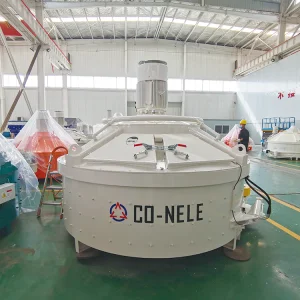
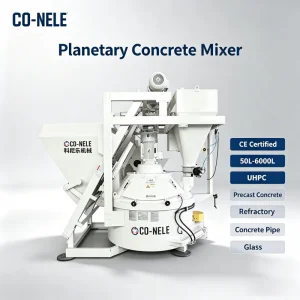
China MP150 Planetary Concrete Mixer Factory, Machine
View Details
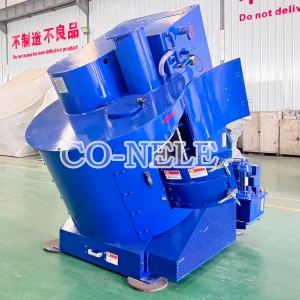
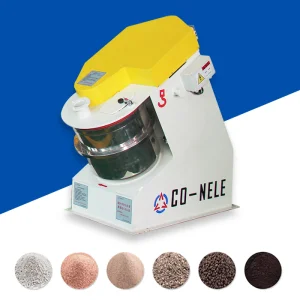
China Foundry Sand Intensive Mixers Manufacturer, Machine
View Details
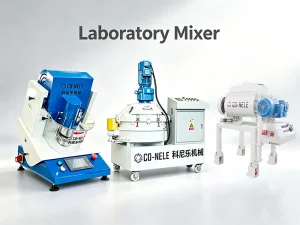
China Laboratory Concrete Mixer Manufacturer, Factory
View Details
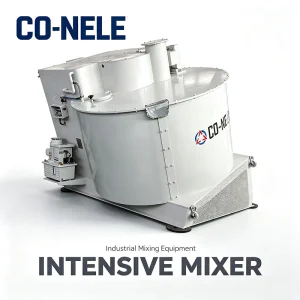
China Intensive Mixer Granulator Manufacturer, Machine
View Details
China Diamond Powder Granulator Manufacturer, Factory
View Details
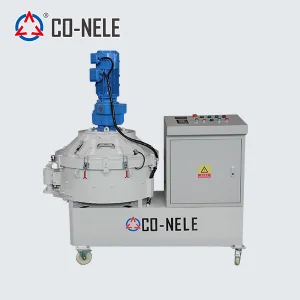
China CMP50 Laboratory planetary concrete mixer Factory, Machine
View Details
China Misturador de Concreto Planetário CMP1000 Manufacturer, Factory
View Details
China MP3000 Planetary concrete mixer Factory, Machine
View Details

1. The Global Paradigm Shift in Industrial Concrete Mixing Kinematics

Why modern mega-projects are transitioning to high-efficiency twin shaft compulsory forced-mixing systems

In the contemporary landscape of international heavy construction, civil infrastructure, and commercial concrete batching, the demand for high-strength, micro-homogeneous concrete formulations has reached an unprecedented peak. As global engineering standards transition from traditional prescriptive concrete specifications to performance-based criteria—requiring low water-cement ratios (w/c < 0.30), heavy integration of Supplementary Cementitious Materials (SCMs like fly ash, slag, silica fume), and micro-fiber additives—the mechanical requirements placed upon industrial batch mixers have evolved dramatically.

"The mechanical efficiency of a concrete mixer is no longer measured solely by batch output volume per hour; it is defined by its ability to achieve uniform micro-dispersion of micro-particles within a 30-to-45 second mixing window without creating thermal hot-spots or phase segregation."

Historically, gravity-based drum mixers and conventional single-shaft pan mixers sufficed for general commercial grade concrete. However, under high-viscosity or low-slump conditions (such as Roller-Compacted Concrete RCC or Ultra-High-Performance Concrete UHPC), traditional designs suffer from rotational dead zones, excessive blade wear, and prolonged batch cycles. China’s twin shaft concrete mixer manufacturing ecosystem, led by pioneering engineering hubs in Qingdao, has systematically redefined compulsory forced-mixing technology through fluid-dynamic counter-rotating blade patterns, heavy-duty planetary gear sync drives, and advanced wear-resistant metallurgy.

Engineering Benchmark Performance Metrics

Data compiled from field evaluations across 10,000+ active mixing installations worldwide.

< 3%
Coefficient of Variation (CV)
30 - 45s
Standard Forced Mixing Cycle
150k+
Wear Parts Cycle Lifetime (Batches)
98.5%
Operational Uptime Reliability

2. Global Commercial & Industrial Procurement Trends

Analyzing procurement requirements across North America, Europe, the Middle East, and Emerging Asia

Infrastructure Megaprojects

High-speed rail bridge piers, deep-sea ports, nuclear containment structures, and hydro-electric dams require continuous pouring of low-heat, high-density concrete. Buyers demand twin shaft mixers with dual hydraulic discharge gates, continuous automated lubrication, and zero shaft-seal slurry leakage guarantees.

Precast & Block Manufacturing

In automated precast element plants (hollowcore slabs, wall panels, architectural facades) and concrete paving block factories, concrete consistency directly dictates mold release times and surface defect rates. High-intensity compulsory mixing prevents aggregate clustering and pigment streak formation.

Total Cost of Ownership (TCO) Shift

International procurement teams have shifted focus from initial CAPEX acquisition price to total OPEX efficiency. Chinese manufacturers providing modular bolt-on Ni-Hard / High-Chrome liners, standardized OEM drive gearboxes (SEW/Nord compatible), and fast-ship spare part logistics win long-term supply contracts.

Technical Comparison Matrix: Mixing Kinematics by Equipment Type

Selecting the optimal mixing machine requires matching recipe rheology to mechanical shear intensity.

Mixing Mechanism Homogeneity Speed Aggressive Material / Dry Mix Suitability Ideal Slump Range Maintenance Complexity Energy Efficiency per m³
Twin Shaft Compulsory (CHS Series) Ultra-Fast (30–45s) Excellent (All Aggregates) 0 - 240 mm (Zero-Slump to Wet) Low - Medium (Replaceable Liners) Highest (88-92%)
Planetary Counter-Current (CMPS) Ultra-Fast (45–60s) Superior (Ultra-Fine / UHPC) Dry Cast, Low Slump, UHPC Medium (Star Arm Adjustment) High (85-90%)
Single Shaft Horizontal Moderate (60–90s) Fair (Standard Ready-Mix) 50 - 180 mm Medium (Shaft End Stress) Moderate (75-80%)
Reversing Drum / Gravity Slow (120–180s) Poor (Prone to Segregation) 80 - 220 mm (High Slump Only) Low (Simple Drum) Low (60-65%)

3. China Industry 4.0: Supply Chain Resilience & Manufacturing Engineering

Inside the Qingdao industrial manufacturing hub: How vertical integration ensures uncompromised quality

The global reputation of Chinese heavy machinery manufacturers has undergone a structural transformation over the past decade. Leading enterprises like Qingdao CO-NELE Machinery Co., Ltd. (established 2004) represent the apex of China’s Industry 4.0 smart manufacturing evolution. Rather than operating as simple assembly shops, top-tier Chinese manufacturers own and operate fully integrated production ecosystems spanning over 30,000 m² of specialized machining, robotic welding, thermal treating, and gearbox testing facilities.

Core Technological Advantages of China's Top Mixer Factories:

  • In-House Planetary & Helical Gearbox Engineering: Drive gearboxes are subjected to severe torque spikes when starting under full batch loads. China's top factories utilize custom-cast high-tensile housing shells fitted with precision-ground carburized alloy gears, delivering 98%+ mechanical transfer efficiency and extended service life.
  • Patented Multi-Layer Shaft End Seals: The primary failure point of traditional twin shaft mixers is slurry intrusion into the shaft bearings. Advanced Chinese designs incorporate multi-stage floating seal rings combined with automatic high-pressure grease injection pumps, creating an impenetrable barrier against abrasive cement paste.
  • Advanced Metallurgy & Wear Liner Science: Wear plates and mixing paddles are cast from specialized Ni-Hard alloys and Chromium carbide steel with hardness ratings exceeding 60-65 HRC, resisting premature degradation even when processing abrasive crushed granite, quartzite, or metallic fiber aggregates.
  • Complete Electrical & Automation Integration: Equipped with Siemens PLC controls, SCADA connectivity, multi-language HMI touchscreens, and dynamic moisture probe feedback (microwave sensing), allowing real-time slump correction mid-batch.

Unrivaled Supply Chain Agility

By controlling 90%+ of component fabrication—from raw steel cutting to CNC milling of mixing arms—China manufacturers maintain unmatched delivery speed. Standard twin shaft mixers (1.0m³ to 4.0m³) can be dispatched within 15–20 days of order confirmation.

Interchangeable Spare Parts Guarantee

Strict CAD/CAM precision standards ensure that replacement wear blades, liners, shaft seal rings, and discharge gate seals are 100% standardized across production years, eliminating field retrofitting downtime.

4. Field Deployments & Localized Application Paradigms

Real-world engineering solutions engineered for demanding jobsite conditions worldwide

Scenario A: Ready-Mix Concrete Batching Plants (HZS Series)

Challenge: Commercial concrete suppliers in fast-growing urban centers require high output (90–180 m³/h) with continuous truck loader turnaround and zero batch variance.

Solution: Twin shaft concrete mixers integrated into stationary or compact HZS batching plants. Dual synchronous drive motors ensure smooth start-up, while twin pneumatic/hydraulic discharge gates allow controlled dumping directly into mixer trucks without splash back.

Scenario B: Precast Concrete & Dry-Cast Block Lines

Challenge: Production of heavy-duty paving blocks, kerbstones, and precast concrete pipes demands zero-slump dry mix with high density and rapid strength gain.

Solution: Heavy compulsory forced action breaks up clay balls and forces water into micro-pore surfaces within 35 seconds, resulting in superior green-strength density and reduced cement consumption per block.

Scenario C: Ultra-High-Performance Concrete (UHPC) & Bridge Grouting

Challenge: Mixing steel-fiber-reinforced concrete with silica fume requires extreme shear energy to de-agglomerate micro-powders without balling the steel fibers.

Solution: High-speed counter-current planetary or specialized twin-shaft configurations with optimized blade angles, delivering complete fiber dispersion and homogeneous fluid flow across bridge expansion joints.

5. Frequently Asked Technical & Procurement Questions

Expert insights compiled by senior application engineers and international trade specialists

How does a Twin Shaft Concrete Mixer differ from a Vertical Planetary Mixer in performance?
A twin shaft concrete mixer utilizes two horizontal counter-rotating shafts equipped with spiral mixing blades. It excels in high-throughput applications (ready-mix concrete, road base, mass pouring) above 1.0 m³ per batch where fast mixing cycles (30–45s) and large aggregate handling are paramount. A vertical planetary mixer uses counter-current star arms that rotate around a central axis, making it ideal for high-precision, dry-cast, colored, or micro-fine recipes like UHPC, GFRC, and refractory castables requiring coefficient of variation (CV) under 3%.
What prevents slurry leakage around the mixing shaft ends in Chinese Twin Shaft Mixers?
Top-tier Chinese manufacturers employ a triple or quadruple shaft-end sealing system. This consists of floating mechanical face seals, rubber lip oil seals, steel pressure plates, and an automatic centralized lubrication system. The auto-grease pump maintains positive hydraulic pressure inside the sealing cavity, continuously forcing clean grease outward to prevent abrasive cement paste or water from reaching the main drive bearings.
What is the expected operating life of wear liners and mixing blades?
With standard High-Chrome Alloy (Cr26 / Hardness ≥ 60 HRC) wear parts, mixing blades and wall liners typically withstand 70,000 to 120,000 batch cycles under normal commercial concrete conditions. When processing highly abrasive crushed quartz or refractory aggregates, service life may range from 35,000 to 50,000 batches. All wear elements are designed in segmented, bolt-on configurations for rapid field replacement within a single maintenance shift.
Can Chinese twin shaft mixers be integrated into existing non-Chinese batching plants?
Yes. Leading Chinese manufacturers design retrofittable structural frame dimensions and standardized discharge gate footprints compatible with major global batch plant brands (European, American, and Japanese standards). Control systems can be configured with standard terminal junction boxes for seamless connection to third-party batching software (Siemens, Schneider, Command Alkon).
What international quality standards and electrical certifications are supported for export?
Export machinery complies with EU CE certification standards, ISO 9001 quality management benchmarks, and optional UL/CSA electrical compliance for North American installations. Motors can be custom-wound for regional voltage and frequency standards (e.g., 220V/380V/415V/440V/480V at 50Hz or 60Hz) with IP55/IP65 ingress protection ratings.

Complete Heavy Industrial Mixing Equipment Portfolio

Explore specialized plant solutions, lab-scale mixers, and intensive granulators

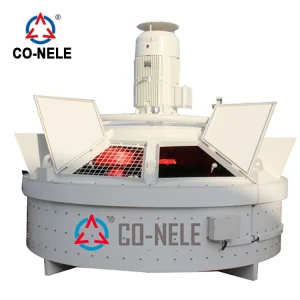
China Planetary Countercurrent Concrete Mixer CMPS Manufacturer, Factory
View Details
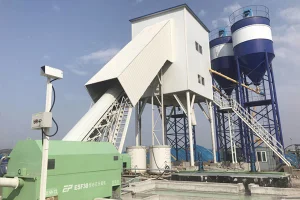
China HZN90 stationary ready concrete batching plants Factory, Machine
View Details
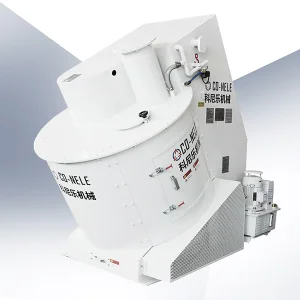
China Inclined Intensive mixer Manufacturer, Factory
View Details
China CQM10 laboratory Intensive mixer Manufacturer, Factory
View Details
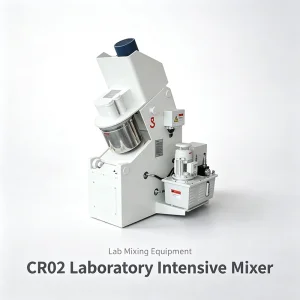
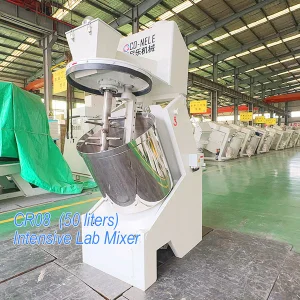
China CR08 Intensive lab Mixer Manufacturer, Factory
View Details
China Refractory mixer Manufacturer, Factory
View Details
China ready mixed concrete plant with planetary concrete mixer Manufacturer, Factory
View Details
China Planetary mixer for concrete block bricks in Russia Manufacturer, Machine
View Details

Partner with China’s Leading Mixing Machinery Authority

With over 20 years of dedicated mechanical innovation, 80+ granted patents, and installations across 80+ nations, our engineering team provides end-to-end technical consultation, laboratory sample testing, custom plant design, and fast-ship global logistics support.
Request Engineering Specification Sheet