CO-NELEMixing & Granulation
High-torque, forced-action planetary and intensive sand mixing machinery manufactured under ISO 9001 and CE directives for foundries, refractories, and advanced materials.
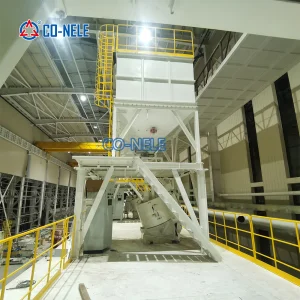
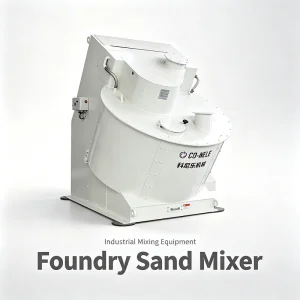
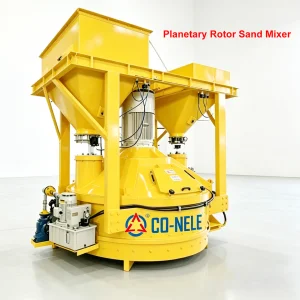
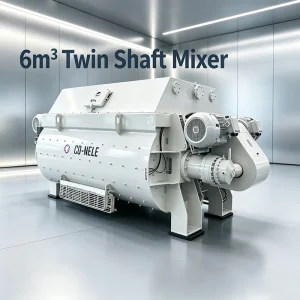
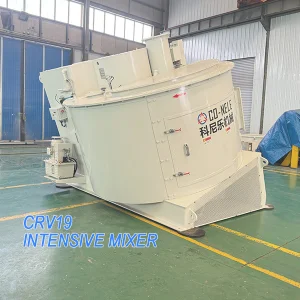
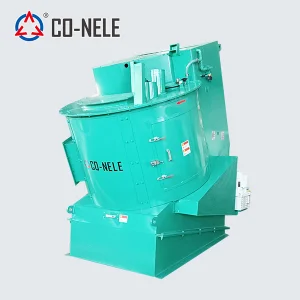
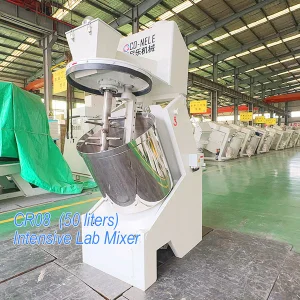
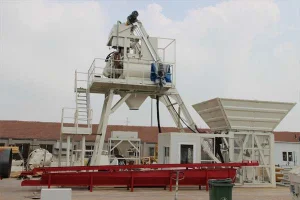
In modern industrial metallurgy, metal casting, refractory manufacturing, glass batching, and petroleum proppant synthesis, the physical properties of prepared sand mixtures directly dictate final component yield, dimensional tolerances, and mechanical performance. The term Sand Mixer Machine encompasses a complex engineering spectrum of compulsory, forced-action mixing systems engineered to disperse liquid binders, solid additives, water, and particulate aggregates into a zero-agglomerate, micro-homogeneous state.
Historically, traditional green sand foundries and refractory producers relied on low-energy wheel mullers or simple horizontal ribbon blenders. However, modern high-speed automated molding lines (such as Disamatic, Heinrich Wagner Sinto, or Hunter molding systems) operate at cycle speeds requiring mold strength consistency within tightly constrained tolerances. Conventional mulling technology suffers from critical physical limitations: uneven energy dissipation, localized thermal buildup, grain breakdown due to excessive crushing pressure, and incomplete clay-binder activation (bentonite swelling). Modern high-intensity sand mixers solve these structural failures by divorcing mechanical shearing from crushing force.
Advanced sand mixer machines engineered by CO-NELE are deployed across five critical industrial domains:
Comparing forced-action planetary counter-current mixing against traditional pan mulling and ribbon blending.
The rotating mixing pan conveys material into the trajectory of high-speed eccentric rotors, creating continuous micro-shear zones that eliminate unmixed dead zones entirely.
Rotor tip speeds of 12 m/s to 30 m/s break up binder agglomerates instantly, coating individual sand grains with uniform liquid resin or activated clay films without crushing aggregate cores.
Integrated microwave moisture probes and dynamic water dosing valves adjust water additions in real-time, holding compactability levels within tight ±1% parameters.
Tungsten-carbide coated mixing blades and interchangeable high-chrome alloy pan liners deliver upwards of 150,000 continuous mixing batches on quartz sand mixtures.
The global industrial sand mixing equipment market is experiencing a rapid technological transition driven by rising raw material costs, stricter environmental regulations (such as OSHA crystalline silica standards and European VOC limits), and the widespread adoption of AI-driven smart foundries. Operating a modern sand mixer machine is no longer merely a mechanical function; it is a critical leverage point for operational profitability.
In high-cost manufacturing regions across North America and Western Europe, foundry operators focus on minimizing chemical binder additions. Furan and phenolic resins represent a substantial percentage of variable molding costs. By upgrading from continuous screw mixers or conventional batch mullers to CO-NELE intensive sand mixers, foundries achieve identical tensile strength values in cured molds using 18% to 25% less resin binder. For a facility processing 50,000 tons of sand annually, this reduction translates to direct chemical cost savings exceeding $180,000 per year.
| Performance Metric | Traditional Wheel Muller | Standard Ribbon Blender | CO-NELE Intensive Sand Mixer |
|---|---|---|---|
| Mixing Cycle Time | 180 – 300 Seconds | 240 – 360 Seconds | 45 – 90 Seconds |
| Coefficient of Variation (CV) | 8.0% – 12.0% | 10.0% – 15.0% | < 3.0% (Micro-Homogeneous) |
| Active Bentonite Requirement | 8.5% – 10.0% | 9.0% – 11.0% | 6.5% – 7.5% |
| Casting Scrap Rate (Sand Defect) | 3.5% – 5.0% | 4.0% – 6.0% | < 0.8% |
| Power Consumption per Ton | 4.2 kWh/Ton | 3.8 kWh/Ton | 2.7 kWh/Ton |
Industrial sand mixing machines operate under drastically different conditions depending on regional geology, local raw materials, and ambient climates:
Operating continuously 24/7, green sand systems require instantaneous water compensation to counteract sand temperature spikes. CO-NELE intensive mixers incorporate dual-stage moisture measurement (capacitive pre-measurement plus high-frequency microwave pan probes) to deliver sand with precise compactability of 38% ± 1.5% at the molding machine hopper.
Processing coarse chromite sand mixes for heavy valve and marine casting bodies. The intensive mixer utilizes coated tungsten scrapers to prevent chromite segregation, ensuring zero core collapse under molten steel pouring temperatures up to 1,650°C.
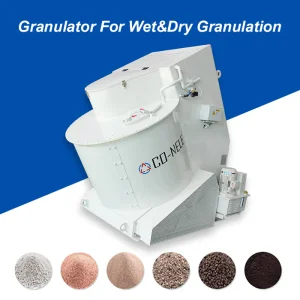
Combining ultra-fine kaolin clay and quartz flour, the machine functions as an intensive mixer-granulator. High-speed rotor dynamics transform cohesive dry powders into perfectly spherical green granules (0.2 mm – 1.2 mm) within a single 3-minute batch process, bypassing multi-stage processing steps.
Custom electrical architecture, regional compliance certification, and rapid-response technical field support in over 80 countries.
Custom engineered for 220V, 380V, 415V, 440V, 480V, and 600V grid configurations at 50Hz or 60Hz. Standardized with Siemens S7-1500 PLC and Schneider electrical switchgear.
Certified under European Union Machinery Directive 2006/42/EC. Explosion-proof ATEX-rated drive motors available for organic resin and dust-laden environments.
All wear plates, rotor tips, drive gearboxes, and seal kits are stored in stock with standardized part numbers for expedited global air freight delivery within 48 hours.
Integrated VPN diagnostic gateways enable CO-NELE factory engineers to perform live PLC troubleshooting, performance auditing, and firmware updates remotely.
The next decade of industrial sand mixing will be defined by autonomous self-optimizing mixing cycles, zero-carbon foundry sand reclamation, and advanced tribological coatings. CO-NELE's R&D team in Qingdao is driving innovation across four core technological pillars:
By continuously analyzing motor current harmonics and torque fluctuations at 1,000 samples per second, the machine calculates real-time viscosity changes during the mixing cycle. The system dynamically alters rotor RPM to achieve optimal dispersion energy while preventing mechanical heat transfer to thermal-sensitive resin binders.
Future green sand systems combine mechanical intensive mixing with thermal sand reclamation units in a closed loop. Spent sand is thermally calcined to strip residual organic binders and immediately conditioned in vacuum-assisted cooling mixers, reducing virgin silica sand consumption by over 95%.
Incorporating embedded piezoelectric wear sensors inside tungsten scraper tips, the mixing controller monitors blade clearance relative to the pan liner in real-time. Automated pneumatic actuators adjust scraper positioning automatically to maintain a 1.5mm gap, preventing sand build-up while extending liner service life by 40%.
Next-generation sand mixer factories incorporate integrated negative-pressure pulse baghouses directly into the mixer housing cover, capturing PM2.5 and silica dust at the point of shear generation, meeting strict environmental sustainability standards worldwide.
Detailed technical answers provided by CO-NELE senior mixing process engineers.
Explore our complete range of stationary concrete batching plants, granulating mixers, and heavy-duty planetary mixers.