CO-NELEMixing & Granulation
Explore our core engineering line of compact batching systems, planetary mixers, and specialized processing plants engineered for maximum volumetric efficiency.
How Modern Engineering Overcomes Civil Footprint Constraints and Elevates Micro-Homogeneity in High-Performance Concrete Production
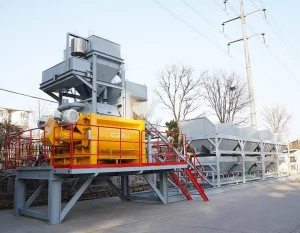
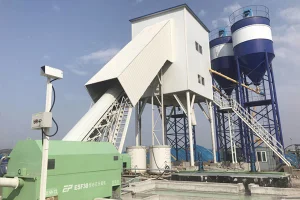
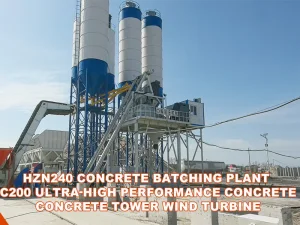
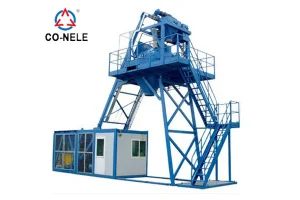
In modern global civil engineering, traditional large-scale stationary batching plants are increasingly restricted by urban space constraints, high foundation installation costs, and long setup lead times. A compact concrete batching plant represents an engineered balance between space preservation and high-capacity batching throughput (ranging from 25 m³/h to 90 m³/h).
By consolidating aggregate dosing bins, cement weighing hoppers, water/admixture dosing manifolds, and high-shear mixers into a pre-wired containerized steel module, engineering teams eliminate up to 60% of traditional site installation time while maintaining rigorous EN 206-1 structural concrete standards.
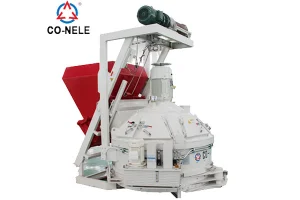
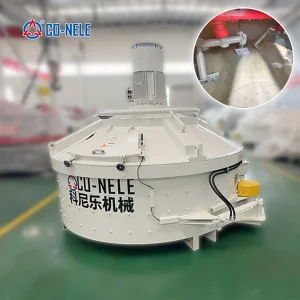
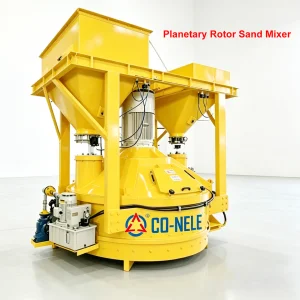
Beyond spatial convenience, the defining metric of next-generation compact plants is mixing homogeneity. Compact batching systems equipped with vertical-shaft counter-current planetary mixers (such as the CO-NELE CMPS/CMP series) achieve a Coefficient of Variation (CV) below 5% within a short 60-second cycle.
This kinematic motion eliminates dead zones, ensuring that supplementary cementitious materials (SCM) like silica fume, blast furnace slag, and fly ash are perfectly dispersed—an absolute technical requirement for Ultra-High-Performance Concrete (UHPC) and precast architectural components.
Deconstructing the Key Sub-Systems driving Precision Dosing, Mechanical Reliability, and Wear Protection
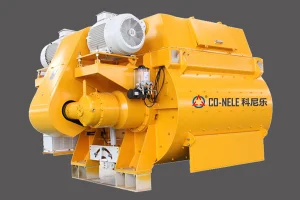
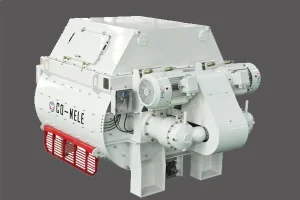
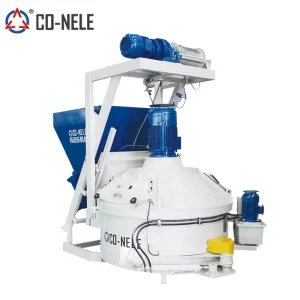
The mixing engine forms the core of the plant. Compact systems can be equipped with either vertical-shaft planetary mixers or twin-shaft compulsory mixers (CHS Series). Planetary units feature custom-built heavy-duty gearboxes with synchronized counter-current mixing arms that trace non-overlapping paths, preventing aggregate segregation.
Equipped with high-precision S-type load cells and pneumatic fast-acting butterfly valves, aggregate scales achieve ±2% accuracy, while cement and water scales maintain tight ±1% tolerances. Integrated microwave moisture sensors dynamically adjust batch water in real-time to maintain a strict Water-Cement Ratio (w/c).
To resist abrasive aggregates such as crushed granite, quartz sand, and iron ore tailings, mixing pans are lined with replaceable high-chrome alloy tiles (hardness ≥ 60 HRC / Brinell HB600). Mixing blades feature cast alloy coatings that extend service life up to 150,000 production cycles under standard batching conditions.
| Compact Plant Model | Theoretical Capacity | Mixer Type & Model | Aggregate Bin Capacity | Discharge Height | Total Connected Power |
|---|---|---|---|---|---|
| HZS25 / MBP25 | 25 m³/h | Planetary MP500 / Twin Shaft CHS500 | 3 × 8 m³ | 3.8 m | ~38 kW |
| HZS35 / MBP35 | 35 m³/h | Planetary CMP750 / Twin Shaft CHS750 | 3 × 10 m³ | 3.8 m | ~55 kW |
| HZS50 / MBP50 | 50 m³/h | Planetary CMP1000 / Twin Shaft CHS1000 | 4 × 12 m³ | 4.0 m | ~75 kW |
| HZS60 / MBP60 | 60 m³/h | Planetary CMP1500 / Twin Shaft CHS1500 | 4 × 15 m³ | 4.0 m | ~90 kW |
| HZS90 / MBP90 | 90 m³/h | Planetary CMP2250 / Twin Shaft CHS2250 | 4 × 20 m³ | 4.2 m | ~132 kW |
Why International EPC Contractors and Concrete Producers Sourced from Leading Manufacturers like CO-NELE in Qingdao
Unlike regional assemblers who source off-the-shelf components, tier-one manufacturers in Qingdao, China operate fully integrated machining, welding, and gearbox test benches. Planetary reducers—the core transmission module of planetary batching plants—are designed and gear-hobbed in-house.
Global procurement teams evaluate machinery based on Total Cost of Ownership rather than upfront purchase price alone. Chinese industrial manufacturing centers deliver up to 45% CAPEX savings while utilizing world-standard electrical components.
Freight logistics often equal 15-20% of total machinery cost. Next-generation compact concrete batching plants engineered in China feature foldaway aggregate hoppers and telescopic support legs. The entire plant—including mixer, batcher, control cabin, and screw conveyor—is engineered to fit inside standard 40-foot High Cube (40' HQ) shipping containers, eliminating expensive breakbulk shipping rates.
Key Tech Drivers: Decarbonization, UHPC Growth, SCADA Automation, and Recycled Aggregates
With global green building certifications (LEED, BREEAM) penalizing high-clinker cement formulations, modern plants require precise multi-binder weighing systems to accurately blend blast furnace slag, fly ash, and calcined clays without batch-to-batch strength variance.
The acceleration of offshore wind energy foundations, bridge deck overlays, and precast architectural facades requires Ultra-High-Performance Concrete (UHPC). Compact plants fitted with high-shear planetary mixers ensure steel fibers are evenly distributed without balling or clumping.
Modern plant operators demand fully automated SCADA platforms with cloud diagnostics. Smart PLC controls record batch histories, automatically correct material moisture variations, monitor drive motor thermal profiles, and order wear parts before breakdown occurs.
Engineered Deployment Models across Diverse Global Field Environments
Metropolitan commercial construction projects frequently lack the ground area for traditional batching plants and aggregate stockpiles. Compact plants with integrated skip-hoist loaders utilize vertical height rather than horizontal length, allowing placement directly inside basement construction zones or tight urban lots.
Dedicated precast factories producing paving blocks, hollow-core slabs, concrete pipes, and utility vaults require continuous zero-slump dry-cast concrete. Compact batching units integrated with planetary mixers feed concrete delivery skip cars directly, operating under synchronized PLC signals from block-making machines.
In island bridge construction or mountain highway paving, transporting transit-mix concrete from a distant commercial plant risks early slump loss and flash setting. Mobile compact batching plants on wheel-mounted chassis can be towed to site, connected to a generator set, and commissioned within 48 hours.
Offshore marine engineering demands specialized ultra-high strength anti-scour grouting mortars. Custom modular UHPC compact plants installed directly on barge decks operate continuously in corrosive marine environments, supplying specialized concrete for wind turbine jacketing foundations.
Technical Buying Criteria for Procurement Officers, Plant Managers, and Project Engineers
While initial machinery capital cost (CAPEX) is critical, operational expenditure (OPEX) over 10 years dictates real project profitability. High-efficiency planetary mixers reduce electricity consumption per cubic meter by up to 15% due to optimized paddle angle geometry.
Furthermore, precision dynamic moisture sensing prevents cement over-dosing—saving up to 15–20 kg of cementitious material per cubic meter of concrete while consistently hitting target compressive strength classes.
Expert Engineering Guidance on Equipment Selection, Maintenance, and Global Logistics
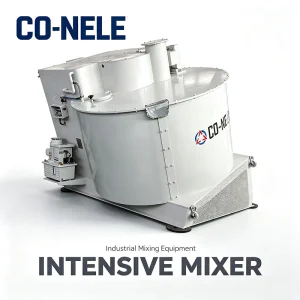
A vertical-shaft planetary counter-current mixer is essential when producing specialized, high-homogeneity, dry-cast, fiber-reinforced, or ultra-high-performance mixes (UHPC, GFRC, refractory castables, concrete pavers, and precast elements). Its forced counter-current mixing motion ensures zero dead zones and a coefficient of variation (CV) < 5%. A twin-shaft compulsory mixer is recommended for high-volume commercial ready-mix concrete production where cycle speed (30–45s) and bulk wet discharge take precedence over micro-homogeneity.
Using standard high-chrome alloy wear parts (hardness ≥ 60 HRC), floor/wall liners and mixing blades typically last between 90,000 to 150,000 batch cycles for standard construction concrete. For highly abrasive materials (such as refractory castables or quartz-heavy UHPC mixes), wear life ranges between 40,000 to 60,000 batches. All wear parts are segmented, bolt-on, and easily replaceable in the field without full pan disassembly.
Yes. Foundationless compact batching plants are built on heavy-duty structural steel chassis frames equipped with broad ground spreader plates. Designed for temporary job sites or leased land, they require only a level, compacted gravel or lean concrete pad. The structural frame distributes operational dynamic loads safely, allowing full plant setup and commissioning in 3 to 5 days without pouring deep foundation pits.
Absolutely. Export equipment is wired to match local site electrical characteristics (e.g., 380V 50Hz, 415V 50Hz, 460V/480V 60Hz). Electrical control panels conform to CE standards or UL requirements upon request, incorporating Siemens or Schneider hardware. The batching automation interface supports multi-lingual operating systems (English, Spanish, French, Russian, Arabic, Portuguese) with printable SCADA batch records.
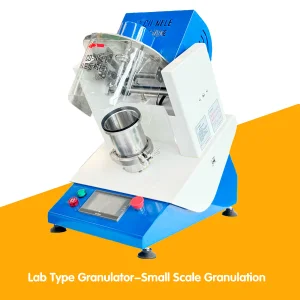
CO-NELE operates an advanced material testing laboratory in Qingdao. Prospective buyers can send a 15–25 kg sample of their specific aggregate, powder, or fiber formulation. Our process engineers run test batches using lab-scale intensive and planetary mixers, generating full trial reports detailing mixing homogeneity, density, moisture curves, dynamic shear behavior, and exact scale-up factors for production sizing.
Explore specialized industrial mixers, asphalt plants, and heavy-duty concrete machinery for global infrastructure projects.