
CO-NELEMixing & Granulation
Engineered for high-homogeneity wet & dry powder pelletizing, ceramic raw material preparation, and laboratory formula development.
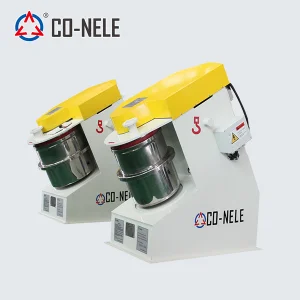
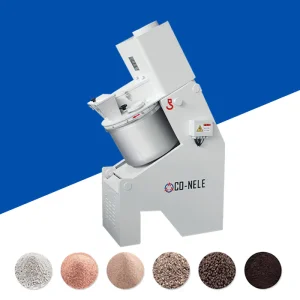
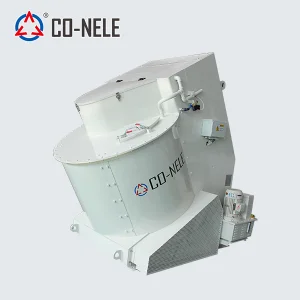
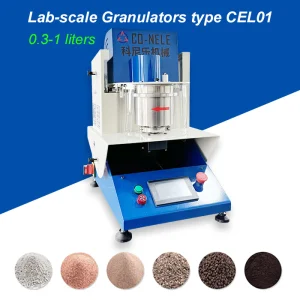
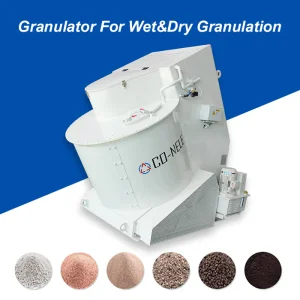
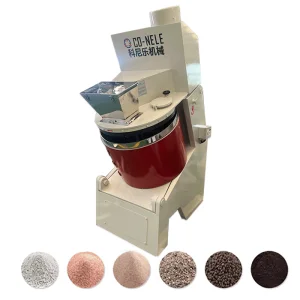
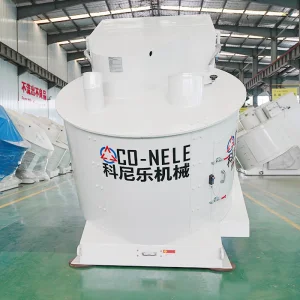
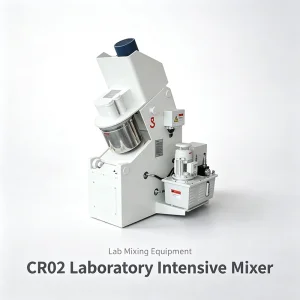
Analyzing the shift from legacy drum pelletizers and spray dryers to dynamic intensive mixing granulators.
In the global powder processing landscape, selecting an elite Granulating Mixer Manufacturer & Factory is no longer merely a procurement decision—it is a strategic imperative that directly governs production yield, material bulk density, thermal sintering efficiency, and overall environmental compliance. Across advanced sectors ranging from synthetic diamond powder synthesis and technical ceramic formulation to lithium-ion battery precursor processing and refractory castable mixing, traditional mixing tools (such as horizontal ribbon blenders, planetary kneaders, and fluid bed agglomerators) frequently reach physical boundaries in homogeneity and particle shear control.
Intensive granulating mixers operate on a fundamentally distinct mechanical principle: the counter-current and inclined pan concept. By decoupling the mechanical drive of the rotating mixing pan from the high-speed rotor tool, process engineers gain independent variable control over material transport speed and micro-shear energy input. This mechanical decoupling enables precise control over the Froude number within the vessel, transforming fine cohesive powders (sub-micron to 500 µm) into perfectly spherical granules with tight grain-size distribution curves (d50 values tailorable between 0.2 mm and 6.0 mm).
Understanding the physics behind counter-current rotation, shear-rate adjustment, and automated liquid addition.
The mixing pan rotates at moderate velocity to convey raw powders continuously into the working zone of the high-speed rotor. This guarantees 100% material turnover without dead spots, regardless of batch volume or density variations.
Operating at tip speeds up to 30 m/s, the central rotor disintegrates agglomerates, homogenizes dry additives within seconds, and applies controlled compaction kinetic energy to format round, dense granules.
Integrated fluid dosing nozzles deliver water, organic binders, or slurry droplets directly into the highest shear zone. Liquid is instantly dispersed over powder surface areas without localized over-wetting or lump formation.
Vessels lined with replaceable tungsten carbide plates, high-chrome alloy steels (HRC 62-65), or technical ceramic tiles protect high-purity compounds (like alumina or PTFE) from metallic contamination.
Stationary multi-purpose wall/bottom scrapers continuously deflect material off the pan boundary, channeling it back into the rotor path while simultaneously keeping vessel inner surfaces clean.
Bottom-center hydraulic discharge gates flush batch contents within 15 to 30 seconds. Zero residual retention prevents cross-contamination between consecutive recipe batches.
A rigorous process engineering comparison highlights why leading factories are transitioning to intensive counter-current mixing granulators.
| Performance Indicator | CO-NELE Intensive Granulating Mixer | Spray Drying Tower | Disc / Drum Agglomerator | Horizontal Ribbon Blender |
|---|---|---|---|---|
| Mixing Homogeneity (CV) | < 3.0% (Micro-level distribution) | N/A (Liquid slurry feed) | 7.0% - 12.0% (Poor micro-mix) | 5.0% - 8.0% (Macro-mix only) |
| Energy Consumption per Ton | Low (12 - 25 kWh/ton) | Very High (Thermal drying costs) | Medium (Requires secondary screening) | Medium (Long cycle times) |
| Granule Shape & Sphericity | High Sphericity (0.85 - 0.95) | Hollow Spheres (Low bulk density) | Irregular Pellets | Flakes / Uncompacted Agglomerates |
| Binder Consumption | Optimized (1.5% - 4.5%) | High (Requires liquid carrier) | High (5.0% - 10.0%) | Inconsistent Dosing |
| Footprint & Civil Requirements | Compact Single-Level Machine | Vertical Structure (15m - 30m high) | Large Horizontal Floor Area | Medium Horizontal Footprint |
| Recipe Changeover Speed | Fast (Automatic CIP / Clean Out) | Very Slow (Ducting washdown) | Moderate | Slow (Residual traps) |
Custom engineering configurations optimized for specialized chemical, metallurgical, and structural material manufacturing.
Granulating micro-diamond or CBN powders with metallic matrix binders (Fe, Cu, Co, Sn) demands zero segregation. Intensive granulating mixers deliver uniform granule sizes, eliminating press-die packing variations and extending diamond tool operational lifespan.
High-purity alumina (Al2O3), zirconia (ZrO2), and silicon nitride ceramics require high bulk density for cold isostatic pressing (CIP). Our ceramic-lined mixers produce dust-free granules with exceptional flowability and controlled green strength.
In soft/hard ferrite production, consistent magnetic domain alignment relies on homogeneous powder composition. The granulating mixer achieves perfect moisture dispersion during wet granulation, preventing phase separation during calcination.
Processing precursor powders (NCM, LFP, synthetic graphite) requires hermetically sealed mixing vessels under inert gas purging (N2/Ar). Stainless steel and PTFE-coated granulators prevent metallic trace contamination down to sub-ppm levels.
Unshaped refractories incorporate micro-silica, alumina powders, and heavy synthetic aggregates. Intensive planetary action breaks down micro-silica clusters within 60 seconds, reducing water demand and raising hot modulus of rupture (HMOR).
Converting bentonite, humic acids, trace elements, and NPK formulations into slow-release spherical granules. High mechanical efficiency yields 90%+ target granule size without needing extensive multi-deck screening loops.
Examining operational deployment metrics across North America, Europe, Asia-Pacific, and Latin America.
Challenge: Agglomerating recycled black mass powder into dust-free granules for pyrometallurgical furnace feed.
Solution: Explosion-proof 750L Granulating Mixer with nitrogen blanket and continuous moisture monitoring.
Result: Furnace dust carryover reduced by 82%; process throughput elevated to 4.5 metric tons per hour.
Challenge: Replacing energy-intensive spray drying towers for HPA (High-Purity Alumina) pressing granules.
Solution: CR Series Intensive Mixer Granulator with full polyurethane liners and high-speed rotor tools.
Result: Electrical and gas energy bills slashed by 61%; press cycle speed accelerated due to superior granule flowability.
Challenge: Micro-granulation of NdFeB magnetic alloy powders without oxidation or iron contamination.
Solution: Sealed stainless-steel CEL05 Granulating Unit integrated into a closed glove-box system.
Result: Achieved exact granule bulk density (3.2 g/cm³); increased magnetic flux consistency across finished sintered magnets.
Pioneering intelligent, automated, and zero-carbon powder granulation processing technologies.
Integration of in-situ optical spatial filter velocimetry (SFV) probes inside the mixing pan to track particle growth curves in real-time, auto-terminating rotor speed upon hitting target d50.
Advanced binder micro-atomization techniques utilizing super-critical CO2 carriers, enabling solventless dry-granulation of moisture-sensitive pharmaceutical and chemical compounds.
Direct-drive permanent magnet synchronous motors (PMSM) adjusting torque dynamically based on continuous rheological feedback, trimming electrical power consumption by another 20%.
Industrial-scale turn-key plant systems converting municipal incinerator fly ash, metallurgical slag, and mine tailings into high-strength synthetic construction aggregates.
Tailored processing systems for abrasive alumina, mineral bentonite, PTFE polymer powders, and high-performance concrete formulations.
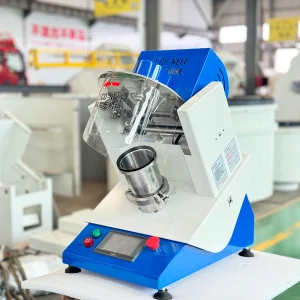
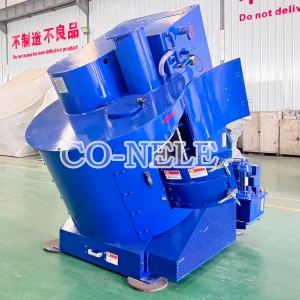
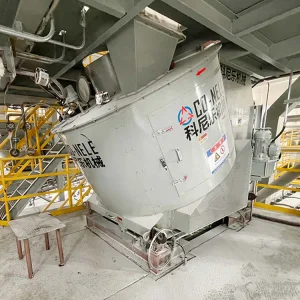
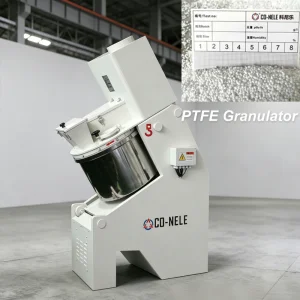
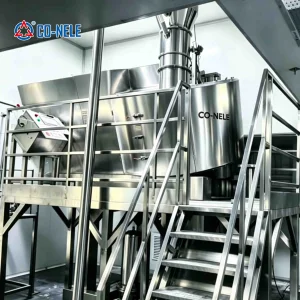
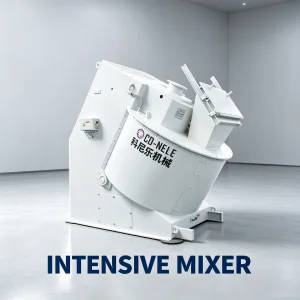
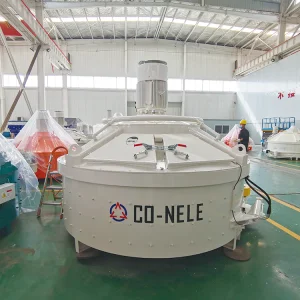
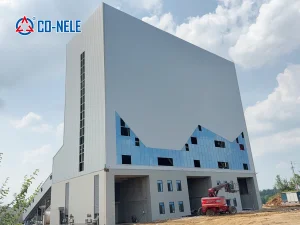
Complete plant integration services including pneumatic powder transport, precision micro-dosing, granulating mixing, and continuous fluid-bed drying.
Loss-in-weight feeders and multi-component batching hoppers supply bulk powders into the granulator with ±0.2% accuracy, eliminating human loading errors in critical recipe formulations.
Fully sealed mixing chambers equipped with pulse-jet cartridge dust collectors ensure continuous negative-pressure operation, maintaining ISO Class 8 cleanroom compliance when required.
Siemens S7-1500 PLC control architecture records mixing pan speed, rotor torque, liquid flow rates, and batch temperature curves, automatically generating printable batch traceability reports.
Deep-dive answers provided by our senior process engineers to assist technical purchasing committees.