Technical White Paper & Industrial Guide

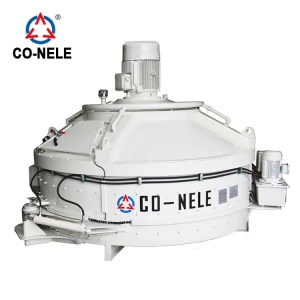
China Vertical Shaft Cement Mixer Manufacturer & Machine

Engineering Next-Generation Counter-Current Mixing Technology, Planetary Kinematics, and Micro-Homogeneity Solutions for Global Infrastructure & Advanced Precast Concrete Manufacturing.

Equipment Portfolio

Advanced Vertical Shaft & Planetary Mixing Systems

Explore China's premier industrial mixers engineered for ultra-high performance concrete, precast elements, refractories, and technical ceramics.
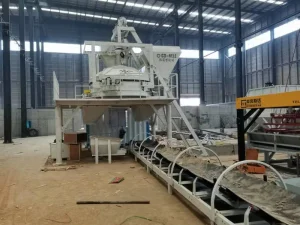
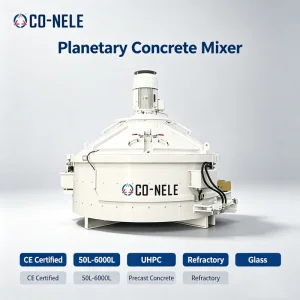
China Precast Concrete Wall Panels Planetary Concrete Mixer PC Batching Plant

China Precast Concrete Wall Panels | Planetary Concrete Mixer | PC Batching Plant Price Manufacturer, Factory

View Equipment Specs
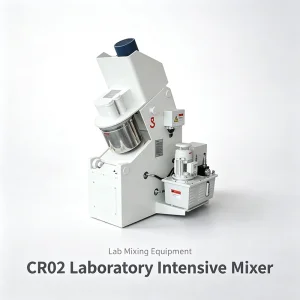
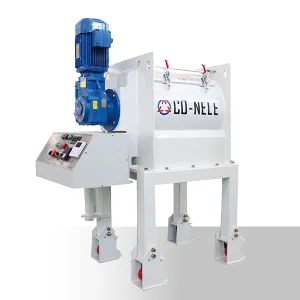
China CDW100 Laboratory Dry Mortar Mixer

China CDW100 Laboratory Dry Mortar Mixer Manufacturer, Factory

View Equipment Specs
China Ultra-high performance concrete mixer

China Ultra-high performance concrete mixer Factory, Machine

View Equipment Specs
China Ceramic Material Mixers

China Ceramic Material Mixers Factory, Machine

View Equipment Specs
China 750L Adsorbent Granulation Machine

China 750L Adsorbent Granulation Machine Manufacturer, Machine

View Equipment Specs
China Diamond Powder Granulator

China Diamond Powder Granulator Manufacturer, Factory

View Equipment Specs
China Planetary fly-cutter Concrete Mixer Type CMPS

China Planetary fly-cutter Concrete Mixer Type CMPS Manufacturer, Factory

View Equipment Specs
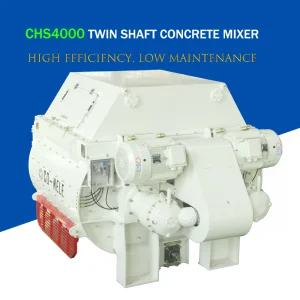
China CHS4000 4 m³ Twin Shaft Concrete Mixer

China CHS4000 (4 m³) Twin Shaft Concrete Mixer Manufacturer, Factory

View Equipment Specs
Technical Fundamentals

The Physics of Vertical Shaft Counter-Current Mixing

Understanding the mechanical distinction between conventional gravity mixers, twin-shaft agitation, and planetary vertical shaft counter-current dynamics.

Uncompromising Homogeneity in Complex Cementitious Formulations

In modern industrial concrete fabrication, the performance of structural elements hinges on microscopic binder dispersion. Traditional horizontal twin-shaft mixers excel at bulk volume output for ready-mix applications, but often fall short when processing high-viscosity mixes, low-water-binder ratio recipes (w/b < 0.20), micro-silica additives, and dense metallic or synthetic fiber reinforcements.

A Vertical Shaft Planetary Cement Mixer eliminates structural dead zones through forced counter-current agitation. The mixing blades rotate on central vertical axes while simultaneously orbiting around the central drive shaft. This dual-rotational vector creates intricate, non-overlapping planetary trajectories across the mixing pan floor and sidewalls.

Information Gain Metric: Coefficient of Variation (CV)

While standard twin-shaft machinery achieves a binder dispersion variance (CV) between 8% and 12%, industrial-grade China Vertical Shaft Planetary Mixers consistently deliver a CV < 3% to 5% within a reduced 60-to-90 second mixing cycle.

Complex Planetary Geometry

High-shear star arms combined with outer wall scrapers enforce 100% material turnover every 4.2 rotations of the primary drive unit, leaving zero unmixed pockets.

Micro-Silica & Fiber De-agglomeration

Optional high-speed planetary fly-cutters break up micro-silica agglomerates and achieve uniform 3D orientation of steel and polymer fibers without balling.

80+
Patented Technologies
< 5%
Mixing Variance (CV)
10,000+
Global Operational Units
80+
Export Destinations
Global Market Analysis

Commercial Dynamics of China's Vertical Shaft Mixing Machinery

How Chinese engineering innovations are reshaping the global market for precast concrete, refractory production, and advanced chemical batching.

Precast Concrete Wall Panels & Modular Building Systems

The global surge in off-site precast construction demands batch-to-batch color stability, structural density, and dimensional accuracy. Chinese vertical shaft mixers allow precast manufacturers to process zero-slump dry-cast formulations reliably, accelerating mold stripping cycles from 24 hours down to under 8 hours.

Ultra-High Performance Concrete (UHPC) Infrastructure

Bridges, wind turbine foundations, and marine seawalls increasingly specify UHPC with compressive strengths exceeding 150 MPa. China's vertical shaft mixer manufacturers integrate reinforced planetary gearboxes capable of generating massive shear forces without thermal overload, solving the intense mixing resistance of ultra-fine powders.

Industrial Refractories & Advanced Ceramic Materials

Beyond structural concrete, vertical shaft planetary technology plays a critical role in steel, aluminum, and ceramic manufacturing. Processing abrasive refractory castables containing corundum, silicon carbide, and graphite requires specialized wear liners (such as cast high-chromium alloys or tungsten carbide cladding) perfected by Chinese OEM factories.

Targeted Engineering

Regional Application Scenarios & Operational Challenges

Customizing industrial batching lines to meet extreme ambient temperatures, regulatory requirements, and raw material variations globally.

North America & Western Europe

Focus: Architectural Precast, GFRC, and Strict CE/UL Compliance

In mature markets, producers demand fully automated batching integration with SCADA connectivity, dust-free vacuum charging ports, and CE/UL certified electrical panels. Vertical shaft mixers in these regions are tailored with liquid pigment metering systems and high-pressure washing heads for rapid color changeovers.

  • Zero chemical admixture segregation in Glass Fiber Reinforced Concrete (GFRC).
  • Energy-efficient VFD motor drives meeting IE4 premium efficiency standards.
  • Automated moisture compensation via microwave sensor probes mounted in the pan floor.

Middle East & Arid Coastal Regions

Focus: High Ambient Temperatures, Salt Corrosion, Low Water Ratios

Desert and coastal conditions demand robust heat dissipation and corrosion prevention. Equipment deployed in Saudi Arabia, the UAE, or Qatar features chilled water dosing manifolds, insulated pan covers, and sealed planetary gearboxes capable of continuous operation in ambient temperatures exceeding 50°C.

  • Heavy-duty anti-corrosion marine epoxy coatings for coastal salt mist environments.
  • Integrated ice-dosing inlets for temperature-controlled mass concrete mixing.
  • Dual hydraulic discharge gates for emergency batch release during power fluctuations.

Southeast Asia & Developing Markets

Focus: Rapid Deployment, Low Maintenance, Cost-Effective Scale-up

For fast-track infrastructure projects in Vietnam, Indonesia, or Kenya, simplicity, durability, and immediate availability of spare parts are paramount. Modular foundationless compact batching plants paired with vertical shaft planetary mixers allow contractors to set up production within 72 hours of site arrival.

  • Bolt-on high-chrome wear liners for easy field replacement without specialized welding.
  • Trailer-mounted mobile chassis configurations for rapid highway project shifting.
  • Intuitive touchscreen PLC controls with multi-language user interfaces.
Innovation Roadmap

Next-Generation Technology Roadmap (2026–2030)

The convergence of industrial mixing machinery, artificial intelligence, green metallurgy, and decarbonized cementitious binders.

Phase 1: AI-Driven Rheology Monitoring & Dynamic Torque Analytics

Modern Chinese mixing machinery is transitioning from fixed-time mixing cycles to real-time viscometric sensing. By tracking drive motor current fluctuations and gearbox vibration frequencies via edge AI processors, the mixer dynamically adjusts mixing duration based on real-time slurry viscosity, reducing energy consumption by up to 18% per batch.

Phase 2: Carbon-Negative Concrete & Geopolymer Activation

As the construction industry shifts toward alkali-activated geopolymers and calcined clay cements (LC3), mixing equipment must handle extreme chemical reactivity and rapid initial setting times. Advanced vertical shaft designs incorporate specialized anti-acid stainless alloy linings and accelerated high-shear rotor inserts to break down sticky geopolymer gels efficiently.

Phase 3: 3D Concrete Printing (3DCP) Continuous Batching Interfaces

Additive manufacturing in construction demands continuous, pulse-free slurry delivery with zero micro-cracking risk. Future vertical shaft mixing platforms will combine batch planetary homogenizers with secondary twin-screw continuous discharge extruders, ensuring uninterrupted material supply to robotic 3D printing gantries.

Complete Plant & Granulation Series

High-Efficiency Batching Plants & Specialized Granulators

Complete your industrial plant layout with factory-direct Chinese concrete batching systems, lab granulators, and heavy-duty mixers.

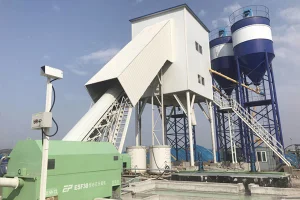
China 180 m³/h Ready Mix Concrete Batching Plant

China 180 m³/h Ready Mix Concrete Batching Plant Manufacturer, Machine

View Plant Specs
China UHPC Concrete Mixer

China UHPC Concrete Mixer Factory, Machine

View Plant Specs
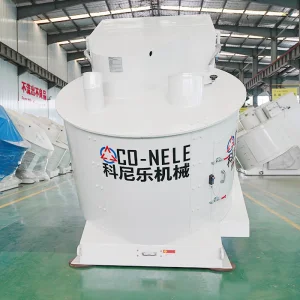
China MP150 Planetary Concrete Mixer

China MP150 Planetary Concrete Mixer Factory, Machine

View Plant Specs
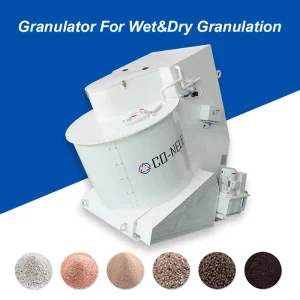
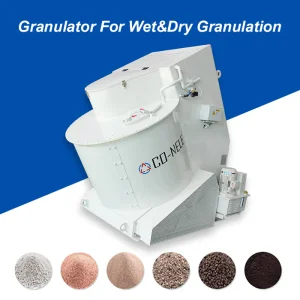
China Granulator Machine For Wet&Dry Granulation

China Granulator Machine For Wet&Dry Granulation Manufacturer, Machine

View Plant Specs
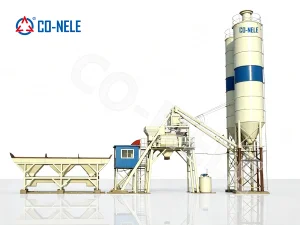
China 50m³/h Compact Concrete Batching Plant

China 50m³/h Compact Concrete Batching Plant Manufacturer, Machine

View Plant Specs
China HZN90 stationary ready concrete batching plants

China HZN90 stationary ready concrete batching plants Factory, Machine

View Plant Specs
China Magnetic Material Granulator

China Magnetic Material Granulator Factory, Machine

View Plant Specs
China MP2000 Planetary concrete mixer

China MP2000 Planetary concrete mixer Manufacturer, Machine

View Plant Specs
Knowledge Base

Frequently Asked Questions (Technical & Procurement FAQ)

In-depth technical answers for plant operations managers, procurement officers, and concrete technology engineers.
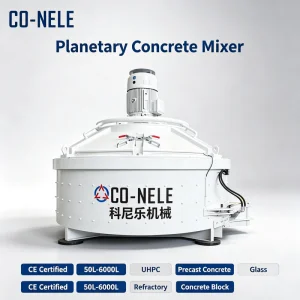
What primary mechanical differences separate a vertical shaft planetary cement mixer from a standard pan or drum mixer?
A standard gravity drum mixer relies on gravitational drop, which fails completely on zero-slump or dense concrete mixes. A traditional pan mixer uses fixed central arms where outer material moves faster than inner material, creating uneven wear and unmixed zones. In contrast, a vertical shaft planetary cement mixer utilizes forced counter-current motion: mixing blades revolve around their own axes while simultaneously orbiting around the pan's center. This ensures 100% swept coverage, equal shear distribution across all particles, and rapid breakdown of binder lumps within 60 to 90 seconds.
Why is a vertical shaft planetary mixer essential for Ultra-High Performance Concrete (UHPC) and GFRC?
UHPC recipes feature extremely high powder concentrations (micro-silica, quartz flour, fly ash) with water-binder ratios often below 0.18, along with steel fiber loading up to 2-3% by volume. Standard twin-shaft or pan mixers lack the torque and shear kinematics to break dry powder agglomerates, resulting in "balling" of steel fibers and trapped micro-air pockets. The planetary mixer’s high-shear star arms generate intensive micro-turbulences that fully coat every particle with liquid ad-mixtures, ensuring 3D uniform fiber dispersion without bending or damaging the steel fibers.
How do Chinese manufacturers address wear resistance and maintenance for highly abrasive materials?
Top Chinese manufacturers construct mixing pan liners and blades using high-chromium alloy irons (hardness ≥ 62 HRC) or tungsten carbide cladding tiles. The floor liners are engineered as modular, rhombic segment plates that can be individually replaced in high-wear zones without dismantling the entire pan floor. Under standard concrete batching conditions, high-chrome wear liners routinely achieve operational lifespans between 120,000 and 180,000 batching cycles before requiring replacement.
Can a laboratory-scale mixer (50L to 100L) accurately scale up to an industrial unit (1500L+)?
Yes. Leading Chinese manufacturers design laboratory mixers (such as the CDW100 or MP150 series) with exact geometric scaling, matching tip speed velocities, Froude numbers, and rotational radius proportions to their full-scale industrial counterparts (such as the MP2000 or CMPS models). Formula development, moisture thresholds, and mixing cycle times derived in the lab translate directly to full production lines with minimal trial adjustment.
What electrical, structural, and shipping requirements apply when importing mixing plants from China?
Chinese mixing equipment manufacturers custom-build drive systems to meet destination grid requirements: 220V/380V/415V/480V at 50Hz or 60Hz. Controls are integrated into CE or UL certified panels with Siemens PLCs and Schneider electrical switchgear. Structurally, compact batching plants and vertical mixers are designed to fit inside standard 40ft High Cube (40HC) shipping containers, featuring modular bolt-together frames for rapid field assembly without thermal cutting or field welding.