CO-NELEMixing & Granulation
Explore our precision-engineered mixing equipment, manufactured to exceed rigorous international standards for homogeneity, wear resistance, and cycle efficiency.
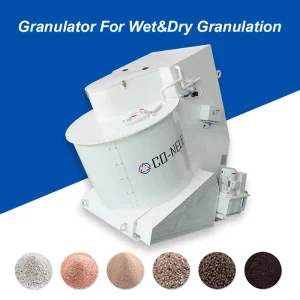
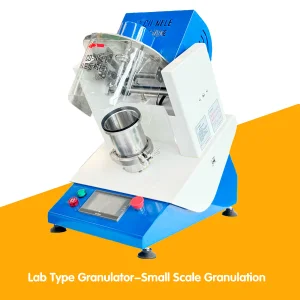
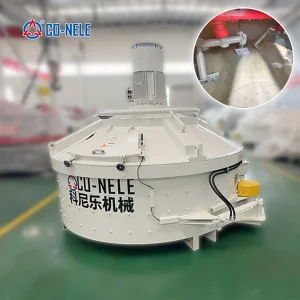
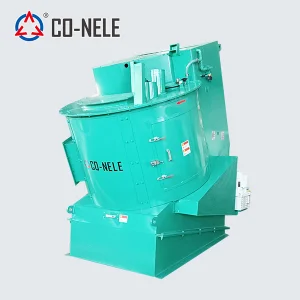
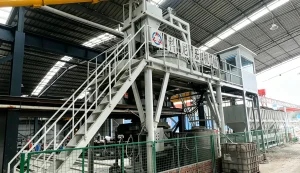
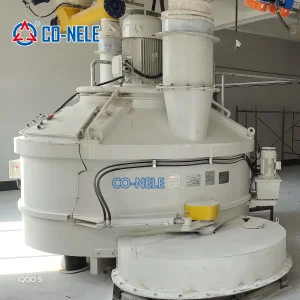
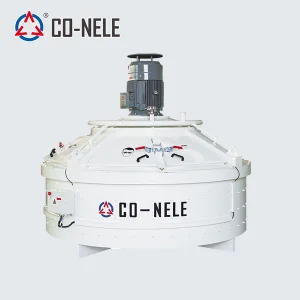
In the global construction engineering landscape, the JS1500 twin-shaft compulsory concrete mixer stands as the workhorse benchmark for medium-to-large scale ready-mix plants, precast element manufacturing, and civil infrastructure developments. Nominated by its standard volumetric capacity—delivering a dry feed capacity of 2400 liters, a compacted batch output of 1500 liters (1.5 cubic meters), and a nominal hourly production rate of 75 to 90 cubic meters when integrated into HZS90 batching towers—the JS1500 represents the optimal convergence of mechanical shear efficiency, operational reliability, and capital cost-effectiveness.
As global infrastructure projects demand increasingly strict concrete performance criteria—ranging from micro-crack control and low slump retention to high early strength—the technical demands placed upon compulsory mixing technology have escalated dramatically. Modern JS1500 units manufactured in specialized Chinese industrial hubs such as Qingdao have evolved beyond legacy designs. Incorporating high-precision helical gearboxes, synchronized twin-shaft counter-rotation, multi-stage hydraulic floating seals, and chromium alloy metallurgy, these machines deliver homogenous aggregate-cement-water slurry dispersion within cycle times under 60 seconds.
The fundamental superiority of the JS1500 compulsory twin-shaft arrangement over gravity tilting drums or single-shaft mixers lies in its forced kinetic shear profile. Two parallel horizontal shafts rotate in opposite directions at synchronized angular velocities (typically 24 to 26 RPM). The rigid mixing arms are arranged spirally at a 60-degree angle along the dual shafts, creating continuous radial and axial circulation zones inside the mixing trough.
The primary failure point in heavy-duty concrete mixers is slurry penetration into the main support bearings. Leading Chinese manufacturers utilize a proprietary 4-stage sealing system comprising floating ring seals, labyrinth mechanical barriers, high-pressure automated grease injection channels, and rubber oil seals. This system maintains positive internal pressure at the shaft boundaries, guaranteeing zero cement grout ingress during high-slump or liquid-admixture batches.
Power transmission in the JS1500 is driven by dual 37kW or a single 55kW/75kW heavy-duty electric motor paired with an enclosed planetary sync gearbox. The dual shafts are mechanically coupled via synchronized spur gears, ensuring flawless angular alignment even under severe unbalanced loads caused by large aggregate charges (up to 80mm particle size).
| Engineering Parameter | Standard JS1500 Technical Specification | High-Spec Precast / Heavy Heavy-Duty Variant |
|---|---|---|
| Discharge Capacity (Compacted) | 1500 Liters (1.5 m³) | 1500 Liters (1.5 m³) |
| Charging Capacity (Dry Material) | 2400 Liters | 2400 Liters |
| Productivity Rate | 75 m³/h (Standard Batch Cycle 72s) | 90 m³/h (Optimized Cycle 60s) |
| Max Aggregate Size (Pebble/Crushed) | 60 mm / 80 mm | 80 mm / 100 mm (Reinforced Arms) |
| Mixing Shaft Speed | 25.5 RPM | 24 - 30 RPM (VFD Control Optional) |
| Main Drive Motor Power | 2 x 37 kW (Dual Motor) or 55 kW | 2 x 45 kW or 75 kW Heavy-Duty Motor |
| Mixing Blade / Liner Material | High-Chromium Cast Iron (Cr15Ni4) | Ultra High-Chromium Alloy (Cr26Ni4 / Ni-Hard) |
| Discharge Gate Operation | Hydraulic Pump Station (3.7 kW) | Dual Hydraulic Cylinders with Multi-Position Sensors |
| Total Machine Weight | ~8,800 kg to 9,500 kg | ~10,200 kg (Reinforced Chassis) |
Over the past two decades, China’s industrial machinery manufacturing sector has transitioned from cost-competitive assembly to world-leading engineering precision. In regions like Qingdao, Shandong Province, advanced machinery builders like CO-NELE leverage tightly integrated supply chain clusters, automated gantry CNC machining centers, and robotic welding lines to produce JS1500 concrete mixers that match or exceed Western European performance benchmarks at a significantly lower Total Cost of Ownership (TCO).
The life cycle cost of a compulsory mixer is overwhelmingly determined by liner and blade wear rates. Chinese manufacturing centers excel in specialized casting metallurgy:
Torsional alignment between the dual shafts must be maintained within tolerances under 0.05 mm across the entire 3-meter shaft span. Chinese manufacturers utilize floor-type CNC boring machines to process the main mixer frame in a single clamping setup. This eliminates cumulative welding stress and mechanical misalignment, preventing premature gearbox tooth fatigue and shaft seal failure.
The JS1500 concrete mixer is rarely operated as a standalone unit; it serves as the core mixing nucleus for specialized batching configurations across distinct global construction sectors:
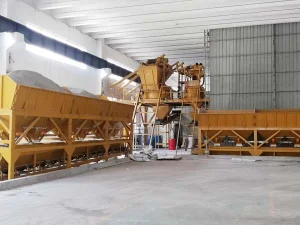
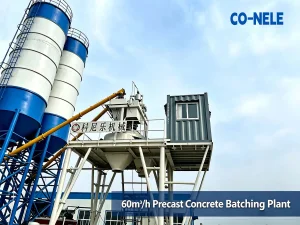
Integrated beneath aggregate batching bins (PLD2400) and elevated cement weighing scales. The JS1500 discharges directly into 8–12 m³ transit mixer trucks, executing rapid 60-second batch cycles for commercial ready-mix supply.
Configured with variable frequency drives (VFD) and moisture-sensing microwave probes. Perfect for producing zero-slump dry-cast concrete for drainage culverts, prestressed bridge girders, concrete railway sleepers, and utility poles.
Outfitted with heavy-duty mixing arms and extra-wide discharge doors to process coarse Roller-Compacted Concrete (RCC) containing aggregate sizes up to 80mm for hydroelectric dam cores and marine seawalls.
When international engineering procurement teams evaluate a China JS1500 concrete mixer manufacturer, evaluation criteria must extend beyond initial purchase price (CapEx) to incorporate long-term operational efficiency (OpEx), compliance, and spare part logistics.
Global job sites require strict conformity with regional standards. Trusted manufacturers supply JS1500 units pre-configured with:
A major procurement advantage of modern Chinese JS1500 designs is modular containerization. The main mixer body, motor frame, and skip hoist mechanism are dimensioned to fit inside standard 40-foot High Cube (40HQ) sea containers without requiring expensive Open-Top or Flat-Rack shipping methods. This reduces international freight expenditure by up to 40%.
The future of industrial batch mixing is driven by digital sensor integration, carbon reduction demands, and autonomous maintenance diagnostics. Premier equipment manufacturers are incorporating several smart technologies into new JS1500 builds:
In-trough microwave sensors measure water-cement ratios and moisture variations in aggregate charges in real-time at 100 readings per second. The PLC automatically adjusts water dosing valves during the active mixing phase, keeping slump variations within ±5mm across batches.
IoT vibration sensors mounted directly on the planetary sync reducer and main shaft bearings analyze high-frequency acoustic signatures. Maintenance algorithms alert plant managers to micro-pitting or seal wear weeks before mechanical failure occurs, preventing unscheduled plant downtime.
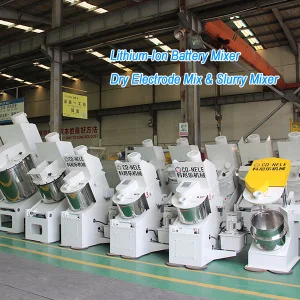
Explore our complete portfolio of planetary mixers, laboratory units, refractory mixers, and specialized battery material equipment.