CO-NELEMixing & Granulation
In modern industrial civil engineering, ready-mix concrete production, and precast element manufacturing, the pursuit of microscopic batch homogeneity and ultra-fast cycle times has rendered traditional single-shaft and conventional twin-shaft mixers insufficient for high-spec recipes. As infrastructure designs demand higher compressive strengths (e.g., C60–C120), lower water-cement ratios ($\le 0.24$), and the inclusion of micro-silica, nano-admixtures, and synthetic fibers, the mechanical mixing mechanism must evolve.
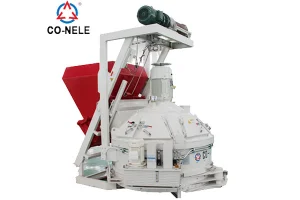
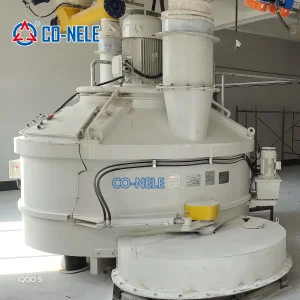
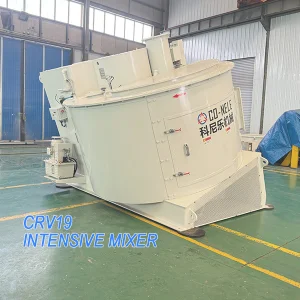
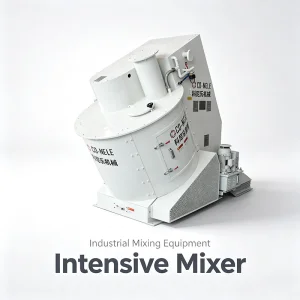
The Double Spiral Shaft Concrete Mixer represents a quantum leap in forced-action mixing technology. Engineered with dual counter-rotating horizontal shafts fitted with continuous or semi-continuous helical ribbon blades, this system transitions mixing from simple spatial movement to hyper-turbulent 3D fluid kinematics. Chinese OEM manufacturing hubs—leveraging advanced metallurgy, fully integrated supply chains, and decades of massive domestic infrastructure deployment—have emerged as the global epicenter for high-reliability, cost-effective double spiral shaft concrete mixing technology.
This technical whitepaper provides EPC contractors, concrete plant equipment procurement leads, and industrial plant managers with a comprehensive evaluation framework covering fluid dynamics, alloy metallurgy, factory operational advantages in China, total cost of ownership (TCO), and global procurement decision vectors.
The primary flaw of traditional paddle-type twin shaft mixers lies in the occurrence of "dead zones" between adjacent mixing arms and near the end-plates. Conventional paddles push materials sequentially in discrete segments, which requires longer mixing cycles (60 to 90 seconds) to homogenize stiff or stiff-dry concrete mixes.
Unlike segmented paddle arms, double spiral ribbons create a continuous axial and radial vortex. Material on the outer edge of the shaft is propelled continuously from left to right, while inner spiral blades propel material in the opposite direction. This establishes a high-shear overlapping figure-eight convection zone.
The continuous shear profile breaks up un-hydrated cement clusters and micro-silica agglomerates within 15 seconds of liquid addition. This mechanical efficiency maximizes water-cement contact area, yielding higher early age strength without increasing binder content.
Double spiral shaft concrete mixers built by top Chinese factories incorporate multi-layered mechanical face seals combined with high-pressure automated grease purging systems. This ensures zero cement slurry ingress into the main drive shaft roller bearings, drastically lowering maintenance downtime.
| Performance Parameter | Double Spiral Shaft Mixer | Standard Twin-Shaft Paddle Mixer | Single Shaft / Pan Mixer |
|---|---|---|---|
| Mixing Homogeneity (CV) | < 3.0% (Ultra-High) | 5.0% – 8.0% (Standard) | > 8.0% (Moderate) |
| Mixing Time (Dry-Cast / UHPC) | 25 – 45 seconds | 60 – 90 seconds | 120 – 180 seconds |
| Energy Consumption per m³ | 0.8 – 1.1 kWh/m³ | 1.3 – 1.6 kWh/m³ | 1.8 – 2.2 kWh/m³ |
| Aggregate Size Limit (Max) | Up to 120 mm | Up to 80 mm | Up to 40 mm |
| Liner & Blade Wear Distribution | Uniform (No localized hot-spots) | Segmented (High arm-tip wear) | High circumferential wear |
The global dominance of Chinese machinery OEMs in concrete batching equipment is rooted in structural industrial advantages that extend far beyond raw unit cost savings. Factories in major industrial centers such as Qingdao, Shandong, have integrated heavy precision machining, proprietary reducer gear manufacturing, and metallurgy under unified quality management systems (ISO9001 / CE standards).
Unlike assemblers who buy third-party transmissions, leading Chinese factories design and load-test synchronized planetary reducers in-house. These gearboxes are specifically rated for high-torque shock loads when starting under full-load condition with dense mixes like UHPC or heavy refractory castables.
Mixing aggressive aggregates (e.g., granite, basalt, crushed quartz, corundum) destroys low-grade steel liners within months. Chinese foundries utilize specialized chromium-nickel alloy formulations ($Cr26 / Ni-Hard$) with hardness ratings exceeding HB600 / HRC60, doubling operational longevity relative to standard manganese steel.
Chinese factories excel at tailoring twin and double-spiral mixing units to exact footprint constraints, voltage requirement profiles ($220V$ to $690V$, $50/60Hz$), custom discharge gate quantities (hydraulic/pneumatic dual gates), and high-pressure washing nozzle rings.
The concrete equipment landscape is experiencing radical technology shifts driven by sustainability mandates, automated production lines, and AI-assisted batching control. Double spiral shaft mixers sit at the apex of this technology convergence.
Modern mixers are moving beyond static mixing timers. Integrated microwave moisture sensors and shaft torque dynamic analyzers continuously measure batch workability (slump/flowability) inside the vessel. The system dynamically alters mixing speed via variable frequency drives (VFD) and auto-adjusts chemical admixture micro-dosing.
With global green building standards requiring low-carbon cements (calcined clays, alkali-activated slag, high fly-ash ratios), double spiral shaft mixers provide the high shear force necessary to activate slow-reacting supplementary cementitious materials (SCMs) without adding extra water.
Leading Chinese exporters equip export mixers with IoT telematics. Vibration sensors on the main gearbox and bearing housings monitor thermal expansion and micro-vibrations, pushing predictive maintenance alerts to plant supervisors' smartphones long before mechanical failure occurs.
The operational flexibility of Double Spiral Shaft Concrete Mixers makes them the preferred choice across diverse infrastructure and specialized manufacturing sectors.
Challenge: Mixing steel fibers ($\le 3\%$) and micro-silica without balling or fiber shearing.
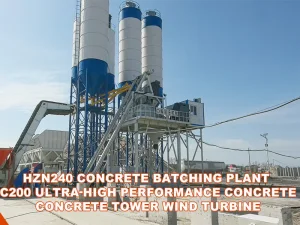
Solution: The continuous 3D overlapping spiral action distributes micro-fibers homogeneously within 40 seconds without tangling, ensuring uniform tensile strength across complex precast architectural panels and wind turbine tower sections.
Challenge: Handling zero-slump Roller-Compacted Concrete (RCC) containing heavy aggregate sizes ($>80\text{mm}$).
Solution: The high torque transfer of the continuous helical ribbon handles zero-slump mixes effortlessly, preventing aggregate segregation during rapid discharge into dump trucks.
Challenge: Achieving maximum cubic-meter output per hour with low power draw.
Solution: Replacing older paddle mixers with double spiral models increases batch output by up to 25% due to reduced mixing cycle times (35s vs 60s), directly expanding a ready-mix plant's daily delivery capacity.
Challenge: Ensuring strict color consistency and zero surface voiding (bug holes).
Solution: Homogeneous dispersion of pigment powders and complete de-aeration during the intensive spiral action guarantees uniform color batches and smooth surface finishes on concrete pipes, culverts, and structural columns.
Challenge: Mixing heavy, high-density abrasive raw materials under extreme temperature variations.
Solution: Customized heat-resistant steel body shells fitted with extra-thick bolt-on high-chrome ceramic/alloy tiles withstand severe abrasion and chemical reaction attack in furnace lining batch plants.
Challenge: Dosing low-percentage additives (e.g., cellulose ethers, polymer powders $\le 0.1\%$).
Solution: The rapid multi-directional shear zone ensures sub-gram dispersion of dry additives throughout bulk sand/cement mixes without thermal degradation.
When international procurement teams evaluate Chinese double spiral shaft concrete mixer factories, evaluating the capital expenditure (CAPEX) alone is insufficient. A holistic Total Cost of Ownership (TCO) evaluation framework must be applied across a 10-year operational horizon.
| Evaluation Parameter | European / US Tier-1 OEMs | Tier-1 Chinese Factory (e.g., CO-NELE) | Low-Cost Unbranded Vendors |
|---|---|---|---|
| Initial Capital Expenditure (CAPEX) | 100% (Baseline Benchmark) | 40% – 55% of Baseline | 20% – 30% of Baseline |
| Gearbox Reliability & Service Life | 10+ Years (High) | 8 – 10+ Years (In-House Tested) | 1 – 3 Years (Frequent Failure) |
| Wear Part Replacement Cost | Very High (Proprietary markup) | Low to Moderate (Standardized Alloy) | Low Initial / High Frequency |
| Delivery Lead Time | 16 – 24 Weeks | 4 – 8 Weeks | 4 – 6 Weeks |
| CE & ISO Compliance Support | Full Standard | Full Certified Documentation | Non-compliant / Fake Certificates |
To mitigate international sourcing risks, purchasing directors should insist on four verification milestones during factory audits:
Technical insights for equipment engineers, batch plant operators, and sourcing managers.