China Concrete Mixer Factory & Machine Infrastructure

Next-Generation Industrial Mixing Equipment, Planetary Counter-Current Kinematics, and Turnkey Concrete Batching Engineering

Featured Industrial Mixing Systems & Machinery

Explore our specialized manufacturing portfolio, featuring high-shear intensive granulators, laboratory scale units, planetary counter-current concrete mixers, and mobile batching machinery engineered in Qingdao, China.
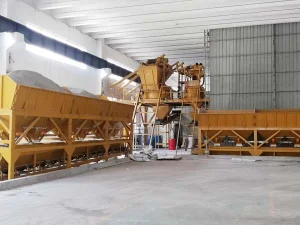
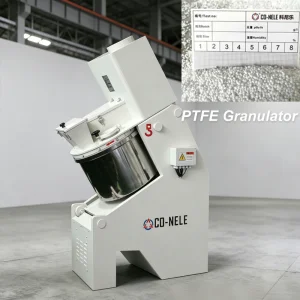
China Intensive Mixer for PTFE Granulator Manufacturer, Machine
View Equipment Specs
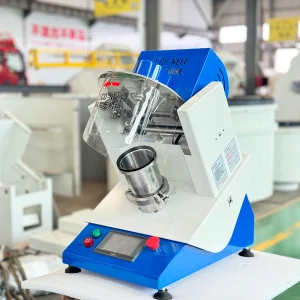
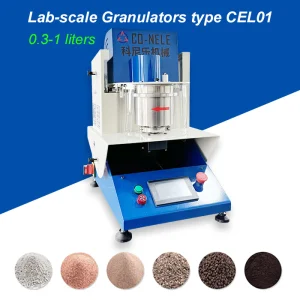
China Lab-scale Granulators Type CEL01 Factory, Machine
View Equipment Specs
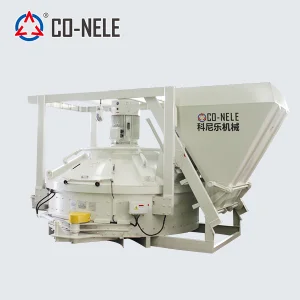
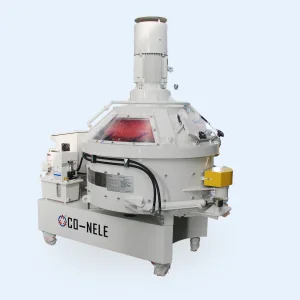
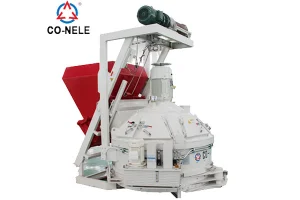
China CMP Planetary Concrete Mixer With Skip Factory, Machine
View Equipment Specs
China Planetary mixer for concrete block bricks in Russia Manufacturer, Machine
View Equipment Specs
China Alumina Granulator Manufacturer, Machine
View Equipment Specs
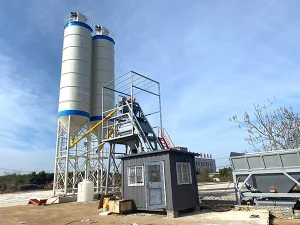
China 25m³/h Small Portable Concrete Batching Plant Manufacturer, Machine
View Equipment Specs
China CR04 Intensive Laboratory Mixer Manufacturer, Machine
View Equipment Specs
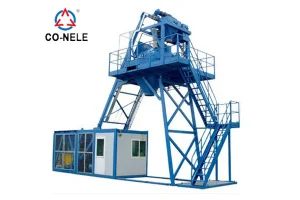
China 30m3/h Mobile concrete batching plant MBP08 Factory, Machine
View Equipment Specs
1. Executive Summary & Global Industrial Landscape

The global industrial mixing sector is undergoing a profound paradigm shift driven by stringent quality standards for high-performance concrete (HPC), ultra-high-performance concrete (UHPC), dry-mix mortars, and specialized chemical/powder metallurgy formulations. China’s emergence as a global engineering epicenter for concrete mixing machinery has fundamentally redefined cost-to-performance benchmarks worldwide. Within this framework, modern industrial mixers are no longer treated as simple mechanical agitators; they are highly specialized thermal-mechanical fluid dynamics reactors designed to achieve micro-homogeneity at microscopic scales.

Across North America, Europe, the Middle East, and Asia-Pacific, infrastructure demands require concrete mixtures with low water-binder ratios, high mineral admixture content (such as silica fume, fly ash, and ground granulated blast-furnace slag), and fiber reinforcement (steel or synthetic). Achieving standard distribution of these micro-components requires advanced forced-action kinematics. Chinese OEMs like Qingdao CO-NELE Machinery Co., Ltd. have bridged the gap between expensive European machinery and low-tier regional suppliers by engineering custom planetary reducers, high-chrome wear alloys, and intelligent automated batching systems.

80+
Patents Granted
10,000+
Global Installations
< 5%
Mix Variance Rate (CV)
80+
Export Nations

The global market demand is heavily influenced by three macroeconomic vectors: rapid urban infrastructure growth in developing nations, high-tier architectural precast adoption in mature markets, and the universal shift toward green concrete decarbonization. These factors necessitate mixers capable of maintaining process stability across varying particle size distributions (PSD) without sacrificing throughput or incurring excessive mechanical wear.

2. Mixing Kinematics, Mechanics & Technical Roadmap

To understand the competitive edge of modern concrete machinery produced in China, one must analyze the mathematical and mechanical principles governing forced mixing mechanics. Industrial concrete mixers are categorized primarily into planetary counter-current mixers, twin-shaft compulsory mixers, and specialized intensive mixer-granulators.

Planetary Counter-Current Kinematics

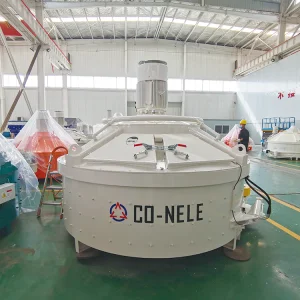
Planetary mixers operate on a dual-rotation vector principle: the mixing star arms rotate around a central vertical axis while simultaneously spinning on their own designated axes. This overlapping trajectory ensures that 100% of the mixing pan floor is swept within one full kinematic revolution, preventing segregation of fine aggregates and eliminating dead zones.

  • Zero dead zones across the entire mixing disc
  • Optimized shear rates for binder dispersion
  • Coefficient of variation (CV) strictly under 5%
  • Ideal for dry-cast blocks, UHPC, and refractories
Twin-Shaft Compulsory Dynamics

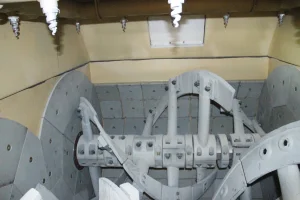
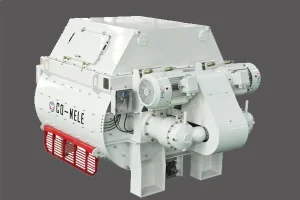
Twin-shaft mixers leverage counter-rotating horizontal shafts equipped with staggered paddle blades. The interaction between the opposing blades creates a high-density turbulent mixing zone in the center of the vessel. The material is continuously lifted, sheared, and tossed along a 3D spiral path, maximizing kinetic energy transfer.

  • High throughput capacity up to 6 m³ per single batch
  • Rapid batch mixing cycle of 30 to 45 seconds
  • High mechanical efficiency for large ready-mix plants
  • Dual hydraulic discharge gate configuration
Intensive Inclined Granulation

Intensive mixers utilize an inclined rotating pan combined with an eccentric high-speed rotor tool. The pan conveys material to the active rotor zone, where tip speeds up to 30 m/s disintegrate agglomerates, homogenize ultra-fine powders, and induce micro-granulation without requiring excessive liquid binders.

  • 90%+ target granule sphericity achieved
  • Processes challenging materials like PTFE, alumina & zirconia
  • Homogeneous dispersion of micro-additives
  • Dust-free wet/dry processing environment
Technical Comparison: Mixing Architecture Benchmarks
Mixing Architecture Kinematic Type Target Materials Typical Cycle Time Wear Rating
Planetary Counter-Current (CMP Series) Vertical Dual-Axis Planetary Orbit UHPC, Precast Concrete, Block Bricks, Refractories 60 - 90 Seconds High Chrome (90k - 150k Batches)
Twin Shaft Compulsory (CHS Series) Horizontal Dual Spiral Intersection Commercial Ready-Mix, Mass Foundation Concrete 30 - 45 Seconds Ni-Hard / High Chrome (60k Batches)
Intensive Mixer Granulator (CR/CEL) Inclined Pan + High-Speed Rotor Shear Technical Ceramics, PTFE, Alumina, Metallurgy 120 - 180 Seconds Tungsten Carbide / Ceramic Coating
Double Spiral Mixer (CDS Series) Horizontal Continuous Ribbon/Spiral Dry Mortar, Tile Adhesives, Plasters 90 - 120 Seconds Abrasion Resistant Alloy Steel
3. Emerging Trends, Decarbonization & Smart Plant Integration

The industrial mixing landscape is shifting rapidly due to environmental policies and digital transformation. Modern industrial concrete equipment must comply with strict sustainability frameworks while delivering unprecedented material control.

Decarbonization & Eco-Concrete Mixing

As the construction sector targets net-zero carbon emissions, clinker substitution strategies have become mandatory. Modern mixers must process alternative binders such as calcined clay, geopolymers, and heavy proportions of industrial byproducts. These supplementary cementitious materials (SCMs) exhibit different rheological behavior, demanding precise dynamic shear control to activate hydraulic properties without thermal degradation or excessive water addition.

Automated IoT Dosing & Moisture Sensing

Quality control in modern batching plants relies on real-time feedback loops. Advanced microwave moisture probes installed on mixing pan floors continuously measure aggregate moisture levels at millisecond intervals. Automated PLC systems instantly adjust water dosing dynamically mid-cycle, guaranteeing consistent slump and compressive strength across every batch.

Advanced Wear Tribology & Metallurgy

Equipment durability dictates operational profitability. Leading Chinese concrete machinery plants utilize proprietary alloy formulations, combining high-chromium iron alloys (exceeding 60 HRC hardness) with specialized tungsten carbide overlay welding. This significantly reduces downtime associated with liner replacement in highly abrasive environments like silica powder or ceramic slurry processing.

Ultra-High-Performance Concrete (UHPC) Mechanics

UHPC formulations require high motor torque and robust gear train engineering. With water-cement ratios dropping below 0.20 and high steel fiber loading (up to 2-3% by volume), specialized planetary mixers must impart high energy inputs to break down micro-agglomerates without bending mixing arms or clumping fibers into balls.

4. Localized Applications & Industrial Use Cases

Concrete mixing technology is inherently context-dependent. Equipment specified for precast concrete plants in Northern Europe requires vastly different engineering controls compared to mobile batching setups operating in tropical or arid environments.

Precast & Architectural Elements

For precast structural beams, hollow-core slabs, and architectural concrete facades, color consistency and surface finish are paramount. Planetary counter-current mixers disperse iron oxide pigments uniformly within seconds, eliminating color streaking and ensuring high early-age compressive strength necessary for rapid mold stripping.

Refractory Material Production

Refractory bricks and monolithic castables used in steelmaking furnaces require low moisture content and precise aggregate grading. Chinese intensive mixers handle high-density corundum, silicon carbide, and graphite batches with low water additions, ensuring maximum bulk density and minimal porosity upon firing.

Civil Infrastructure & Mobile Works

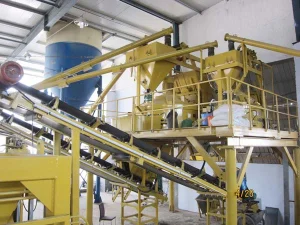
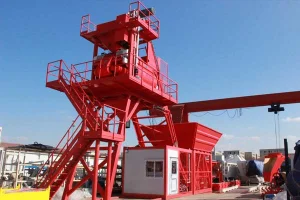
Remote road repair, bridge deck construction, and tunnel lining demand fast setup times. Mobile concrete batching plants (such as the MBP series) integrate aggregate batching hoppers, twin-shaft or planetary mixers, water tanks, and additive dispensers onto a single towable trailer frame for rapid site relocation.

5. Quality Assurance, Engineering Benchmarks & Standards Compliance

Evaluating an OEM machine supplier requires evaluating manufacturing processes, metallurgical integrity, quality management standards, and after-sales support networks. A trustworthy machinery builder must adhere to rigid industrial validation protocols.

  • In-House Gearbox Manufacturing: Unlike standard assemblers who purchase off-the-shelf commercial gearboxes, dedicated mixing equipment manufacturers design and machine custom planetary gearboxes tailored to handle extreme torsional shock loads.
  • Dynamic Balance & Load Testing: Every drive system undergoes rigorous thermal imaging, vibration analysis, and load testing prior to factory acceptance testing (FAT) to verify gear mesh accuracy and oil seal integrity.
  • Standardized Interchangeable Wear Parts: All wear plates, scrapers, and mixing blades utilize bolt-on configurations with globally standard bolt patterns, allowing field replacement without torch cutting or specialized welding.
  • International Certification: Full compliance with ISO9001 quality management systems, CE safety directives, and optional ATEX explosion-proof electrical configurations for explosive chemical or powder handling applications.
Complete Machinery Range & Mixing Systems

Browse our additional specialized concrete mixing systems, heavy-duty double spiral units, planetary block machinery, and containerized mobile batch plants engineered for global export.
China Planetary concrete mixers For Blocks Factory, Machine
View Equipment Specs
China MP100 Planetary concrete mixer Factory, Machine
View Equipment Specs
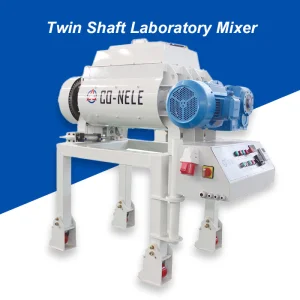
China Laboratory twin shaft concrete mixer Factory, Machine
View Equipment Specs
China CDS1000 double spiral concrete mixer Manufacturer, Factory
View Equipment Specs
China Double spiral shaft concrete mixer Factory, Machine
View Equipment Specs
China 60 m³ Mobile concrete mixing plant MBP15 Manufacturer, Machine
View Equipment Specs
China Misturador de Concreto Planetário CMP1000 Manufacturer, Factory
View Equipment Specs
China MP500 Planetary concrete mixer Manufacturer, Factory
View Equipment Specs
6. Frequently Asked Questions & Technical Knowledge Base
When should an engineer select a planetary counter-current mixer instead of a twin-shaft mixer?
Select a vertical-shaft planetary counter-current mixer when your application demands micro-homogeneity, low water-cement ratios, fiber dispersion, or color pigment consistency (e.g., UHPC, precast elements, paving blocks, and refractory castables). Planetary mixers eliminate dead zones through dual-rotation kinematics. Choose a twin-shaft mixer for high-volume commercial ready-mix plants where batch sizes exceed 2.0 m³ and speed (30-45 second mix cycles) takes precedence over specialized micro-shear requirements.
What expected service lifespan can be anticipated from high-chrome wear liners and mixing blades?
Under standard operating conditions with regular aggregate size (e.g., standard C30/C40 concrete), premium high-chromium alloy liners (60+ HRC) yield a operational life between 90,000 to 150,000 batches. When processing highly abrasive materials such as quartz-rich refractories, sintered alumina, or dense UHPC, operational lifespan averages 40,000 to 60,000 batches. All liners feature standardized bolt-on geometry for fast field replacements.
Can material trials and particle size distribution tests be performed prior to equipment purchase?
Yes. Factory R&D testing facilities operate pilot-scale intensive laboratory mixers and granulators (such as the CR04 and CEL01 series) with batch volumes ranging from 5 to 75 liters. Customers can send raw material samples (powders, aggregates, or binders) for laboratory trial runs. Process engineers deliver comprehensive analysis reports detailing liquid binder requirements, particle size distribution curves, bulk density metrics, and exact scale-up parameters.
What electrical voltages, industrial certifications, and documentation are provided for global export shipments?
All machinery is custom-built to comply with destination site power grids (e.g., 220V/380V/415V/440V/480V at 50Hz or 60Hz). Units ship with complete English technical manuals, CE certification documentation, electrical wiring schematics, foundation civil engineering drawings, and recommended spare-parts lists. Control panels can be equipped with Siemens PLC hardware with localized multi-language touch-screen interfaces.
How is concrete batching plant volumetric capacity sized accurately for commercial projects?
Plant capacity sizing requires accounting for transit logistics and site discharge delays. Theoretical output (e.g., 60 m³/h for an HZS60 plant) reflects continuous batch cycles under ideal charging conditions. Practical output typically ranges between 65% to 80% of theoretical rating due to truck positioning, aggregate moisture adjustments, and ad-hoc recipe modifications. Engineers evaluate truck fleet sizing, aggregate hopper charging capacity, and cement silo reserves to match continuous site output demand.