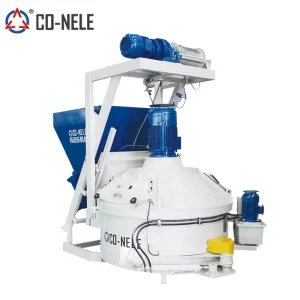

CO-NELEMixing & Granulation
Engineered specifically for unshaped refractory castables, high-alumina bricks, and thixotropic zero-cement recipes requiring micro-homogeneity below 3% variance.
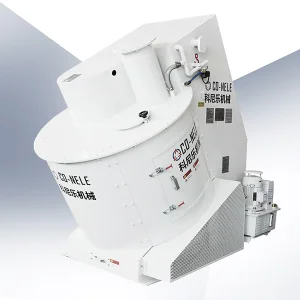
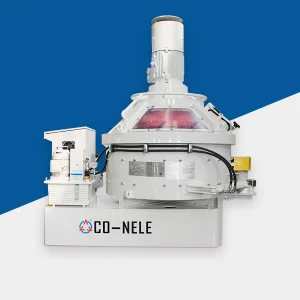
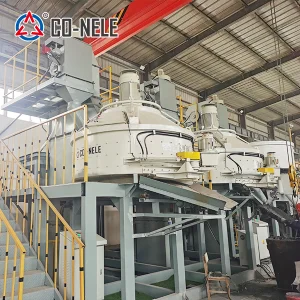
The Czech Republic stands as one of Central Europe's most fortified industrial hubs, characterized by a deep-rooted heritage in metallurgy, heavy mechanical engineering, automotive glass manufacturing, and advanced technical ceramics. Key industrial zones—including the Moravian-Silesian Region (anchored by Ostrava and Třinec), South Moravia (Brno), and Central Bohemia—house major blast furnaces, steel casting plants, non-ferrous foundries, and glass blowing facilities that require high-performance refractory materials.
Facilities such as primary steel mills, ladle furnace operators, and continuous casting plants in Třinec demand extreme thermal stability, mechanical resistance, and chemical inertness from their refractory linings. Achieving these properties relies on absolute batch homogeneity during the wet and dry mixing stages of refractory castables, ramming mixes, and shaped brick formulations.
Information Gain Insight: Standard horizontal twin-shaft or gravity pan mixers often fail when mixing ultra-low cement castables (ULCC) and metallic fiber-reinforced refractories due to segregation and dead zone accumulation. Counter-current planetary mixing kinematics eliminate density gradient variations within 60 to 90 seconds of processing.
As Czech manufacturers accelerate their transition toward European Green Deal compliance, decarbonized electric arc furnace (EAF) steelmaking, and energy-efficient glass melting kilns, the technical requirements for refractory linings have intensified. Industrial buyers in Prague, Ostrava, and Pilsen now require mixing machinery that delivers micro-dispersion of micro-silica, synthetic corundum, zircon flour, and organic binder systems without degrading particle size distribution or overheating sensitive thixotropic mixtures.
Why traditional mixing methods underperform in advanced refractory preparation, and how planetary action solves micro-segregation.
The mixing blades rotate on their own axis while simultaneously revolving around the central axis of the mixing pan. This complex counter-current trajectory covers 100% of the pan floor within seconds, leaving zero unmixed material along walls or corners.
When mixing stainless steel fibers, polypropylene anti-spalling fibers, or ultra-fine fumed silica, high shearing force is essential. Planetary kinetics prevent fiber balling and ensure uniform 3D dispersion across the entire batch matrix.
Refractory aggregates like silicon carbide (SiC), fused alumina, and calcined bauxite are highly abrasive. Our mixers feature bolt-on tiles made from High-Chrome Alloy (63-65 HRC), Hardox 500, or Wolfram Tungsten Carbide overlay.
| Model Series | Charging Volume (L) | Discharging Capacity (L) | Mixing Power (kW) | Discharge Gate Type | Primary Application Target |
|---|---|---|---|---|---|
| CMP250 Refractory Spec | 375 L | 250 L | 7.5 - 11 kW | Pneumatic / Hydraulic | High-Value Dense Castables, Precast Shapes |
| CMP500 Refractory Spec | 750 L | 500 L | 18.5 - 22 kW | Hydraulic Multi-Position | EAF Ladle Mixes, Blast Furnace Trough Castables |
| CMP750 Refractory Spec | 1125 L | 750 L | 30 - 37 kW | Hydraulic High-Pressure | Unshaped Refractory Plant Continuous Lines |
| CMP1000 Refractory Spec | 1500 L | 1000 L | 45 - 55 kW | Dual-Door Hydraulic | Large Scale Refractory Brick & Block Batch Plants |
| CMP1500 Refractory Spec | 2250 L | 1500 L | 75 - 90 kW | Heavy Hydraulic Cylinder | Primary Metallurgical Complex Raw Material Mixing |
Our Qingdao manufacturing complexes house state-of-the-art 5-axis CNC machining centers, automated robotic welding systems, laser cutting gantries, and customized gearbox load-test benches. Every planetary gear reducer is designed, cast, machined, and dynamically load-tested in-house to guarantee zero oil leaks and an operational lifespan exceeding 15 years under high shock-load refractory mixing conditions.
For European buyers in the Czech Republic, equipment purchasing decisions hinge on structural reliability, technological precision, and overall total cost of ownership (TCO). Procurement teams no longer accept high-markup European-assembled mixers that utilize outsourced components. CO-NELE’s vertically integrated production model delivers European-grade performance at a competitive direct-from-factory price point.
Our complete control over the supply chain—from raw steel forging and precision gear hobbing to automated assembly and digital factory acceptance testing (FAT)—ensures complete quality management. Every batch mixer destined for Central Europe undergoes 48 hours of continuous no-load dynamic testing, thermal vibration diagnostic checks, and precise alignment testing prior to export packaging.
By leveraging direct rail shipping corridors (such as the Yiwu/Zhengzhou to Prague railway line) as well as maritime routes via Hamburg or Koper, we guarantee fast, dependable transit times for complete machinery, spare wear plates, and replacement drive assemblies directly to your plant site in the Czech Republic.
From dense castables to lightweight insulating mixes, explore how our mixers integrate into complete production lines.
Unshaped refractories demand exact water addition ratios (sometimes down to 4.5% total liquid content). Our automated microwave moisture sensors and high-pressure liquid injection manifolds ensure precise moisture distribution across the mix within 45 seconds.
For high-alumina, magnesia-spinel, and carbon-bonded refractory brick manufacturing, batch uniformity directly determines green strength and firing shrinkage. Planetary counter-current mixing eliminates particle binder agglomeration prior to pressing.
Handling delicate porous aggregates like expanded clay, vermiculite, or bubble alumina requires gentle yet compulsory mixing forces to avoid crushing fragile cellular structures. Our planetary speed controls accommodate low-shear mixing regimes effortlessly.
Operating industrial equipment within the European Union requires strict compliance with safety directives, environmental standards, and grid electrical specifications. All CO-NELE machinery destined for Czech industrial users is custom-engineered to comply with the European Machinery Directive 2006/42/EC, Low Voltage Directive 2014/35/EU, and Electromagnetic Compatibility Directive 2014/30/EU, complete with official CE marking and Declaration of Conformity.
Our electrical panels feature premium European standard components—including Siemens S7-1500 PLC control architectures, Schneider Electric switchgear, Eaton safety interlocks, and ABB frequency converters (VFDs). Operating on the standard Czech industrial power grid (400V, 3-phase, 50Hz), our systems interface seamlessly with plant SCADA systems via Profinet or Ethernet/IP protocols.
Telemetry & Remote Diagnostics: Integrated IoT gateway modules enable our engineering team in Qingdao to perform real-time diagnostic checks, firmware updates, and operational monitoring alongside local Czech site technicians, minimizing unexpected downtime.
From intensive granulators to mobile concrete batching plants, explore our full manufacturing range engineered for international markets.
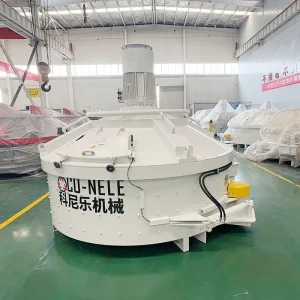
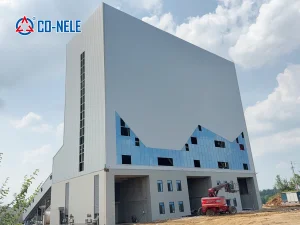
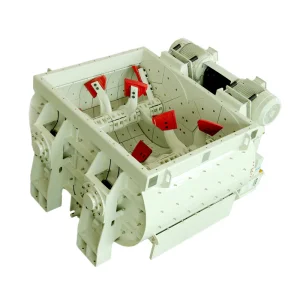
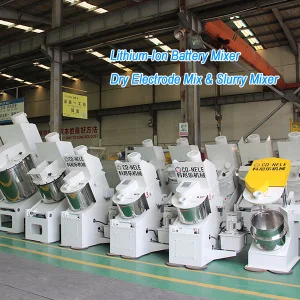
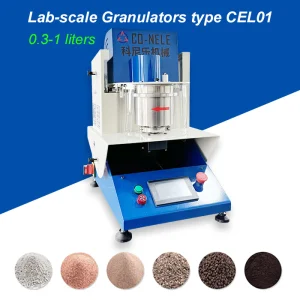
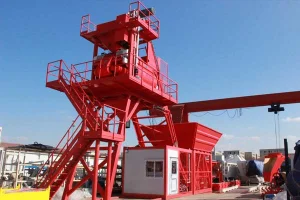
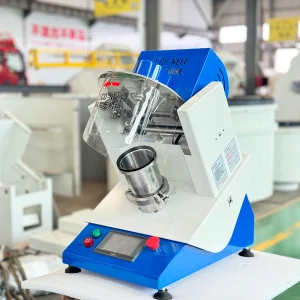
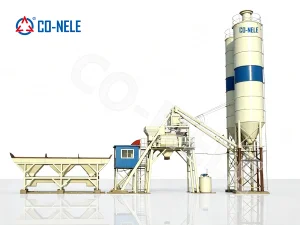
Meeting the rigorous technical audit criteria of European EPC contractors, metallurgical groups, and commercial buyers.
We support full Factory Acceptance Testing (FAT) at our Qingdao testing facility (or via high-definition live video link) and Site Acceptance Testing (SAT) on location in the Czech Republic, including weld non-destructive testing (NDT) and motor vibration analysis.
Our heavy-duty planetary gearboxes deliver an optimized torque transmission efficiency exceeding 94%. Compared to conventional mixing systems, energy consumption per ton of mixed refractory material is reduced by up to 30%.
Our engineering team provides comprehensive 3D STEP/IGES CAD models and BIM objects to support seamless integration into your existing refractory processing line or greenfield factory layout.
Clear, authoritative responses from our Senior Refractory Process Engineering Team.
Horizontal twin-shaft mixers rely heavily on gravitational shear and axial pushing, which causes heavy abrasive segregation when handling dry powders mixed with micro-silica, steel fibers, or high-density corundum aggregates. Counter-current planetary mixers force material upward and outward in overlapping paths, creating high mechanical shear without dead zones and achieving complete homogeneity in under 90 seconds.
For extreme abrasion applications, we equip the mixing pan with replaceable Hardox 500 or High-Chrome Alloy (63-65 HRC) liner tiles. Mixing blades can be upgraded with sintered tungsten carbide brazed edges or solid ceramic composite surfaces, extending component service life beyond 100,000 continuous mixing cycles.
Yes. All machines exported to the Czech Republic are custom built with 400V, 3-Phase, 50Hz electrical architectures utilizing Siemens or Schneider Electric components. Control cabinets are rated to IP55 or IP65, certified to European CE standards, and pre-wired to accommodate local safety interlocks and emergency stop networks.
Manufacturing standard planetary refractory mixers typically requires 25 to 35 business days. Cargo can be dispatched via sea freight to European ports (Hamburg or Koper) with direct truck transport to your facility, or shipped via direct Europe-China freight train networks reaching Prague terminal yards within 18-22 days.
Absolutely. Our Qingdao Process Testing Center maintains lab-scale intensive mixers and granulators (5L to 75L capacity). You can ship 20-50 kg of your raw material mix to our facility, and our engineers will execute trial runs, measure rheological performance, and issue a detailed test report with recommended production-scale specifications.
Every CO-NELE mixer design maintains standardized part numbering for interchangeable components produced since 2004. Critical wear parts, seals, and drive items are maintained in stock for rapid air-express shipment, ensuring minimal downtime for your processing operations in Central Europe.