
CO-NELEMixing & Granulation
Engineered forced-action equipment designed for high homogeneity, extreme abrasiveness, and continuous duty cycles.
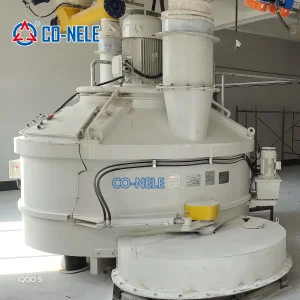
China Glass Industry Batch mixer Factory, Machine
Explore Specifications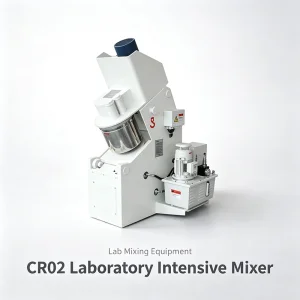
China CR02 laboratory intensive mixer for mixing and granulating Factory, Machine
Explore Specifications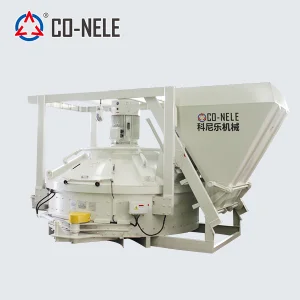
China CMP Planetary Concrete Mixer With Skip Factory, Machine
Explore Specifications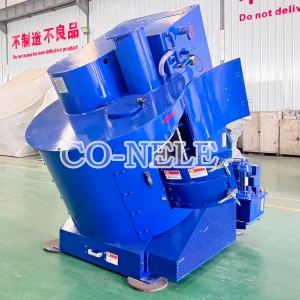
China Intensive Mixer Granulator Manufacturer, Machine
Explore Specifications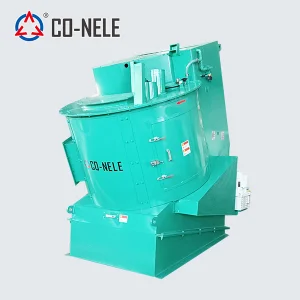
China Intensive Mixer Factory, Machine
Explore Specifications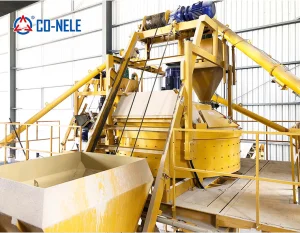
China Concrete Batching Plant for Road Bricks Manufacturer, Factory
Explore Specifications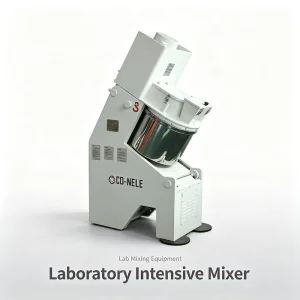
China CR04 Intensive Laboratory Mixer Manufacturer, Machine
Explore Specifications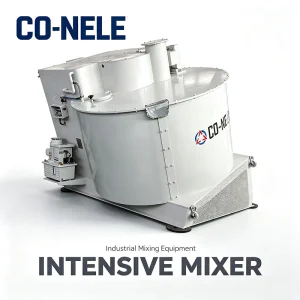
China Inclined Intensive mixer Manufacturer, Factory
Explore SpecificationsHow the twin shaft compulsory concrete mixer emerged as the global standard for high-speed infrastructure and heavy civil construction projects.
Modern mega-projects—ranging from high-speed railway networks (HSR) and hydro-electric mega-dams to port expansions—require ready-mix concrete with structural integrity exceeding C60 to C100 grade standards. Traditional gravity-drop drum mixers fail to achieve the rapid dispersion of cementitious materials, silica fume, and chemical admixtures within standard cycle times.
Twin shaft mixers utilize synchronized counter-rotating shafts equipped with overlapping mixing arms. This mechanism imparts intense turbulence and intense shearing actions to the batch, reducing mixing cycle times to 30–45 seconds per batch while achieving a Coefficient of Variation (CV) of less than 5% across the mixture volume.
Over the past two decades, China has evolved into the world's engineering epicenter for mixing machinery. Manufacturers like Qingdao CO-NELE Machinery Co., Ltd. combine heavy structural steel fabrication with precision planetary reducer technology, delivering field-proven equipment to over 80 countries with exceptional cost-to-performance metrics.
“The transition from single-shaft tilt-drum systems to compulsory twin shaft technology represents the single largest technical leap in concrete production efficiency over the past half-century. China's industrial supply chain has lowered the barrier to entry for this high-tier technology globally.”
Deconstructing fluid turbulence, multi-seal protection, and wear metallurgy in modern twin shaft concrete mixers.
Unlike single-shaft mixers that move material along a continuous helical path, twin shaft concrete mixers deploy counter-rotating dual shafts running at 20 to 30 RPM. The mixing blades are arranged at specific geometric pitch angles (typically 45° to 60°) to generate both axial transport and radial acceleration. This forces material into a centralized dynamic vortex zone where kinetic energy transfer is optimized, instantly shearing aggregate clusters and dry cement pockets.
| Kinematic Parameter | Twin Shaft Compulsory Mixer | Vertical Shaft Planetary Mixer | Traditional Reversing Drum Mixer |
|---|---|---|---|
| Primary Mixing Mechanism | Counter-rotating overlapping shear vortex | Counter-current planetary star motion | Gravity-fall free drop mechanism |
| Batch Cycle Time (Standard Mix) | 30 – 45 seconds | 60 – 90 seconds | 120 – 180 seconds |
| Suitable Slump Range | 0 – 220 mm (Dry-hard to High-slump) | 0 – 80 mm (Ultra-dry cast & precast) | > 80 mm (High slump ready-mix only) |
| Max Aggregate Size | 80 mm – 150 mm (Model dependent) | 40 mm – 60 mm | 60 mm – 80 mm |
| Energy Consumption per m³ | Low (0.8 - 1.2 kWh/m³) | Medium (1.4 - 1.8 kWh/m³) | High (2.0+ kWh/m³) |
The primary point of failure in historical horizontal mixers was slurry ingress into shaft bearings. Advanced Chinese manufacturers utilize quadruple-seal architecture: floating face seals combined with automatic grease lubrication pumps that maintain positive differential hydraulic pressure, preventing micro-fine silica slurry from entering bearing housings.
Mixer liners and paddles undergo severe abrasive wear from crushed granite, basalt, and silica sand. CO-NELE twin shaft mixers integrate high-chromium alloy cast irons (Ni-Hard and Cr26 series) with surface hardness exceeding 62-65 HRC, ensuring operational lifespans beyond 150,000 batch discharge cycles before scheduled overhaul.
Why international EPC contractors choose Chinese mixing equipment partners for global project delivery.
China's industrial machinery clusters in Qingdao and Shandong province provide unparalleled vertical integration. From raw steel plate cutting via multi-axis fiber lasers to CNC heavy gear machining, planetary gear reducer assembly, and dynamic load testing, every process takes place within dedicated manufacturing facilities.
Key electrical and hydraulic sub-systems are standardized around global brands (Schneider Electric, Siemens PLC, SKF Bearings, Parker Hydraulics). This hybrid engineering model ensures robust physical structures coupled with internationally available electronic spares.
Capital expenditure (CAPEX) for a Chinese engineered 6m³ twin shaft mixer is typically 40% to 60% lower than equivalent European-manufactured units, without compromising mechanical torque ratings, shaft isolation integrity, or structural steel wall thickness.
Exerting high performance across diverse climate zones, aggregate profiles, and operational conditions.
In high-density urban developments, twin shaft mixers (such as CHS2000 to CHS6000 models) act as the heart of central batching stations, supplying 120 m³/h to 240 m³/h of high-slump pumpable concrete with zero segregation during transit.
Zero-slump dry concrete utilized in railway sleepers and precast tunnel lining rings requires high shear energy to activate cement hydration. Twin shaft forced action guarantees zero unmixed lime pockets within tight cycle constraints.
Roller Compacted Concrete (RCC) for dam construction involves large stone aggregates up to 80-120 mm. Specially reinforced twin shaft arms absorb shock loads while distributing dry binders evenly throughout massive aggregate volumes.
Integrating twin shaft mixers into automated block-making plants enables rapid discharge via pneumatic double-door gates, feeding block machines with consistent moisture levels batch after batch.
How IoT integration, AI moisture monitoring, and green concrete initiatives are shaping the next generation of Chinese mixing machinery.
Integration of real-time vibration sensors, shaft seal pressure transmitters, and oil temperature monitors connected directly to cloud dashboards for proactive wear alert scheduling.
In-pan microwave moisture sensors sampling sand and aggregate humidity 100 times per second, dynamically adjusting water-dosing pumps via PLC during the first 10 seconds of mixing.
Specialized mixing blade geometries designed to process carbon-captured concrete formulations, geopolymer binders, and 100% recycled concrete aggregates (RCA) without blade jamming or premature liner failure.
Combining planetary intensive rotor technology with horizontal twin shafts to produce Ultra-High-Performance Concrete (UHPC) at commercial volumes exceeding 4.5 m³ per batch.
De-risking international machinery procurement through certified manufacturing and local service frameworks.
CO-NELE products adhere strictly to CE safety directives, ISO9001 quality management benchmarks, and EAC (Eurasian Conformity) electrical standards, ensuring seamless customs clearance and site safety approvals worldwide.
Motors and control panels are customized for regional electrical grids: 220V, 380V, 415V, 440V, 480V at 50Hz or 60Hz. Tropicalized insulation protects electrical enclosures against extreme humidity and desert heat.
Critical wear elements, shaft seals, and hydraulic gate accessories are standard inventory lines, dispatched within 24 to 48 hours via international air freight to minimize unexpected site downtime.
Complete mixing equipment line-up engineered for ceramics, refractories, dry mortar, and advanced concrete applications.
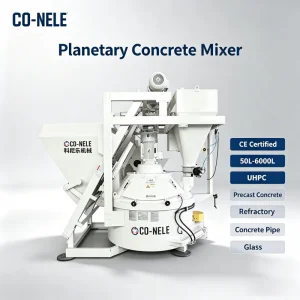
China Planetary Countercurrent Concrete Mixer CMPS Manufacturer, Factory
Explore Specifications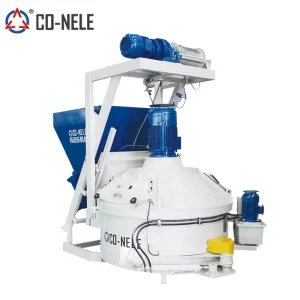
China Planetary mixer for refractory Manufacturer, Factory
Explore Specifications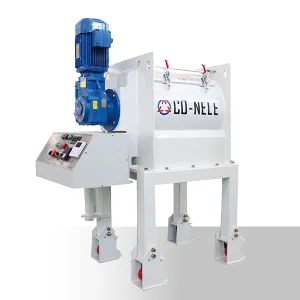
China CDW100 Laboratory Dry Mortar Mixer Manufacturer, Factory
Explore Specifications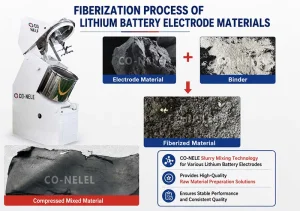
China Dry Electrode Mixing & PTFE Fibrosis Machine Manufacturer, Machine
Explore Specifications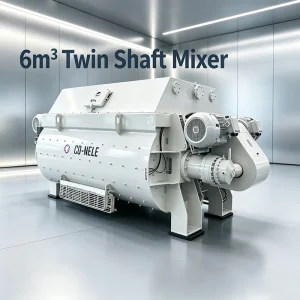
China 6m³ Twin Shaft Concrete Mixer Factory, Machine
Explore Specifications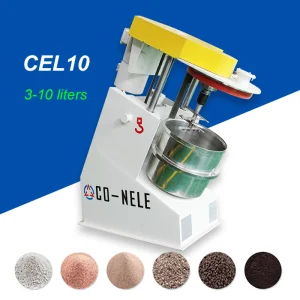
China Lab-scale Granulators type CEL10 Factory, Machine
Explore Specifications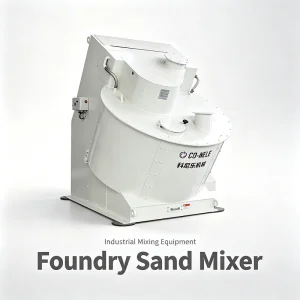
China Foundry Sand Mixer Factory, Machine
Explore Specifications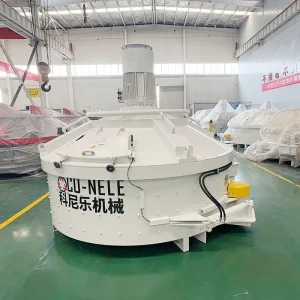
China Planetary Refractory Mixer Manufacturer, Machine
Explore SpecificationsAddressing engineering specifications, operational maintenance, and selection criteria for industrial mixing buyers.
The primary distinction lies in kinetic flow velocity patterns and cycle throughput efficiency. Twin Shaft Concrete Mixers feature two horizontal counter-rotating shafts creating intensive three-dimensional turbulent shearing zones, rendering them superior for high-volume ready-mix and infrastructure applications requiring output from 1.0 m³ to 6.0 m³ per batch within 30 to 45 seconds. Conversely, Planetary Counter-Current Mixers utilize vertical shafts with orbiting star arms, making them optimal for dry-cast concrete, UHPC, color pavers, and refractory materials where micro-homogeneity (<3% CV) is paramount, albeit at slightly longer cycle times (60 to 90 seconds).
Quality Chinese manufacturers such as CO-NELE implement a multi-stage seal defense architecture. This consists of: 1) Floating mechanical face seals that prevent liquid entry; 2) Multiple polyurethane V-ring seals forming intermediate barrier chambers; 3) An automatic electric grease pump continuous pressurization system that pushes fresh grease outward through the seal gaps to purge micro-particles; and 4) External isolation bearings separated from the main housing by an open air gap, preventing slurry from ever contaminating the main drive bearings.
Under standard sand and gravel concrete mixing, high-chromium alloy liner plates (Cr26/Ni-Hard, hardness ≥62 HRC) typically achieve 100,000 to 150,000 batches. When processing highly abrasive basalt, crushed quartz, or steel fiber concrete, lifespan decreases proportionally to approximately 60,000 to 80,000 batches. All wear paddles, scrapers, and wall liners are bolt-on modular components designed for quick field replacement within a single maintenance shift.
Yes. Chinese twin shaft mixers are designed with standard mechanical mounting flanges and open electrical control architectures. Digital junction boxes accept standard 24VDC control signals from Siemens, Command Alkon, or Schneider PLC systems. Hydraulic discharge gate position switches, motor thermal sensors, and automatic grease pump fault signals integrate seamlessly into existing plant control loops via Profinet, Modbus, or Ethernet/IP protocols.
When retrofitting, engineers must analyze five core parameters: 1) Compressed compact batch volume versus uncompacted dry feed volume; 2) Drive motor kilowatt rating to ensure sufficient torque under zero-slump emergency restarts; 3) Discharge gate clearance height and pneumatic/hydraulic cylinder pressure; 4) Overall frame dimension compatibility with existing aggregate skip hoists or weigh belts; and 5) Electrical peak amperage limits of the local substation transformer.