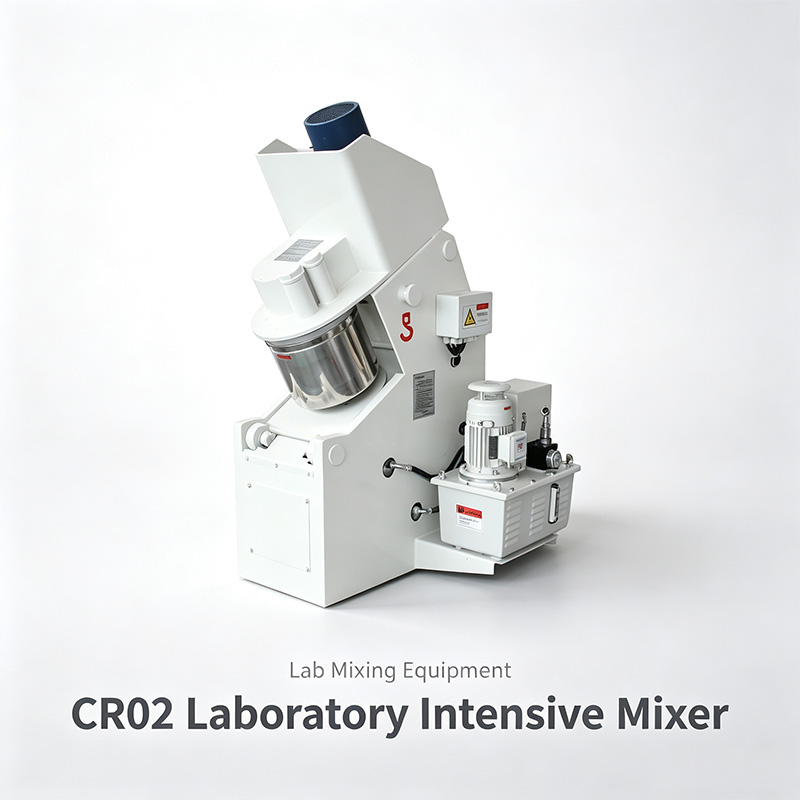
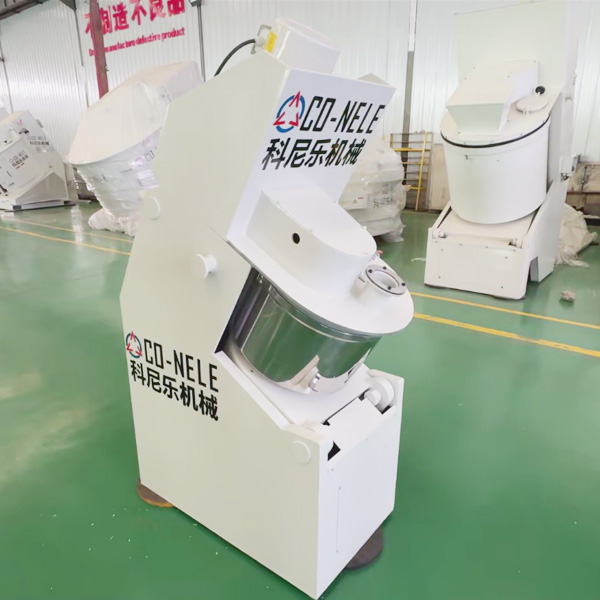
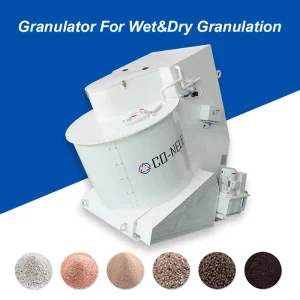
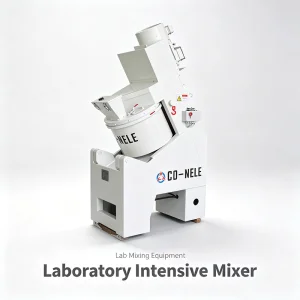
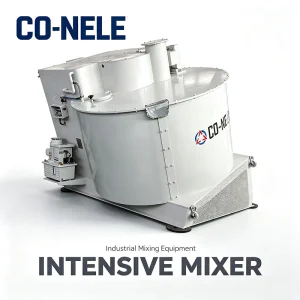
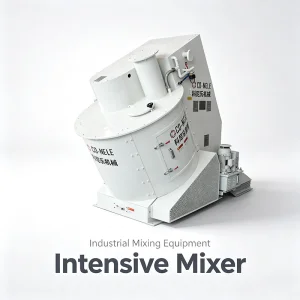
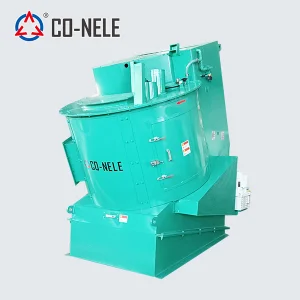
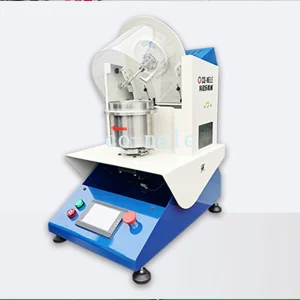
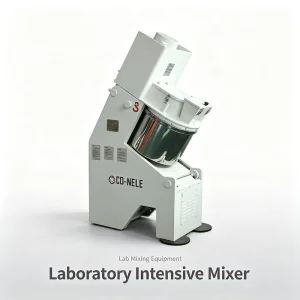
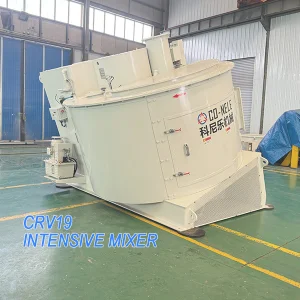
CR02 laboratory intensive mixer is a flexible, high-performance mixing equipment suitable for R&D and small-scale production. Here is a brief introduction:
CR02 Laboratory Intensive Mixer Features
Good mixing effect
The unique mixing principle ensures that 100% of the materials are mixed, and the best product quality can be obtained in the shortest time, whether it is high-speed mixing to achieve the best dispersion of fibers, the best mixing of powdery fine materials and the production of suspended solids with high solid content, or medium-speed mixing to obtain high-quality mixtures, or low-speed mixing to gently add lightweight additives or foams, it can be done well.
High balling rate
Through the principle of strong countercurrent, the equipment has the advantages of high balling rate and uniform particle size, and the granulation time and granulation uniformity can be efficiently controlled.
Adjustable speed
The rotating mixing barrel and granulation tool group can be controlled by variable frequency, and the speed is adjustable. The particle size can be controlled by adjusting the speed.
Convenient unloading
The unloading method is tipping unloading or bottom unloading (hydraulic control), which is fast and clean, and easy to clean.
Multiple functions
It has multiple functions such as mixing, granulation, coating, kneading, dispersion, dissolution, and defibration.
Safety and environmental protection
The whole process of mixing and granulation is fully enclosed, without dust pollution, safe and environmentally friendly. Heating and vacuum functions can be added according to user needs. Equipped with an independent control cabinet, it can be connected to the plc control system to achieve full automatic control.
Application Areas
Ceramics:used for the production of molecular sieves, proppants, grinding materials, grinding balls, ferrites, oxide ceramics, etc.
Building materials:such as porosity agents are used in the preparation of bricks, expanded clay, perlite, etc., and can also be used to produce refractory ceramsite, clay ceramsite, shale ceramsite, ceramsite filter material, ceramsite bricks, ceramsite concrete, etc.
Glass:It can handle glass powder, carbon, lead glass mixture, etc.
Metallurgy:Suitable for mixed processing of zinc and lead ore, alumina, silicon carbide, iron ore, etc.
Agricultural chemistry:It can be used for the processing of lime hydrate, dolomite, phosphate fertilizer, peat fertilizer, mineral compounds, beet seeds, etc.
Environmental protection:It can handle cement filter dust, fly ash, mud, dust, lead oxide, etc.
Technical parameters: The capacity of the CR02 laboratory Intensive Mixer is generally 5 liters.
Frequently Asked Questions (FAQ)
What is the standard capacity of the CR02 laboratory intensive mixer?
The capacity of the CR02 laboratory intensive mixer is generally 5 liters, making it ideal for laboratory R&D and small-scale production requirements.
What processes can the CR02 intensive mixer perform?
The equipment features multiple functions including mixing, granulation, coating, kneading, dispersion, dissolution, and defibration.
How does the CR02 mixer control particle size and balling rate?
Particle size and balling rate are efficiently controlled using strong countercurrent principles along with variable frequency speed adjustments for both the rotating mixing barrel and granulation tool group.
What discharge/unloading methods are available?
The equipment offers two unloading options: tipping unloading or hydraulically controlled bottom unloading, both designed for quick, clean material release and easy maintenance.
Is the CR02 laboratory mixer environmentally friendly and safe to operate?
Yes, the entire mixing and granulation process is fully enclosed to eliminate dust pollution. Additionally, heating and vacuum functions can be integrated, and PLC automated control is supported via an independent control cabinet.
Which industries commonly use the CR02 intensive mixer?
It is widely used across various industries including ceramics, building materials, glass, metallurgy, agricultural chemistry, and environmental protection processing.