CO-NELEMixing & Granulation
Explore our core engineering lineup, backed by direct factory support, certified high-chrome metallurgy, and precision manufacturing.
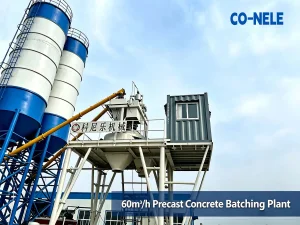
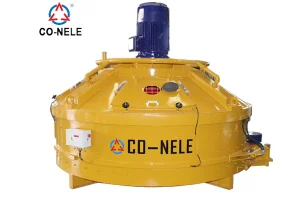
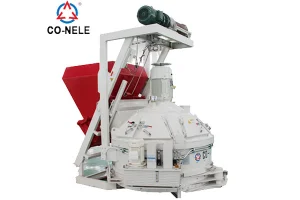
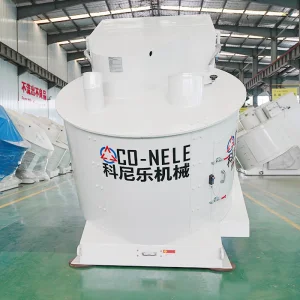
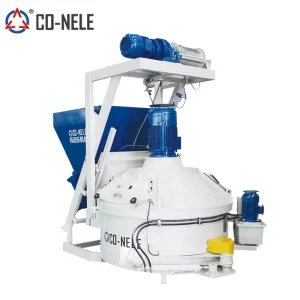
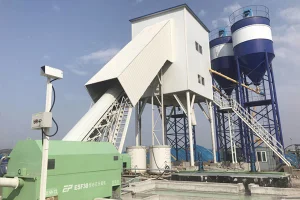
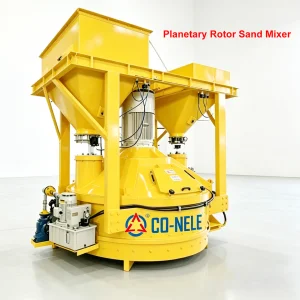
China HZS60 60m³/h Precast Concrete Batching Plant | 1000 Planetary Mixer Manufacturer, Factory
View Product SpecificationsA comprehensive analysis of compulsory twin-shaft mixing dynamics, wear-resistant metallurgy, and global supply chain integration.
In modern industrial concrete production, the compulsory twin shaft concrete mixer represents the apex of high-throughput mixing technology. Operating on counter-rotating synchronized horizontal shafts, the system forces coarse aggregates, fine sand, cementitious binders, water, and chemical admixtures into a violent 3D turbulence zone. Unlike gravity-fed drum mixers, twin shaft mixing kinematics generate intense fluid shear and particle collision without relying on acceleration alone.
This forced turbulence achieves micro-homogeneity within 30 to 45 seconds per batch. However, the immense mechanical friction, impact forces, and corrosive chemical slurry subject internal components—specifically mixing arms, paddles, liner plates, and shaft seals—to extreme tribological stress. Achieving long operational lifespans requires precise engineering of wear-resistant alloy metallurgy and modular structural designs.
As a global hub for industrial equipment production, specialized factories in China have redefined the price-to-performance paradigm for twin shaft concrete mixer replacement parts. Premium original equipment manufacturers (OEM) and high-tier aftermarket foundries employ advanced induction melting, lost-foam casting, and precision heat-treatment protocols.
By optimizing chromium-molybdenum-nickel alloys (such as Cr26MoNi and Ni-Hard 4), Chinese production bases achieve rockwell hardness levels up to 62-68 HRC while preserving micro-structural toughness. This balances wear resistance with impact absorption, preventing micro-fracturing when processing heavy granite or basalt aggregates in ready-mix plants.
Unpacking the engineering parameters behind high-durability wear liners, mixing arms, multi-stage shaft seals, and sync gearboxes.
The interior mixing pan is armored with replaceable tiles. Premium factories utilize modular rhombic or hexagonal layouts that distribute friction evenly. Made from high-chromium white cast iron (BTMCr15Mo to BTMCr26), these tiles resist localized abrasive gouging. Precision CNC beveling ensures tight tolerances between adjacent tiles, eliminating cement slurry migration behind the wear floor.
Mixing arms are manufactured from cast alloy steel (such as ZG35SiMn or ductile iron QT600-3) to ensure high tensile strength and fatigue endurance under continuous impact loads. The removable mixing blades (paddles) attached to the arm tips feature hydrodynamic streamlined profiles that reduce drag while boosting axial turnover. High-chromium alloy chemistry ensures a minimum 120,000-batch life cycle under standard aggregate conditions.
The main shaft end seal is the critical defense line preventing fine sand and caustic alkaline slurry from invading outer bearings and sync drives. Advanced designs combine continuous automatic grease injection, floating floating mechanical rings, polyurethane V-rings, and heavy-duty labyrinth seals. This multi-layered barrier protects expensive shafts from scoring, preventing catastrophic downtime.
| Component Type | Material / Metallurgy Standard | Hardness Range (HRC) | Expected Service Life (Batches) | Key Performance Attribute |
|---|---|---|---|---|
| High-Chrome Mixing Blades | Cr26MoNi / ASTM A532 Class III | 60 - 67 HRC | 120,000 - 160,000 | High abrasion resistance & low brittle fracture rate |
| Bottom Wear Liners | Cr15Mo3 / High-Cr Alloy Cast Iron | 58 - 64 HRC | 100,000 - 140,000 | Uniform wear distribution, flush seam jointing |
| Side Wall Liners | Ni-Hard 4 / Ductile Chrome Alloy | 55 - 60 HRC | 130,000 - 180,000 | Resists side slurry friction and lateral impact |
| Compulsory Mixing Arms | ZG35SiMn / High-Strength Cast Steel | 28 - 35 HRC (Core) | 300,000+ | Exceptional torsional flex and shear strength |
| Shaft End Seal Rings | Special Polyurethane & Hardened Alloy Steel | 60 - 62 HRC (Ring face) | 80,000 - 120,000 | Zero-leakage labyrinth seal with auto-greasing |
Standard cast iron degrades rapidly due to matrix tearing under angular quartz sand friction. China’s leading twin shaft parts foundries utilize controlled heat treatment regimes—specifically destabilization annealing followed by forced air quenching and low-temperature tempering. This process generates a matrix of tough martensite embedded with ultra-hard eutectic M7C3 carbides, offering superior resistance to abrasive slurry wear.
Combining industrial scale, advanced robotic metallurgy, and comprehensive reverse engineering for universal mixer compatibility.
Chinese factories dedicated to twin shaft concrete mixer parts operate integrated manufacturing ecosystems. From electric arc furnaces (EAF) with AOD refining units to automated green sand casting lines and 5-axis CNC machining centers, production is standardized to exacting tolerances.
Every casting run undergoes optical emission spectrometry to verify chemical element ratios. Automated heat treatment lines with digital temperature logging eliminate human error, ensuring consistent hardness across every batch of wear tiles and mixing arms shipped worldwide.
A key advantage of partnering with premier Chinese parts manufacturers is their extensive reverse engineering catalog. Factories maintain precise 3D laser-scanned drawings and patterns compatible with leading European, American, and Asian twin-shaft concrete mixer brands, including SICOMA, BHS, LIEBHERR, TEKA, SIMEM, and MEKA.
Whether a client operates a 1.0m³, 2.0m³, 3.0m³, or 6.0m³ batching plant mixer, direct replacement wear parts fit precisely with zero field modification required, drastically cutting maintenance lead times.
A strategic decision framework for commercial ready-mix operators, precast plants, and infrastructure contractors.
Purchasing mixer wear parts directly from specialized Chinese manufacturing hubs yields immediate cost reductions of 40% to 60% compared to local distributor markups. However, smart enterprise buyers evaluate Total Cost of Ownership rather than purchase price alone. Freight costs, wear-life predictability, and installation labor are critical variables in the economic equation.
To avoid premature failure, global procurement protocols mandate stringent Quality Assurance documentation. Standard inspection packages include Spectrometric Material Analysis, Brinell/Rockwell Hardness Certifications, Ultrasonic Testing (UT) for internal porosity, and 3D CMM coordinate checks. Leading factories supply complete EN 10204 3.1 material test certificates with every export shipment.
To guard against supply chain disruptions, international ready-mix conglomerates utilize localized safety stock models. By establishing consignment inventory or annual blanket purchase agreements with Chinese manufacturers, plant managers lock in stable pricing while guaranteeing emergency replacement kits (shaft seals, mixing blades) arrive at job sites within 24 hours.
Addressing real-world working conditions in Ready-Mixed Concrete (RMC), Precast Elements, and High-Abrasive Hydro Projects.
Heavy Infrastructure & RCC Dams: Mixing Roller-Compacted Concrete (RCC) with coarse aggregates up to 80mm creates severe impact loads on mixing arms and blades. In these high-impact applications, pure high-chrome cast iron can crack. Foundries specify modified alloy steels with higher toughness matrix structures (Cr18Mo2 with adjusted carbon content).
Ultra-High-Performance Concrete (UHPC): UHPC recipes feature dense steel micro-fibers and silica fume, which induce severe high-velocity polishing wear. This requires special Cr28 high-chrome alloys with specialized surface treatment to resist micro-grooving.
Localized Liner Gouging: Caused by aggregate entrapment due to excessive blade-to-liner clearance. Solution: Regular 50-hour inspection and readjustment of mixing blade mounting bolts to maintain a 3mm to 5mm gap.
Shaft Seal Blowout: Caused by contaminated grease lines or pump failures. Solution: Installation of pressure sensors on the automatic lubrication distributor, linked directly to the main plant PLC to auto-stop mixing if grease pressure drops below 15 bar.
Smart sensors, sustainable metallurgy recycling, and digital twin predictive maintenance transforming batch plant operation.
Next-generation liner tiles feature embedded conductive wire loops or ultrasound transducers. As the wear plate thins past critical thresholds, the embedded circuit triggers an automated alert in the plant software, enabling scheduled replacement before catastrophic mixer floor erosion occurs.
Leading Chinese foundries are creating closed-loop recycling programs. Spent high-chrome wear blades collected during plant overhaul are remelted in electric arc furnaces, reducing raw material carbon footprint by 35% while lowering replacement costs for enterprise buyers.
Modern batch plants maintain digital twin models of their mixing systems. Chinese replacement parts factories provide step-by-step CAD files and 3D BIM models for immediate upload into enterprise asset management (EAM) platforms, streamlining engineering maintenance workflows.
Direct answers from our metallurgical and mechanical engineering specialists on parts selection, service life, and maintenance.
Discover complementary granulators, lab-scale mixers, intensive industrial units, and mobile batching solutions.
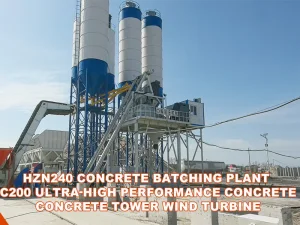
China UHPC Batching Plant for Precast Concrete Wind Turbine Towers Manufacturer, Factory
View Product Specifications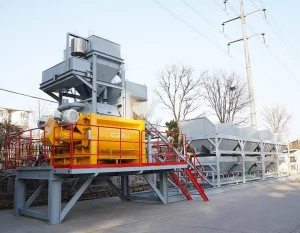
China Small Mobile Concrete Batching Plants(25 m³/h-50 m³/h) Manufacturer, Factory
View Product Specifications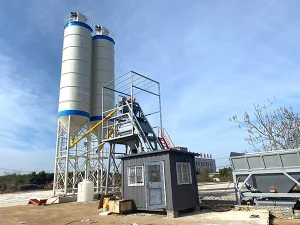
China 25m³/h Small Portable Concrete Batching Plant Manufacturer, Machine
View Product Specifications