CO-NELEMixing & Granulation
Refractory materials occupy a critical niche in high-temperature industrial processing. Unlike standard structural concrete or simple dry mortars, refractory castables, shaped bricks, and monolithic formulations demand an extraordinary level of microscopic homogenization. A leading China Refractory Material Mixer Manufacturer operates at the intersection of heavy mechanical engineering, fluid dynamics, and ceramic powder technology to resolve the unique rheological challenges inherent in advanced thermal-resistant mixes.
Refractory compounds—comprising high-alumina aggregates, silicon carbide, zirconia, magnesia-carbon mixes, micro-silica powders, and ultra-fine metallic fibers—exhibit non-Newtonian, thixotropic, and pseudoplastic flow behavior. Achieving uniform dispersion of sub-micron particles across dense aggregate matrices without degrading grain sizing requires precisely controlled kinetic energy input. Standard gravity-fed pan mixers or horizontal ribbon blenders fail because they create systemic dead zones, induce particle segregation, and overheat temperature-sensitive binder systems.
Elimination of agglomerates in nano-silica and ultra-fine alumina binders, guaranteeing a Coefficient of Variation (CV) below 3% across large industrial batches.
Optimized planetary rotor speed profile prevents the crushing of expensive porous lightweight aggregates while delivering mandatory shearing forces.
Integrated jacket cooling and high-efficiency mechanical drives prevent premature hydration of quick-setting calcium aluminate cement phases.
The global refractories market has undergone a structural pivot toward high-performance monolithics and complex ceramic matrix composites. China has solidified its position as the premier manufacturing hub for advanced processing machinery by merging metallurgical depth, massive supply-chain consolidation, and rigorous electro-mechanical engineering standards.
China's machinery ecosystem in regions such as Qingdao and Shandong provides direct access to high-grade structural steel, precision planetary gear manufacturing, specialized foundry casting for wear-resistant alloys, and global motor/PLC component suppliers (Siemens, ABB, SEW-Eurodrive). This proximity reduces lead times for custom machine builds by up to 50% compared to Western European machinery OEMs.
Refractory mixing subjects pan liners and mixing blades to severe abrasive wear caused by hard aggregates like fused corundum, silicon carbide, and calcined bauxite. Chinese manufacturers utilize advanced heat-treatment regimes, chromium-carbide hardfacing overlays, tungsten carbide ceramic tiles, and Ni-Hard iron formulations that achieve operational lifespans exceeding 100,000 batches under high-abrasion working conditions.
Leading Chinese OEMs do not force rigid, standardized catalog units onto complex production lines. Engineers design fully customized mixing vessels featuring variable-frequency drives (VFD), high-speed chopper/fly-cutter units, hydraulic discharge doors with multi-stage sealing, and integrated explosion-proof (ATEX) enclosures for resin-bonded pitch formulations.
By optimizing raw material sourcing, automated robotic welding, and lean production assembly, a top-tier China Refractory Material Mixer Factory delivers heavy-duty industrial mixing stations at a fraction of European equipment pricing, offering international buyers a significantly shorter payback period and superior Return on Investment (ROI).
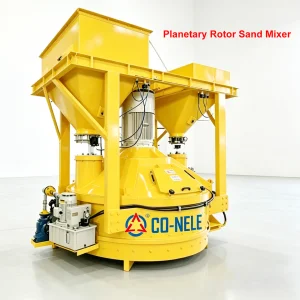
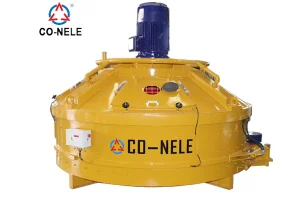
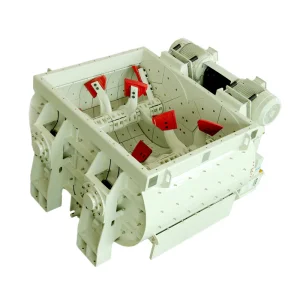
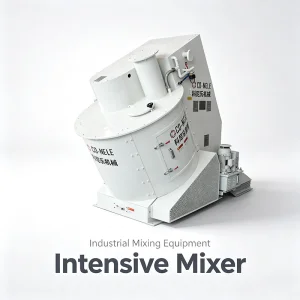
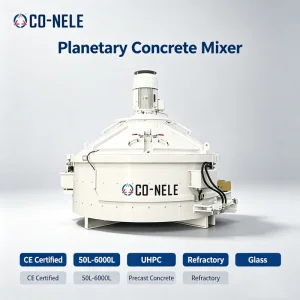
Selecting the correct mixer geometry is the single most critical factor in engineering a high-efficiency refractory processing plant. Two main mechanical paradigms dominate the high-end industrial landscape: Planetary Counter-Current Mixers and Inclined High-Intensive Mixers. Below is an engineering comparison of how these systems handle complex formulations.
| Kinematic Parameter | Planetary Counter-Current Mixer | Inclined Intensive Mixer (Eirich Type) | Traditional Horizontal Twin-Shaft |
|---|---|---|---|
| Mixing Motion Principle | Dual-rotation star arms revolving around central axis while rotating on own shaft. | Rotating inclined pan combined with eccentric high-speed multi-stage rotor. | Parallel counter-rotating shafts with overlapping paddle arcs. |
| Dead Zone Elimination | 100% full pan coverage via overlapping planetary geometry. | 100% full vessel sweep via wall/bottom scrapers & rotating pan. | Moderate; potential build-up on end-seals and vessel corners. |
| Shear Energy Input | Medium to High; uniform micro-shearing across entire batch volume. | Ultra-High; customizable rotor speeds (up to 30 m/s tip speed). | Low to Medium; primarily macroscopic convective transport. |
| Ideal Material Formulations | Low-cement castables (LCC), Ultra-low cement (ULCC), shaped brick batches. | Granulating mixes, nano-bonded castables, fine ceramic powders, oxide mixes. | Coarse plastic refractories, low-spec bulk repair mortars. |
| Fibre Dispersion Efficiency | Excellent; prevents balling of steel/organic micro-fibres via star motion. | Superior; high-speed rotor breaks fibre clusters instantly. | Fair; prone to fibre entanglement around center shafts. |
| Discharge Speed & Cleanout | Rapid pneumatic bottom drop door; high cleanliness rating. | Center bottom valve or tilting pan emptying; 99.5%+ batch removal. | Horizontal gate discharge; residual retention along shaft seals. |
Refractory mixes are non-standardized formulations engineered specifically for severe operational environments. Industrial mixers manufactured in China are deployed worldwide across heavy industrial sectors requiring strict temperature control, zero-contamination processing, and high abrasion protection.
Key Products: Magnesia-Carbon (MgO-C) bricks, Alumina-Magnesia-Carbon (AMC) ladles, Blast Furnace taphole clays, and Tundish spray mixes.
Mixer Requirement: High-torque intensive mixers equipped with liquid resin/pitch injection systems, vacuum degassing capabilities, and heated jackets to maintain binder fluid state without prematurely curing the thermosetting resins.
Key Products: Alkali-resistant dense castables, high-alumina burner pipe linings, preheater cyclone refractories, and silicon carbide anti-clogging linings.
Mixer Requirement: Heavy-duty planetary counter-current mixers designed to handle coarse silicon carbide aggregates up to 25mm without jamming or destroying mixing arm shock-absorber assemblies.
Key Products: Fused Cast AZS (Alumina-Zirconia-Silica) blocks, ceramic regenerator checkers, and high-purity oxide crucibles.
Mixer Requirement: Contamination-free mixing pans lined with high-purity polyurethane, zircaloy, or sintered ceramic plates to prevent tramp iron pickup that degrades optical clarity in glass or dielectric properties in ceramics.
Key Products: Abrasion-resistant hex-mesh linings, dense erosion-resistant castables, and thermal insulation monolithics.
Mixer Requirement: Precision water dosing units integrated with load-cell weighing automation to maintain exact water-to-cement ratios (±0.1%), ensuring maximum cold crushing strength (CCS) after thermal activation.
A stand-alone mixer is only as effective as the material handling, dosing, and control systems surrounding it. Modern industrial procurement demands comprehensive end-to-end plant automation that integrates raw material storage, precision micro-ingredient dosing, high-efficiency mixing, and automated packaging.
Pneumatic conveying systems for fine powders coupled with loss-in-weight gravimetric feeders. Automated multi-ingredient batching hoppers achieve an accuracy of ±0.05% for micro-additives such as organic deflocculants, steel fibers, and metal powder antioxidants.
Material transfers into a high-intensity planetary or inclined mixer featuring automated recipe management via Siemens S7-1500 PLC systems. Dynamic torque sensors adjust mixing speed in real time based on material rheology changes during liquid addition.
Homogenized wet castables or granulates are discharged into automated big-bag filling stations, hydraulic brick press feeding systems, or robotic shotcrete container lines under continuous moisture tracking using microwave inline sensors.
When issuing a Request for Proposal (RFP) to a China Refractory Material Mixer Manufacturer, procurement teams and plant engineering directors must evaluate technical parameters beyond simple drive horsepower and tank capacity. Use this engineering audit matrix to evaluate equipment suppliers:
Demand cast-iron single-body planetary gearboxes designed specifically for high-impact shock loads. Ensure the service factor ($S_f$) is equal to or greater than 2.0. Inquire whether gear teeth are case-hardened and ground to ISO Grade 6 precision standards to prevent gear failure under high-density mix start-ups.
Refractory dust (micro-silica, fused alumina fines) is extremely aggressive toward mechanical bearings. Ensure the mixer utilizes multi-stage mechanical labyrinth seals integrated with continuous automatic grease-purge systems to isolate drive shafts completely from the mixing chamber.
Verify that all internal vessel liners and mixing blades are 100% bolt-on and field-replaceable. Tender specifications should mandate minimum 400 HBW (Hardox 400/500) wall liners, high-chrome iron mixing arms (≥62 HRC), and optional tungsten carbide blade edge cladding for extreme abrasion environments.
Confirm that electrical cabinets carry full CE certification under EU Machinery Directive 2006/42/EC, UL508A compliance for North American installations, and integrated safety interlocks (PILZ safety relays / Fortress key lock systems) on all access doors.
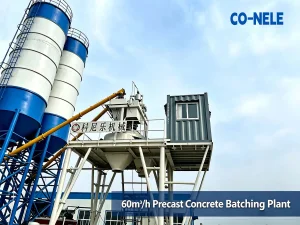
China HZS60 60m³/h Precast Concrete Batching Plant | 1000 Planetary Mixer Manufacturer, Factory
View Details