CO-NELEMixing & Granulation
High-efficiency mixing equipment and complete batching plants manufactured in Qingdao, China for global export.
An in-depth fluid-mechanic analysis on why vertical-shaft planetary mortar mixers are becoming the indispensable standard for high-spec dry-mix mortars and UHPC formulations.
Modern dry-mix mortars, self-leveling underlayments, and Ultra-High-Performance Concrete (UHPC) are no longer simple sand-cement formulations. They contain micro-silica, chemical polymers, cellulose ethers, nano-additives, and heavy synthetic or steel fibers. Conventional ribbon mixers or horizontal twin-shaft machines generate directional flow zones, leaving micro-clumps (binder balls) and structural segregation. Planetary counter-current mixing solves this through 360-degree non-dead-zone kinematic sweeping paths.
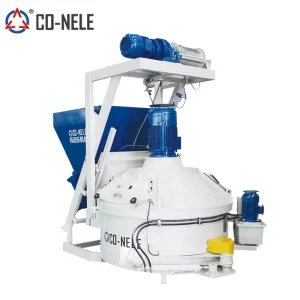
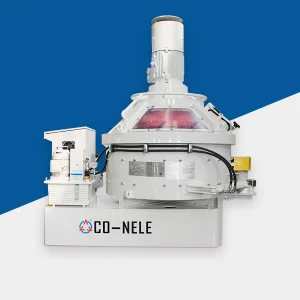
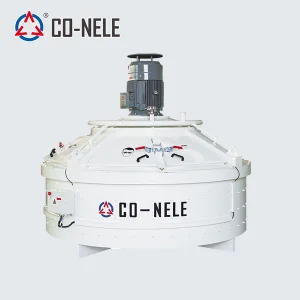
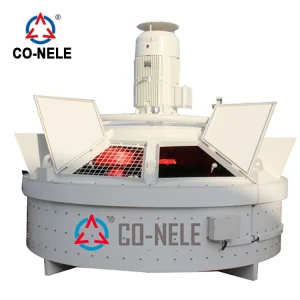
In a CO-NELE planetary mortar mixer, the mixing arms rotate on their own axis while simultaneously revolving around the central axis of the pan. This planetary ratio (typically 1:3 to 1:4) forces every material particle to intersect a shearing trajectory within fractions of a second. The resulting velocity differential destroys agglomerates without crushing brittle lightweight aggregates, reducing mixing cycles by up to 45% compared to static pan mixers.
| Performance Parameters | CO-NELE Planetary Counter-Current Mixer | Horizontal Twin-Shaft Mixer | Traditional Ring-Pan / Ribbon Mixer |
|---|---|---|---|
| Mixing Kinematics | Dual Rotation & Planetary Revolution | Dual Horizontal Counter-Rotating Axes | Single Axis Radial Sweep |
| Mixing Dead Zones | 0% (Complete Pan Coverage) | 5 - 10% (End-Shaft Stagnation) | 12 - 18% (Outer Wall / Center Cone) |
| Micro-Homogeneity (CV) | Extreme (< 3% Variation) | Moderate (5% - 8% Variation) | Poor (> 10% Variation) |
| Fiber Dispersion (UHPC/GFRC) | Uniform distribution, zero balling | Prone to fiber clumping | High risk of fiber nesting |
| Power Consumption / Tonne | Optimized Torque Distribution | High Peak Startup Current | Low Shear, Inefficient Energy Transfer |
| Wear Part Lifetime | High (Symmetrical Wear & Reversible) | Moderate (Uneven Blade Erosion) | Low (Scraper Wear at Outer Edges) |
Why sourcing your planetary batching mixer directly from Qingdao CO-NELE Machinery delivers structural quality, custom mechanical gearboxes, and unbeatable Total Cost of Ownership (TCO).
Unlike competitors who purchase commercial commercial-grade off-the-shelf speed reducers, CO-NELE designs and machines proprietary heavy-duty planetary gearboxes. Built to withstand shock loads from dry mortar mixes and steel-fiber UHPC batches, our gearboxes feature anti-leakage shaft seals and oil-bath lubrication systems.
Mortar mixing is intensely abrasive. We utilize high-chromium cast iron (hardness ≥ HB600) and optional tungsten carbide hard-facing for mixing blades, while pan liners are constructed from wear-resistant alloy plates (Hardox 450/500 equivalent). This extends part service life to over 150,000 continuous mixing batches.
Located in the industrial heartland of Qingdao, our 30,000 m² manufacturing campus houses CNC machining centers, automated laser cutting, plasma welding, and full-load motor testing rigs. Direct factory control eliminates middleman markups and guarantees 100% spare parts compatibility for decades.
From heavy infrastructure to advanced materials, explore how planetary counter-current mixers excel across demanding sector environments.
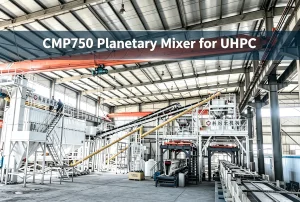
UHPC formulations require intense shear forces to activate silica fume and distribute steel fibers uniformly. CO-NELE CMP series mixers feature high-torque planetary drives that handle ultra-low water-cement ratios (w/c < 0.18) without thermal buildup or mechanical stalling.
For masonry mortars, render, self-leveling screeds, and thin-set tile adhesives, rapid hydration and polymer dispersal are vital. Planetary mixing eliminates dry unmixed pockets, ensuring consistent tensile adhesive strength across all bagged mortar products.
Handling corundum, silicon carbide, and dense alumina powders requires zero material contamination and extreme abrasion resistance. Our refractory planetary mixers come equipped with polyurethane liners, pneumatic discharge doors, and dust-tight seals.
Architectural concrete, railway sleepers, hollow-core slabs, and colored paving blocks demand identical color shade and density across batches. Planetary motion ensures 100% pigment distribution and zero slump variance.
Handling silica sand with liquid binders or resin additives demands high-speed moisture distribution. Planetary intensive mixers deliver consistent green sand strength and homogeneous resin coating for casting foundries.
Concrete incorporating barite, magnetite, or iron ore aggregates suffers from severe gravity segregation in standard mixers. Planetary forced action keeps heavy aggregates suspended evenly until discharge.
Navigating international electrical codes, safety regulations, and post-purchase engineering support for seamless plant integration.
Every mixer shipped from our Qingdao facility is engineered to meet the destination country's industrial standard. We offer full compliance certifications including:
Buying machinery direct from China requires robust local service backup. CO-NELE safeguards your uptime through:
How intelligent sensors, dynamic moisture measurement, and high-energy planetary mixing drive green building initiatives.
Integrating optical and microwave moisture sensors into the floor of the planetary pan allows PLC systems to adjust water dosing dynamically within 0.1% accuracy during active mixing, compensating for sand moisture fluctuation automatically.
As the construction industry transitions to low-carbon supplementary cementitious materials (SCMs) like calcined clays, slag, and fly ash, higher shear energy is required to achieve particle dispersion. Planetary mixers provide the required kinetic input without thermal degradation.
Reducing cleaning downtime between batch recipe shifts: integrated 360-degree high-pressure water jet heads automatically sanitize the interior mixing pan, reducing manual labor risk and water consumption by 60%.
Clear, authoritative technical answers to assist plant engineering managers and international procurement officers.
While both utilize vertical shaft architectures, a counter-current planetary mixer is specifically geared so that the mixing blades rotate in the opposite rotational vector to the main arm carrier revolution. This opposing shear motion creates intense velocity gradients essential for dispersing dry polymer powders, micro-silica, and fine sands in dry-mix mortars, preventing clump formation and reducing batch time.
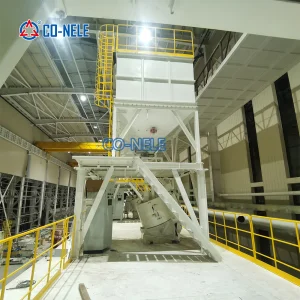
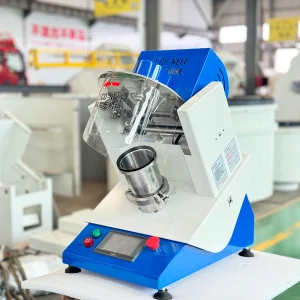
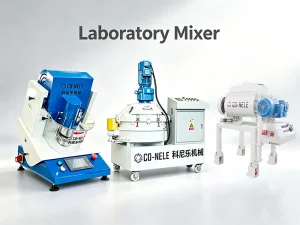
CO-NELE manufactures planetary mortar mixers ranging from small lab units (CMP50 / 50 Liter dry discharge) up to high-output industrial production models (CMP3000 / 3000 Liter batch capacity). Complete turnkey dry mortar lines are custom-engineered for capacities from 5 tons per hour to over 100 tons per hour.
Yes. CMP series planetary mixers are world-renowned for UHPC production. The high shear planetary arms feature specialized angle geometry that unfolds micro-fibers, preventing "nesting" or fiber-balling without damaging the high-tensile steel fiber structure.
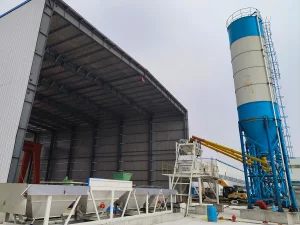
Standard CMP planetary mixers have a manufacturing cycle of 20 to 35 days. Complete foundationless or mobile batching plants require 40 to 50 days. Standalone mixers are designed for modular disassembly to fit into standard 40ft High Cube (40HC) containers or Open Top containers for larger gearboxes.
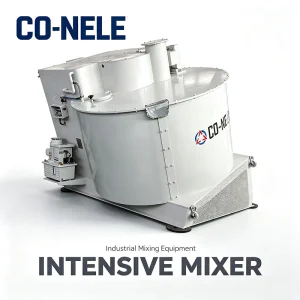
If your goal is liquid-powder mixing, mortar homogenization, or concrete batching, a Planetary Mixer is the ideal choice. If your process requires transforming fine powders into spherical granules (e.g., fertilizer pellets, ceramic proppants, iron powder, or alumina granulation), an Inclined Intensive Granulating Mixer (CEL / CQ series) should be selected.
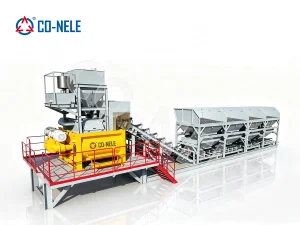
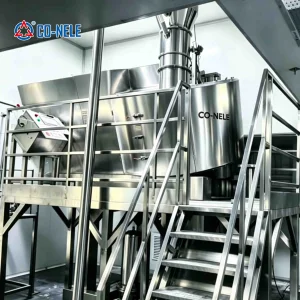
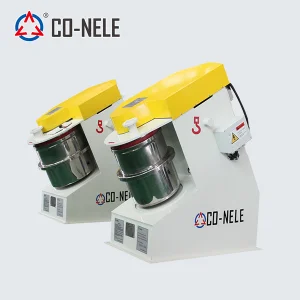
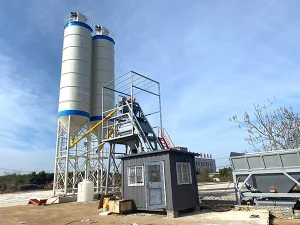
Explore our specialized planetary models, mobile batch plants, and intensive granulators.
Consult with CO-NELE's senior process engineers to analyze your raw materials, optimize batch cycle times, and receive a customized technical machinery quotation.
Request Technical Proposal & Quotation