CO-NELEMixing & Granulation
Explore our flagship planetary mixing systems, precast plants, and specialized material preparation machinery engineered in Qingdao, China.
In the realm of modern civil infrastructure, ultra-high-performance concrete (UHPC), and precast element manufacturing, the choice of concrete batching plant equipment dictates structural longevity, operational efficiency, and overall project profitability. The global demand for China Concrete Batching Plant For Sale solutions has evolved far beyond traditional gravity mixing. Today’s industrial requirements demand absolute batch-to-batch repeatability, microscopic distribution of cementitious binders, and seamless integration with smart automated batching controls.
Qingdao CO-NELE Machinery Co., Ltd. (established in 2004) stands at the forefront of this industrial mixing revolution. With over two decades of dedicated mechanical R&D, holding 80+ national patents, and maintaining three state-of-the-art production bases in Qingdao, CO-NELE has moved concrete processing from simple volumetric blending to high-energy compulsory counter-current planetary kinematics.
Standard twin-shaft mixers serve ready-mixed concrete needs adequately, but specialized concrete formulations—such as GFRC, glass batching, refractory materials, dry-cast block production, and fiber-reinforced UHPC—demand a Coefficient of Variation (CV) below 5%. Achieving this level of micro-homogeneity without destroying delicate lightweight aggregates or micro-fibers requires sophisticated vertical-shaft planetary motion.
This technical whitepaper reviews the engineering mechanics, economic parameters, localized application scenarios, and macro-industrial trends governing global buyers sourcing concrete batching machinery from premier Chinese manufacturers.
Quantifiable proof of manufacturing rigor, structural reliability, and international deployment.
China's heavy equipment ecosystem in Shandong Province integrates high-grade metallurgical refining, precision gear cutting, and industrial automation within close radius. CO-NELE leverages this supply chain to execute in-house gear housing casting, heat treatment, and robotized pan welding, reducing production lead times by up to 40% compared to Western OEMs.
Unlike secondary assemblers who purchase off-the-shelf commercial gearboxes, CO-NELE designs and manufactures specialized planetary gearboxes tailored to forced-action concrete mixing dynamics. Built to handle extreme torsional shocks from stiff dry-mix batches, these reducers ensure zero downtime during sudden load shifts.
Exported machinery meets global regulatory and electrical standards, including European CE directives, ISO9001 quality management, NEMA electrical enclosures, and custom motor voltages (220V–440V, 50/60 Hz). Complete structural elements undergo finite element analysis (FEA) to withstand high seismic zones and extreme wind loads.
Tailored concrete mixing setups designed for specific material behavior, transport constraints, and product requirements.
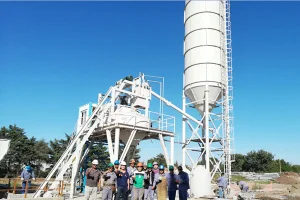
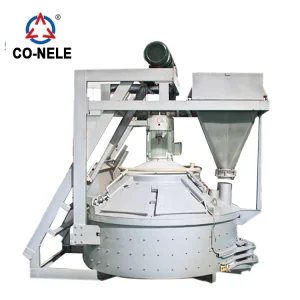
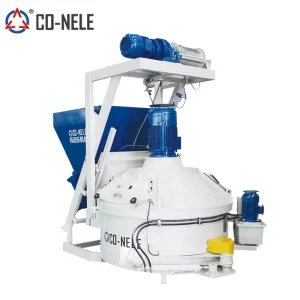
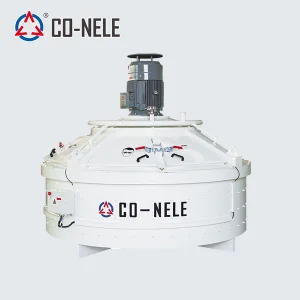
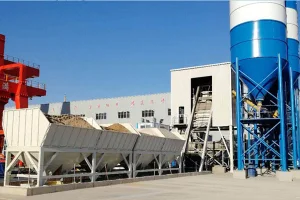
Precast factories require fast discharge speeds and zero material segregation. Utilizing specialized plant layouts such as the HZN35 or HZS60 equipped with CMP series planetary mixers, precast operators produce high-density concrete poles, kerb stones, prestressed girders, and architectural wall panels with uniform color distribution and flawless surface finishes.
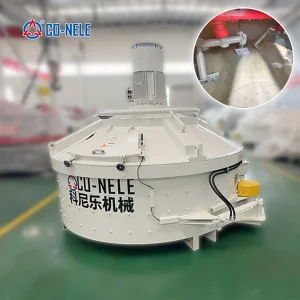
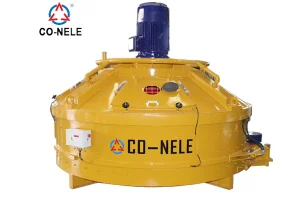
UHPC recipes feature extremely low water-binder ratios (<0.20) and high steel-fiber loading. Standard twin-shaft mixers often ball fibers together and generate excessive friction heat. CO-NELE UHPC planetary mixers utilize optimized star-blade trajectories to disperse fibers uniformly without shearing them, delivering compressive strengths exceeding 150 MPa for bridge joints and wind turbine foundations.
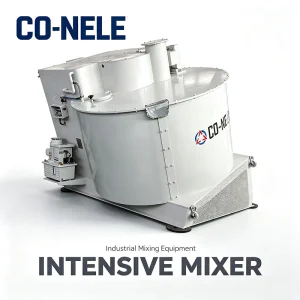
In steel mill linings and high-temperature furnace construction, refractory mixes must maintain ultra-consistent binder hydration. CO-NELE intensive mixers and refractory planetary units incorporate high-chrome diamond wear plates and adjustable mixing tools to process dense corundum, silicon carbide, and graphite formulas without contamination.
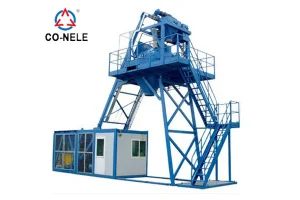
Contractors running highway repairs, dam projects, or remote tunnel linings require equipment that moves with the job site. Foundationless batch plants require no concrete foundation pits, installing on leveled steel pads within days. Mobile plants feature fully integrated trailer chassis housing aggregate bins, weighing hoppers, mixer, and PLC controls for immediate plug-and-play batching.
A granular breakdown of mechanical motion, shear distribution, and batch suitability to guide plant selection.
Modern CO-NELE concrete plants integrate microwave moisture sensors inside both the aggregate bins and the mixing pan. The Siemens PLC batching computer automatically calculates real-time sand moisture variations, dynamically adjusting batching water quantities down to the exact liter before mixing starts.
Global decarbonization requires plants capable of handling high replacement rates of blast furnace slag (GGBS), fly ash, calcined clays, and recycled aggregates. High-energy counter-current mixing ensures micro-fine pozzolanic materials disperse without clumping, maintaining target early strength profiles.
Remote monitoring gateways built into the plant control panel stream real-time operational data: gearbox oil temperatures, motor vibration specs, hydraulic pressure cycles, and wear-blade operating hours. Maintenance teams receive automated alerts before mechanical failures interrupt production.
Follow this structured engineering protocol when evaluating proposals from Chinese concrete plant manufacturers.
Theoretical capacity assumes zero wait time. Calculate actual hourly demand by multiplying rated capacity by an operational efficiency factor of 0.65 to account for truck positioning and aggregate filling cycles.
Match your recipe to the mixer. Ready-mix concrete with slump > 80mm works economically on Twin-Shaft (CHS). Dry-cast blocks, pavers, pipe production, or UHPC require Planetary (CMP) forced-action mixing.
Standard cast iron wears rapidly under harsh granite aggregate friction. Specify high-chrome alloy liners (Cr26) with hardness ≥ 60 HRC or rubber ceramic composites for abrasive applications.
Ensure electric motors match your local grid phase, voltage, and frequency. Demand premium pneumatic components (e.g., AirTAC or Festo valves) for reliable cylinder operation on aggregate gates.
Review our full range of industrial mixing systems for blocks, ceramic powder, dry mortar, diamond granulating, and mobile concrete applications.
Expert guidance compiled by CO-NELE senior process engineers to address common procurement and operation questions.