CO-NELEMixing & Granulation
Engineered for low-cement castables (LCC), ultra-low cement castables (ULCC), and complex ceramic formulations.
Analyzing the intersection of green steelmaking, high-temperature thermal processing, and advanced mixing kinematics in Eastern Germany.
The Berlin-Brandenburg metropolitan region has rapidly evolved from a classic manufacturing hub into Europe’s premier corridor for advanced clean technology, electro-mobility, additive manufacturing, and high-performance material synthesis. With the expansion of heavy industrial supply chains in nearby steelworks (such as Eisenhüttenstadt), glass plants, waste-to-energy incinerators, and chemical manufacturing complexes, the operational demands placed on thermal containment linings have reached unprecedented levels.
Refractory products—ranging from unshaped dense castables, insulating mixes, and oxide-bonded ceramics to high-alumina bricks—form the critical thermal barrier protecting high-temperature equipment from chemical corrosion, thermal shock, and mechanical abrasion. However, the performance of any advanced refractory matrix is fundamentally capped by the homogeneity of its wet or dry blend prior to installation.
In modern ultra-low cement castables (ULCC), ultra-fine silica fume and reactive alumina particles (under 1 micron) must be evenly distributed around coarse aggregates. Conventional tilting drum or twin-shaft mixers lack the necessary multi-directional shear vectors, causing micro-agglomerates that trap air and increase water demand. CO-NELE’s counter-current planetary technology breaks these agglomerates in seconds without degrading fragile lightweight aggregates, guaranteeing maximum mechanical cold crushing strength (CCS) after firing.
Bridging Chinese manufacturing excellence with stringent German engineering directives (DIN, VDI, CE, ISO).
Every industrial refractory mixer destined for Berlin plants is retrofitted with premium European components: Siemens S7-1500 PLC control architecture, SEW-Eurodrive motor configurations, and Eaton safety relays adhering strictly to CE Directives 2006/42/EC and EN 60204-1.
Refractory aggregates such as fused alumina, silicon carbide, and corundum rank extremely high on the Mohs hardness scale (8.5–9.5). CO-NELE utilizes interchangeable tungsten carbide overlay liners and Hardox 500/600 wear plates to extend component life beyond 120,000 continuous mixing cycles.
By leveraging CO-NELE’s vertically integrated 30,000 m² Qingdao manufacturing facility, European plant operators achieve up to 40% reduction in capital expenditure (CAPEX) while maintaining identical or superior mixing homogenies compared to legacy West European OEMs.
A rigorous engineering comparison of mixing mechanics for high-density refractory materials.
| Kinematic Parameter | Planetary Counter-Current Mixer | Intensive Shear Mixer (CR Series) | Conventional Twin-Shaft Mixer |
|---|---|---|---|
| Mixing Motion Principle | Revolution & rotation offset ratio (1:2.45) | Inclined rotating pan + high-speed counter rotor | Horizontal overlapping linear shear arms |
| Micro-Homogeneity (CV) | < 2.5% within 60 seconds | < 1.5% within 45 seconds (Granulation capability) | 4.5% - 7.0% (Struggles with micro-powders) |
| Dead Zone Ratio | 0.00% (100% pan floor coverage) | 0.00% (Multi-tier wall/floor scrapers) | 8.5% (Shaft ends & corner accumulation) |
| Wear Material Options | High-chrome alloy (HRC > 62), Carbide tiles | Sintered ceramic liners, Tungsten carbide spray | Standard Ni-Hard plates |
| Best Application in Berlin | Precast refractory shapes, LCC/ULCC castables | Advanced ceramics, dry granulates, synthetic refractory | Low-grade mass concrete / non-critical mortar |
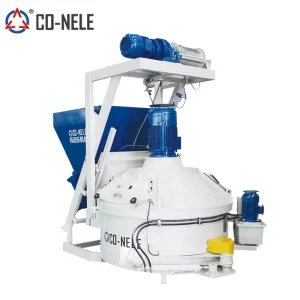
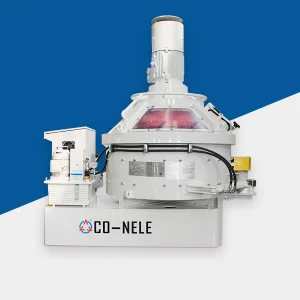
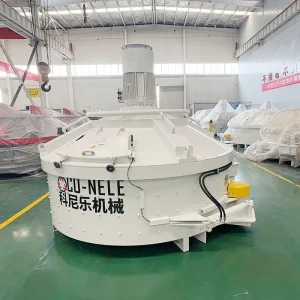
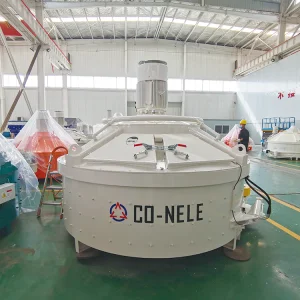
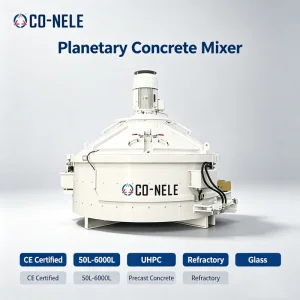
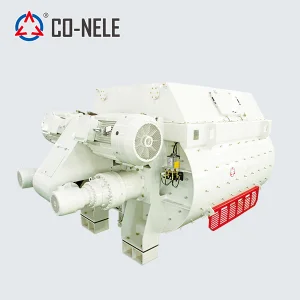
The core innovation of the CO-NELE Planetary Mixer lies in its custom-designed co-axial gearbox. As the main vertical shaft rotates, the mixing star arms revolve around the pan center while simultaneously spinning on their own axes at high velocity. This dual-action trajectory sweeps the entire mixing pan floor every fraction of a second, eliminating dead zones and ensuring that micro-silica fume, metallic fibers, and coarse synthetic aggregates are perfectly homogenized.
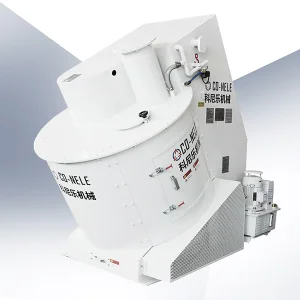
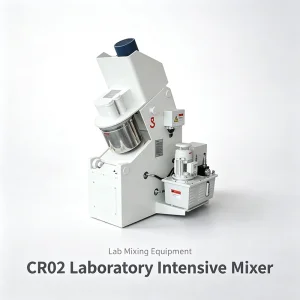
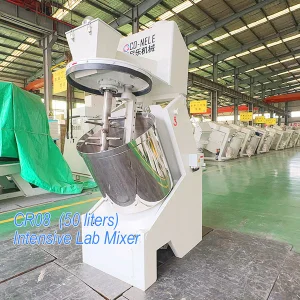
For specialized refractory powder preparation, the CR Series Intensive Mixer features an inclined mixing pan that rotates at moderate speeds, delivering raw material into the direct zone of a high-speed rotor. By varying the rotor speed (up to 30 m/s tip velocity), plant engineers can transition seamlessly from high-shear homogenizing to controlled spherical particle wet granulation, ideal for pressing high-density refractory bricks.
From initial laboratory testing in Qingdao to on-site commissioning and lifetime spare parts support in Berlin.
Plant managers in Berlin can dispatch 20–50 kg of raw refractory aggregates directly to our Qingdao R&D center. Our process engineers execute test batches across 5L–75L lab scale mixers, providing a complete diagnostic report with grain size distribution, moisture retention, and power torque curves prior to equipment purchase.
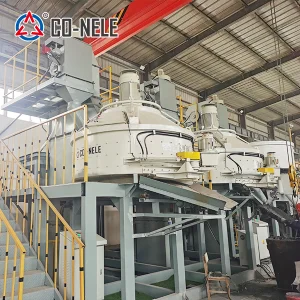
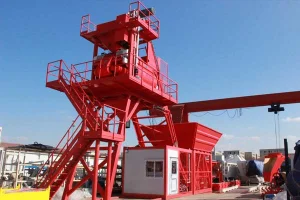
We supply modular, container-ready skid-mounted mixing plants. All wiring harnesses use industrial Harting connectors, pre-inspected for 400V/50Hz 3-phase German mains power networks, drastically reducing civil works and installation downtime on site.
CO-NELE maintains complete digital CAD archives for every machine manufactured since 2004. Standardized wear components (mixing blades, wall scrapers, discharge seals) ship with rapid air-freight options to Berlin within 72 hours, backed by remote augmented-reality commissioning support.
Predictive maintenance, sensor fusion, and real-time batch moisture optimization for next-generation plants.
Integrating microwave moisture probes directly into the mixing pan floor allows CO-NELE mixers to dynamically measure water content during dry and wet phases. The Siemens PLC automatically adjusts fluid dosing valves in real-time to compensate for raw material ambient humidity, keeping batch repeatability within strict tolerances.
By monitoring power frequency harmonics from the VFD motor drive, our smart control system detects subtle shifts in material viscosity and mechanical resistance. Plant engineers receive automated alerts when mixing arms reach critical wear thresholds, preventing unscheduled downtime and avoiding catastrophic internal gearbox failure.
Detailed engineering responses for procurement teams and process engineers serving the Berlin region.
Explore specialized machinery for refractory, precast, ceramic powder, and intensive batching applications.
Request a custom technical proposal, CAD integration plant layout, or schedule a material trial at our R&D mixing laboratory today.
Send Inquiry Now