CO-NELEMixing & Granulation
Precision-engineered vertical pan, planetary counter-current, and lab-scale intensive mixing units manufactured in Qingdao, China.
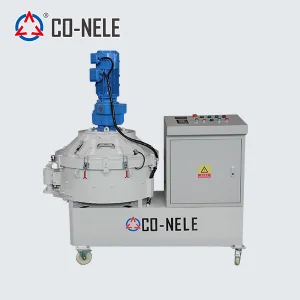
In modern material processing, traditional horizontal ribbon blenders, low-speed drum mixers, and conventional twin-shaft agitators frequently reach operational limits when processing ultra-fine powders, highly abrasive minerals, or cohesive fiber-reinforced pastes. A Vertical High Intensity Mixer engineered by leading China factories solves this by applying counter-current planetary kinematics, high shear velocity gradients, and controlled energy input inside a single mixing vessel.
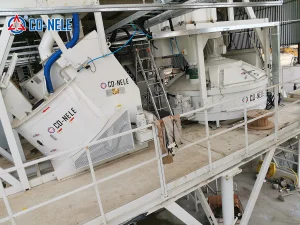
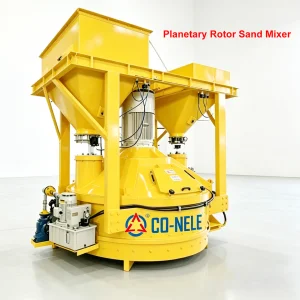
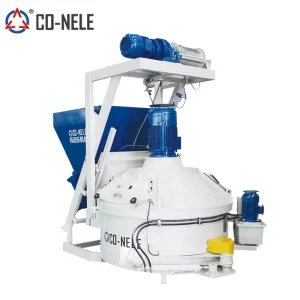
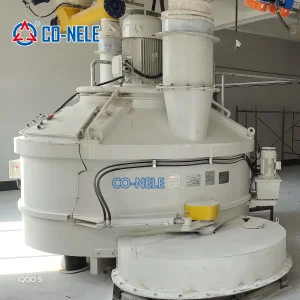
Unlike standard vertical pan mixers where mixing arms rotate along fixed concentric paths, high-intensity counter-current mixers feature off-center rotor stars that rotate rapidly in the opposite direction of the main rotating pan or drive cross. This dual-rotation vector creates a complex, three-dimensional flow pattern. Material particles are accelerated into overlapping high-shear zones, completely eliminating dead corners and preventing material agglomeration at the pan floor or walls.
Information Gain Key Takeaway: Mathematical modeling demonstrates that high-intensity vertical mixing achieves a Coefficient of Variation (CV) below 3% within 60 to 90 seconds of mixing time. This is accomplished by establishing a targeted high Froude Number ($Fr > 3.0$), forcing rapid kinetic transfer between micro-constituents without destroying delicate lightweight aggregates or shearing synthetic fibers destructively.
The core objective of high-intensity vertical mixing is uniform material coating at the micron scale. When dry powders such as silica fume, nano-alumina, or micro-silica are blended into liquid binders or polymer resins, inter-particle forces (Vander Waals attraction) create micro-agglomerates. Conventional mixers lack the specific kinetic dissipation rate required to break these sub-micron bonds.
By optimizing blade geometry, peripheral rotor speed (often exceeding 15 m/s to 30 m/s), and pan rotation ratios, vertical intensive mixers impart intense shear stress directly into the bulk material mass. This mechanics is critical for critical formulations such as Ultra-High Performance Concrete (UHPC), carbon-bonded refractory bricks, battery electrode dry mixes, and advanced technical ceramics.
| Kinematic Parameter | Standard Pan Mixer | Twin Shaft Mixer | Vertical High Intensity Mixer |
|---|---|---|---|
| Shear Energy Input | Low (0.5 – 1.2 kW/ton) | Medium (1.5 – 3.0 kW/ton) | High / Very High (5.0 – 15.0+ kW/ton) |
| Batch Homogeneity (CV%) | < 8% – 10% | < 5% – 7% | < 1.5% – 3.0% (Micro-level) |
| Fiber Dispersion Efficiency | Poor (Prone to balling) | Moderate | Optimal (3D isotropic matrix distribution) |
| Mixing Cycle Time | 120 – 180 seconds | 45 – 75 seconds | 30 – 90 seconds (Recipe dependent) |
| Applicable Viscosity Range | Low to Dry-cast | Medium / Slurry | Extreme (Dry powder to high-viscosity paste) |
Tailored vertical mixing technology configured for extreme thermal, abrasive, chemical, and physical processing environments worldwide.
Achieves dense binder dispersion in magnesia-carbon bricks, alumina-silica castables, and ceramic proppants. Special high-chrome wear liners ($Cr26+$) resist severe aggregate abrasion during dry micro-blending cycles.
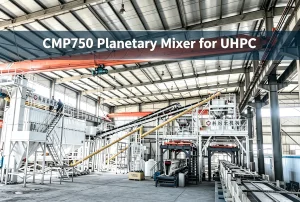
De-agglomerates micro-silica and evenly disperses steel or synthetic fibers in high-strength mixes ($>150\text{ MPa}$). Reduces air entrainment while minimizing water-to-cement ratios down to 0.16.
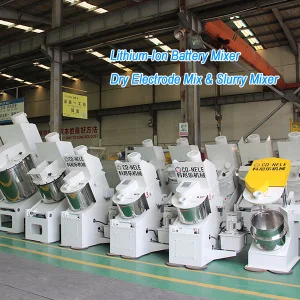
Designed for hermetically sealed dry electrode blending and cathode slurry dispersion. Prevents metallic iron contamination through non-magnetic ceramic coatings and titanium-alloy mixing tools.
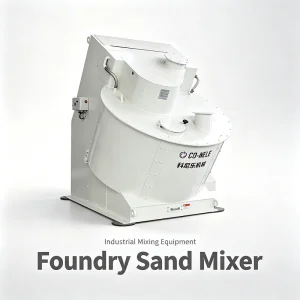
Rapidly coats quartz sand with phenolic resins, bentonite clay, and water additives. Delivers precise moisture distribution across green sand matrices for flawless casting mold surfaces.
Handles abrasive silica sand, cullet, soda ash, and micro-colorants. Sealed dust-free mixing pans with liquid spraying manifolds prevent hazardous air-borne particle escape during operation.
Integrates dual-action mixing and wet pelletizing into a single machine. Produces spherical granules with 90%+ target sizing without requiring secondary spray-drying equipment.
Inside China's premier mixing equipment production hubs: Advanced CNC machining, customized metallurgical wear plates, and rigorous load testing bench standards.
The transmission gearbox is the heart of any high-intensity vertical mixer. Conventional commercial speed reducers installed by assembly-only suppliers often experience premature tooth fatigue, seal degradation, and oil leaks under high thermal and mechanical shock loads. Leading Chinese manufacturers design and cast heavy-duty planetary gearboxes specifically tailored for high-shear mixing dynamics.
Featuring carburized, hardened, and ground alloy steel helical gears, these gearboxes operate with gear grinding precision reaching AGMA Class 12 (ISO Grade 6). Multi-stage lip seals and synthetic fluid bath systems guarantee zero oil leakage into the mixing pan, protecting sensitive material recipes from lubricant contamination.
To withstand intense continuous abrasion, Chinese vertical mixer factories employ advanced wear-resistant metallurgy customized for specific industrial applications:
The global processing industry is demanding higher digital integration, energy efficiency, and predictive maintenance capabilities. Future technological development in Chinese vertical high-intensity mixers is centered around four transformational pillars:
Integration of non-contact ultrasonic transducers and torque-feedback AI algorithms that continuously measure slurry viscosity, moisture content, and particle packing density in real time during the mixing cycle.
Adaptive VFD control systems that dynamically modulate rotor and pan speeds depending on the physical transformation state of the material (e.g., switching instantly from dry micro-blending to wet high-shear dispersion).
Full nitrogen-purged hermetic vessel designs capable of operating under positive pressure or high vacuum, enabling safe processing of flammable solvents, dry electrode materials, and hazardous toxic dusts.
When international EPC contractors, plant directors, and corporate procurement teams evaluate China Vertical High Intensity Mixer suppliers, evaluating key technical parameters beyond initial purchase price (CAPEX) is vital for ensuring long-term plant profitability and low Operational Expenditure (OPEX).
Energy consumption accounts for up to 45% of a high-intensity mixer's lifecycle cost. Modern Chinese mixers utilize high-efficiency IE3/IE4 premium efficiency motors combined with optimized planetary velocity ratios, reducing power consumption per batch ton by 15% to 25% compared to older gear-drive setups.
Tier-1 Chinese factories manufacture machinery fully compliant with international regulatory safety standards:
Leading suppliers implement rigorous Factory Acceptance Testing (FAT) prior to ocean dispatch. Every unit undergoes a continuous 8-to-24 hour dry run test, gearbox temperature indexing, noise emission mapping ($< 80\text{ dB}$), and dynamic vibration analysis. Optional customer material trial runs are conducted in lab facilities to confirm output particle sphericity, density, and mixing homogeneity before final shipment approval.
Answers to common engineering and procurement inquiries regarding vertical high intensity mixers.
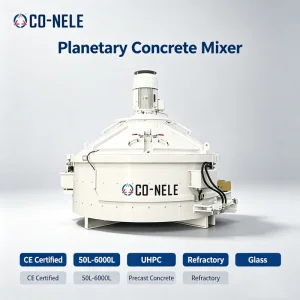
While both utilize vertical shaft designs, a planetary counter-current mixer features mixing stars that orbit around a central axis while counter-rotating, ideal for precast concrete, blocks, and UHPC. An intensive mixer features an inclined rotating mixing pan combined with a high-speed rotor turning at significantly higher RPMs, making it suitable for wet pelletizing, micro-granulation, and battery dry powder dispersion.
Under normal precast concrete processing, standard high-chrome liners ($Cr26$) deliver between 100,000 to 150,000 batch cycles. In extreme abrasive environments such as fused alumina refractories or quartz sand foundry processing, wear life ranges from 40,000 to 70,000 batches. All wear components are modular, bolt-on, and easily swappable during scheduled downtime.
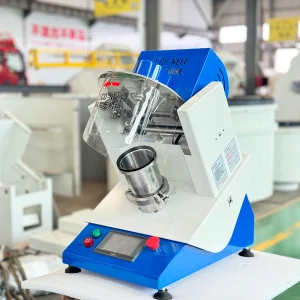
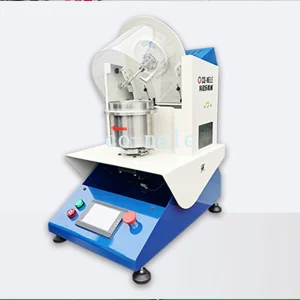
Yes. Laboratory vertical high-intensity mixers (5-liter to 50-liter capacity) are built using identical kinematic velocity R/r ratios, tip speed mechanics, and energy density curves as large industrial production models (up to 4,000 liters). Formula developments and scale-up parameters transfer seamlessly from pilot trials to full-scale manufacturing lines.
Export shipments include complete technical packages: mechanical foundation layouts, electrical schematics in English, CE conformity declarations, spare parts catalogs, and comprehensive operational manuals. Electrical cabinets are customized with Schneider/Siemens PLCs, VFDs, and voltage components matching the customer's site specifications.
Fiber balling occurs when low-shear mixers fail to break mechanical interlocking forces among steel or polymer fibers before cementitious hydration starts. The three-dimensional cross-shear flow in a vertical counter-current mixer rapidly separates fiber bundles, uniformly embedding individual fibers into the liquid matrix within 30 to 45 seconds of introduction.
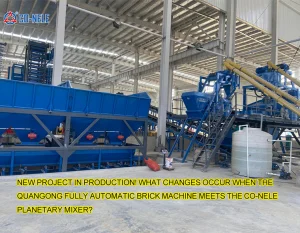
High-capacity mixers, batching systems, and specialized planetary equipment engineered for heavy industrial output.