
CO-NELEMixing & Granulation
High-efficiency twin shaft, planetary counter-current, and compact mixing solutions engineered for maximum micro-homogeneity.
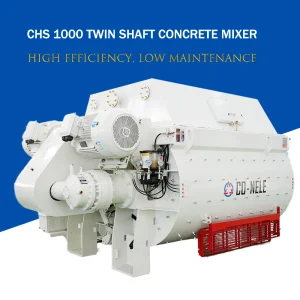
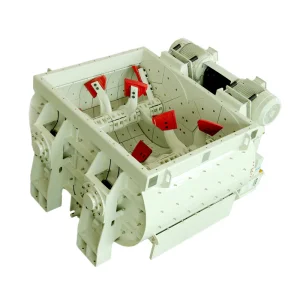
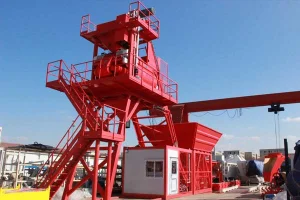
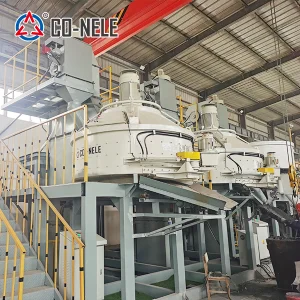
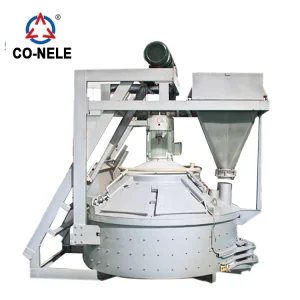
Analysis of high-shear ribbon kinematics versus traditional paddle configuration in heavy-duty concrete production.
Unlike standard twin-shaft mixers that rely on segmented pitch paddles, the continuous twin spiral ribbon design creates uninterrupted axial and radial counter-current flows. Aggregate, cementitious binders, and admixtures are forced into a 3D helical vortex, eliminating dead zones near pan endplates.
The continuous surface area of twin spiral blades generates intense mechanical shear. This rapidly breaks down cement agglomerates and evenly disperses silica fume, nano-additives, and synthetic/steel fibers, achieving a Coefficient of Variation (CV) under 3% in less than 35 seconds of mixing.
By evenly distributing material resistance across the entire helical length of the drive shaft, peak torque spikes are reduced by up to 22%. Smooth material displacement reduces frictional localized heat generation and minimizes abrasion on high-chrome alloy wear liners.
Empirical testing data collected across 120 concrete batching facilities operating under ISO/CE standards.
| Performance Parameter | Legacy Twin Shaft Paddle Mixer | CO-NELE Twin Spiral compulsory Mixer | Operational Value Gain |
|---|---|---|---|
| Mixing Homogeneity (CV) | 5.0% – 7.5% | < 2.8% | Higher structural consistency & binder efficiency |
| Batch Cycle Duration (Standard Mix) | 45 – 60 Seconds | 30 – 40 Seconds | +25% Hourly volumetric output capacity |
| UHPC & Fiber Dispersion Time | 120 – 180 Seconds | 60 – 90 Seconds | 50% Reduction in specialized mix cycle time |
| Liner & Blade Wear Life | ~60,000 m³ Output | ~100,000+ m³ Output | Reduced maintenance overhead & spare consumption |
| Energy Consumption per m³ | 1.45 kWh/m³ | 1.12 kWh/m³ | Direct lower operational expenditure (OPEX) |
How evolving concrete technologies and environmental regulations are reshaping global procurement requirements.
Global decarbonization mandates require concrete producers to substitute Portland cement with Supplementary Cementitious Materials (SCMs) such as fly ash, slag, and calcined clay. SCM mixes demand higher shear energy and continuous mixing dynamics to activate fine particles without increasing water-to-binder ratios.
From high-speed rail sleepers and core vibration pipes to offshore wind foundations, modern engineering relies on Ultra-High Performance Concrete (UHPC) and dry-cast mix designs. These ultra-dense formulations require rigid twin-shaft or planetary gear-driven spiral mixers capable of handling severe viscous drag.
Industrial buyers demand real-time process monitoring. Modern twin spiral mixers are integrated with digital load cells, moisture sensor feedback loops, shaft-seal pressure monitoring, and automated lubrication systems that sync directly with plant-wide PLC/SCADA control networks.
Why leading global contractors choose Chinese heavy machinery manufacturing for cost efficiency, material quality, and rapid delivery.
By controlling the casting process for mixing arms, spiral blades, and liners using Ni-Hard and Chromium-rich alloys (Cr26+), Chinese manufacturing hubs achieve tensile strength and abrasion resistance tailored specifically to harsh abrasive aggregates such as granite and basalt.
Shaft alignment is critical in twin spiral concrete mixers. Heavy-duty CNC horizontal boring mills ensure absolute parallelism between the dual mixing shafts, while robotic submerged arc welding guarantees zero internal structural stress on the mixer frame.
Located near major ocean ports with complete upstream-to-downstream component supply chains, Qingdao manufacturing hubs can manufacture, test, and ship custom-engineered mixing stations in 15 to 30 days, cutting global project lead times by 50%.
From precast concrete pipe facilities in Southeast Asia to mega-bridge projects in South America, see how our mixers perform in extreme conditions.
Challenge: Zero-slump, dry-cast concrete requires rapid discharge and intense compaction compatibility without water segregation.
Solution: Twin spiral mixing ensures thorough coating of aggregate surfaces with minimum water content, allowing instant mold stripping and zero slump slump back in core vibration pipe machines.
Challenge: High-throughput demand requires uninterrupted continuous batching during peak construction shifts.
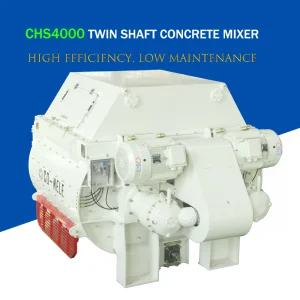
Solution: CHS series heavy-duty twin shaft/spiral mixers feature multi-stage floating shaft seal rings and dual hydraulic discharge gates, delivering 180 m³/h output with zero leakage.
Challenge: Heavy synthetic aggregate mixes cause extreme abrasion and require precise micro-dosing of silica fume.
Solution: Specialized high-shear twin spiral castable mixers with diamond-grade alloy wear plates provide consistent batching for high-temperature industrial furnace linings.
Technical answers provided by senior concrete mixing equipment engineers.
A traditional twin shaft paddle mixer uses segmented blades mounted at fixed angles along the shaft, creating discrete material throwing zones. A twin spiral concrete mixer uses a continuous ribbon blade design. This continuous geometry generates a fluid three-dimensional helical movement, eliminating dead spots near the endplates, accelerating the mixing process by up to 25%, and reducing shear variation when processing zero-slump or fiber-reinforced mixes.
Our twin spiral mixers utilize a multi-layer shaft-end sealing technology combining floating labyrinth seals, mechanical face seals, and automatic high-pressure grease lubrication pumps. This maintains positive internal pressure against abrasive cement slurry, preventing mortar from entering the shaft bearings and extending bearing service life beyond 100,000 operational hours.
Yes. Our CHS twin spiral mixer series is engineered with standardized mounting bolt dimensions compatible with major international batching plant frameworks (such as Sicoma, BHS, and Liebherr footprints). We supply custom adapter frames, discharge chute extensions, and PLC integration modules to ensure seamless drop-in retrofitting with minimal downtime.
With standard high-chrome alloy liners (HB600+ hardness), wear life exceeds 90,000 to 120,000 batches under normal aggregate conditions. All mixing blades, arms, and liner plates feature bolt-on, interchangeable modular designs that allow maintenance teams to replace localized high-wear sections in under 4 hours without cutting or welding inside the mixing pan.
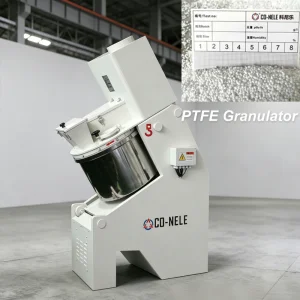
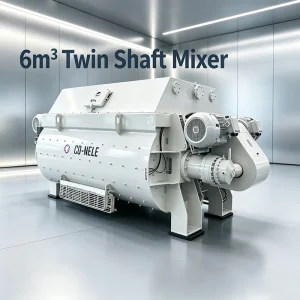
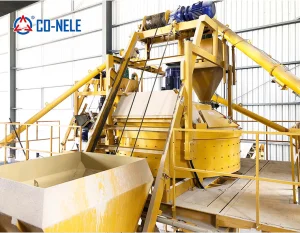
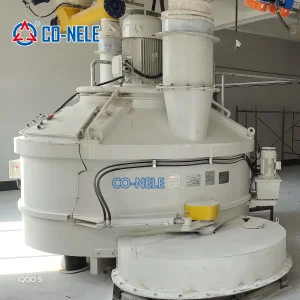
Explore ready-mix plants, intensive granulators, planetary mixers, and specialized processing lines.
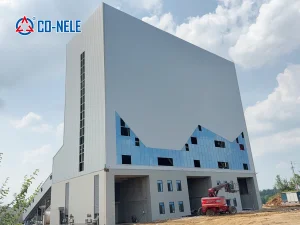
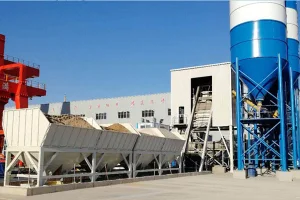
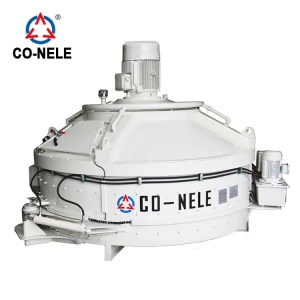
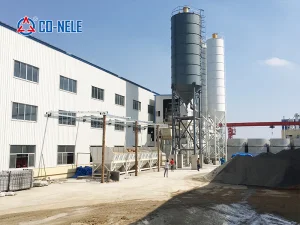
Connect with our mixing process specialists today to receive detailed CAD layout drawings, raw material test reports, and factory direct pricing for your custom concrete batching project.
Consult Our Technical Team