
CO-NELEMixing & Granulation
Precision-engineered compulsory mixing equipment engineered for maximum structural yield, abrasion resistance, and rapid discharge cycles.
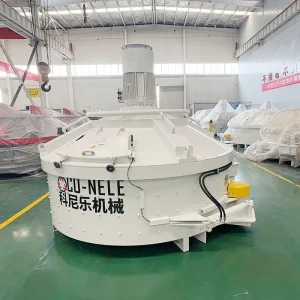
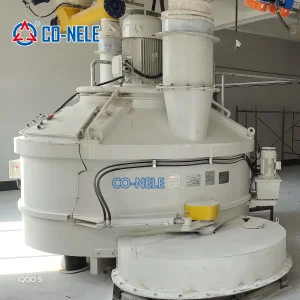
Analyzing the global migration toward forced twin-shaft mixing systems across mega-infrastructure, advanced materials processing, and energy storage sectors.
Massive transportation corridors, high-speed rail networks, deep-sea ports, and hydro-electric dams demand concrete with uniform compressive strength and zero segregation. Twin-shaft compulsory mixing generates intense 3D counter-turbulent shear zones, distributing binder particles homogeneously across aggregate matrices within 30 seconds.
In energy storage, technical ceramic manufacturing, and monolithic refractory formulation, dry electrode powders and viscous slurries require shear rates that overcome agglomeration forces. China’s advanced twin shaft machinery integrates automated liquid dosing and temperature-controlled jackets to meet these requirements.
International EPC contractors and industrial producers evaluate equipment via Total Cost of Ownership (TCO). Chinese OEM manufacturers deliver substantial capital expenditure optimization without sacrificing component quality, incorporating high-chrome alloy liners, planetary gear reducers, and Schneider/Siemens electrical architectures.
Understanding the fluid-particle velocity vectors, shear rates, and structural shaft seal designs that give twin shaft mixers superior performance.
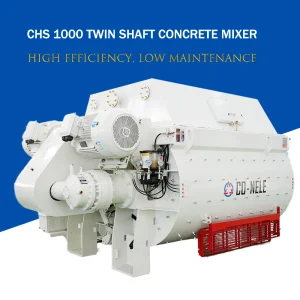
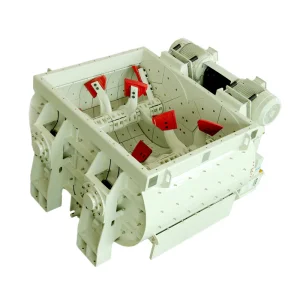
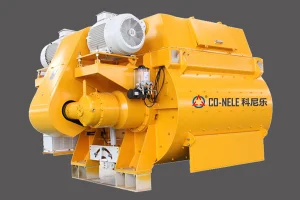
The operational core of a high-efficiency twin shaft concrete mixer rests upon twin horizontal shafts rotating in opposite directions at synchronized angular velocities ($\omega \approx 20\text{--}28 \text{ RPM}$). Mixing arms are arranged in a staggered helical trajectory along each shaft.
As materials enter the mixing trough, the opposing blades displace the material horizontally, vertically, and radially simultaneously. This generates a turbulent three-dimensional vortex at the center of the vessel. Unlike single-shaft ribbon blenders that push material along a single path, compulsory twin shaft mixing subjects every particle to high shear forces. This reduces cement binder agglomeration and achieves a uniform mix within 30 to 45 seconds of charging.
The primary failure mode in heavy-duty concrete and industrial mixing equipment is cement slurry ingress into main drive bearings. Advanced Chinese manufacturing addresses this with multi-tiered sealing systems:
| Performance Metric / Spec | CHS 1000 / 1500 Series | CTS 3000 / 2000 Series | UHPC High-Shear Variant | Dry Battery / Slurry Variant |
|---|---|---|---|---|
| Discharge Yield (Dry/Wet) | 1500L / 1000L | 3000L / 2000L | 750L / 500L | Variable (500L - 2000L) |
| Main Drive Power (kW) | 37 kW (Single/Dual Motor) | 2 x 37 kW / 2 x 45 kW | 55 kW Heavy Torque | 45 kW Explosion-Proof ATEX |
| Blade & Liner Hardness | Cr26 High-Chrome (HRC >62) | Ni-Hard IV / Cr28 Alloy | Tungsten Carbide Clad | Zirconia Ceramic / SUS316L |
| Discharge Gate Actuation | Hydraulic (16 MPa Pump) | Hydraulic Multi-Stage Valve | Pneumatic Fast-Drop Gate | Vacuum-Sealed Rotary Gate |
| Mixing Homogeneity (CV) | ≤ 5% in 30 Seconds | ≤ 3% in 35 Seconds | ≤ 1.5% Micro-Distribution | ≤ 0.8% Sub-Micron Trace |
Key criteria and financial frameworks used by engineering buyers to evaluate Chinese machinery investments.
Electric power consumption makes up over 40% of the long-term operational expense of concrete batching plants. China twin shaft mixers utilize optimized gear reductions (planetary drive units with energy transformation efficiencies exceeding 94%).
By completing a homogeneous mix in 30 seconds compared to 60-90 seconds in conventional planetary or single-shaft systems, overall energy consumption per cubic meter of concrete drops from 1.8 kWh/m³ down to approximately 0.95 kWh/m³. Over a 500,000 m³ production contract, this equates to significant electrical cost savings.
A major concern for buyers is machine downtime during liner and mixing arm maintenance. Chinese manufacturers standardize wear components using modular bolt-on design principles:
Tailored mixing systems engineered to meet the thermodynamic, chemical, and mechanical requirements of distinct global industries.
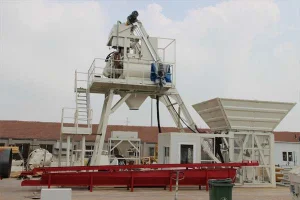
Configured for continuous high-speed batching plants ($60\text{--}240\text{ m}^3/\text{h}$). Twin shaft mixers like the CHS and CTS series integrate dual hydraulic discharge doors, automatic high-pressure washdown rings, and aggregate moisture compensation interface modules.
UHPC requires dispersing micro-silica fume and steel fibers without clumping. High-shear twin shaft variants feature increased motor torque, variable frequency drive (VFD) speed control, and wear-resistant tungsten carbide arm coatings.
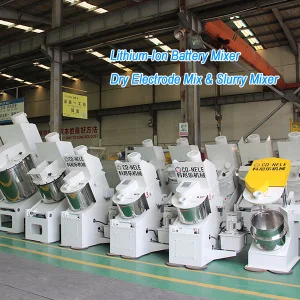
Hermetically sealed twin-shaft dry electrode and slurry mixers feature full SUS316L stainless steel contact zones, vacuum pressure capabilities (-0.098 MPa), and thermal cooling jackets to preserve raw material purity.
Preventing iron contamination is critical in optical glass and technical ceramic batching. Specialized mixers feature non-metallic ceramic tile linings (99% Alumina or Zirconia) and sealed dust-extraction ports.
Refractory castables require high forced-shear torque to mix ultra-dense dry aggregates with low water-binder ratios. Planetary and twin shaft refractory configurations feature extra-heavy gearboxes built to withstand tough materials.
For architectural precast, hollow-core slabs, and paver production, twin shaft mixers deliver consistent moisture levels across color-pigmented dry-cast and semi-dry batches.
Leading Chinese machinery suppliers are incorporating predictive AI monitoring, direct-drive motor technology, and zero-carbon material processing features.
Modern twin shaft mixers feature integrated IoT telemetry suites. Tri-axial vibration sensors on reduction gearboxes, acoustic emission sensors on main shaft bearings, and temperature probes embedded within mechanical seals stream real-time data directly to edge-computing PLCs.
Machine learning algorithms analyze operational signatures to detect micro-cavitation in seal oil, gear tooth spalling, or liner wear anomalies days before mechanical failure occurs. This turns unscheduled downtime into planned off-shift maintenance.
The next generation of mixing machinery replaces traditional belt drives and hydraulic couplers with high-torque Permanent Magnet Synchronous Motors (PMSM) directly coupled to planetary gearsets.
Eliminating drive belts cuts transmission energy losses by 6-8%, reduces footprint dimensions by 20%, and allows full dynamic torque control from zero speed up to maximum nominal RPM. This enables soft-start capabilities under fully loaded emergency stop conditions without tripping main circuit breakers.
Assuring seamless integration into global job sites with strict compliance standards and round-the-clock technical service agreements.
Fully compliant with EU Machinery Directive 2006/42/EC, EN 12151 safety norms, double safety-interlocked maintenance doors, and emergency stop systems.
Electrical control cabinets built with North American NEMA ratings, UL-listed wiring harnesses, and Schneider/Siemens switchgear rated for 480V/60Hz grid standards.
Manufacturing facilities operate under certified ISO quality management. Ultrasonic weld inspection, laser alignment of main shafts, and 4-hour dry testing are executed prior to dispatch.
Regional spare parts hubs across Europe, South America, Middle East, and Southeast Asia guarantee 48-hour delivery on critical wear items and 24/7 remote engineering support.
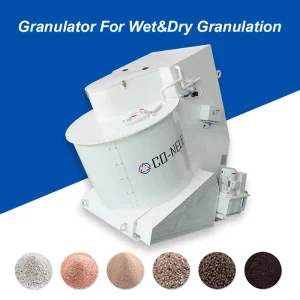
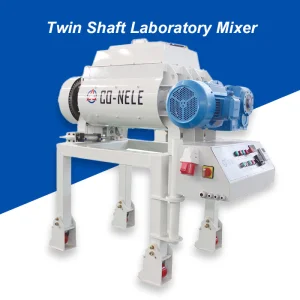
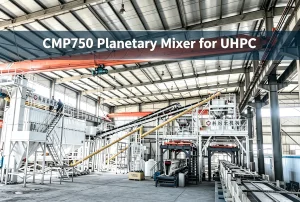
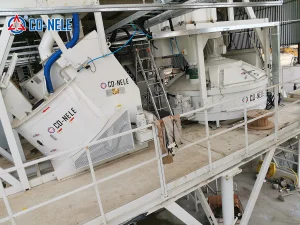
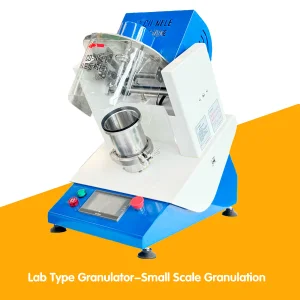
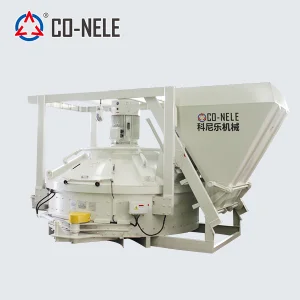
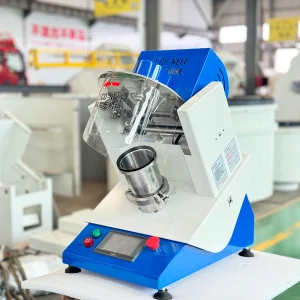
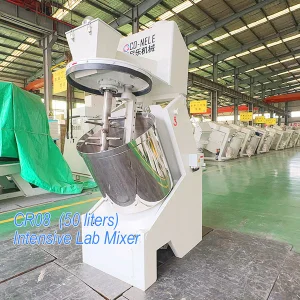
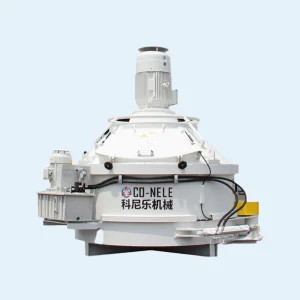
Planetary, lab-scale, batching plant, and granulating machinery engineered for high-performance production facilities worldwide.
Addressing key procurement queries, fluid dynamic mechanics, wear management protocols, and plant integration parameters.
Twin shaft mixers operate via compulsory counter-rotating synchronized horizontal shafts. Mixing arms are positioned to overlap in a helical geometry, generating intersecting three-dimensional turbulent flow fields. Material is subjected to axial displacement and intense radial shear simultaneously at the center zone. This overcomes particle surface tension and binder agglomeration in 30 to 45 seconds, achieving a mixing homogeneity coefficient of variation ($\text{CV} \le 3\%$). In contrast, gravity drum mixers rely solely on freefall cascading (taking 90–120s), and planetary vertical pan mixers struggle to clear dead zones along the outer radius at high volumes ($>2.0\text{ m}^3$ per batch).
Main shaft seal leakage is prevented using a multi-tiered isolation setup. Modern factories incorporate a quad-stage sealing architecture: (1) replaceable polyurethane floating ring seals that adapt to dynamic shaft bending under load, (2) an automated electrical multi-point grease injection pump maintaining continuous positive pressure ($>2.5\text{ MPa}$) to flush micro-particles outward, (3) a labyrinth grease channel filled with high-viscosity synthetic lubricant, and (4) outboard mounted main spherical roller bearings completely separated from the trough end-wall by a 50mm air gap. This setup prevents slurry ingress even if primary seals require service.
Standard liner tiles and mixing blades use high-chromium white cast iron alloys (Grade Cr26 to Cr28) conforming to ASTM A532 Class III Type A standards. The microstructural matrix contains embedded M7C3 primary chromium carbides yielding a surface hardness of HRC 62 to 65 (Brinell HBW > 600). For extreme wear environments—such as refractory castable mixing with crushed quartz or corundum—blades are clad with a tungsten carbide matrix ($WC/Co$) via vacuum plasma welding or equipped with modular sinter-bonded Zirconia ceramic tiles. This yields up to 150,000 batch cycles before requiring liner replacement.
Mixer sizing works backward from required hourly production rates ($\text{m}^3/\text{h}$) while accounting for real-world mechanical utilization efficiency ($\eta \approx 0.70\text{--}0.80$). The formula for nominal batch yield is: $$\text{Batch Capacity (L)} = \frac{\text{Target Hourly Output } (\text{m}^3/\text{h}) \times 1000}{\text{Batches Per Hour}}$$ Assuming a standard 60-second total cycle (15s aggregate/cement dosing, 30s compulsory mixing, 15s hydraulic gate discharge), a plant targeting $120\text{ m}^3/\text{h}$ executes 60 cycles/hour. Therefore, each batch must yield $2.0\text{ m}^3$ ($2000\text{ Liters}$) of compacted wet concrete. The corresponding machine selection is a twin shaft mixer with $3000\text{L}$ dry charging capacity and $2000\text{L}$ discharge output (such as the CTS 3000/2000 model).
For lithium-ion battery electrode mixing, silica powder processing, or explosive chemical dust environments, twin shaft mixers undergo specific modifications: (1) full stainless steel enclosure (SUS316L or SUS304) with surface polishing down to Ra < 0.4 μm to avoid metallic iron contamination, (2) ATEX Zone 21 / Zone 22 certified explosion-proof gearmotors and intrinsically safe sensor loops, (3) gas-tight nitrogen purging seals ($N_2$ blanket) maintaining positive inert pressure inside the vessel, and (4) dual-jacketed thermal fluid channels for cooling or heating dry material during high-shear dispersion.
Tier-1 manufacturing facilities implement a rigorous 5-step Factory Acceptance Testing (FAT) protocol prior to export packing: (1) 100% Non-Destructive Testing (NDT) via Ultrasonic and Dye-Penetrant inspection on main shaft load welds, (2) 3D Laser Tracker alignment of dual horizontal shaft parallelism (≤ 0.05mm angular deviation), (3) 4-hour continuous dry-run thermal baseline logging monitoring gearcase bearing oil temperature rise (ΔT < 35°C), (4) high-pressure hydraulic discharge gate seal testing at 16 MPa operating pressure, and (5) electrical insulation breakdown testing under IEC 60204-1 standards.