CO-NELEMixing & Granulation
Engineered for extreme wear resistance, micro-homogeneity, and high-throughput batching reliability.
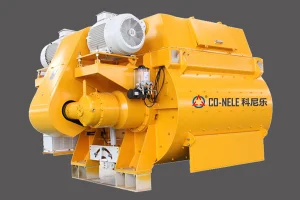
In modern industrial concrete production, the Twin Shaft Compulsory Concrete Mixer represents the pinnacle of forced-action mixing technology. Unlike gravity-based drum mixers or single-shaft spiral mixers, twin shaft mixers utilize two horizontal counter-rotating shafts fitted with synchronized mixing arms and paddles. This structural layout generates a continuous, three-dimensional turbulence zone within the mixing trough.
The core fluid dynamics advantage lies in the counter-rotating kinetic vectors. As the two shafts rotate inward at synchronized speeds (typically between 24 to 32 RPM depending on drum volume), the mixing arms overlap in the central zone of the tank. This overlap forces raw materials—ranging from fine cement particles ($<45\mu m$) and silica fume to coarse aggregates up to 80mm—into a intense turbulent cross-flow state.
High velocity gradients break up cement agglomerates rapidly, ensuring uniform distribution of hydration reactants and liquid admixtures within 15 seconds of charging.
By shifting material mechanically across overlapping radii rather than lifting it against gravity, energy consumption per cubic meter is reduced by up to 18% compared to single-shaft designs.
Features multi-layer floating seal rings combined with automatic grease lubrication pumps operating at continuous positive pressure to completely isolate slurry from drive bearings.
Global EPC contractors and ready-mix operators increasingly source batching plant systems from qualified Chinese industrial hubs such as Qingdao, Shandong. The competitive edge of a modern China Twin Shaft Mixer Factory extends far beyond labor cost efficiency; it stems from a fully integrated industrial ecosystem encompassing high-grade metallurgy, heavy CNC machining, and specialized drive transmission manufacturing.
The wear life of a concrete mixer's liners and mixing blades directly impacts operating expenditure (OPEX) and plant uptime. Leading Chinese factories deploy advanced alloy casting technology:
| Component | Material Composition | Hardness (HRC) | Expected Service Life (Batches) | Key Wear Mechanism Resistance |
|---|---|---|---|---|
| Trough Wear Liners | High-Chromium Cast Iron (Cr26) | ≥ 60 - 64 HRC | 120,000 - 160,000 | Severe sliding abrasion & Impact scratching |
| Mixing Blades / Paddles | Ni-Hard / Chromium-Manganese Alloy | ≥ 58 - 62 HRC | 100,000 - 140,000 | High-velocity impact & aggregate cleavage |
| Scraper Arms | Ductile Iron (QT600-3) / Cast Steel | Tensile Strength > 600 MPa | 200,000+ | Bending fatigue & torsional stress failure |
| Shaft Seal Rings | Tungsten Carbide / High-Polymer Elastomer | N/A (Pressure Sealed) | 80,000 - 100,000 | Fine particle slurry ingress & thermal wear |
Furthermore, China's localized supply chain enables seamless integration of premium international components—such as Bonfiglioli or Rossi gearboxes, Siemens PLCs, Schneider electronics, and WAM dust collectors—with heavy structural steel fabrications (Q355B/Q460 high-strength steel plate), resulting in a optimal blend of durability and cost-efficiency.
A complete Twin Shaft Concrete Batching Plant integrates material storage, dosing, conveying, weighing, mixing, and automated control into a cohesive unit. Chinese machinery manufacturers offer multiple plant configurations tailored to site geography, logistics, and output scale:
Designed for large-scale commercial ready-mix concrete (RMC) supply and major infrastructure (dams, bridges, airports). Features aggregate storage hoppers (100m³ to 400m³ capacity), inclined belt conveyors, and fully enclosed mixing towers producing 90m³/h to 240m³/h.
Engineered with integrated steel structure bases that eliminate the need for deep concrete foundations. Allows rapid installation within 3 to 5 days, ideal for leased land or short-term civil contracts.
Built on a heavy-duty towable trailer chassis incorporating aggregate bins, weighing belts, twin-shaft mixer, water/admixture scales, and foldable control room. Enables plug-and-play setup for road paving and remote projects.
| Model Spec | Charging Volume (L) | Discharging Volume (L) | Theoretical Yield (m³/h) | Mixing Motor (kW) | Max Aggregate Size (mm) |
|---|---|---|---|---|---|
| CTS 1000 / 750 | 1,200 L | 750 L | 37.5 m³/h | 2 x 18.5 kW | 60 / 80 mm |
| CTS 1500 / 1000 | 1,600 L | 1,000 L | 50 - 60 m³/h | 2 x 37 kW | 60 / 80 mm |
| CTS 3000 / 2000 | 3,000 L | 2,000 L | 90 - 100 m³/h | 2 x 37 kW / 2 x 45 kW | 80 / 100 mm |
| CTS 4500 / 3000 | 4,500 L | 3,000 L | 135 - 150 m³/h | 2 x 55 kW | 80 / 100 mm |
| CTS 6000 / 4000 | 6,000 L | 4,000 L | 180 - 200 m³/h | 2 x 75 kW | 100 / 120 mm |
Deploying concrete machinery worldwide demands strict compliance with regional safety codes, electrical standards, and environmental conditions. Chinese manufacturers like CO-NELE engineer export-grade batching equipment with localized adaptations:
Compliance with CE directives (Machinery Directive 2006/42/EC, Low Voltage 2014/35/EU), UL/CSA standards for North America, and EAC certification for Eurasian Customs Union markets. Custom dual-voltage transformers (220V–480V, 50Hz/60Hz) ensure seamless site power grid alignment.
Hot & Arid Climates (Middle East/Africa): Equipped with chilled water dosing systems, insulated aggregate bins, thermal protected motor enclosures, and dual-filter dust suppression systems.
Cold Climates (Scandinavia/Canada): Integrated boiler steam heating pipes inside mixing troughs and aggregate hoppers.
Utilizes multi-channel strain gauge load cells (OIML certified) achieving measurement accuracy of ±1% for cement and water, ±2% for aggregates, and ±1% for liquid chemical admixtures. Controlled via microcomputer SCADA systems with real-time moisture compensation.
The global construction sector is undergoing a transformation driven by decarbonization targets and digital automation. Modern batching plants are evolving rapidly:
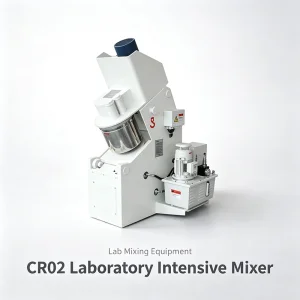
Advanced granulators, laboratory testing units, UHPC mixers, and specialized mortar equipment.
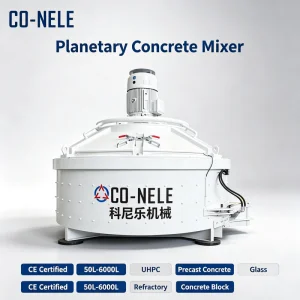
China Ultra-high performance concrete mixer Factory, Machine
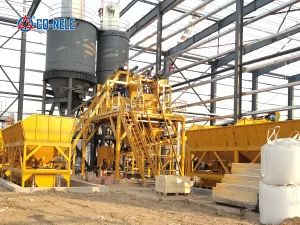
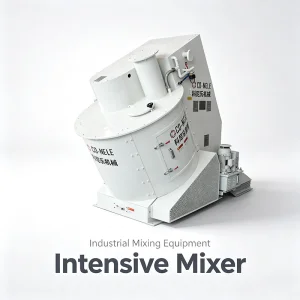
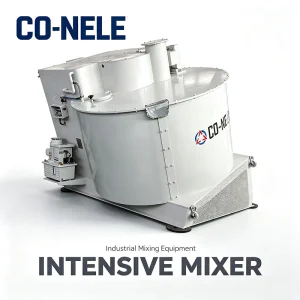
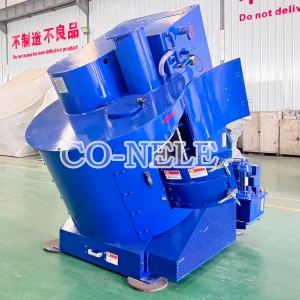
China high intensive mixer product mixing Castable Manufacturer, Machine
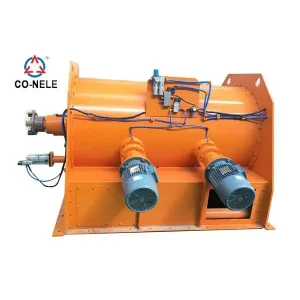
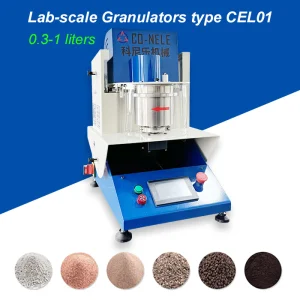
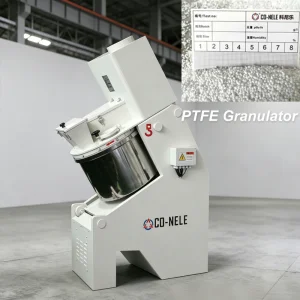
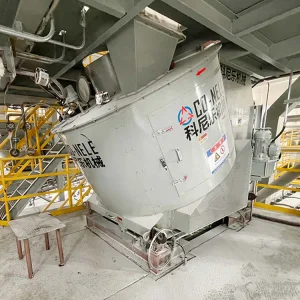
China Intensive Mixer for PTFE Granulator Manufacturer, Machine
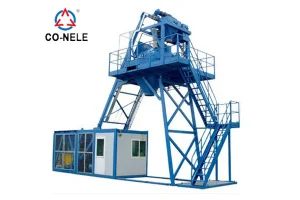
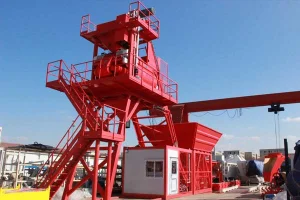
China 30m3/h Mobile concrete batching plant MBP08 Factory, Machine
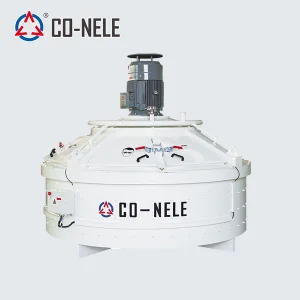
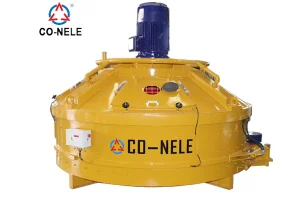
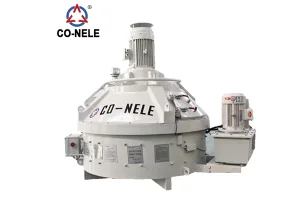
China Planetary Concrete Mixer Type CMP Manufacturer, Factory