CO-NELEMixing & Granulation
Standardized engineering equipment designed for fast deployment, high homogeneity, and severe application environments.
Shift in international infrastructure expenditures toward decentralized batching, modular agility, and reduced civil engineering overhead.
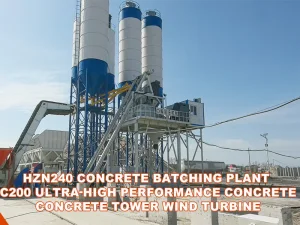
The global construction sector is undergoing a structural transition. Commercial contractors, municipal infrastructure developers, and specialized precast engineers are increasingly favoring **small portable concrete batch plants** over traditional capital-intensive, stationary installations. Driven by tighter project deadlines, urban infill constraints, and remote geographic challenges, the economic and logistical paradigm of concrete production has transformed.
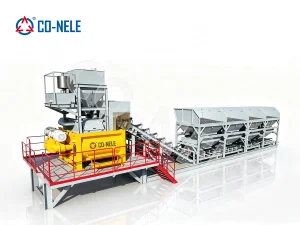
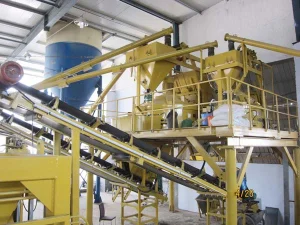
Modern metropolitan projects lack the spatial footprint required for standard stationary batch plants. Portable plants utilize compact containerized footprints (under 50m²), eliminating long-distance ready-mix truck delays and reducing transit-induced slump degradation in congested urban traffic.
Highway construction, railway expansion, bridge rehabilitation, and pipeline trenching require continuous relocation of batching assets. Portable foundationless designs allow equipment to advance in lockstep with project milestones, dramatically cutting hauling logistics costs.
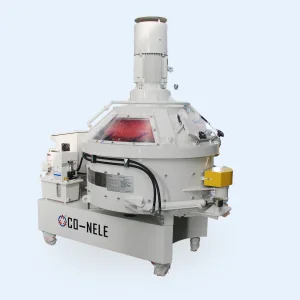
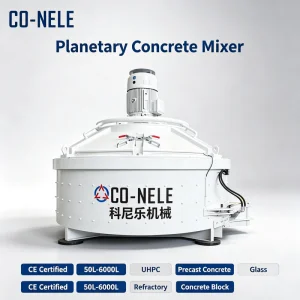
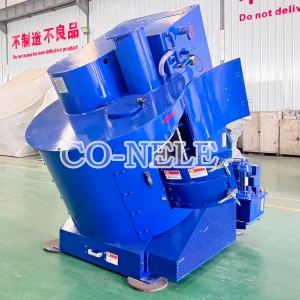
Emerging structural requirements—such as Ultra-High-Performance Concrete (UHPC), Glass Fiber Reinforced Concrete (GFRC), and specialized precast components—demand short mixing cycles and high shear. Small portable plants equipped with vertical planetary counter-current mixers ensure uniform dispersion of silica fume, micro-fibers, and chemical admixtures.
Evaluating a Chinese portable concrete batch plant manufacturer requires shifting focus from initial purchasing price (CAPEX) to operational metrics (OPEX). Key indicators include wear-part metallurgical longevity, PLC replacement component global availability, container shipping volume efficiency, and civil foundation requirements.
An inside look at advanced batching hydraulics, planetary counter-current mixing physics, and automated gravimetric dosing systems.
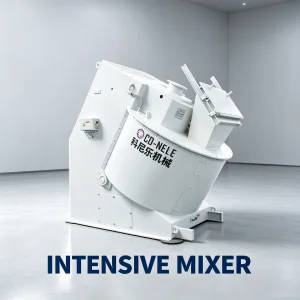
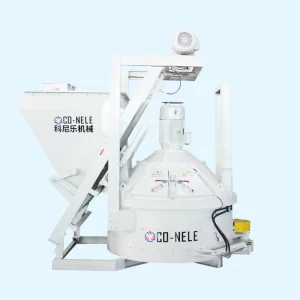
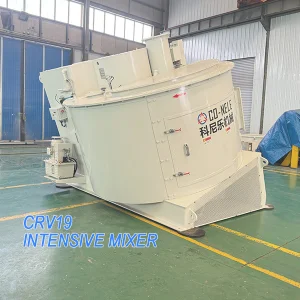
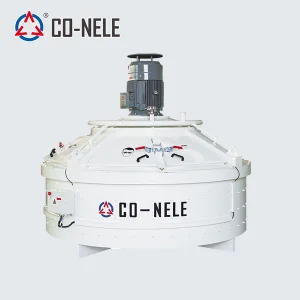
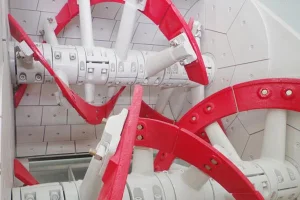
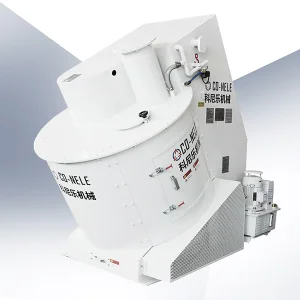
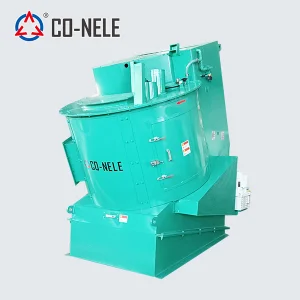
Small portable batching plants utilize two main compulsory mixing technologies. While twin-shaft mixers excel at high-volume wet ready-mix concrete (>2m³ per batch), vertical planetary counter-current mixers dominate small-scale, high-rigidity applications:
Achieving structural mix design compliance in mobile formats requires robust weight sensor integration:
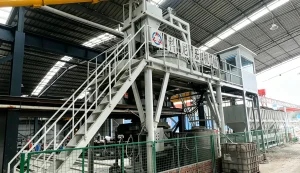
Engineering innovations have removed the need for deep reinforced concrete footings on temporary job sites:
| System Parameters | Compact Drag- Hopper Series | Trailer Mobile Series (T-Type) | Foundationless Modular Series |
|---|---|---|---|
| Capacity Range (m³/h) | 15 – 35 m³/h | 25 – 60 m³/h | 50 – 90 m³/h |
| Mixer Core Technology | Vertical Shaft / Planetary | Planetary / Twin-Shaft | Twin-Shaft Compulsory |
| Dosing Accuracy (Agg / Cmt) | ± 2% / ± 1% | ± 1% / ± 1% | ± 1% / ± 0.5% |
| Transport Protocol | 1x 40ft HQ Container | Integrated Towing Chassis | 2x 40ft HQ Containers |
| Setup Time Frame | 8 to 12 Hours | 4 to 6 Hours | 24 to 36 Hours |
| Control Automation | Semi-Auto / Fully-Auto PLC | Full Industrial PLC + Touch Screen | Multi-Screen SCADA System |
Navigating electrical, safety, and environmental standards across North America, the European Union, the Middle East, and developing economies.
Exporting to regulated markets requires comprehensive engineering verification:
Operational reliability under harsh ambient environments:
Ensuring high operational uptime across international sites:
Evaluation of raw aggregate sieve curves, target batch output (m³/h), site footprint, and electrical power capabilities.
3D CAD positioning, structural loading calculations, container loading plan optimization, and electrical schematic design.
Laser cutting, robotic welding, surface blasting, assembly, and dry-run testing under full motor load conditions.
Containerized dispatch, on-site mechanical erection guidance, electrical calibration, and plant operator training.
Extending wear component life cycles while ensuring recipe consistency across multi-shift industrial applications.
Mixer inner walls and floor liners are subjected to high abrasion from coarse aggregates. Top Chinese manufacturers utilize high-chromium alloy cast irons (Ni-Hard / Cr26) with hardness ratings exceeding **HBW 600 (HRC 58-62)**. Bolt-on segmental designs allow localized replacement without complete liner overhaul.
Sand moisture fluctuations disrupt the water-cement ratio ($w/c$). Portable batch plants feature high-frequency microwave moisture sensors embedded in aggregate hopper discharge gates. The PLC dynamically adjusts added water volumes in real time to maintain precise target slump.
Modern plant software maintains unlimited mix design recipes, tracks cement consumption, logs scale calibration histories, and generates automated dispatch notes. Cloud integration allows multi-plant operations managers to monitor production efficiency and batch accuracy remotely.
Explore our complete machinery portfolio, ranging from double-screw mixers to ultra-heavy-duty refractory batching systems.
Expert answers to direct procurement, installation, and engineering queries regarding small portable batch plants.