
CO-NELEMixing & Granulation
Explore our flagship heavy-duty sand preparation, planetary mixing, and automated batching equipment engineered by CO-NELE.
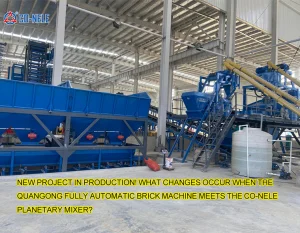
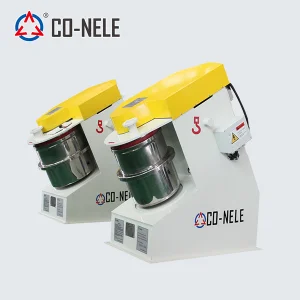
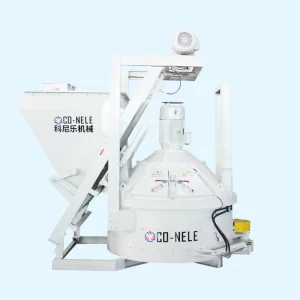
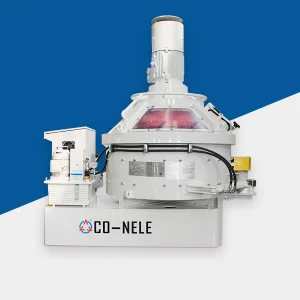
In modern ferrous and non-ferrous casting plants, the quality of molten metal pouring is strictly governed by the rheological and mechanical properties of the molding sand. A high-performance China sand mixture for foundry factory & machine setup is not merely a blending container; it is a precision chemical-mechanical reaction system. The homogenisation of silica sand, sodium bentonite, coal dust, water, or synthetic resin binders dictates casting surface finish, gas permeability, dimensional tolerance, and structural scrap rates.
Foundry sand preparation revolves around achieving complete binder film encapsulation around every individual quartz grain. Whether utilizing green sand for high-speed automated mold lines (such as DISA or HWS) or resin-bonded self-hardening systems (furan, phenolic urethane, or cold-box), inadequate mechanical dispersion results in localized binder agglomeration. This directly triggers fatal casting defects including scabs, pinholes, veinings, sand burn-on, and mold erosion during high-temperature molten metal impact.
Achieving zero-defect green sand preparation requires precise dynamic control over several key laboratory parameters during the rapid mixing cycle:
High-energy shear blades force water molecules into bentonite interlayers, converting raw clay into a fully activated binder envelope around sand grains within 60–90 seconds.
For no-bake furan and alkaline phenolic core sand, liquid binder consumption is reduced by 15-20% through hyper-homogeneous liquid atomization and non-destructive rotor stirring.
Integrated fluidbed or pan-bottom evaporative cooling systems regulate return sand temperature below 45°C, preventing premature moisture vaporization and binder breakdown.
Why leading global foundries are replacing old horizontal wheel mullers with CO-NELE intensive vertical rotor sand mixers.
Traditional foundry sand preparation relied heavily on heavy muller wheels that squeezed sand grains against a rotating pan floor. While effective in early mechanical foundries, wheel mullers suffer from low energy density, excessive grain crushing (which alters the AFS fineness number), high mechanical wear, and slow cycle times (3 to 5 minutes per batch).
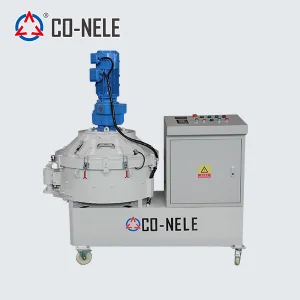
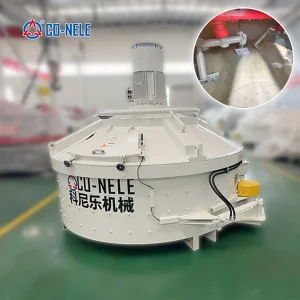
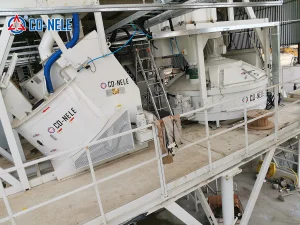
The modern China Sand Mixture Machine for Foundry Factory engineered by CO-NELE utilizes an advanced counter-current intensive mixing concept. The rotating mixing pan transports the sand charge into the path of high-speed eccentric rotor tools. Simultaneously, stationary wall and bottom scrapers continuously turnover material, creating 100% material circulation without dead zones.
| Performance Metrics | Legacy Wheel Muller / Paddle Mixer | CO-NELE Intensive Counter-Current Sand Mixer | Foundry Factory Benefit |
|---|---|---|---|
| Mixing Cycle Time | 180 – 300 Seconds | 60 – 90 Seconds | +200% Batch Throughput Output |
| Bentonite Addition Rate | 8.0% – 10.0% Mass Fraction | 6.5% – 7.5% Mass Fraction | 15-25% Raw Material Cost Savings |
| Compactability Standard Deviation | ± 4.5% Variance | ± 1.2% High Precision | Eliminates Sand Inclusions & Drops |
| Grain Crushing Rate | High (Excessive Fines Generation) | Zero (Kinetic Shear without Crushing) | Preserves Constant Sand Permeability |
| Scraper Wear Protection | Basic Hard-Facing Welding | Tungsten Carbide Armor Tiles | Service Life Exceeds 150,000 Batches |
Tailored sand preparation units designed for specific alloy foundries, molding technologies, and core-making processes.
High-volume gray iron and ductile iron foundries supplying OEM automotive engine blocks require continuous green sand consistency. CO-NELE intensive mixers integrate online moisture and compactability probes, adjusting water dosing dynamically in real time to match high-speed Flaskless Mold Lines (e.g., 400 molds/hour).
Producing 50-ton wind turbine hubs or excavator frames mandates self-hardening Resin-Bonded Sand (Furan/Alkaline Phenolic). CO-NELE continuous sand mixers feature dual-arm design, liquid micro-metering pumps, and fast-cleaning mixing troughs, eliminating premature binder curing and casting cold laps.
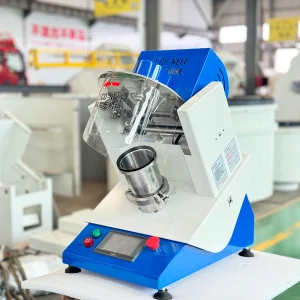
Complex internal hydraulic valve cores require micro-fine silica sand (AFS 55-70) blended with amine-cured phenolic urethane binders. CO-NELE lab-scale and batch mixers prevent friction heat buildup, maintaining core sand bench life while delivering flawless dimensional accuracy.
High-temperature alloy steel foundries utilize heavy chromite facing sand backed by reclaimed silica sand. CO-NELE heavy-duty mixers handle high bulk density materials (up to 2.8 t/m³) with custom reinforced planetary gearboxes without torque overload.
Choosing a China Sand Mixture for Foundry Factory manufactured by CO-NELE in Qingdao offers international casting enterprises unprecedented supply chain stability, technical depth, and cost efficiency. As a direct manufacturer—not a commercial trading company—CO-NELE maintains complete vertical integration over the entire production cycle.
Pioneering smart, eco-friendly, and digital-twin integrated sand preparation systems for modern green foundries.
Integration of microwave moisture sensors and optical compactability analyzers directly inside the mixing bowl. Machine learning algorithms automatically compensate for ambient humidity variations, maintaining ±0.5% moisture precision.
Adapting rotor geometry for next-generation inorganic and bio-based binders. Optimized low-shear mixing heads prevent premature degradation of fragile sugar/silicate binder networks while maintaining high bond strength.
IoT vibration sensors and motor torque monitoring upload real-time telemetry to foundry SCADA systems. Wear scraper life and oil lubrication intervals are calculated dynamically to prevent unplanned molding line stoppages.
Exporting industrial sand mixing machinery to foundries across Europe, North America, Southeast Asia, and the Middle East requires strict adherence to international electrical, mechanical, and safety standards. CO-NELE equipment is fully customized to match destination site requirements:
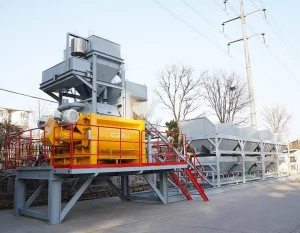
Select from our extended lineup of ceramic granulators, mobile batching plants, and heavy-duty industrial mixers.
Answers provided by CO-NELE senior foundry equipment engineering consultants.
Traditional low-shear mixers leave a significant portion of bentonite in unactivated agglomerates or clumps. CO-NELE intensive counter-current mixers apply high kinetic energy shear directly to the sand-clay-water mixture. This action mechanically shears and smears the bentonite platelets into an ultra-thin, continuous film enveloping every individual silica grain. Because 100% of the added clay is activated, foundries can reduce total bentonite addition by 15% to 25% while maintaining or improving Green Compression Strength (GCS) and Wet Tensile Strength (WTS).
Yes. Steel foundries frequently use chromite or zircon facing sand which has a much higher bulk density (up to 2.8 t/m³) compared to standard quartz silica sand (1.5 t/m³). CO-NELE builds heavy-duty sand mixers equipped with engineered planetary gearboxes designed specifically to handle high torque starting loads without drive slip or gear tooth pitting.
Hot return sand (exceeding 50°C) causes rapid water evaporation, leading to compactability spikes and severe molding defects. CO-NELE intensive sand mixers can be configured with an integrated evaporative cooling system. Low-pressure air is blown through the fluidized sand bed inside the mixing bowl, dynamically evaporating injected micro-water droplets to lower sand temperature below 40°C before binder dosing occurs.
Quartz silica sand is highly abrasive (Mohs hardness 7). To maximize uptime, CO-NELE equips all mixing scrapers and rotor arms with bolt-on tungsten carbide armor tiles and high-chromium alloy liner plates (HRC ≥ 62). Under standard multi-shift green sand operations, scraper tools typically exceed 120,000 to 150,000 mixing cycles before requiring quick-change tile replacement.
Absolutely. CO-NELE provides custom engineering interface designs. Our technical team produces CAD/BIM drawings to match the exact discharge height, surge hopper flange, batch weighing hopper, and PLC communication protocols (Profinet, Ethernet/IP, Modbus) of your existing automatic molding plant.
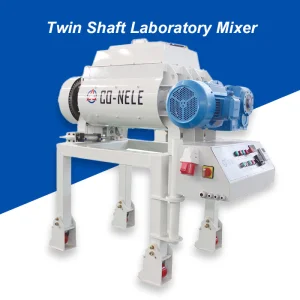
CO-NELE operates an advanced materials testing laboratory in Qingdao. International clients can ship a 20 kg sample of their raw silica sand, bentonite, or resin binder. Our process engineers execute test batches using 5L to 50L lab-scale intensive mixers, generating a comprehensive test report detailing compactability, green compression strength, optimal cycle time, and recommended scale-up production model.