
CO-NELEMixing & Granulation
Explore our core engineering line-up designed for high-density castables, precast units, and intensive material granulation.
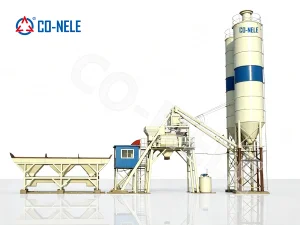


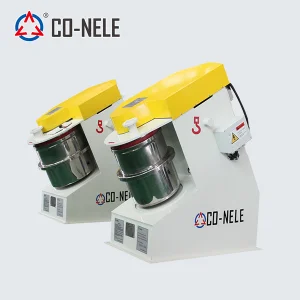
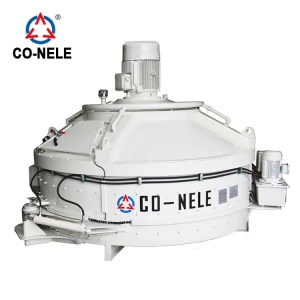
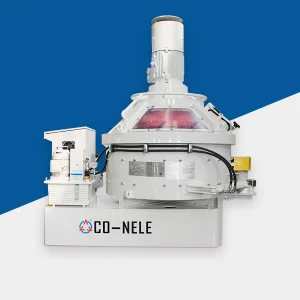
In high-temperature thermal processing industries—ranging from iron and steelmaking to petrochemistry, cement calcination, and glass manufacturing—the performance of refractory materials directly dictates operational uptime, thermal efficiency, and safety. Monolithic refractories, such as Ultra-Low Cement Castables (ULCC), Low Cement Castables (LCC), Zero-Cement Castables (ZCC), and dense plastic ramming mixes, rely heavily on ultrafine powders (e.g., microsilica, reactive alumina) and precise water or liquid binder additions. Achieving maximum bulk density and high cold crushing strength (CCS) requires a mixer that does more than simply move material around; it must deliver intense, controlled mechanical energy to break agglomerates and evenly disperse liquid films across coarse aggregates and nano-scale matrices.
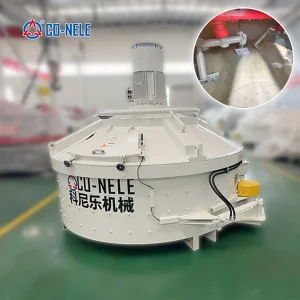
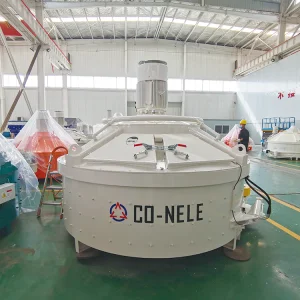
A specialized China Refractory Pan Mixer operating on counter-current planetary kinematics represents the apex of modern forced-action batch mixing. Traditional gravity drum mixers or single-shaft horizontal mixers fail to process high-viscosity, low-moisture refractory formulations, leaving unmixed dry balls, segregation, or localized binder concentrations. By utilizing high-shear planetary mixing stars that rotate on their own axes while revolving around a central axis, refractory pan mixers guarantee 100% material sweep within the mixing bowl, reducing mixing cycle times while achieving a Coefficient of Variation (CV) under 3%.
Core Engineering Rule: The thermal shock resistance and slag corrosion resistance of a castable refractory are lost not in the kiln, but in the mixer. Incomplete dispersion of microsilica leads to structural porosity and premature thermal spalling.
This technical whitepaper examines the design principles, metallurgy, manufacturing capabilities, and global procurement strategies associated with high-performance refractory pan mixers manufactured by leading OEMs in Qingdao, China. Built upon two decades of empirical mixing telemetry and heavy industrial manufacturing, this guide provides EPC contractors, plant managers, and refractory formulators with actionable engineering criteria to optimize material processing.
Understanding the structural engineering, metallurgic supply chains, and cost-efficiency advantages of sourcing industrial pan mixers from China's industrial manufacturing hubs.
Qingdao's industrial machinery cluster hosts dedicated foundries specializing in high-chrome alloys (Cr26, Ni-Hard) and heavy planetary reducers. Raw material sourcing for high-strength structural steels and precision machining occurs within a 50km radius, reducing lead times and component overhead.
Rather than off-the-shelf commercial gearboxes, leading Chinese refractory pan mixer factories design and build reinforced planetary gear reducers in-house. These gearboxes feature hardened gear teeth with high safety margins (SF ≥ 2.0) capable of absorbing severe shock loads from sticky castable batches.
Refractory aggregates (corundum, silicon carbide, bauxite, sintered magnesia) are extremely abrasive. Chinese manufacturers integrate modular, bolt-on wear liners made of chromium carbide cladding, ceramic tiles, or cast high-chrome alloys, extending service life to over 100,000 batches.
By leveraging advanced automated welding robotics, large-scale CNC gantry milling, and lower structural manufacturing costs, China refractory pan mixer factories deliver European-grade mixing performance at 35% to 50% lower initial capital expenditure.
The Qingdao heavy machinery ecosystem combines maritime logistics access through Qingdao Port with proximity to Shandong’s massive refractory raw material mines. This unique geographic and industrial alignment enables OEMs to perform continuous full-load dry and wet testing with synthetic aggregates before shipping machinery globally.
The global steel, glass, and non-ferrous alloy industries are undergoing a major shift toward unshaped, monolithic refractories. Pre-cast shapes, self-flowing castables, and gunning mixes are replacing traditional fired bricks due to lower installation labor and joint-free thermal barrier continuity. However, these modern chemical formulations present severe mixing challenges:
Traditional ring pan mixers rotate blades along fixed circular concentric paths. This leaves unmixed dead zones near the center and walls, requiring longer mixing times and causing uneven wear. In contrast, a Counter-Current Planetary Refractory Pan Mixer drives the mixing arms in an overlapping, counter-directional figure-eight trajectory.
The mixing stars sweep every square millimeter of the pan floor and sidewalls every 4 revolutions. Zero dead zones ensure no raw material escapes high-energy shear forces.
Bottom-mounted pneumatic or hydraulic discharge gates open rapidly. The rotating wall scraper blades actively force sticky refractory batches out within 10 to 15 seconds.
By shortening cycle times from 5 minutes down to 60 seconds, the mixer prevents friction-induced heating of heat-sensitive binders and accelerating additives.
Refractory pan mixers engineered in China serve tailored engineering roles depending on the operational environment of the processing plant.
Scenario: Iron ladles, torpedo cars, tundish working linings, and blast furnace main troughs.
Mixer Setup: Heavy-duty planetary mixer with high-torque gearboxes and water-dosing meters. Processes dense Al₂O₃-SiC-C castables with steel fiber reinforcement without blade stalling.
Scenario: Preheater cyclones, calciner ducts, kiln hoods, and cooler side walls.
Mixer Setup: Mobile or semi-stationary refractory pan mixers equipped with forklift pockets and pneumatic rubber tires for rapid on-site relining during planned maintenance shutdowns.
Scenario: Regenerator checker bricks, feeder channels, and aluminum furnace ramps.
Mixer Setup: Intensive pan mixers configured with stainless steel lining options or ceramic tiles to prevent iron contamination in high-purity silica or zircon refractory mixes.
Scenario: Fluidized bed combustors (CFBC), FCCU risers, and hazardous waste incinerators.
Mixer Setup: Pan mixers integrated into fully automated batching systems with dust collection, loss-in-weight feeders, and digital batch logging for strict compliance audit trails.
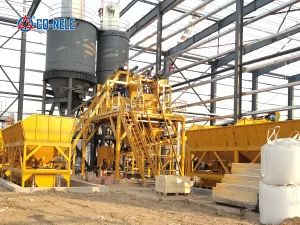
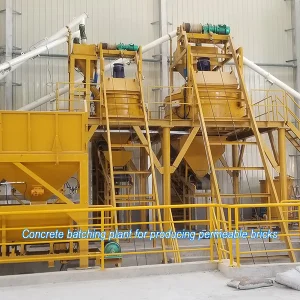
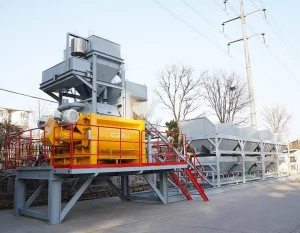
A standalone refractory pan mixer is only as effective as the upstream batching and downstream conveyance infrastructure surrounding it. Modern industrial installations feature fully automated refractory mixing plants that minimize manual operator intervention, reduce toxic silica dust exposure, and guarantee batch repeatability.
A structured technical evaluation framework for procurement teams, plant engineers, and EPC directors evaluating China refractory pan mixer suppliers.
Verify that the planetary reducer is purpose-built for compulsory mixing. Demand a gear service factor (SF) of at least 1.8 to 2.2, hardened helical gears, and dual shaft seals with oil-leak alarm telemetry.
Ensure wear liners are divided into standardized, interchangeable tiles rather than large monolithic plates. This allows localized replacement of high-wear areas (such as outer blade tracks) without replacing the entire pan lining.
Confirm the equipment carries CE marking, ISO9001 quality system certification, and electrical enclosures rated to IP65 or higher. Motors must support local grid voltages (e.g., 380V 50Hz, 440V 60Hz, 480V 60Hz).
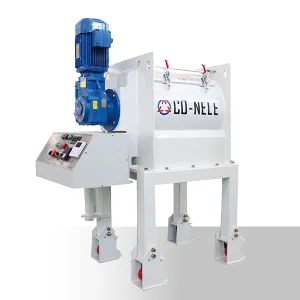
Explore planetary concrete mixers, twin-shaft units, and lab-scale batching machinery for precise recipe development.


Direct technical answers covering equipment selection, wear life, fiber dispersion, and custom manufacturing capability.
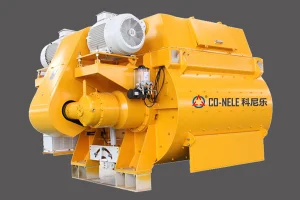
Twin-shaft mixers excel at high-volume wet concrete, but their parallel shaft kinematics create dead zones near shaft ends when handling dry, low-cement, or sticky refractory formulations. A planetary counter-current mixer uses complex overlapping star paths that continuously shear fine matrix powders, breaking down agglomerates without causing segregation or shaft sealing failures.
For highly abrasive aggregates like silicon carbide (SiC) or electro-fused corundum (Al₂O₃), standard AR400 steel liners wear out rapidly. We recommend high-chromium cast iron alloy liners (Cr26, hardness ≥ HRC 62) or bolted alumina ceramic tile linings. Blades should be clad with tungsten carbide hardfacing along their leading edges.
Polypropylene micro-fibers and metallic stainless steel fibers must be added without clumping into "bird nests." Our planetary mixers feature high-speed choppers/whirler blades operating alongside the main mixing stars. The high velocity breaks open fiber bundles and homogenizes them throughout the dry batch before liquid addition.
Yes. Chinese OEMs offer custom structural modifications including compact low-profile gearboxes, customized frame heights, multiple discharge gates (hydraulic or pneumatic), and tailored inlet chute configurations to integrate seamlessly into existing brownfield refractory plants.
A standard batch cycle consists of: Dry powder pre-mixing (15-20 seconds), liquid/binder addition (15 seconds), high-shear wet mixing (30-45 seconds), and rapid bottom-gate discharge (10-15 seconds). Total batch cycle time ranges between 75 and 95 seconds.
Contact our senior process engineering team to review your refractory formula, calculate machine sizing, or schedule a raw material test in our Qingdao application laboratory.