CO-NELEMixing & Granulation
Explore our industrial-grade concrete machinery, engineered in Qingdao for precision batching, precast elements, UHPC, and specialized material preparation.
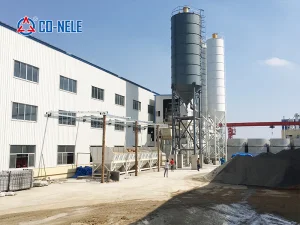
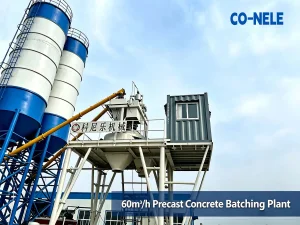
Analyzing key structural shifts in concrete batching plant design, environmental compliance, and high-precision mixing technologies across global mega-projects.
Modern RMC plants must handle complex mix designs incorporating high percentages of Fly Ash, Ground Granulated Blast-furnace Slag (GGBS), calcined clays, and silica fume. Chinese manufacturers are pioneering dynamic dosage and shear-intensive planetary mixing to overcome micro-agglomeration in low-water, low-cement formulations.
Transitioning from manual compensation to high-frequency microwave moisture probes installed inside aggregate bins and mixing pans. Closed-loop SCADA systems auto-adjust water and admixture additions in real-time, holding target water-cement (W/C) ratios within tolerances as tight as ±0.01.
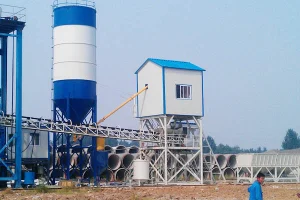
Global contractors demand fast assembly and minimal site civil works. Containerized, compact, and mobile batching plants eliminate months of foundation preparation, allowing high-throughput RMC setups to be fully operational within 7 to 10 days of arrival on site.
Achieving structural homogeny requires matching mixer blade geometry, rotational speed, and shear profiles to specific batch characteristics.
In the concrete manufacturing sector, the choice of mixer core defines plant efficiency, maintenance overhead, and final compressive strength uniformity. Standard gravity or tilting mixers are no longer sufficient for structural infrastructure. China's leading RMC machinery engineers focus on two dominant compulsory mixing technologies:
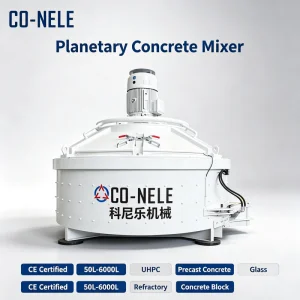
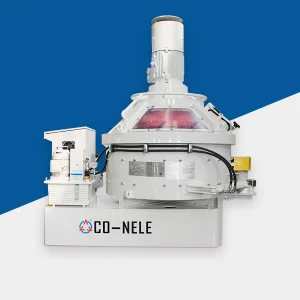
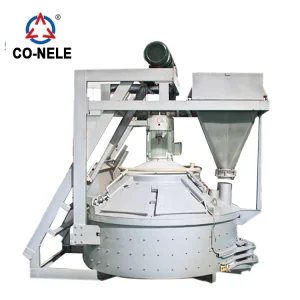
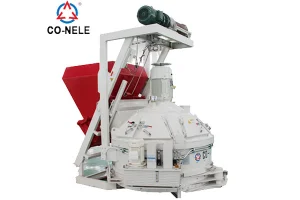
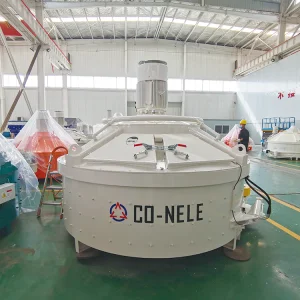
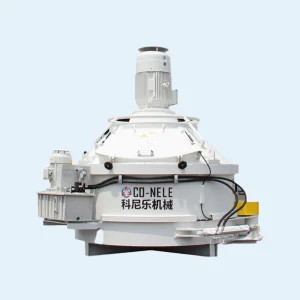
Planetary concrete mixers operate on a synchronized counter-current drive mechanism. The mixing arms revolve around the central vertical axis while simultaneously rotating at high speeds around their own planetary axes. This dual-rotation motion creates violent turbulence across every cubic centimeter of the mixing pan without leaving dead zones.
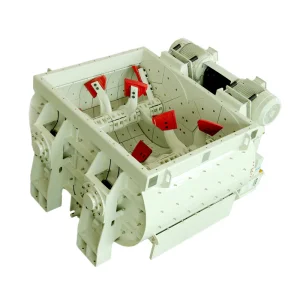
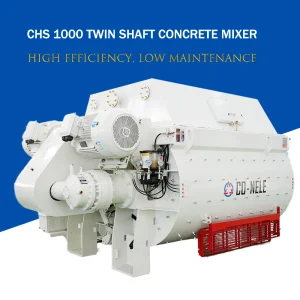
Twin-shaft concrete mixers utilize counter-rotating horizontal shafts fitted with multi-angle mixing paddles. The intersecting paddle arcs create a localized weightless zone at the center of the mixing chamber, fluidizing aggregates and enabling ultra-rapid mixing cycles.
Key parameters international EPC contractors and commercial concrete producers evaluate when sourcing mixing plants from China.
Initial capital investment (CapEx) accounts for only 20-25% of a plant's lifetime cost. Chinese OEM engineering focuses on low OpEx: energy-efficient motor-reducers, quick-change wear plates, and low-maintenance pneumatic discharge gates.
Leading Chinese exporters build systems using globally serviceable components: Schneider/Siemens electrical switchgear, WAM dust filters and butterfly valves, SKF bearings, and AirTAC pneumatic cylinders to ensure universal local spare-part availability.
Export units comply with European CE Machinery Directive (2006/42/EC), ISO 9001 quality management systems, and optional UL/CSA electrical panel standards required for North American infrastructure markets.
From massive dam constructions to specialized refractory linings, specialized batching machinery adapts to exact material physics.
| Application Sector | Recommended Plant / Mixer Type | Key Engineering Requirement | Throughput & Batch Cycle |
|---|---|---|---|
| Commercial Ready-Mix (RMC) | Stationary HZS Series with Twin-Shaft Mixer | High volume output, enclosed environmental dust extraction, multi-silo management | 60 m³/h – 240 m³/h (30–45 sec mixing time) |
| Precast Elements & Pipe Lines | HZS Precast Plant with Planetary Counter-Current Mixer | Zero segregation, micro-homogeneity, strict color consistency, dry-cast capability | 30 m³/h – 90 m³/h (60–90 sec mixing time) |
| Ultra-High Performance Concrete (UHPC) | Specialized Intensive UHPC Planetary Mixer | High shear energy, efficient fiber dispersion, temperature-controlled water dosing | 150 L – 3,000 L per batch (90–150 sec mixing time) |
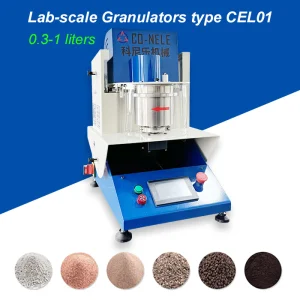
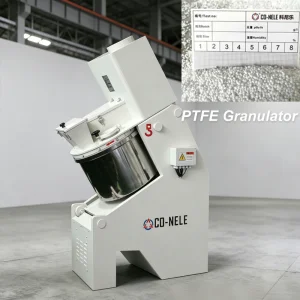
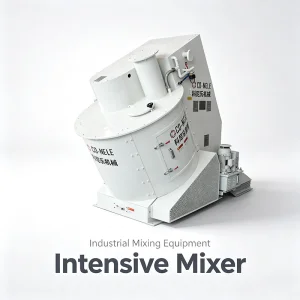
| Refractory Castables & Ceramics | High-Intensive Industrial Pan / Granulating Mixer | Extreme wear resistance (HRC ≥ 62 liners), zero cross-contamination, dust-tight seal | 50 L – 2,000 L per batch (Dynamic variable speed) |
| Remote Infrastructure (Bridges/Tunnels) | Mobile & Foundationless Compact Batching Plant | Towable trailer chassis, rapid setup on compacted soil, plug-and-play wiring | 25 m³/h – 75 m³/h (Rapid installation design) |
Deploying concrete plant equipment internationally requires robust engineering adaptations to meet local grid conditions, safety regulations, and environmental constraints.
Exported concrete batching plants are built custom to the operating country’s power grid setup. Industrial control cabinets accommodate 220V, 380V, 415V, 440V, or 480V three-phase supplies at 50Hz or 60Hz. Transformers, variable frequency drives (VFDs), and thermal overload protectors are matched to local current fluctuations and tropicalized for high ambient temperature operation.
To pass city environmental audits in Europe, North America, and urban Asia, Chinese manufacturers integrate zero-emission solutions: pulse-jet bag house filters mounted on top of cement silos, completely enclosed aggregate belt conveyors, rubber-lined transfer chutes, and soundproof mixer housings reducing operational noise below 75 dB(A).
How predictive AI, IoT telemetry, and digital twin technology are elevating China's mixing machinery sector.
As the construction industry advances toward digitalization, concrete batching equipment is expanding beyond mechanical reliability into intelligent node automation. Modern ready-mixed concrete plants incorporate key technological innovations:
Vibration sensors attached to mixer planetary reducers and main motors transmit continuous telemetry to cloud diagnostic servers. Predictive AI algorithms analyze wear patterns, alerting plant operators to grease requirements or bearing fatigue weeks before potential failure.
In-mixer slump sensors monitor real-time motor load torque during the mixing phase. The system automatically calculates target slump and workability, dynamically adjusting superplasticizer dosing to compensate for raw material moisture variations.
Integrated SCADA software automatically logs the embodied carbon equivalent for every batch ticket produced. By calculating cement substitution rates and energy consumption per cubic meter, plants simplify environmental reporting for green building certifications (LEED, BREEAM).
Discover our complete portfolio of stationary batching plants, planetary mixers, intensive granulators, and dry mortar units.
Clear, engineering-backed answers addressing plant sizing, mixing performance, maintenance cycles, and international export procedures.
Connect directly with our Qingdao-based mixing process engineering team for plant layout proposals, recipe testing, and technical quotations.