CO-NELEMixing & Granulation
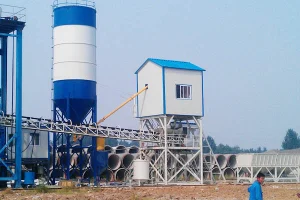
Precision-engineered intensive mixers, planetary batching modules, and specialized pelletizing equipment optimized for precast concrete plants.
Analyzing the technological transition from traditional readymix batching to high-precision vertical planetary and intensive mixing architectures.
The global construction ecosystem is experiencing a fundamental structural pivot toward industrial off-site manufacturing (OSM) and modular construction. Traditional batching plants, optimized primarily for continuous volume output rather than structural homogeneity, fall short when producing specialized precast components such as prestressed bridge girders, segmental tunnel linings, architectural cladding, permeable pavers, and Ultra-High-Performance Concrete (UHPC) panels. China's machinery manufacturing sector, spearheaded by pioneers like CO-NELE, has evolved from low-cost assembly to leading-edge mechanical innovation in vertical planetary counter-current mixing.
Tier-1 precast manufacturers across Europe, North America, the Middle East, and Southeast Asia demand stringent process control metrics. Modern enterprise procurement protocols prioritize zero segregation during discharge, exact color reproducibility across architectural batches, microscopic air-entrainment control, and high dynamic shear forces capable of breaking down silica fume agglomerates and dispersing micro-synthetic or steel fibers uniformly without balling effects.
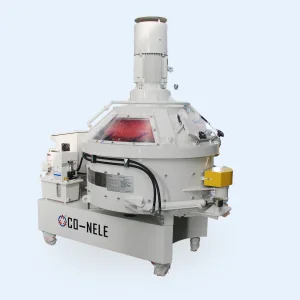
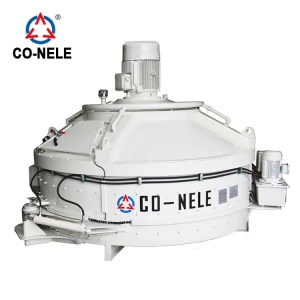
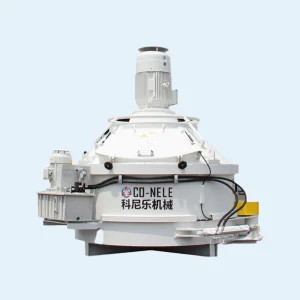
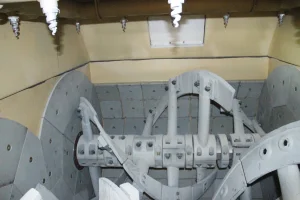
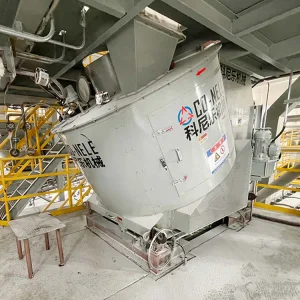
Unlike conventional horizontal twin-shaft mixers designed primarily for plastic ready-mix concrete, precast applications demand forced-action vertical planetary kinematics. The star mixing arms rotate on a central vertical axis while simultaneously orbiting around the mixing pan. This counter-current motion covers 100% of the pan floor every few revolutions, guaranteeing zero dead zones, rapid moisture stabilization, and unmatched micro-homogeneity within 60 to 90 seconds of batching.
Evaluating operational parameters for precast plants, architectural block factories, and dry-mix chemical facilities.
| Kinematic Parameter | Vertical Planetary Counter-Current Mixer | Traditional Twin-Shaft Mixer | High-Speed Intensive Granulating Mixer |
|---|---|---|---|
| Primary Target Application | Precast Concrete, UHPC, GFRC, Colored Pavers | Ready-Mix Concrete, High-Volume Dam Mass Concrete | Refractory Materials, Battery Slurry, Powder Granulation |
| Mixing Homogeneity (CV) | < 3.0% (Micro-Homogeneous) | 5.0% - 8.0% (Macro-Homogeneous) | < 1.5% (Ultra-Fine Dispersion) |
| Steel/Synthetic Fiber Dispersion | Excellent (Zero Fiber Balling) | Moderate (Prone to Clumping in Dry Mixes) | Exceptional (High Dynamic Shear) |
| Dry-Cast / Zero-Slump Performance | Superior Energy Transfer | Sub-Optimal (High Shaft Load Stress) | Optimal for Specialized Dry Powders |
| Wear Liner Life (Standard Aggregates) | 120,000 - 180,000 Batches | 80,000 - 120,000 Batches | 60,000 - 100,000 Batches (High Shear abrasive) |
| Discharge Segregation Risk | Virtually Zero (Bottom Gate Sweepers) | Moderate (Lengthy Discharge Gate Path) | Zero (Center Bottom / Pan Tilting) |
Turnkey plant designs engineered to solve concrete batching challenges across specialized manufacturing sectors.
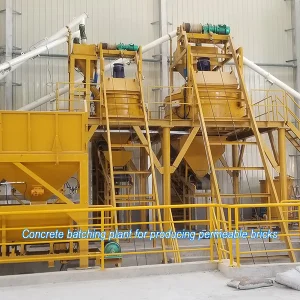
Eco-friendly urban stormwater management relies heavily on permeable pavement blocks and road tiles. These products demand extreme batch consistency—specifically a zero-slump semi-dry mix (earth-moist concrete). Batching plants configured with CO-NELE CBP series systems incorporate high-precision microwave moisture probes directly in the mixing pan and aggregate hoppers. Real-time water adjustments ensure every block press receives identical moisture content, eliminating density variations, surface cracking, and efflorescence.
Spun concrete pipes and box culverts require dense compaction and immediate demolding strength. Concrete batching plants dedicated to pipe manufacturing leverage customized double-spiral and heavy-duty planetary mixers (MP and CMP series). These units ensure ultra-fast coating of coarse aggregate with fine cementitious paste, reducing cycle times by up to 25% while meeting strict hydrostatic permeability standards.
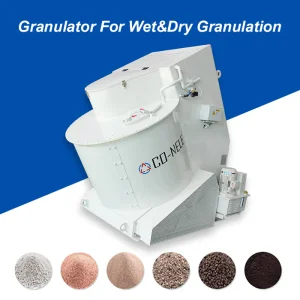
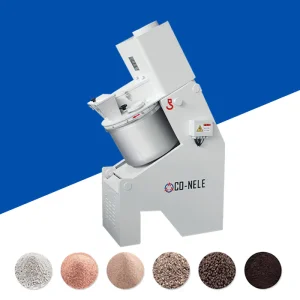
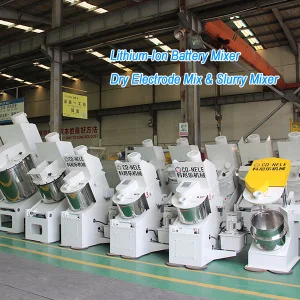
Beyond traditional precast concrete, modern manufacturing ecosystems frequently require specialized pelletizing technology. Advanced intensive mixers (CEL and CR series) transform ultra-fine powders—such as bentonite, lithium battery dry electrodes, diamond grinding abrasives, and refractory ceramics—into uniform spherical granules. This dual capability underscores China's advanced manufacturing mastery across cross-industry material preparation.
Ensuring seamless operational integration, robust safety certifications, and continuous technology innovation for international buyers.
Every precast concrete batching plant and standalone mixer manufactured in China for global export must meet stringent international engineering codes. Mechanical design adheres to DIN 45635 for acoustic emissions and ISO 9001 quality management systems. Electrical control systems feature full CE conformity, utilizing Schneider, Siemens, and ABB automation hardware capable of multi-voltage operation (220V to 480V, 50/60Hz) with integrated SCADA protocols for enterprise resource planning (ERP) sync.
Enterprise procurement risk is mitigated through comprehensive localization infrastructure. Modern batching plants feature fully standardized bolt-on wear liners (high-chromium alloys with HRC ≥ 62 or tungsten carbide cladding). Global service agreements guarantee fast dispatch of critical spare parts, while remote diagnostic gateways enable Chinese software engineers to troubleshoot PLC logic, calibrate load cells, and optimize mixing cycles online anywhere in the world.
The next decade of precast plant engineering centers on real-time rheological feedback. AI algorithms integrated with motor torque sensors dynamically detect concrete workability inside the mixing chamber. The system automatically adjusts admixture and water dosing mid-cycle to compensate for fluctuations in aggregate moisture or ambient temperature, delivering perfect slump and flowability every single batch.
Connect directly with China's leading precast mixing machinery experts. Receive a detailed technical proposal, CAD plant layout, and mixing trial evaluation tailored to your project recipe.
Explore Complete Product CatalogExpert technical insights answering key enterprise procurement, engineering, and operational questions.
Planetary counter-current mixers utilize vertical mixing star arms that orbit around a central axis while rapidly rotating themselves. This complex kinematic motion ensures complete physical coverage of the mixing pan, preventing static pockets or segregation. For zero-slump dry-cast concrete, UHPC, and colored architectural concrete, planetary mixers achieve microscopic homogeneity (CV < 3%) much faster and with lower energy consumption than twin-shaft mixers, which are optimized for high-volume wet ready-mix concrete.
High-precision precast batching plants utilize microwave moisture sensors installed inside the aggregate bins and directly on the floor of the mixing pan. These sensors read the dielectric constant of the raw aggregates and the wet mix at milliseconds intervals. The PLC control system calculates the precise water deficiency in real-time and dynamically adjusts the final water injection volume during the wet-mixing phase, guaranteeing consistent water-cement ratios (W/C) regardless of weather changes.
Yes. Specialized UHPC mixing systems engineered by factories like CO-NELE feature heavy-duty reinforced gearboxes, increased motor power density, and specially angled high-shear mixing blades. The intense kinetic energy generated breaks down dense silica fume micro-particles while dispersing high percentages of micro-steel fibers or synthetic fibers uniformly without clumping, enabling production of concrete with compressive strengths exceeding 150-200 MPa.
Under standard operating conditions with quartz sand and gravel aggregates, premium cast high-chromium alloy liners (HRC 60-65) typically last between 120,000 and 180,000 mixing cycles. For highly abrasive applications such as glass fiber reinforced concrete (GFRC) or refractory castables, specialized tungsten carbide coated tiles or ceramic liners are available to extend operating life by 300% to 500% before replacement is required.
Export machinery packages include complete 3D foundation layouts, electrical schematics, and mechanical assembly documentation. Factories deploy field commissioning engineers worldwide for on-site installation supervision, load testing, and operator training. Additionally, systems feature integrated remote diagnostic modules, allowing factory engineers to provide real-time software support and PLC calibration remotely via secure internet connections.
Explore heavy-duty concrete batching plants, planetary units, and battery-grade intensive mixing machinery.