CO-NELEMixing & Granulation
Explore heavy-duty equipment precision-engineered in Qingdao, delivering uniform micro-homogeneity, rapid batch cycles, and exceptional durability across severe material applications.
A rigorous industrial perspective on how complete component verticalization, internal metallurgical advancements, and digital drive controls provide competitive capital advantages.
In modern bulk powder processing, the efficiency of pelletizing and agglomeration directly impacts subsequent thermal reactions, press molding, pneumatic conveyance, and binder usage. Sourcing powder granulators from specialized Chinese manufacturing plants has evolved dramatically from pure cost arbitrage into a technologically superior, robust value equation.
Operating out of heavy engineering hubs such as Qingdao, leading Chinese manufacturers maintain comprehensive control across the complete production chain. While traditional assemblers outsource planetary reducers and critical wear plates, tier-one Chinese factories carry out machining, CNC gear grinding, dynamic balancing, and automated high-chrome alloy casting within their own premises. This end-to-end integration ensures that mechanical backlash is minimized and internal transmission tolerances remain rigid under intense, high-viscosity torque profiles.
Furthermore, the domestic supply chain for high-performance metallurgy—such as silicon carbide composite liners, tungsten carbide hardfacing, and hardened wear ceramics—allows Chinese powder granulators to withstand severe abrasive slurries and powders (like fused alumina, quartz sand, PTFE compounds, and zinc ferrites) at a fraction of standard European maintenance overheads.
Proprietary heavy-duty planetary gearboxes designed specifically to absorb shock loads and sudden dynamic torque spikes during binder dispersion and micro-pellet nucleation.
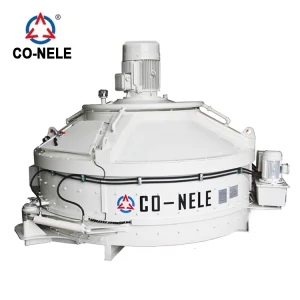
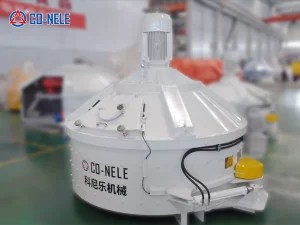
High-speed rotating impellers combined with inclined pan geometry generate multi-directional, counter-current shear velocities that eliminate dead zones completely.
Direct PLC integration monitors amperage draw to identify the exact inflection curve of particle growth, ensuring perfect cycle cutoff without wet cake formation.
Transitioning from energy-intensive spray drying towers to high-density mechanical granulation, while meeting international environmental and occupational standards.
Replacing thermal spray drying systems with mechanical mixing granulators cuts operational thermal energy by up to 70%, forming uniform ceramic and metal pellets with only 8-15% initial moisture.
Enclosed positive-pressure dust seals, dynamic pan-edge scrapers, and integrated pulse-jet venting eliminate airborne particulate leakage during the charging and nucleating stages.
High-sphericity granule production (>90%) improves bulk flowability, ensuring tight dimensional tolerances during die compaction in technical ceramics and powder metallurgy parts.
From lithium-ion battery precursor synthesis in Asia to high-wear refractory production in the Americas and Europe.
High shear rotor systems deliver sub-micron coating and uniform spherical agglomeration of lithium nickel manganese cobalt oxides without cross-contamination, using titanium or ceramic-lined bowls.
Intensive counter-current mixing disperses micro-silica and binders evenly within 60 to 90 seconds, securing early compressive strength and exceptional thermal shock resistance for steel mill linings.
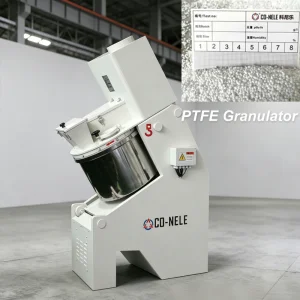
Specially calibrated gentle shear kinematics agglomerate PTFE micronized fine powders into free-flowing granules suitable for automated ram extrusion, avoiding fiber shear degradation.
Authoritative technical clarifications addressing particle size distribution, wear life, validation trials, and electrical protocols.
Granule growth in our intensive mixers is controlled by varying the differential speed between the rotating pan and the high-speed tool, the binder dosing rate, and the residence cycle. Fast rotor speeds produce micro-nucleation; decelerating the tool promotes rolling pellet enlargement. Automated power tracking stops processing the instant target density is reached.
Depending on the corrosiveness and abrasiveness of your formulation, we supply high-chromium alloy liners (over 62 HRC), replaceable weld-on tungsten carbide tiles, or sintered alumina ceramic lining. Tools are armored with specialized carbide cladding to ensure 50,000+ batches before maintenance is required.
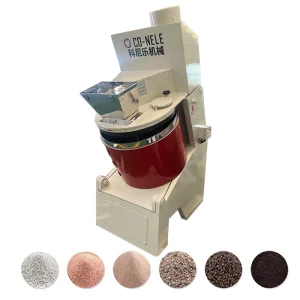
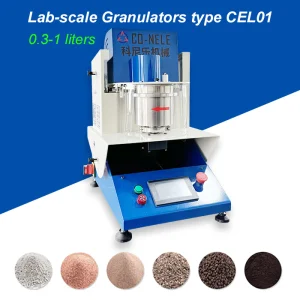
Yes. Our Qingdao engineering laboratory maintains 5L, 25L, and 75L lab-scale granulators. Clients send 10-50 kg raw powder samples; our process team tests and issues an empirical report detailing bulk density, sphericity, cycle timing, moisture consumption, and precise scale-up parameters for industrial units.
Every granulator can be configured to comply fully with European CE machinery and low-voltage directives, UL/CSA standards for North America, and specific local requirements (208V, 380V, 415V, 480V at 50/60 Hz). Control cabinets feature Siemens PLC automation, Schneider switchgear, and SEW or in-house precision gear motors.
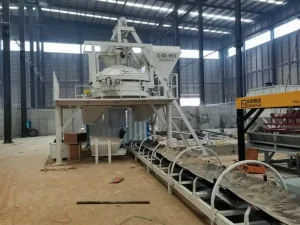
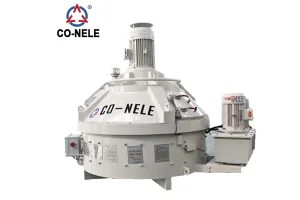
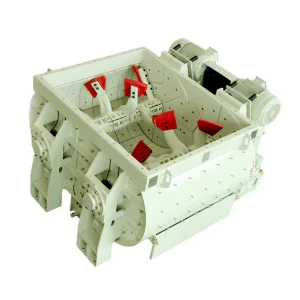
Explore our full line of planetary mixers, heavy twin-shaft compulsory units, and integrated plant systems deployed across 80+ countries worldwide.