CO-NELEMixing & Granulation
Engineered for complex mixing recipes requiring absolute material homogeneity, fast discharge cycles, and maximum machine uptime.
Decoding the mechanical physics, fluid dispersion mechanisms, and operational economics of vertical-shaft planetary mixers versus conventional mixing technologies.
In modern material processing—spanning high-performance concrete (UHPC), refractory castables, technical ceramics, glass batching, and battery slurry synthesis—the structural integrity and quality of the final product are directly dictated by mixing homogeneity. Traditional horizontal twin-shaft mixers and standard ring-pan mixers often encounter localized dead zones, uneven micro-silica dispersion, and prolonged mixing cycle times. As industrial specifications become increasingly stringent globally, the transition toward planetary counter-current mixing technology has emerged as the definitive benchmark for processing complex, multi-phase formulations.
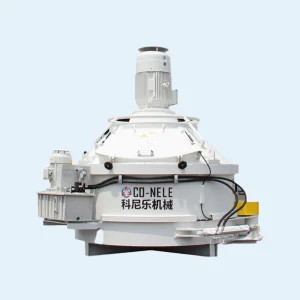
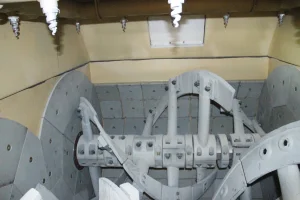
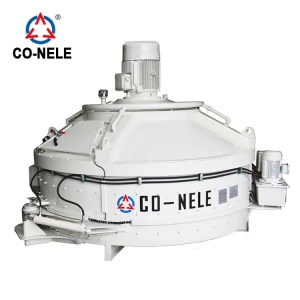
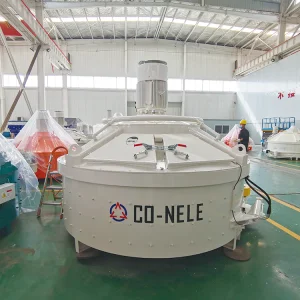
A planetary concrete mixer operates on a dual-rotation kinematic principle. The mixing arms and mixing stars rotate around their own dedicated vertical axes while simultaneously orbiting around the central axis of the mixing pan. This overlapping, mathematical planetary trajectory ensures that every square millimeter of the mixing pan floor and side walls is swept within milliseconds. The forced counter-current turbulence breaks down agglomerates, homogenizes fine powders with micro-additives, and evenly encapsulates aggregates without causing particle segregation.
To assist global procurement directors, process engineers, and plant operators in selecting the optimal mixing engine, the table below provides a rigorous technical comparison of primary mixing systems utilized across industrial manufacturing plants:
| Performance Metric / Parameter | Vertical Planetary Counter-Current Mixer | Horizontal Twin-Shaft Concrete Mixer | Traditional Ring Pan / Turbine Mixer | Inclined Intensive Mixer / Granulator |
|---|---|---|---|---|
| Primary Mixing Mechanism | Dual-rotation planetary kinematics with counter-current trajectories | Dual counter-rotating horizontal shafts with overlapping paddles | Single-axis vertical rotation with fixed scraper blades | High-speed rotor combined with inclined rotating pan |
| Mixing Homogeneity (CV %) | Ultra-High (CV < 3%) | Standard to High (CV 5% - 8%) | Moderate (CV 8% - 12%) | Micro-Level (CV < 1.5%) |
| Optimal Application Spectrum | UHPC, Precast Blocks, Refractories, Glass, Dry Mortar, GFRC | Commercial Ready-Mix, Mass Dam Concrete, High-Volume Wet Mix | Basic Precast Elements, Standard Mortar, Non-Critical Mixes | Ceramic Powders, Metallurgy, Battery Materials, Granulation |
| Fibre Dispersion Capability | Superior (Zero steel/synthetic fiber balling) | Moderate (Risk of fiber balling at low slump) | Poor (High tendency for localized fiber clustering) | Exceptional (Disperses micro-fibers thoroughly) |
| Discharge Speed & Cleanliness | Rapid hydraulic gate; 99.5% clean pan discharge | Fast twin-door bottom discharge; moderate buildup | Slower perimeter discharge; requires frequent scraping | Central bottom discharge with dynamic wall scrapers |
| Mechanical Wear & Maintenance TCO | Low; bolt-on high-chrome tiles (HRC ≥ 62) | Moderate; frequent shaft-seal lubrication required | Moderate to High; uneven blade tip wear patterns | Low; protected rotor tools and ceramic wall liners |
How decarbonization, Ultra-High-Performance Concrete (UHPC) recipes, and AI-driven moisture compensation are reshaping mixer engineering.
Modern engineering demands mixes with water-cement ratios below 0.18 containing silica fume, quartz flour, and steel micro-fibers. Next-generation planetary mixers integrate heavy-duty planetary gearboxes rated for continuous high-torque shear without thermal degradation, enabling full hydration of low-water formulations.
With global cement production shifting toward low-carbon alkali-activated materials, calcined clays, and high-volume fly ash/slag blends, mixing machinery must deliver violent mechanical activation to break chemical bonds in supplementary cementitious materials (SCMs) for optimal compressive strength.
Leading Chinese factories are embedding microwave moisture sensors directly into the planetary pan floor alongside torque-sensing drive systems. These systems monitor concrete rheology dynamically during mixing, adjusting water and admixture dosing autonomously within a fraction of a second.
Evaluating Total Cost of Ownership (TCO), component durability, and technical certifications across major international markets.
When global EPC contractors, concrete block manufacturing plants, and industrial refractory producers evaluate planetary mixers from China, procurement decisions extend far beyond initial capital expenditure (CapEx). Engineering teams look closely at long-term operational expenditure (OpEx), gearbox fatigue resistance, wear-plate metallurgy, and spare-part interchangeability.
The lifetime expenditure of an industrial mixer over a 10-year period typically splits into: 15% Initial Machine Purchase, 25% Energy Consumption, 10% Wear Parts Replacement, and 50% Operator & Plant Maintenance. China's top-tier manufacturers reduce the total cost of ownership by precision-casting high-chrome alloy liner tiles (hardness ≥ 62 HRC) and utilizing proprietary, hardened planetary reduction gearboxes that eliminate frequent oil leaks and shaft seal failures.
Inside the Qingdao industrial machinery ecosystem: How end-to-end metallurgical control, robotized welding, and structural testing deliver world-class mixing machinery.
Unlike assemblers who buy off-the-shelf gearboxes, premier Chinese manufacturers design and machine their own planetary gear reducers in-house. Gear grinding, heat treatment, and oil-bath dynamic torque testing are conducted under strict ISO9001 supervision.
Utilizing large-scale gantry machining centers, robotic arc welding, and laser cutting, machine bodies achieve structural rigidity capable of absorbing extreme torsional shock loads generated during dry concrete and refractory startup.
Headquartered in Qingdao—one of the world's largest deep-water shipping ports—manufacturers ensure streamlined ocean freight forwarding, standardized container loading, and overnight spare-part air shipments globally.
How specialized mixing arm configurations, high-shear rotors, and lining materials adapt planetary mixers across distinct industrial processing sectors.
For high-density paving blocks, kerbstones, and architectural wall panels, surface color uniformity and zero air-voids are non-negotiable. Planetary mixers deliver rapid color-pigment dispersion within 30 seconds, eliminating streakiness and reducing cement consumption by up to 8% per batch.
Processing unshaped refractory materials, alumina silica castables, and iron-runner linings requires extreme motor power and wear protection. Heavy-duty planetary mixers equipped with thick Ni-Hard or Chromium Carbide overlay liners process high-density, low-moisture refractory batches without stalling.
Glass manufacturing demands completely iron-free or strictly controlled mixing environments. Specialized planetary mixers incorporate stainless steel linings, rubber-coated mixing arms, and dust-tight seals to prevent micro-contamination of silica sand, soda ash, and cullet mixes.
Solidification and stabilization of hazardous industrial fly ash, heavy metal sludge, and chemical waste require thorough binding with lime and cementitious reagents. Planetary counter-current agitation prevents unreacted reagent pockets, meeting strict environmental leaching criteria.
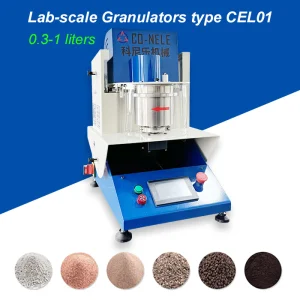
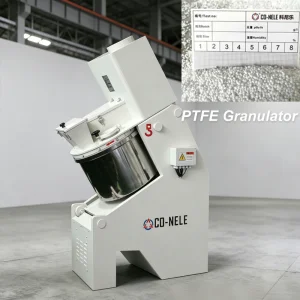
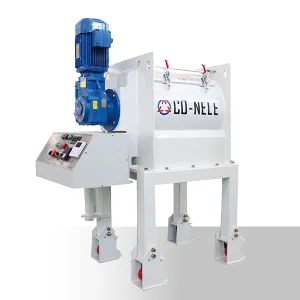
Using laboratory and production-scale intensive mixers, ceramic powders and metallic friction materials are blended with organic binders. The intensive rotor speeds generate controlled agglomeration, forming spherical micro-granules optimal for press molding.
Engineered for bridge decks, offshore wind turbine foundations, and security barriers. The high-shear planetary action breaks up silica fume agglomerates and distributes micro-steel fibers uniformly throughout the matrix, attaining compressive strengths exceeding 150 MPa.
A closer look at power transmission, lubrication dynamics, and wear-resistant alloy metallurgy inside China's premier planetary mixers.
The core heart of any planetary mixer is its central reduction gearbox. Operating under extreme torque, non-uniform batch resistance, and harsh abrasive dust conditions, the reducer must transfer heavy mechanical energy without gear tooth pitting, shaft deflection, or lubricant leakage.
Comprehensive answers regarding machine selection, electrical compatibility, wear life, and custom engineering support.
Explore our complete catalog of industrial mixing equipment engineered for precast blocks, dry mortars, laboratory testing, and advanced powder processing.