CO-NELEMixing & Granulation
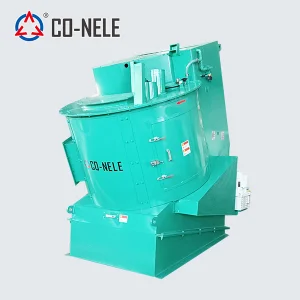
Explore our engineering portfolio of vertical-shaft planetary mixers, intensive granulators, and turnkey batching plants deployed across global precast and high-performance concrete operations.
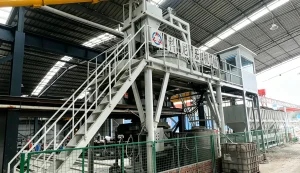
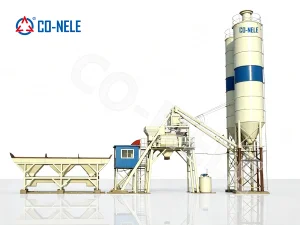
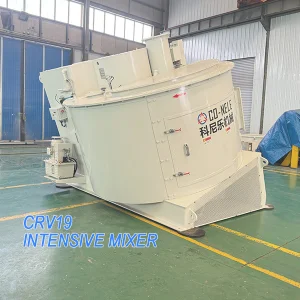
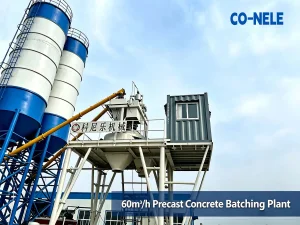
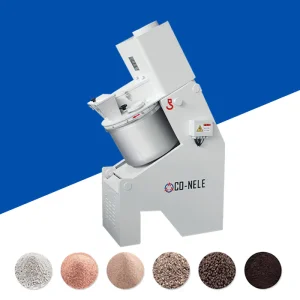
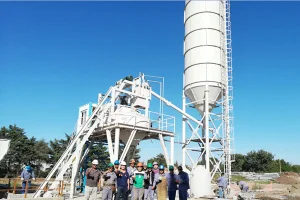
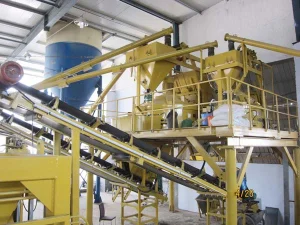
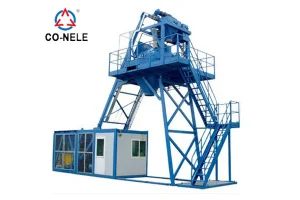
The global commercial concrete industry is undergoing a paradigm shift driven by stringent decarbonization mandates, the rise of Ultra-High-Performance Concrete (UHPC), and demanding requirements for precast element structural integrity. Standard horizontal twin-shaft mixers, while effective for low-grade ready-mix applications, consistently exhibit limitations when handling low-water-cement ratios (w/c < 0.25), micro-silica powders, heavy pigments, and fiber-reinforced mixtures.
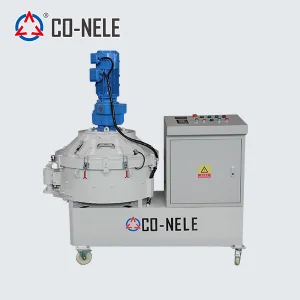
China's manufacturing sector—led by engineering pioneers like CO-NELE—has established global dominance in vertical-shaft planetary mixer manufacturing. By replacing legacy mixing mechanics with high-torque counter-current planetary drives, modern factories achieve complete particle shear dispersion within 45 to 90 seconds, maintaining a coefficient of variation (CV) under 3% across the entire batch volume.
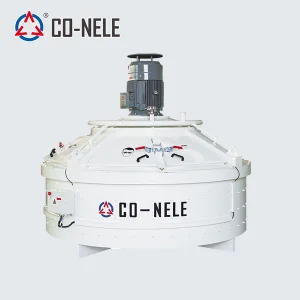
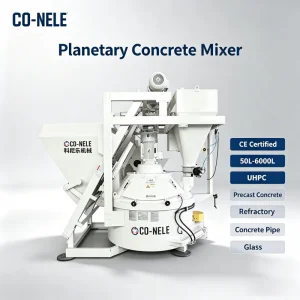
The foundational difference between a vertical planetary mixer and conventional mixing platforms lies in the trajectory and velocity gradients created inside the mixing pan. Planetary mixing arms rotate on their own vertical axis while simultaneously orbiting around the central axis of the mixing pan. This dual-kinematic motion ensures zero dead zone coverage.
| Mechanical Parameter | Vertical Planetary Mixer (CO-NELE CMP Series) | Standard Twin-Shaft Compulsory Mixer |
|---|---|---|
| Particle Trajectory | Complex counter-current overlapping elliptical paths | Parallel linear pushing with localized shaft-end stagnation |
| Shear Energy Distribution | Uniform high-intensity dissipation across 100% pan radius | Concentrated near shaft centers; lower kinetic energy at walls |
| Low W/C Ratio Suitability | Exceptional (W/C down to 0.14 for UHPC / Refractory) | Moderate (Prone to balling and unmixed powder pockets) |
| Pigment & Fiber Dispersion | Complete micro-dispersion within 60 seconds | Requires prolonged cycle times; risk of fiber clump formation |
| Shaft Seal Wear & Risk | Zero fluid contact with gearbox; zero seal leakage risk | Continuous slurry pressure on shaft seals; high maintenance |
From heavy infrastructure elements to specialty chemical formulations, the industrial applications of Chinese planetary concrete mixers extend across diverse high-tier manufacturing sectors:
Designed specifically for hollow-core slabs, concrete poles, utility culverts, and structural beams. The rapid discharge rate combined with zero particle segregation ensures pristine surface finish and high early compressive strength.
In dry-cast block and paver manufacturing, face-mix color uniformity is critical. Counter-current planetary mixing guarantees vibrant pigment distribution across face-coat mixes with minimal oxide usage.
Ultra-High-Performance Concrete requires high shear energy to break silica fume agglomerates and disperse steel micro-fibers without damaging fiber length. CO-NELE CMP mixers excel in these extreme rheological regimes.
Handling dense, highly abrasive alumina and silica refractory castables requires heavy-duty gearboxes and extreme wear-resistant Ni-Hard / High-Chrome lining tiles, engineered to withstand continuous impact.
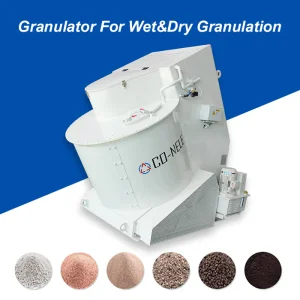
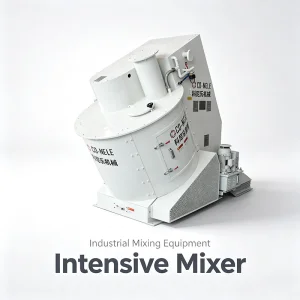
Intensive mixing granulators leverage planetary rotational mechanics to homogenize fine chemical powders and produce dense, free-flowing granules essential for battery material synthesis.
Used for hazardous waste encapsulation, fly ash stabilization, and green concrete formulations incorporating high volumes of blast-furnace slag and recycled aggregate fractions.
To compete at the highest level in North America, Western Europe, the Middle East, and Southeast Asia, leading Chinese planetary concrete mixer manufacturers maintain strict international quality and compliance certifications.
The heart of the CO-NELE planetary mixer is its proprietary single-stage gear reduction box. Unlike imported commercial gearboxes adapted from general industrial machinery, our gearboxes are custom-engineered in-house exclusively for compulsory concrete mixing shocks. Power is split fluidly across multiple planetary gears, distributing mechanical torque evenly and extending gear teeth operating life beyond 100,000 duty cycles under full load.
Full compliance with 2006/42/EC directives, emergency stop interlocks, dual safety key switch systems, and sound-attenuated hood optioning for European job site regulations.
Built to regional power grids (220V/380V/415V/440V/480V at 50Hz or 60Hz). Electrical cabinets integrate Siemens PLC systems, Schneider switchgear, and optional UL/CSA panel certification.
Interchangeable bolt-on wear parts (cast chrome liners ≥60 HRC, specialized rubber blades, hydraulic door seals) maintained in regional hub warehouses for rapid air dispatch.
The concrete machinery sector is progressing towards digital twin integration, sensor-driven moisture control, and lower embedded carbon footprints. Key developments shaping the future of planetary mixer manufacturing include:
Integrating optical and microwave moisture sensors directly into the rotating pan floor allows the PLC to adjust added water dynamically in mid-batch, maintaining slump tolerances within ±5mm regardless of raw aggregate sand dampness variations.
Vibration and thermal sensor arrays embedded on the planetary gearbox casing transmit operational telemetry to cloud monitoring systems, alerting plant managers to liner wear or lubricant degradation before failure occurs.
As plant operators replace Portland cement with calcined clays, alkali-activated slag, and geopolymer binders, high-intensity mixing energy becomes mandatory to activate gel polymerization efficiently.
Choose a vertical-shaft planetary counter-current mixer when your mix design demands high micro-homogeneity (CV < 5%), involves low water-cement ratios (such as UHPC or dry-cast paving blocks), uses synthetic or steel fibers, or includes color pigments. Twin-shaft mixers are tailored for high-volume ready-mix wet concrete where rapid 30-second bulk throughput takes precedence over intense shear micro-dispersion.
Under standard concrete batching conditions, high-chrome alloy liners (≥60 HRC) deliver between 90,000 and 150,000 batch cycles. In highly abrasive applications such as quartz-rich refractories or corundum castables, wear part life averages 40,000 to 60,000 batches. All liners are designed as standardized, bolt-on segments for quick field replacement.
Our Qingdao R&D facility operates laboratory scale mixers from 5 liters to 75 liters that maintain exact kinematic geometric similitude with industrial production models up to 4,000 liters. Raw material samples sent by global clients undergo pilot tests to establish binder curves, optimal energy input, and mixing cycle times prior to full-scale machine specification.
Machines are manufactured to match the destination country's electrical grid (e.g., 380V 50Hz, 415V 50Hz, 460V/480V 60Hz). Control panels can be delivered with CE compliance documentation, IP65 enclosure ratings, and Siemens/Schneider automation components, alongside comprehensive English wiring schematics and manuals.
Browse our additional machine models engineered for laboratory testing, wet and dry granulation, mobile mixing, and specialty block manufacturing.