CO-NELEMixing & Granulation
Explore our flagship engineered machinery designed for maximum homogenisation, structural longevity, and minimal operational downtime.
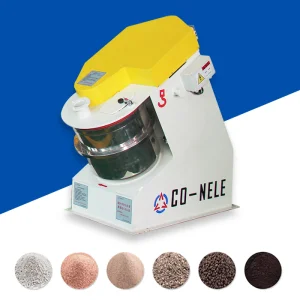
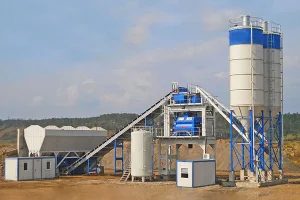
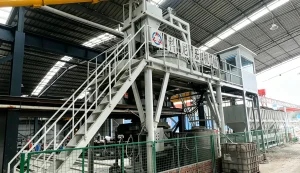
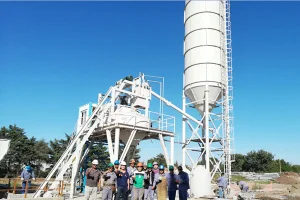
Understanding why global precast, UHPC, and advanced refractory manufacturers are shifting from traditional twin-shaft and drum mixers to vertical-shaft counter-current planetary technology.
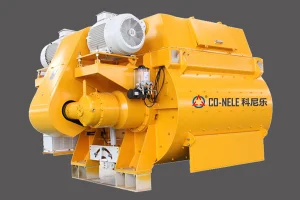
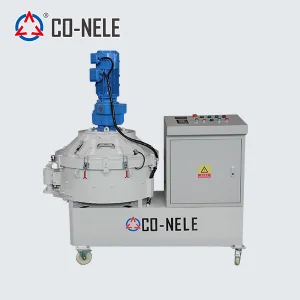
In the domain of high-specification concrete formulation—such as Ultra-High Performance Concrete (UHPC), Glass Fiber Reinforced Concrete (GFRC), and refractory castables—homogeneity cannot be achieved by simple shearing or gravity tumbling. The planetary concrete mixer utilizes a complex counter-current kinematic system where mixing arms rotate around a central vertical axis while simultaneously revolving at high speed around their own planetary shafts.
This dual-rotation mechanism forces the material stream into overlapping parabolic trajectories. The mixing blades sweep every square millimeter of the mixing pan bottom and sidewalls within a single revolution cycle, completely eliminating dead zones, aggregate segregation, and unmixed binder pockets.
Unlike twin-shaft mixers that rely heavily on horizontal shearing forces—which can cause localized material packing and high thermal buildup—planetary counter-current mixing dissipates kinetic energy uniformly throughout the entire batch volume. This results in faster hydration kinetics, optimal dispersion of micro-silica, micro-fibers, and pigments, and a 15% to 25% reduction in total mixing cycle time.
Evaluating the procurement cost, configuration variables, and long-term operational expenditures for international buyers sourcing industrial mixing equipment from China.
When procuring a China planetary concrete mixer machine, buyers often observe price disparities ranging from $5,000 for laboratory-scale equipment to upwards of $150,000 for large-scale, fully automated industrial mixing batching plants. Understanding the underlying cost drivers is critical for accurate CAPEX allocation and establishing an optimized Total Cost of Ownership (TCO) model.
| Mixer Capacity / Model | Dry / Compacted Output | Estimated China Price Range (USD) | Primary Technical Configuration | Ideal Application Profile |
|---|---|---|---|---|
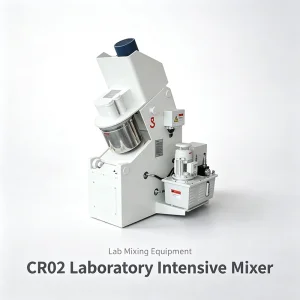
| CMP50 / CQM10 (Lab Scale) | 50 Liters / 0.05 m³ | $4,500 – $12,000 | Single Planetary Star, Manual / Pneumatic Discharge, Variable Speed Inverter | R&D Testing, UHPC Recipe Development, Pigment Sampling |
| CMP250 / CMP375 | 250 – 375 Liters / 0.25–0.37 m³ | $14,000 – $26,000 | Single Star, Heavy-Duty Coaxial Reducer, High-Chrome Liners (HRC 62+) | Small Precast Elements, Kerbs, Decorative Blocks, GFRC |
| CMP500 / CMP750 | 500 – 750 Liters / 0.50–0.75 m³ | $28,000 – $48,000 | Dual Planetary Star, Hydraulic Discharge Gate, High-Pressure Wash System Option | Precast Structural Beams, Pipe Mills, Paving Bricks, Refractories |
| CMP1000 / CMP1500 | 1,000 – 1,500 Liters / 1.0–1.5 m³ | $52,000 – $85,000 | Dual/Triple Planetary Rotor, Heavy Gearbox (Hardened Tooth), Moisture Probe Integration | Commercial Precast Plants, Railway Sleeper Production, UHPC Mixers |
| CMP2000 / CMP3000 | 2,000 – 3,000 Liters / 2.0–3.0 m³ | $90,000 – $165,000+ | Quad Planetary Rotor System, Dual Hydraulic Discharge Gates, SCADA Control Ready | High-Capacity Infrastructure Projects, Dam Construction, Large Batch Plants |
The heart of a planetary concrete mixer is its custom gearbox. Standard commercial reducers fail under heavy eccentric torque. Premium Chinese manufacturers engineer specialized coaxial planetary gearboxes featuring hardened alloy teeth (20CrMnTi) subjected to gas carburizing, significantly driving up durability and initial manufacturing cost while protecting against catastrophic shear failure.
Base models employ standard chilled cast iron liners, whereas heavy-duty models incorporate high-chromium alloy (Cr26) or ceramic composite wear plates with a Rockwell Hardness exceeding HRC 62. While high-chrome options increase initial pricing by 15-20%, they extend service life from 40,000 batches to over 150,000 batches, drastically reducing cost per cubic meter.
Integrating microwave moisture measurement sensors (such as Hydronix or native digital probes) directly into the floor wear plates allows real-time slump estimation and automated water dosing. Automation packages using Siemens S7-1500 PLCs increase upfront equipment investment but prevent batch rejection and trim cement consumption by up to 18%.
An objective evaluation of international market adoption, supply chain integration in Qingdao, Shandong, and competitive positioning against European alternatives.
Historically, the high-end industrial concrete and refractory mixing market was dominated by European brands (e.g., Teka, BHS, Eirich). However, over the past two decades, Chinese machinery centers—specifically clustered around industrial hubs like Qingdao—have achieved parity in mechanical engineering, precision gear hobbing, and metallurgical wear technology.
By leveraging robust domestic steel manufacturing, vertically integrated gear machining facilities, and specialized labor forces, Chinese manufacturers produce heavy-duty planetary mixers at a price point 40% to 60% lower than European equivalents, without compromising structural integrity or mechanical tolerance.
North America & Europe: Widely adopted by precast producers looking to optimize equipment ROI while maintaining UL/CSA and CE compliance.
Middle East & Africa: Favored for high ambient temperature resilience, dust-sealed bearings, and heavy-duty planetary drive units handling high-density aggregates.
Southeast Asia & Latin America: Rapidly replacing traditional twin-shaft mixers in block and paving brick plants to improve product surface density and lower water absorption rates.
Analyzing the internal mechanics, transmission geometry, fluid discharge design, and wear-resistance engineering of modern planetary mixers.
The mixer drive unit transmits power via a central vertical shaft to planetary gear arms. The mixing star blades revolve in an anti-clockwise motion while simultaneously turning on their own axes in a clockwise direction. This dual-action motion generates extreme turbulence, accelerating binder coating onto aggregate particles without crushing delicate lightweight aggregates.
Unlike conventional gearboxes that utilize external V-belts or exposed bevel gears, the planetary mixer gearbox integrates all gear stages inside a sealed cast housing. Oil-bath lubrication coupled with forced oil circulation pumps maintains low thermal operating conditions, guaranteeing smooth torque output during zero-slump or high-viscosity mixing cycles.
Fast, clean discharge is vital to prevent batch contamination and maintain high hourly throughput. Modern planetary mixers feature hydraulically operated rotary discharge doors equipped with adjustable limit switches and manual emergency hand pumps. The seal ring geometry prevents fine powder or slurry leakage during high-fluidity UHPC mixing.
From precast structural elements to advanced ceramics, examine how planetary mixing technology solves formulation challenges across different industrial sectors.
Challenge: Surface blemishes, air voids (pockmarks), and batch-to-batch color variation in white/pigmented concrete panels.
Solution: Planetary mixers achieve uniform pigment dispersion within 45 seconds of dry mixing. The forced-action kinematics evacuate entrapped macro-air bubbles, producing ultra-smooth surface finishes right out of the mold.
Challenge: Homogeneous dispersion of steel or synthetic micro-fibers without fiber balling or clumping in zero-slump pastes.
Solution: The planetary mixing action subjects the high-viscosity paste to multidirectional shear forces, pulling micro-fibers apart and embedding them evenly into the dense matrix. Compressive strengths exceeding 150 MPa are reliably achieved.
Challenge: Mixing high-density, highly abrasive mineral powders with low water content (under 4%) without generating excess friction heat.
Solution: Special planetary mixers equipped with ceramic-lined pans and rubber-coated mixing arms prevent iron contamination while maintaining micro-homogeneity under low-moisture conditions.
Challenge: Maintaining strict height tolerances, high green strength, and edge sharpness in dry-cast block machines.
Solution: Consistent moisture distribution across dry-mix aggregate batches ensures uniform compaction densities during vibration pressing, drastically reducing block rejection rates.
Ensuring seamlessly integrated international operations through rigorous certification compliance, localized electrical adaptation, and dedicated engineering field support.
Deploying machinery into regulated markets such as North America, the European Union, Australia, and the Middle East requires adherence to international safety and electrical codes. Reputable Chinese planetary mixer manufacturers engineer control systems that comply directly with:
1. Remote Diagnostics: Integrated IoT telemetry modules allow factory automation engineers to troubleshoot PLC code, diagnose sensor faults, and push software updates remotely.
2. Dispatchable Field Service: Certified installation engineers available for on-site foundation layout verification, mechanical assembly supervision, and batch plant commissioning.
3. Spare Parts Depot Guarantee: Essential wear components (blades, scrapers, liner plates, seals) maintained in stock for immediate international air-freight dispatch within 24–48 hours.
The next generation of planetary concrete mixers: AI-assisted moisture control, carbon-capturing cementitious mixing, and predictive mechanical health monitoring.
Real-time motor load torque feedback coupled with microwave moisture sensing enables automated water and superplasticizer injection, dynamically adjusting batch consistency on the fly.
Optimizing mixer internal fluid dynamics to handle high-substitution supplementary cementitious materials (SCMs), such as calcined clays, alkali-activated slag, and recycled concrete powder.
Embedded ultrasonic vibration sensors inside planetary gearboxes and wireless strain gauges on mixing arms predict bearing wear and liner fatigue weeks before mechanical breakdown occurs.
Expert answers addressing buying intent, pricing verification, model selection, maintenance requirements, and factory quality control.
China planetary concrete mixer prices generally range between $14,000 and $165,000 USD depending on batch output capacity (CMP250 to CMP3000), drive power, wear liner quality, and automation level. Equivalent European planetary mixers typically cost 40% to 60% more due to higher localized labor overhead, despite using similar grade steel (Q355B/Q460), high-chrome casting alloys, and standard international electrical components (Siemens, Schneider).
Planetary counter-current mixers excel in applications requiring exceptional micro-homogeneity, low water-cement ratios, dry-cast mixes, or fiber dispersion (e.g., precast blocks, UHPC, kerbs, pavers, refractories). Twin-shaft mixers are optimized for high-volume commercial ready-mix concrete above 2 m³ per batch where cycle speed takes precedence over complex kinematic shearing.
Equipped with standard high-chromium alloy liners (HRC 60–65), floor liners and mixing blades typically endure 90,000 to 150,000 batches under normal aggregate conditions. When mixing highly abrasive materials like quartz sand, silicon carbide, or refractory castables, wear part service life ranges between 40,000 and 70,000 batches. All wear plates are modular and bolt-on, enabling straightforward replacement in the field.
Yes. Heavy machinery manufacturers in China routine customize electrical motors and control systems for global export. Common power configurations include 220V/380V/415V/440V/480V/600V at 50 Hz or 60 Hz. Control panels can be built to CE, UL, or CSA standards upon client request, complete with dual-language English/Spanish/French PLC touch-screen interfaces.
Initial gearbox synthetic gear oil should be flushed and replaced after the first 500 operating hours. Subsequent oil changes are recommended every 4,000 operating hours or annually. Daily maintenance involves inspecting the automatic central lubrication pump that supplies grease to the main vertical drive shaft seals and checking the hydraulic discharge gate oil reservoir level.
Explore specialized granulators, twin-shaft units, and application-specific mixing plants designed for diverse production requirements.