CO-NELEMixing & Granulation
Standard-setting mixing solutions engineered for high-viscosity, abrasive, fine-powder, and complex material recipes.
Bridging the critical gap between benchtop R&D formulation and mass industrial production via mathematically predictable mixing kinematics.
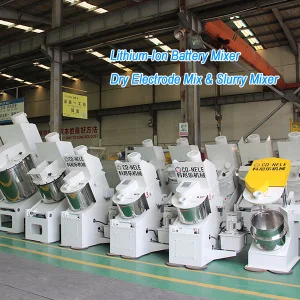
In modern industrial material science—spanning lithium-ion battery slurry preparation, ultra-high-performance concrete (UHPC), technical ceramics, and synthetic refractories—the performance ceiling of the final product is strictly bounded by the homogeneity of the initial mix phase. A laboratory mixer is no longer merely an agitator; it is a high-precision chemical and physical reactor that imparts controlled kinetic energy to shear agglomerates, wet nano-particulates evenly, and standardize granule sphericity.
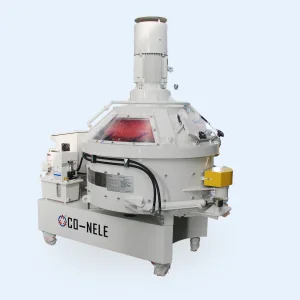
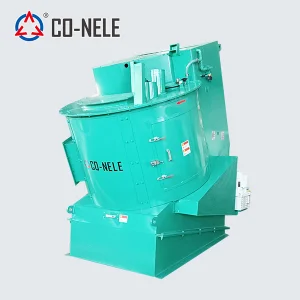
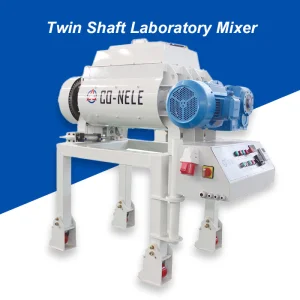
As a leading China Laboratory Mixer Supplier Factory, our engineering paradigm addresses the central challenge in industrial research: Kinetic Scale-Up Distortion. Traditional laboratory mixers often generate localized high shear without full vessel circulation, resulting in false batch parameters that fail when transferred to pilot plants or continuous production lines. By implementing vertical-shaft planetary counter-current drives and inclined high-shear intensive rotor dynamics, lab-scale machines (such as 5L to 75L test units) yield 100% reproducible data with a Coefficient of Variation (CV) under 3%.
From empirical trial-and-error blending to data-driven digital twin mixing environments.
Modern battery electrode formulas and fine ceramics require sub-micron dispersion. Advanced lab mixers integrate high-speed tool rotors spinning up to 30 m/s tip speed to mechanically sunder van der Waals clusters without destroying delicate crystal structures.
Lab mixers are transforming into inline analytical instruments. Integrated sensor arrays track dynamic energy consumption, temperature spikes, and viscosity changes, enabling automated determination of the exact end-point of mixing.
Handling hazardous powders (such as nano-silica, active battery materials, or toxic catalysts) demands hermetically sealed vessels with vacuum degassing capabilities to remove micro-bubbles and prevent atmospheric oxidation.
Navigating quality compliance, mechanical longevity, and cross-border engineering support.
Global procurement teams across Europe, North America, the Middle East, and Southeast Asia look far beyond basic equipment purchase costs when selecting a Chinese machinery manufacturing partner. Precision industrial trial work requires absolute reliability and mechanical repeatability. Key purchasing considerations include:
High-abrasion applications (such as corundum refractories or diamond powder compounds) destroy conventional stainless steel in weeks. Global buyers require customizable options including tungsten carbide cladding, high-chrome alloy liners (HB600+), silicon carbide tiles, or polyurethane linings.
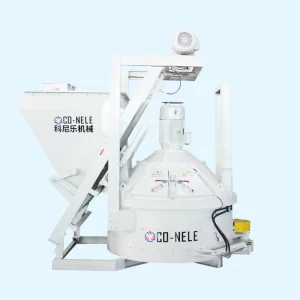
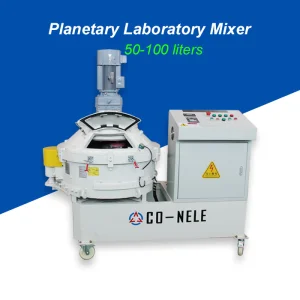
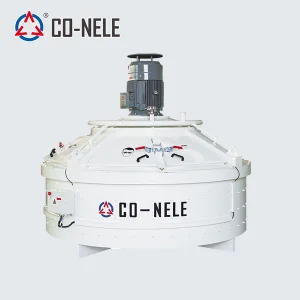
Buyers must ensure that a 10-liter recipe developed on a laboratory mixer (e.g., CMP50/CMP100) translates with zero reformulating error to a 1500-liter factory floor mixer. Drive mechanisms must mirror industrial planetary redutores precisely.
Compliance with CE, UL, and ATEX (explosion-proof certification for solvent-based mixing) is non-negotiable. Siemens PLC integration, Schneider low-voltage electronics, and dual safety-interlocked lid switches are standard requirements.
How Qingdao's industrial machinery cluster delivers ultra-precise engineering at scalable economies.
The global reputation of Chinese heavy machinery manufacturing has undergone a profound transformation. Today, premier Chinese suppliers like Qingdao CO-NELE Machinery Co., Ltd. operate fully digitized manufacturing campuses combining robotic laser welding, 5-axis CNC machining centers for proprietary planetary reducers, and automated dynamic balance testing facilities.
This concentrated ecosystem provides unmatched supply chain resilience:
Match your raw material rheology with the mathematically optimized agitation principle.
| Kinetic Parameter | Counter-Current Planetary Mixer (CMP Series) | Inclined Intensive Mixer / Granulator | Twin-Shaft Horizontal Mixer (CHS Series) |
|---|---|---|---|
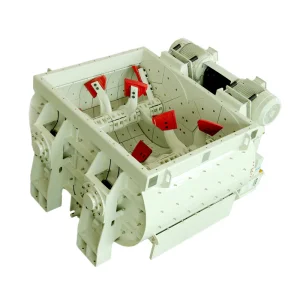
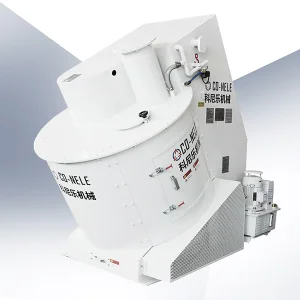
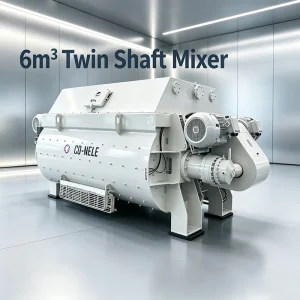
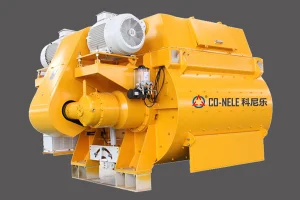
| Primary Mixing Mechanism | Counter-current planetary arms + wall scraper (Vertical) | High-speed rotor + inclined rotating pan | Dual overlapping counter-rotating paddle axes |
| Relative Rotor Speed | Moderate (1.5 m/s - 4.5 m/s tip speed) | High to Ultra-High (10 m/s - 32 m/s tip speed) | Moderate (1.8 m/s - 3.2 m/s tip speed) |
| Best Suited Materials | UHPC, Precast Concrete, Refractories, Foundry Sand | Battery Slurry, Fine Ceramics, PTFE, Pelletizing | High-volume Ready-Mix, Mass Aggregate Concrete |
| Mixing Homogeneity (CV) | < 3% (Micro-homogeneity) | < 1% (Ultra-fine dispersion) | < 5% (Standard bulk structural) |
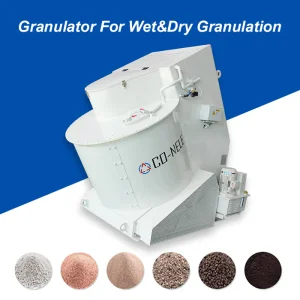
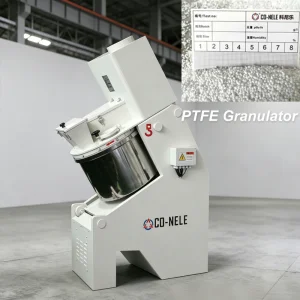
| Granulation Capability | Limited (Secondary micro-pelletization) | Exceptional (Controllable 0.2mm - 8mm sphericity) | None |
| Scale-Up Predictability | 99.2% linear kinetic match | 98.5% scale-up match via tip speed tuning | 95% match based on retention time |
Proving performance across demanding global industrial sectors.
Challenge: Fibrillating PTFE binders evenly into active cathode/anode powders without thermal degradation.
Solution: Temperature-controlled jacketed lab intensive mixer operating under positive argon purge, achieving uniform binder mesh networking in under 180 seconds.
Challenge: Dispersing micro-silica fume and 13mm steel fibers without balling or fiber nesting.
Solution: CMP50 Laboratory Planetary Mixer with specialized high-shear star mixing blades, yielding fiber distribution uniformity exceeding 98%.
Challenge: Granulating ultra-fine alumina powder to precise bulk density for high-speed automatic pressing.
Solution: High-speed laboratory granulator delivering 92%+ spherical granule yield within target size distribution limits.
Direct technical insights provided by CO-NELE engineering directors.
Original heavy industry and laboratory machine series engineered by CO-NELE.