CO-NELEMixing & Granulation
In modern industrial material synthesis—spanning advanced structural ceramics, refractory composites, ultra-high-performance concrete (UHPC), battery cathode slurries, and powder metallurgy—the laboratory mixer is no longer a simple sample-preparation tool. It is the fundamental control mechanism for phase distribution, micro-agglomerate dispersion, and rheological predictability.
As industrial research and development demands smaller trial batch sizes to minimize expensive raw material consumption (such as nano-silica, rare-earth oxides, or specialized synthetic polymers), China has emerged as a global leader in high-precision, heavy-duty Laboratory Intensive Mixers. By integrating complex planetary gear kinematics, customizable rotor geometries, and Industry 4.0 IoT telemetry, leading Chinese manufacturers provide international research institutions and multinational industrial groups with unparalleled scale-up accuracy and structural durability.
Global transition to solid-state lithium batteries, sodium-ion chemistries, and synthetic graphite anodes requires ultra-homogeneous slurry preparation without metallic iron contamination. Laboratory intensive mixers with ceramic-lined vessels eliminate cross-contamination during micro-dosing trials.
Modern infrastructure megaprojects demand UHPC with compressive strengths exceeding 150 MPa. Achieving uniform steel or synthetic fiber dispersion without balling requires extreme shear stress and counter-current mixing action engineered specifically into intensive laboratory mixers.
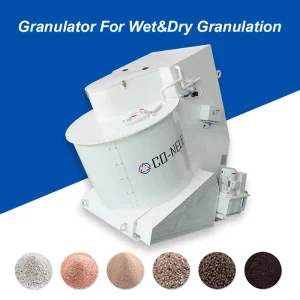
In high-temperature metallurgy and ceramic armor fabrication, binder distribution determines green-body density. Laboratory intensive mixers provide simultaneous mixing, coating, and wet granulation in a single sealed process chamber.
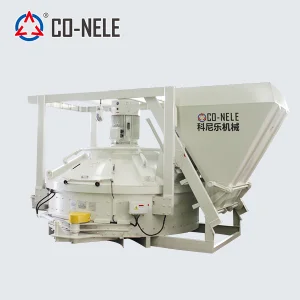
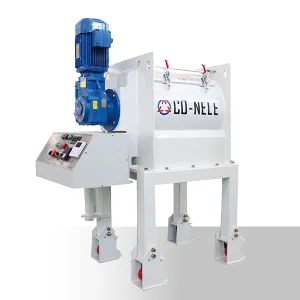
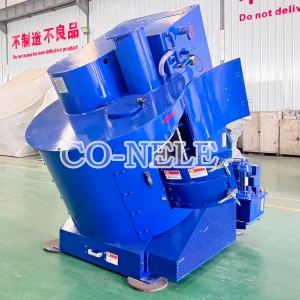
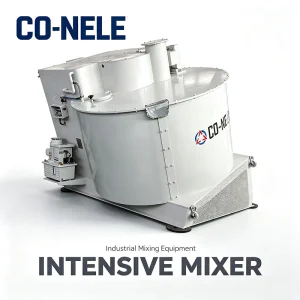
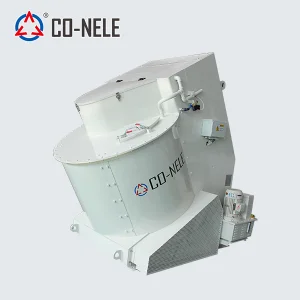
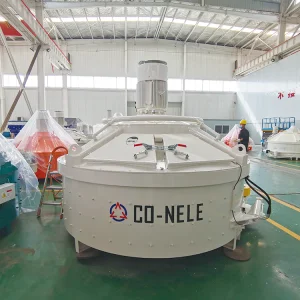
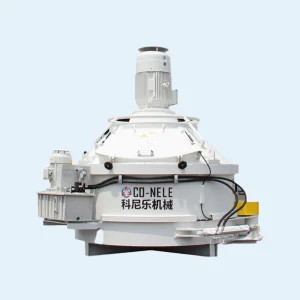
Unlike standard static-pan planetary mixers, an intensive laboratory mixer features an inclined or flat rotating pan that transports material continuously into the high-energy mixing zone. This delivers a 100% mechanical turnover per revolution, eliminating unmixed dead zones at the vessel perimeter.
Positioned eccentrically within the pan, the high-speed rotor operates in counter-rotation or co-rotation relative to the pan movement. Rotor tip speeds can be adjusted from gentle blending (2 m/s) to intense dispersion and agglomerate breakdown (up to 40 m/s), enabling precise physical manipulation of fine powders.
| Performance Characteristic | Standard Planetary Mixer | Laboratory Intensive Mixer (Counter-Current) | High-Shear Sigma Blade Mixer |
|---|---|---|---|
| Mixing Homogeneity (CV) | 5.0% - 8.0% | < 1.5% (Micro-Level) | 3.5% - 6.0% |
| Dead Zone Elimination | Moderate (Wall drag present) | 100% (Continuous Scraping) | Poor (Corners accumulate aggregate) |
| Processing Time per Batch | 5 to 12 minutes | 1 to 3 minutes | 15 to 30 minutes |
| Granulation Capability | Not Capable | Integrated (Multi-Functional) | Extrusion/Paste Only |
| Scalability to Production | Non-linear scale factors | 1:1 Hydrodynamic Scale-Up | Difficult thermal scaling |
Chinese machinery giants control the full production vertical—from casting high-chrome alloy wear plates (HRC > 62) to precision-hobbing planetary gear assemblies in ISO 9001 workshops in Qingdao.
Whether an R&D unit requires explosion-proof (ATEX) motors, vacuum-tight chambers, thermal fluid jackets, or PLC cloud data logging, Chinese engineering teams offer rapid custom CAD iterations without prohibitive lead times.
Procuring a European laboratory mixer often incurs massive brand premiums. Chinese manufacturers supply equivalent or superior mechanical tolerance, Siemens PLC integration, and wear performance at 40-60% reduced capital expenditure.
With standardized component topologies, standard Schneider electricals, and fast-ship replacement wear tools, downtime for research teams and production pilot lines is virtually eliminated.
Challenge: Dry-pressing advanced alumina or zirconia electronic components requires dust-free spherical granules with consistent bulk density to prevent air voids during pressing.
Solution: The laboratory intensive mixer functions as a high-shear granulator. By adding liquid binder during high-speed rotation, micro-granules (0.2 - 2.0 mm) form rapidly with 90%+ sphericity in a single closed step.
Challenge: Ultra-low cement refractory castables incorporate micro-silica, alumina aggregates, and deflocculants that require rapid water activation without thermal breakdown.
Solution: High dynamic shear ruptures surface tension instantly, dispersing water uniformly at low liquid-to-solid ratios (moisture contents down to 3.5%), maximizing cold crushing strength.
Challenge: Diamond powders must be coated with metallic matrix powders (Cobalt, Bronze, Tungsten Carbide) without particle segregation.
Solution: Controlled variable tip speed ensures light, perfectly uniform matrix wrapping around synthetic diamond grains without degrading micro-diamond crystal facets.
A primary failure point in material development is the "scale-up barrier"—where a formula perfected in a 1-liter beaker fails to achieve expected mechanical properties when produced in a 2-cubic-meter batch mixer. Laboratory Intensive Mixers overcome this through geometric and dynamic similarity principles.
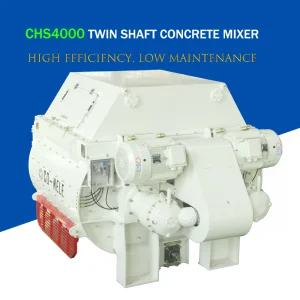
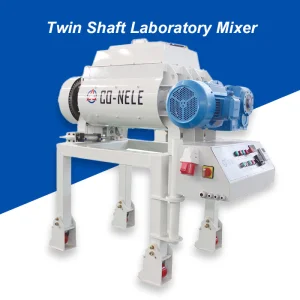
Standard twin-shaft or ribbon mixers rely primarily on mechanical transport along an axis, which creates low-shear zones and relies heavily on gravity settling. A laboratory intensive mixer uses an active rotating pan combined with an independently powered, high-speed eccentric rotor. This counter-current action generates intense differential velocity gradients throughout 100% of the working volume, dispersing nano-particles, pigments, and fibers in a fraction of the time with minimal batch-to-batch variation.
Yes. This is one of its primary technological advantages. The operator can homogenize fine dry powders at moderate rotor speeds, inject liquid binders via precise atomizing nozzles, and subsequently increase rotor velocity to trigger agglomeration and wet granulation—all within the same sealed processing chamber, eliminating material transfer loss.
For abrasive applications (e.g., corundum, silicon carbide), we offer high-chrome alloy steels (HRC > 60), tungsten carbide hard-facing, and replaceable armor-plate liners. For contamination-free applications (e.g., battery materials, advanced ceramics), we supply solid polyurethane linings, stainless steel 316L polished chambers, or technical ceramic wall coatings (Alumina/Zirconia).
Our laboratory intensive mixers are equipped with Siemens S7-1500 PLC control systems and high-resolution industrial touch panels. Parameters including rotor RPM, pan speed, drive torque, mass temperature, liquid dosing volume, and power consumption are sampled at 100 Hz and exported via Ethernet, USB, or cloud telemetry for statistical analysis.
Standard laboratory units (5L to 50L) feature a manufacturing lead time of 20 to 35 days. Custom explosion-proof (ATEX) or vacuum units require 45 days. Equipment is fully CE-compliant, shipped with UL/CSA electrical certification options, accompanied by English technical manuals, foundation drawings, and comprehensive spare-part lists.
Leading Chinese original equipment manufacturers maintain digital twin CAD records for every machine serial number produced. Wear tools, scrapers, motor drives, and seals are standardized and stocked in automated distribution hubs in Qingdao, ensuring international air-freight dispatch within 48 hours of request.