CO-NELEMixing & Granulation
Explore our benchmark machinery engineered in Qingdao, China—ranging from planetary counter-current mixers to fully automated concrete batching facilities worldwide.
Why standard laboratory tilt-drum and gravity mixers fail to deliver accurate formulation predictability for Ultra-High-Performance Concrete (UHPC), Alkali-Activated Materials, and Advanced Refractories.
Information Gain Key Takeaway: Modern concrete formulation research requires mixing equipment that achieves a Coefficient of Variation (CV) under 3% within 60 to 90 seconds. Precision China laboratory concrete mixers leverage high-energy planetary kinematics to shear micro-silica agglomerates, disperse steel/synthetic micro-fibers without balling, and yield perfectly reproducible batch statistics.
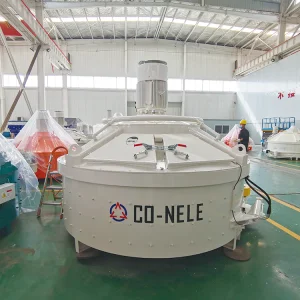
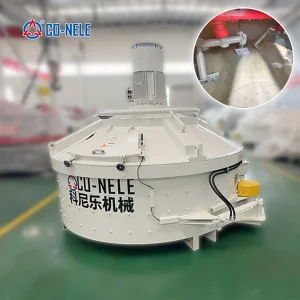
Laboratory mixing is not merely particle distribution; it is dynamic fluid rheology modification. Advanced lab planetary mixers generate counter-current forced mixing paths. The rotating mixing star accelerates materials along opposing vector paths, creating localized high-shear zones that break up agglomerated ultra-fine particles (silica fume, nano-TiO2, nano-CaCO3) instantly.
In UHPC and Engineered Cementitious Composites (ECC), fiber clump-up (balling) causes catastrophic mechanical failure in structural testing. Laboratory intensive mixers apply multi-dimensional kinetic energy vectors, ensuring matrix penetration between individual micro-steel fibers (0.2mm diameter, 13mm length) without structural damage or wire bending.
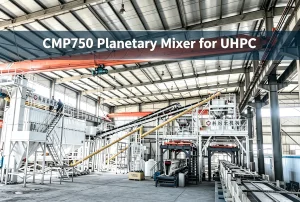
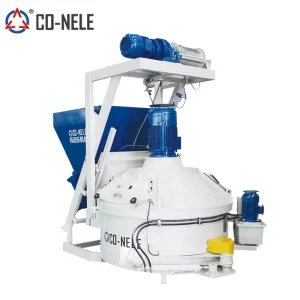
A primary bottleneck in material R&D is the "Scale-Up Gap"—the discrepancy between 5-liter lab test specimens and 3,000-liter commercial plant batches. Leading Chinese manufacturers design laboratory mixers with exact volumetric-to-surface-area ratios and speed kinematics matched to industrial-scale counter-current planetary mixers (such as the CMP and CR series).
Analyzing global enterprise demands across North America, Europe, Asia-Pacific, and the Middle East for advanced concrete R&D, green cement development, and high-tier manufacturing.
With global net-zero targets for 2050, cement producers are rapidly replacing traditional Portland clinker with Supplementary Cementitious Materials (SCMs) such as calcined clay, granulated blast furnace slag (GGBS), fly ash, and bio-char. China laboratory mixers enable precise shear control to activate low-carbon binders and geopolymer formulations requiring high chemical dispersibility.
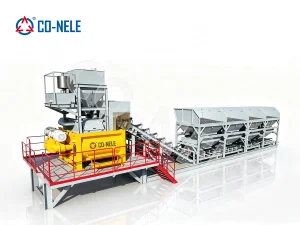
From offshore wind turbine jacket foundation grouting to high-speed railway bridge decks, high-strength precast components require rigorous trial mixing. Precast plants depend on laboratory planetary units to evaluate matrix rheology, slump flow retention, and early-stage compressive strength development before launching full-scale batching.
Industrial applications extend far beyond civil concrete. Refractory producers in steelmaking, glass manufacturing, and petrochemical industries utilize intensive laboratory mixers to blend high-alumina castables, silicon carbide mixes, and corundum powders with minimal liquid addition (<4% moisture content).
| Geographic Region | Primary R&D & Procurement Drivers | Dominant Equipment Configuration | Compliance & Standards Required |
|---|---|---|---|
| North America (USA & Canada) | UHPC bridge overlay, ECC seismic retrofits, low-carbon SCM testing | Lab Intensive Mixer (CR Series) with VFD & Temperature Monitoring | ASTM C192, UL/CSA Certified Controls, CE Mark |
| European Union (EU) | Geopolymer concrete, calcined clay activation, 3D Concrete Printing (3DCP) | Vertical Planetary Lab Mixer with Vacuum System Options | EN 196-1, CE Directives 2006/42/EC, ISO 9001 |
| Middle East (GCC Region) | Extreme temperature concrete, high-durability marine structures, precast facades | Heavy-Duty Planetary Mixer with High-Chrome Wear Liners | ISO 9001, Heavy-Duty Tropicalized Motors (50°C ambient) |
| Asia-Pacific (APAC) | High-speed rail precast, mega-infrastructure, refractory brick manufacturing | Combined Intensive Mixer-Granulator & Planetary Lab Units | GB/T Standards, ISO 14001, Standard Export Compliance |
A deep dive into the mechanical transmission systems, fluid dynamics, and blade trajectory physics engineered by China's premier mixing machine manufacturers.
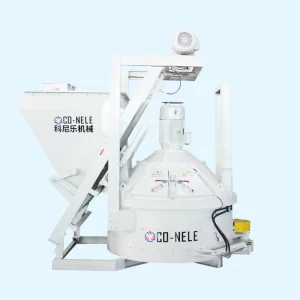
The planetary mixing mechanism features a central drive unit that rotates the mixing arms around a main central axis while simultaneously spinning the mixing stars on their own independent axes at high speed. This dual-rotation vector covers 100% of the pan floor within one complete revolution cycle.
Kinematic Advantages: Absolute destruction of dead angles, uniform velocity gradient from inner shaft to outer wall, low energy dissipation, and friction control preventing micro-aggregate breakdown.
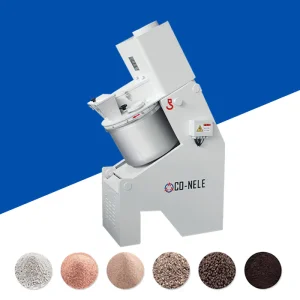
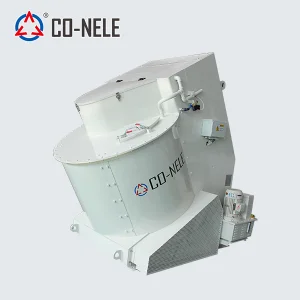
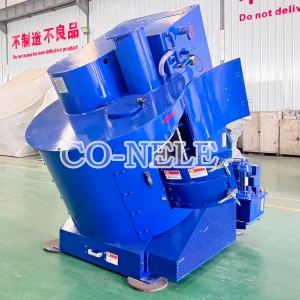
Inclined intensive mixers position the mixing pan at an angle (typically 20° to 30°). The pan rotates at a moderate speed, elevating the charge to the apex where gravity forces it down directly into a high-speed rotor turning in the opposite direction. This mechanism separates material transport from the mixing phase.
Kinematic Advantages: Variable tool speeds independent of bulk transport, ultra-high energy input capability for dry granulating/pelletizing, and sub-minute mixing cycles for dry mortars and battery chemicals.
E-E-A-T Technical Insight: China's top-tier laboratory mixer manufacturers utilize proprietary heavy-duty planetary gearboxes (such as CO-NELE's patented red-line reducers). Unlike standard commercial gear assemblies, these reducers are custom-cast to withstand severe mechanical shocks caused by low-water UHPC formulations and dense metallic refractory aggregates.
From academic research laboratories to high-throughput industrial plants, discover how specialized mixing technology drives performance across sectors.
3DCP requires an extremely narrow rheological window: the thixotropic paste must pump easily through a nozzle but build yield stress immediately after extrusion to support subsequent layers. Laboratory concrete mixers integrated with continuous torque monitoring allow researchers to precisely plot yield stress development versus mixing time.
Refractory materials require rapid liquid dispersion over vast particle surface areas. Intensive lab mixers ensure zero dry pockets, uniform micro-silica wetting, and rapid dispersion of chemical deflocculants. Resulting in castables with maximum cold crushing strength and minimum open porosity.
Beyond standard concrete, laboratory granulating mixers transform fine technical ceramic powders (alumina, zirconia), glass batches, and lithium battery cathode materials into round, dust-free granules (0.2–5mm) with predictable bulk density and superior press-feed flowability.
Technical parameter comparison for selecting the optimal research or pilot-plant mixing equipment based on batch size, power density, and material properties.
| Model Series | Mixing Principle | Discharge Capacity (L) | Main Drive Power (kW) | Rotor/Star Speed (RPM) | Ideal Application Profile |
|---|---|---|---|---|---|
| CMP5 / CMP10 | Counter-Current Planetary | 5 - 10 Liters | 1.5 - 2.2 kW | 0 - 180 (Variable) | Academic university labs, micro-specimen testing, expensive additive formulas |
| CMP30 / CMP50 | Counter-Current Planetary | 30 - 50 Liters | 4.0 - 7.5 kW | 0 - 150 (Variable) | Standard cube test specimens, UHPC formula verification, precast R&D |
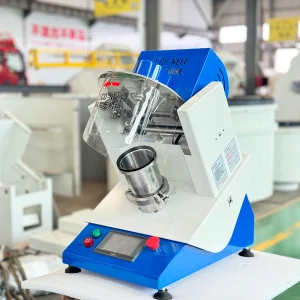
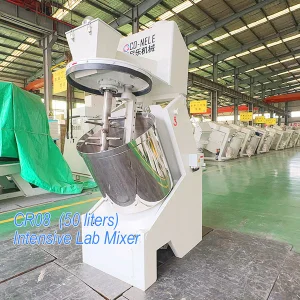
| CR02 / CR08 | Inclined Intensive / Granulator | 5 - 15 Liters | 3.0 - 5.5 kW | 0 - 1200 High Speed | Powder pelletizing, ceramic granulating, rapid dry mortar wetting |
| CR15 / CR75 | Inclined Intensive / Granulator | 15 - 75 Liters | 7.5 - 15.0 kW | 0 - 1000 High Speed | Pilot production lines, battery cathode batching, refractory research |
How leading Chinese manufacturers ensure international operational safety, material traceability, and seamless regional power grid integration for worldwide buyers.
Every machine exported is custom-wired to match the client's domestic power supply: 220V/380V/415V/440V/480V at 50Hz or 60Hz. Electrical control panels integrate premium global components (Siemens PLC, Schneider contactors, ABB VFD drives, Omron sensors) ensuring local spare-part availability anywhere in the world.
Equipment complies fully with European Union CE directives (2006/42/EC Machinery Directive, 2014/30/EU EMC Directive). Standard safety features include dual proximity-sensor interlocks on vessel covers, emergency stop circuits, dust-tight sealed discharge gates, and noise-damping enclosures (<75 dB operational acoustic profile).
Mixing pan liners and scrapers are manufactured using high-chrome alloy cast iron (Ni-Hard, Chromium hardness >60 HRC) or specialized polyurethane coatings for non-contamination applications (glass, white UHPC, technical ceramics). All wear plates feature standardized bolt-on designs for rapid field replacement.
Expert responses from our senior mixing process engineers regarding machine operation, material testing, purchasing logistics, and technical customization.
China’s leading mixing equipment manufacturers (such as CO-NELE in Qingdao) have bridged the technical gap with European producers through decades of dedicated kinematic research, in-house planetary gearbox manufacturing, and over 80 granted patents. By sourcing directly from a top Chinese OEM, global buyers achieve identical micro-homogeneity metrics, robust high-chrome wear metallurgy, and full CE/ISO compliance at a 30% to 50% lower capital expenditure. Furthermore, Chinese manufacturers offer faster production lead times and highly customizable laboratory setups.
Traditional drum and gravity mixers rely on low-energy free-fall action, which fails to generate sufficient shear to break up micro-silica agglomerates or disperse fibers in advanced concrete formulations like UHPC or ECC. Ribbon blenders create linear axial movement, often resulting in severe dead zones along the vessel walls. In contrast, vertical planetary counter-current mixers combine high-speed star rotation with revolving arm paths, subjecting 100% of the material to continuous, intense shear vectors. This achieves micro-homogeneity with a Coefficient of Variation (CV) under 3% in less than 90 seconds.
Yes. State-of-the-art laboratory testing facilities in Qingdao offer comprehensive trial mixing and granulating services for global clients. Enterprise buyers can ship 10kg to 50kg samples of raw materials (cementitious powders, aggregates, slag, silica fume, refractories, or ceramic powders). Process engineers conduct mixing trials, measure rheological performance, evaluate granule sphericity and bulk density, and return a complete technical test report alongside high-definition video documentation to verify performance before order commitment.
For UHPC, laboratory mixers can be equipped with reinforced high-torque drives, variable speed VFD controls (0-200 RPM), temperature-sensing probe blades, and water-jacketed cooling pans to monitor and control hydration heat during high-shear mixing. For aggressive geopolymer mixes or color-sensitive formulations, stainless steel (SUS304/316) pans or polyurethane non-reactive liners are installed to prevent chemical corrosion and batch cross-contamination.
Export units include a standard 12-month comprehensive warranty on drive systems and structural assemblies. Standard wear components (mixing blades, scrapers, pan bottom liners) are maintained in stock in Qingdao for immediate global courier dispatch (DHL/FedEx/Air Freight). Furthermore, technical support is provided 24/7 via remote video commissioning, PLC online diagnostics, and step-by-step English maintenance manuals.
Browse our extended product portfolio engineered for precast production, alumina granulation, intensive lab research, and refractory manufacturing.
Send your powder or aggregate samples to our R&D center in Qingdao. Our process engineers will return detailed rheological analysis, mixing time optimization, and model scale-up recommendations.