
CO-NELEMixing & Granulation
In modern industrial material synthesis, the transition from conventional low-shear blending to high-efficiency counter-current intensive dry mixing represents a fundamental engineering leap. Across sectors spanning advanced refractories, ultra-high-performance concrete (UHPC), lithium-ion battery dry electrodes, technical ceramics, and specialty metallurgy, process engineers no longer measure mixing performance purely by volumetric throughput. Instead, the decisive metric is micro-homogeneity achieved at minimum specific energy consumption.
Traditional drum, horizontal ribbon, or simple planetary mixers operate predominantly under gravity-assisted mass movement. These legacy systems struggle when handling micro-powders (sub-micron to 10-micron particle scales), high-viscosity binder additions, nano-silica dispersion, or dry-powder PTFE fibrosis. The fundamental limitation of legacy mixing equipment lies in the creation of dynamic "dead zones" and uncontrolled shear gradients, leading to aggregate agglomeration, batch-to-batch coefficient of variation (CV) exceeding 12%, and severe tool wear.
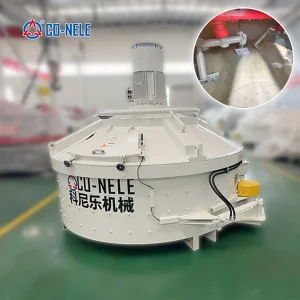
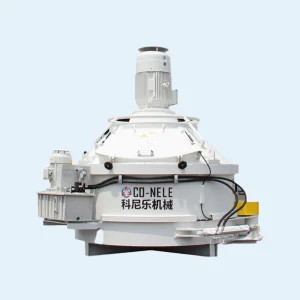
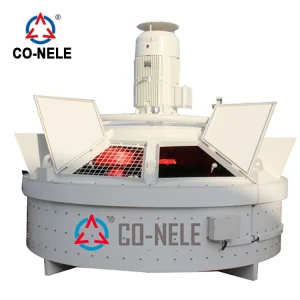
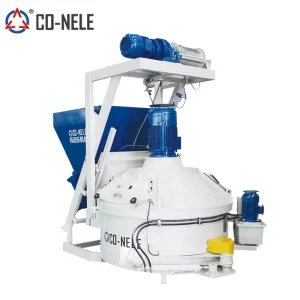
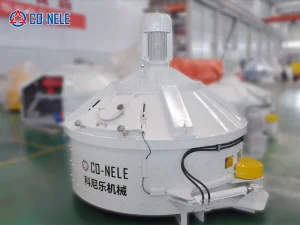
As a leading premier China Intensive Dry Mixer Manufacturer, Qingdao CO-NELE Machinery Co., Ltd. integrates counter-current rotating pan technology with high-speed rotor tools. By separating material transport (governed by the inclined rotating pan) from the micro-mixing action (driven by high-velocity rotor arms), our systems achieve 100% material turnover every revolution, delivering micro-homogeneity with a Coefficient of Variation (CV) under 3% in less than 90 seconds.
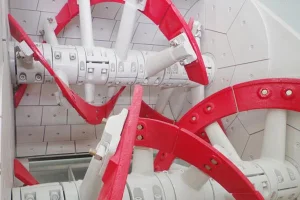
To understand the superior mixing efficacy of an Intensive Dry Mixer Machine, one must evaluate the vector forces applied to individual particles. CO-NELE intensive mixers utilize an inclined mixing pan set at a calculated angle ($20^\circ - 30^\circ$ to the horizontal plane). As the pan rotates at moderate speeds to transport the material upward against gravity, a high-speed, independently powered rotor system rotates in the opposite (counter-current) direction.
Material is fed continuously into the high-shear impact zone of the rotor. The mechanical energy input is localized, enabling rapid breakdown of dry powder agglomerates without destroying sensitive aggregate grain structures.
A wall-bottom scraper deflects material continuously away from the pan boundary directly into the path of the rotor. This guarantees zero buildup on vessel walls and facilitates 99.8% clean discharge upon batch completion.
Through variable frequency drives (VFD), rotor tip speeds can be dynamically adjusted between $4 \text{ m/s}$ (gentle homogenizing/granulation) up to $40 \text{ m/s}$ (intense high-shear dispersion and PTFE fibrillation).
| Performance Parameter | CO-NELE Intensive Dry Mixer | Horizontal Twin-Shaft Mixer | Standard Planetary Pan Mixer |
|---|---|---|---|
| Mixing Mechanism | Counter-current inclined pan + high-speed rotor | Parallel twin-shaft forced shearing | Vertical axis planetary star arms |
| Micro-Homogeneity (CV) | < 2.5% - 3.0% | 5.0% - 8.0% | 4.0% - 6.0% |
| Batch Cycle Time (Dry Mix) | 45 - 90 Seconds | 120 - 180 Seconds | 90 - 150 Seconds |
| Agglomerate De-clumping Ability | Extreme (High-speed shear rotor) | Moderate (Requires choppers) | Low to Moderate |
| Wear Part Lifetime Index | High (High-Chrome Alloys / Tungsten Carbide) | Medium (High surface friction) | Medium to High |
| Discharge Efficiency | 99.8% Clean Rate via bottom central gate | 95.0% - 97.0% | 97.0% - 98.5% |
Engineered to handle extreme particle variance—from ultra-fine nano-silica powders to coarse 20mm refractory aggregates—CO-NELE intensive dry mixing systems serve critical global industries.
Unshaped refractory castables, corundum-based mixtures, and silicon carbide ceramics demand absolute binder dispersion (microsilica, CAC cement). CO-NELE intensive mixers distribute trace liquid additives evenly across dry particles without creating micro-balling, ensuring high cold-crushing strength and thermal shock resistance in the final refractory bricks.
Ultra-High-Performance Concrete (UHPC) features water-binder ratios below 0.18 and dense steel/synthetic fiber reinforcement. Standard mixers cause fiber clumping ("hedgehog effect"). CO-NELE planetary and intensive mixers split fiber clusters, embedding them into a homogenous cementitious matrix to achieve compressive strengths exceeding $150 \text{ MPa}$.
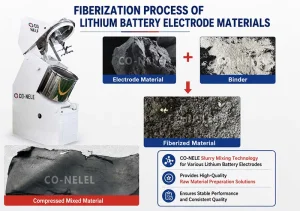
In next-generation EV battery manufacturing, solvent-free dry electrode technology relies on PTFE binder fibrosis under intense mechanical shear forces. Our high-shear dry intensive mixing machines impart precise shear stresses to fibrillate PTFE micro-particles, yielding self-supporting active material films without thermal degradation.
Modern automated foundries require bentonite-bonded green sand with rapid moisture activation and uniform clay coating around quartz grains. CO-NELE intensive sand mixers shorten cycle times to 45 seconds while maximizing green compression strength and sand permeability, drastically reducing casting surface defects.
When multinational engineering teams evaluate a China Intensive Dry Mixer Manufacturer, capital expenditure (CAPEX) is only one element of the strategic matrix. Leading global enterprises prioritize operational expenditure (OPEX), life-cycle reliability, safety compliance, and OEM spare-part interchangeability.
CO-NELE manufacturing facilities operate strictly under ISO9001 Quality Management Systems. Products exported to Europe, North America, and the Middle East carry full CE compliance, ATEX explosion-proof motor certifications for dusty environments, and UL/CSA electrical component alignment upon client request.
Mixing abrasive dry powders (such as quartz sand, corundum, or glass cullet) requires superior metallurgy. CO-NELE liners are fabricated from hard-faced chromium carbide overlay plates (62-65 HRC) or interchangeable ceramic tiles, extending wear life 4-fold compared to standard AR400 steel plates.
All production-scale mixers integrate seamlessly with centralized factory SCADA systems via PROFINET or Ethernet/IP protocol. Operators monitor power consumption curves, batch temperature, moisture probe readings, and bearing vibration telemetry in real time.
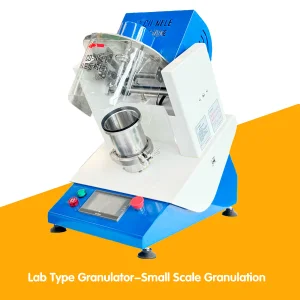
To de-risk capital investment for international buyers, CO-NELE operates an advanced R&D trial facility in Qingdao. Global clients can ship 20-50 kg raw powder samples for mixing trials. Our process engineering team generates complete analytical benchmark reports—measuring mixing homogeneity index, bulk density changes, particle shape sphericity (for granulating applications), and specific energy requirements—before contract execution.
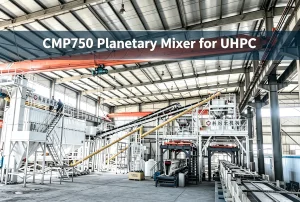
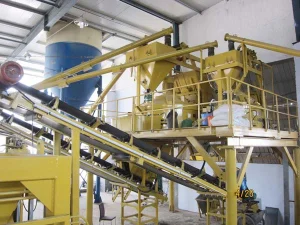
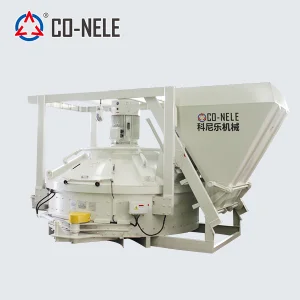
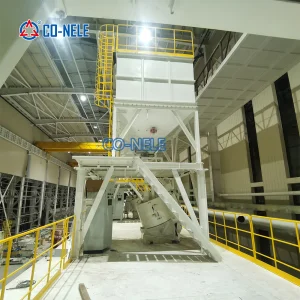
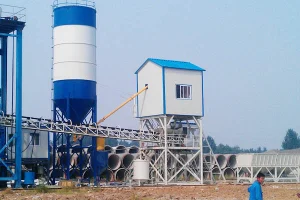
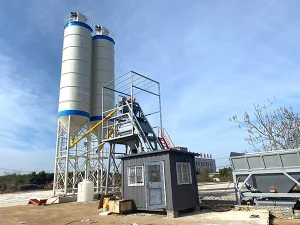
With over 10,000 operational installations across more than 80 countries, Qingdao CO-NELE Machinery Co., Ltd. has established a robust international sales and technical service ecosystem. From modular containerized mixing plants deployed in South America to heavy-duty industrial intensive mixers running 24/7 in European refractory plants, our equipment is proven across diverse operational environments.
Recognizing that unmanaged downtime directly erodes plant profitability, CO-NELE maintains central spare-part distribution hubs in Qingdao, supported by overseas service partners in Southeast Asia, Europe, and North America. Critical wear components—including alloy mixing blades, discharge gate seals, and planetary gear sets—are standardized and dispatched via express air freight within 24 hours of request.
Remote commissioning assistance, powered by secure IoT telemetry connections, enables CO-NELE senior automation engineers to calibrate drive frequencies, optimize batch weighing parameters, and diagnose system faults anywhere in the world without requiring on-site travel delays.
As industrial manufacturing transitions toward Industry 4.0, CO-NELE is pioneering smart intensive dry mixing technologies. Our upcoming generation of mixing systems incorporates in-line optical moisture sensors, real-time power torque spectral analysis, and neural network process control algorithms.
By analyzing rotor load fluctuations during the initial 15 seconds of dry material addition, the smart controller automatically adjusts rotor shaft speed and binder injection timing dynamically, eliminating human operator error and guaranteeing consistent batch density regardless of minor raw material moisture variations.
Detailed engineering responses to high-intent technical inquiries regarding Intensive Dry Mixer procurement, scale-up, and process optimization.
An Intensive Dry Mixer separates material movement from shear homogenizing. An inclined rotating mixing vessel conveys 100% of the material upward against gravity. At the same time, an independently driven high-speed rotor tool rotates in the opposite direction. This counter-current flow subjects every particle to localized high shear forces, de-agglomerating dry powders completely within 45 to 90 seconds. In contrast, ribbon and standard planetary mixers rely on slow planetary paths, creating velocity dead zones and requiring 3 to 5 times longer cycle durations.
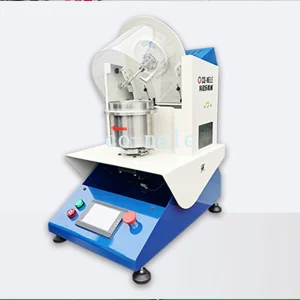
In dry battery electrode production, active materials (NMC/LFP, conductive carbon, and PTFE binder powders) must be intimately mixed without solvent. The CO-NELE Dry Electrode Intensive Mixer applies precisely calibrated high-shear forces via specialized rotor tips operating at linear velocities up to 40 m/s. This mechanical energy input shears the spherical PTFE micro-particles into a uniform 3D web-like fibrous network, anchoring active materials evenly into a continuous film ready for calendering, eliminating NMP solvent drying costs entirely.
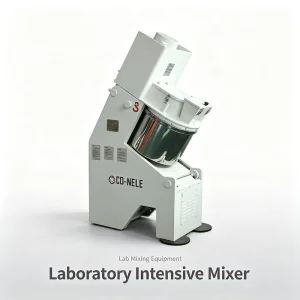
CO-NELE designs its entire laboratory series (5-liter to 75-liter units) with geometrically identical kinematic ratios relative to full-scale industrial batch mixers (up to 3,000-liter capacity). Key scaling metrics—including Froude number ($Fr$), rotor tip velocity ($v$), pan inclination angle, and specific energy input per metric ton ($kWh/t$)—maintain direct linear scalability. Data recorded during laboratory trial runs transfer directly to production-scale PLC recipe logic without trial-and-error re-formulation.
Depending on raw material abrasiveness, CO-NELE provides four tiered wear protection systems: (1) Hardened alloy steel plates (HARDOX 500); (2) High-chromium carbide overlay plates (62-65 HRC); (3) Bolt-on Sintered Tungsten Carbide edge blades for mixing rotor tools; and (4) Pure Alumina ($\text{Al}_2\text{O}_3$) or Zirconia ceramic tile liners for contamination-free white ceramic powder applications. All wear components feature standard modular bolt-on designs for rapid field replacement.
Standard machinery lead times range from 30 to 45 calendar days following engineering design sign-off. Before dispatch from our Qingdao facility, every unit undergoes a rigorous 4-hour Factory Acceptance Test (FAT), including no-load vibration analysis, noise level verification (< 78 dB at 1 meter), thermal bearing inspection, and seal integrity testing under full operating pressure. Mixers are packed in seaworthy anti-corrosion vacuum packaging and loaded into standard OT (Open Top) or HQ containers for global ocean transport.