CO-NELEMixing & Granulation
Precision-engineered mixing, batching, and granulating equipment dispatched directly from our Shandong production facilities.
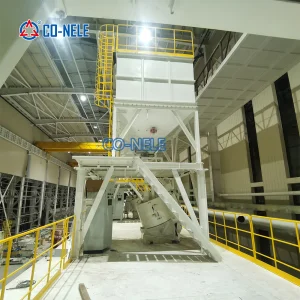
Analyzing the paradigm shift from basic batch blending to micro-homogeneous fluid-dynamic shear processing across global manufacturing infrastructure.
In modern industrial processing, mixing is no longer considered a simple auxiliary operation of combining raw solids and liquids. Across high-value manufacturing—spanning Ultra-High Performance Concrete (UHPC), advanced refractories, technical ceramics, lithium-ion battery precursors, powder metallurgy, glass batching, and synthetic foundry sand—the physical properties of the end product are directly governed by the micro-homogeneity achieved during the mixing cycle. This engineering reality has fueled the rapid global transition toward High Intensity Mixers and Intensive Granulating Systems.
Conventional gravity-fed, ribbon, or free-fall drum mixers rely on passive material cascades. While sufficient for low-grade ready-mix concrete or basic agricultural fertilizers, they suffer from severe physical limitations: extended cycle times, persistent dead zones along vessel walls, particle segregation due to density differentials, and an inability to break up micro-agglomerates. In contrast, high intensity mixing technology introduces forced mechanical agitation through specialized kinematic counter-current motion and high-speed rotor tools.
High-shear rotors disperse pigments, micro-silica, nano-additives, and synthetic fibers evenly within 30 to 90 seconds, achieving a Coefficient of Variation below 5%.
Separation of pan rotation speed and rotor tip speed allows process engineers to independently adjust friction, dispersion energy, and thermal dynamics.
Capable of transforming ultrafine metal, oxide, or mineral powders into spherical granules (0.5 mm to 8 mm) within a single enclosed process vessel without secondary drying.
Global demand for high intensity mixers is expanding at an unprecedented rate, driven by strict green-energy mandates, high-rise structural demands, and extreme thermal requirements in steelmaking and aerospace. Factory managers and engineering procurement construction (EPC) firms require mixers that deliver consistent, non-segregated batches shift after shift while keeping maintenance downtime to an absolute minimum.
How Shandong's heavy industrial cluster, proprietary metallurgy, and supply chain integration deliver unmatched value and engineering robustness.
Historically, the high intensity industrial mixer market was dominated by European brand names, which carried substantial capital equipment costs and expensive wear replacement parts. Over the past two decades, China—led by industrial equipment clusters in Qingdao, Shandong Province—has redefined the global procurement standard by combining advanced European mixing kinematics with proprietary Chinese mechanical innovations and cost efficiencies.
| Evaluation Parameter | Traditional European OEM | China Tier-1 OEM (CO-NELE Standard) | Competitive Impact for Buyers |
|---|---|---|---|
| Capital Expenditure (CAPEX) | Premium Pricing Base | Optimized / Factory-Direct Cost | 40-50% Savings Lower ROI payback threshold |
| Wear Parts Availability | Long lead times (8-12 weeks) | Global Stocking / Fast Dispatch | Eliminates catastrophic plant downtime |
| Gearbox Transmission Design | Commercial / Proprietary Closed | In-House Heavy-Duty Planetary Reducer | High torque tolerance & field repairability |
| Customization Agility | Rigid standard modular option | Fully Bespoke Engineering Layouts | Fits exact existing plant footprint |
| Mixing Homogeneity (CV) | < 5% | < 3-5% (Validated by test labs) | Identical or superior chemical dispersion |
Detailed technical engineering analysis of planetary counter-current, intensive granulating, twin-shaft compulsory, and mobile batching systems.
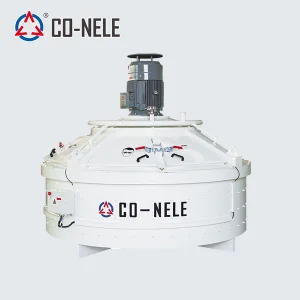
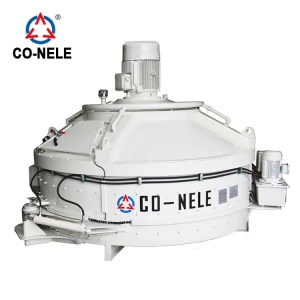
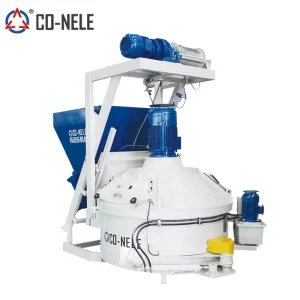
Utilizes vertical-shaft kinematics where the mixing star arms rotate rapidly on their own axes while simultaneously orbiting around the central axis of the mixing pan. This dual-rotation pattern forces every particle through intense shear paths within seconds, guaranteeing zero dead zones, perfect color distribution in dry-cast products, and homogeneous hydration of silica fume in UHPC mixes.
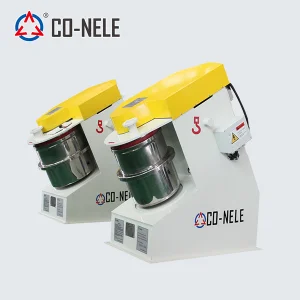
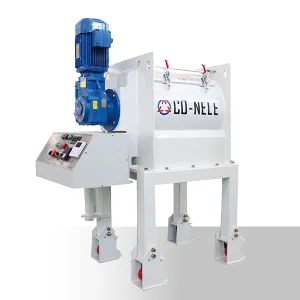
Combines an inclined rotating mixing pan with an independently driven, high-speed eccentric rotor. The pan transports raw powders upward while wall/bottom scrapers deflect the material directly into the high-shear rotor zone. By adjusting pan speed, rotor velocity, and liquid binder spray rates, the unit performs high-speed mixing, wetting, micro-pelletizing, and coating in a continuous automated batch.
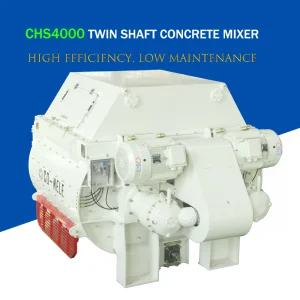
Designed for continuous, high-throughput commercial ready-mix concrete and mass civil infrastructure. Dual horizontal synchronized shafts fitted with overlapping fluid dynamic paddles generate intense turbulent cross-mixing cycles. Discharge takes 30 to 45 seconds through hydraulic rotary doors, handling batches up to 6,000 liters per drop.
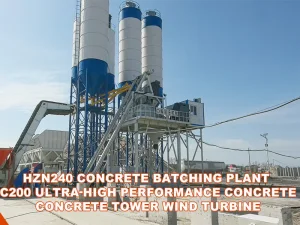
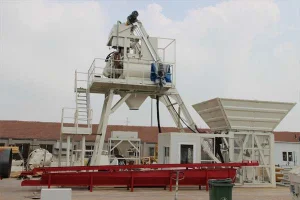
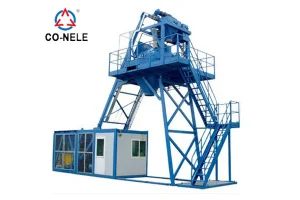
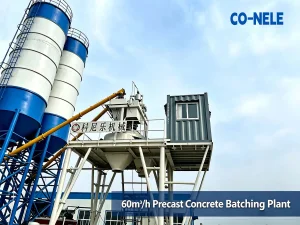
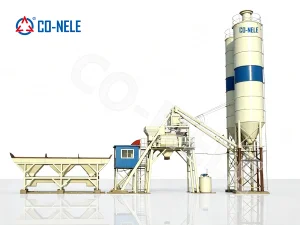
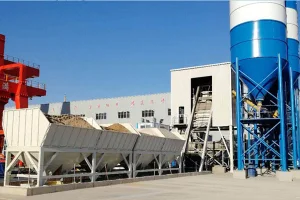
Integrates high intensity planetary or twin-shaft mixers directly onto towable chassis or foundationless steel frames. Complete with aggregate batching bins, moisture probes, cement/water weighing hoppers, and Siemens PLC control cabs, these plants deploy within 48 hours for fast-track highway, bridge, and offshore wind power grouting projects.
How customized high intensity mixing parameters solve critical material processing challenges across diverse global manufacturing sectors.
Challenge: Dispersing high volumes of steel micro-fibers, quartz flour, and silica fume without fiber balling or air entrainment.
Solution: Planetary CMP series with variable frequency drives (VFD) ensuring 100% fiber dispersion, compressive strengths exceeding 150-200 MPa, and superior architectural surface finishes.
Challenge: Mixing dense corundum, silicon carbide, and graphite powders with tiny liquid binder ratios without crushing fragile aggregate grains.
Solution: Intensive counter-current mixers with ceramic-coated wear liners and high-torque planetary reducers, delivering rapid binder dispersion without thermal degradation.
Challenge: Converting sub-micron alumina, zirconia, or iron powders into dense, highly spherical granules for automatic pressing lines.
Solution: Inclined mixing granulators (CEL series). Provides reproducible bulk density, zero dust emissions, and precise grain sizes from 0.2 mm to 3 mm without thermal spray dryers.
Challenge: Coating quartz sand uniformly with bentonite clay and water film in short cycle times to maintain green sand strength.
Solution: High-speed sand intensive mixers. Rapid mechanical energy shear distributes moisture and clay activation rapidly, minimizing binder usage while optimizing mold permeability.
Challenge: Extremely abrasive cullet, quartz, and soda ash batch mixing causing severe liner wear and batch segregation.
Solution: Heavy-duty planetary mixers with chrome-carbide hard-faced liner plates, gas-tight dust seals, and steam/liquid dosing systems.
Challenge: Blending micro-dosed chemical additives (cellulose ethers, redispersible polymer powders) into sand and cement matrices.
Solution: Single and dual-shaft mortar mixers equipped with high-speed chopper knives to eliminate agglomerates within 60-second batch cycles.
Essential selection criteria for plant managers, procurement directors, and EPC engineering consultants.
When selecting a high intensity mixer or batching plant manufactured in China, buyers must evaluate technical parameters beyond simple volumetric vessel sizes. Actual effective output depends heavily on material bulk density, rheology, binder addition cycles, and discharge valve geometry.
| Mixer Model Series | Discharge Capacity (L) | Main Drive Power (kW) | Primary Application Match | Homogeneity Cycle Time |
|---|---|---|---|---|
| CMP250 / CMP375 | 250 L – 375 L | 7.5 kW – 11 kW | Lab R&D, Colored Pavers, Specialty UHPC Joints | 45 – 60 Seconds |
| CMP750 / CMP1000 | 750 L – 1,000 L | 30 kW – 45 kW | Precast Elements, Pipe Mills, Refractory Bricks | 50 – 75 Seconds |
| CMP1500 / CMP2000 | 1,500 L – 2,000 L | 55 kW – 75 kW | UHPC Wind Towers, Structural Precast, Glass Batching | 60 – 90 Seconds |
| CEL05 / CEL10 (Intensive) | 5 L – 100 L | 4 kW – 15 kW | Battery Cathode Pilot Lines, Ceramic Granulation | 60 – 120 Seconds |
| CHS2000 / CHS4000 (Twin Shaft) | 2,000 L – 4,000 L | 2x37 kW – 2x75 kW | High-Volume Ready-Mix, Dam Concrete, Highways | 30 – 45 Seconds |
Next-generation automation, real-time rheology sensing, and energy-optimized mixing dynamics.
Integration of high-frequency microwave moisture probes and electric current torque-curve tracking within mixing pans. Automated PLCs calculate dynamic plastic viscosity in real time, automatically adjusting water or liquid binder dosing to guarantee batch slump consistency regardless of raw material humidity fluctuations.
Transitioning from traditional V-belt drive configurations to direct-coupled permanent magnet synchronous motors (PMSM) paired with planetary gearboxes. Reduces mechanical power losses by 12-18%, lowers noise levels below 75 dBA, and eliminates belt maintenance tensioning routines.
For high-purity chemical powders, toxic battery materials, and fine ceramic oxides, high intensity mixers now incorporate hermetically sealed vacuum chambers (< -0.09 MPa). This prevents airborne particulate contamination, degassing liquids during mixing, and ensuring cleanroom environment compliance.
Expert solutions to common technical queries regarding installation, maintenance, selection, and operations.
Explore our full range of planetary mixers, batching plants, refractory mixers, and mobile solutions engineered for demanding global job sites.