
CO-NELEMixing & Granulation
Explore our high-performance planetary counter-current mixers, laboratory intensive units, and concrete batching machinery configured for global export.
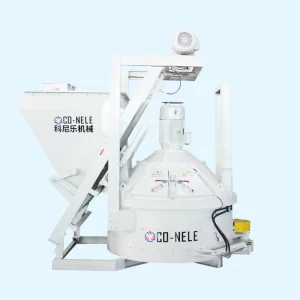
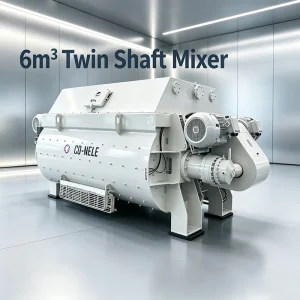
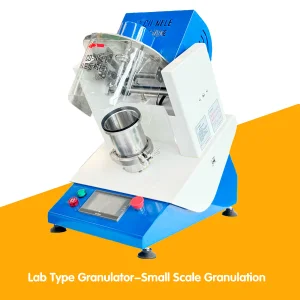
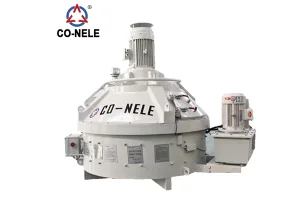
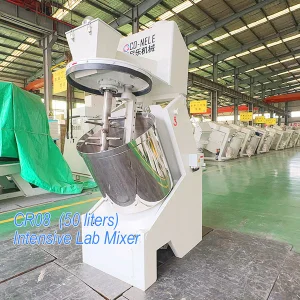
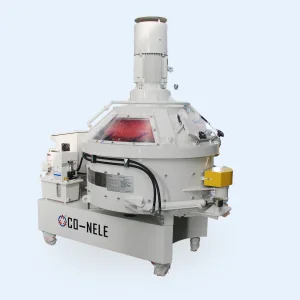
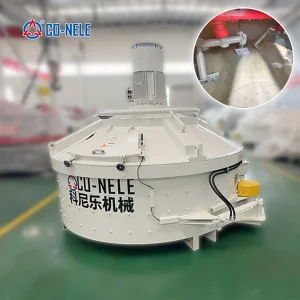
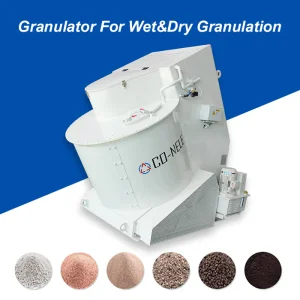
How advanced counter-current kinematics and inclined pan design are replacing traditional mixing systems across advanced materials processing.
Modern advanced industries—such as technical ceramics, lithium battery cathode synthesis, ultra-high-performance concrete (UHPC), and shaped refractories—no longer tolerate standard batch variances. The global industry is transitioning from simple low-shear ribbon blenders to high-energy intensive mixers capable of achieving a Coefficient of Variation (CV) under 3% within 60 to 90 seconds.
Enterprise procurement trends favor multifunctional systems. High-intensity mixers designed on the counter-current principle allow mixing, homogenizing, moistening, granulating, and heating to occur inside a single hermetically sealed chamber. This eliminates intermediate material transfers, prevents cross-contamination, and drastically reduces cleanroom footprint.
While European OEMs have historically dominated the high-shear intensive mixing landscape, global procurement teams face growing pressure to manage capital expenditure. Sourcing high-specification Eirich-type intensive mixers from top-tier Chinese manufacturers yields identical mixing kinematics, robust metallurgy, and smart PLC integration at 40% to 60% lower total capital cost.
Over the past decade, leading Chinese mixing machinery manufacturers (such as CO-NELE, based in Qingdao) have modernized their manufacturing infrastructure. By combining heavy-duty mechanical engineering with intelligent manufacturing processes, China has established itself as the world’s most reliable production hub for intensive mixers and planetary batching plants.
Every industrial intensive mixer produced in our Qingdao manufacturing facility undergoes multi-stage non-destructive testing (NDT), load testing, and dynamic balance analysis before shipment.
Decades of dedicated mixing research deliver verified performance across international markets.
Understanding how intensive counter-current rotors outperform conventional mixing mechanics for complex batch formulations.
| Performance Parameter | Counter-Current Intensive Mixer (Eirich Type) | Planetary Counter-Current Mixer | Twin-Shaft Compulsory Mixer |
|---|---|---|---|
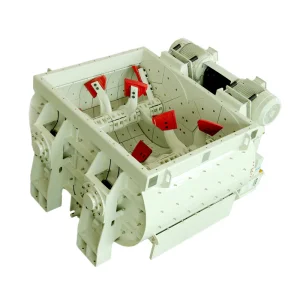
| Mixing Kinematics | Rotating inclined pan + high-speed counter-rotating rotor tools | Vertical central axis with counter-rotating star mixing arms | Dual horizontal shafts with overlapping paddle arms |
| Mixing Homogeneity (CV) | Ultra-High (< 1% to 3%) | High (< 3% to 5%) | Standard (5% to 8%) |
| Batch Cycle Duration | 45 – 90 Seconds | 60 – 120 Seconds | 30 – 45 Seconds |
| Primary Application Focus | Refractories, Ceramics, Powders, Batteries, Granulation | Precast, UHPC, Coloured Blocks, Glass Batching | High-Volume Ready-Mix Concrete, Mass Dams |
| Dead Zone Occurrence | 0% (Pan wall & bottom wall scraped continuously) | 0% (Complete floor-area coverage) | Minor accumulation at shaft end seals |
| Granulation Capability | Excellent (0.2mm - 8mm controlled pellets) | Limited | None |
Tailored engineering solutions configured for demanding industrial processes across target markets.
Used in bridge deck overlays, architectural cladding, and offshore wind foundations. The high-shear rotor breaks up silica fume agglomerates and distributes steel/synthetic fibers evenly without clumping or balling.
Vital for steel plant ladles, glass melting furnaces, and cement kiln linings. Handles dense alumina, silicon carbide, and graphite mixes with minimal moisture addition to maximize density.
Used in spray-drying slurry preparation, insulator ceramics, and wear components. Ensures complete binder dispersion and micro-granule uniformity prior to dry pressing.
Configured with stainless-steel or ceramic-coated contact surfaces to eliminate metal contamination during the mixing of lithium-iron-phosphate (LFP) and precursor raw materials.
Converts toxic electric arc furnace (EAF) dust, iron ore fines, and hazardous industrial by-products into dense, non-dusting granules for recycling or safe landfill disposal.
Guarantees streak-free melting by perfectly coating silica sand with minor additives, fluxing agents, and decolorizers, while reducing melt energy in the furnace.
For international procurement directors and plant managers, evaluating an Eirich Mixer for sale from a Chinese manufacturer involves analyzing total lifetime operating costs, not just the initial purchase price.
1. Capital Expenditure (CAPEX) Savings: Direct factory procurement from Qingdao reduces equipment acquisition costs by up to 50% compared to European OEM machinery, freeing capital for plant automation and upstream/downstream material handling.
2. Operational Expenditure (OPEX) & Energy Efficiency: The inclined pan counter-current mechanism optimizes energy transfer. By using 100% of the mechanical energy for particle displacement rather than dragging material against gravity, energy consumption per ton of mixed product is reduced by 15% to 25%.
3. Wear-Part Availability & Standardized Components: Standardizing on global brands for electric motors (Siemens, ABB), hydraulic power units (Bosch Rexroth), and pneumatic systems (Festo) ensures replacement parts are available locally worldwide.
Pro Tip: Schedule a laboratory trial in Qingdao to receive a detailed process test report covering batch density, mixing time, and moisture distribution before placing a full-scale order.
Clear engineering answers addressing technical specifications, customization, delivery, and field service support.
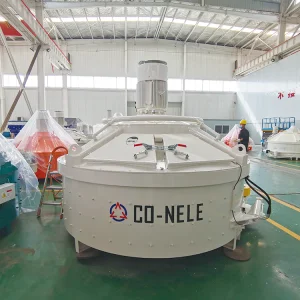
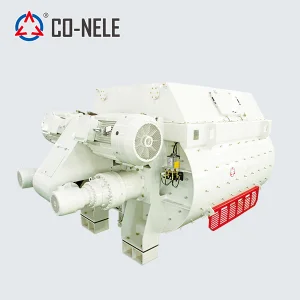
The mixer operates on the counter-current principle using an inclined rotating pan and one or more high-speed rotor tools. The pan transports raw material to the rotor zone, where high shear forces rapidly disperse powders, liquids, and micro-additives. A wall-and-bottom scraper continuously cleans the vessel surfaces and directs material back into the active mixing zone, ensuring zero dead space and consistent batch results.
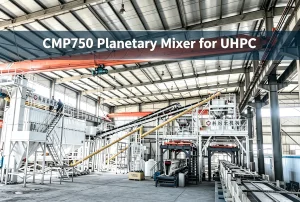
A planetary mixer utilizes a vertical central axis with planetary star arms rotating through a stationary pan, making it ideal for precast concrete, UHPC, dry-cast block mixes, and glass. An intensive mixer features an inclined pan that rotates while high-speed rotors turn independently, creating higher shear forces suitable for fine powders, ceramic slurries, wet/dry granulation, and abrasive refractories.
For highly abrasive recipes—such as refractory castables or quartz-heavy ceramic pastes—we supply mixing pan liners and rotor blades coated with tungsten carbide, Hardox 500/600 wear plates, or Vautid hardfacing overlays. For iron-free processing in ceramics or batteries, polyurethane, alumina ceramic tiles, or micro-crystalline stone liners are available.
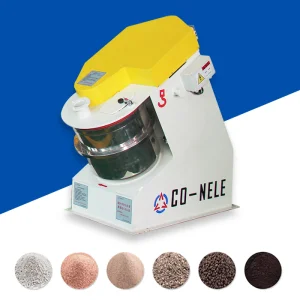
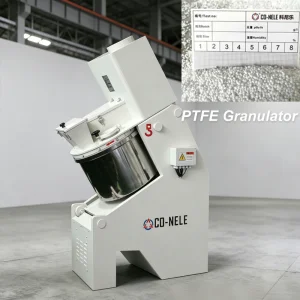
Yes. By adjusting rotor speeds and liquid binder dosing during the cycle, the machine transitions seamlessly from homogenous dry mixing to controlled wet granulation. This process produces spherical granules ranging from 0.2 mm to 8 mm, ideal for ceramic pressing, fertilizer pellets, and powder metallurgy.
Machines are engineered to meet destination site power supplies (220V, 380V, 415V, 440V, 480V at 50Hz or 60Hz). Deliveries include complete CE compliance certification, foundation loading drawings, wiring schematics, English O&M manuals, and a 12-month warranty covering major drive components.
We provide remote commissioning assistance via video engineering calls, augmented reality diagnostic support, and on-site engineer deployment for line installation. Critical wear parts and standardized drive components are maintained in global stock hubs in Qingdao for rapid international air shipment within 24 to 48 hours.
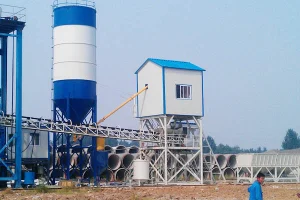
Complete concrete batching plants, laboratory mixers, and specialized granulators built for industrial demands.
Send us your raw material characteristics, target batch capacity, and uniformity requirements. Our engineering team in Qingdao will generate a full technical quote, layout drawing, and ROI analysis within 24 hours.