CO-NELEMixing & Granulation
Explore our core machinery offerings deployed globally for concrete batching, UHPC, dry-cast wall panels, refractories, and industrial powder granulations.
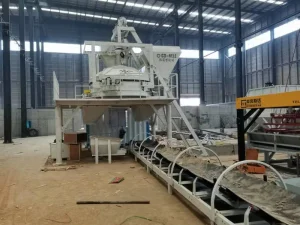
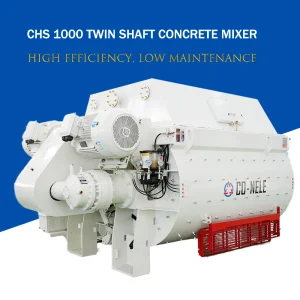
Understanding why horizontal double shaft (twin shaft) compulsory mixers dominate commercial ready-mix, dam construction, and infrastructure projects across the globe.
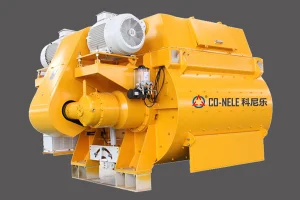
Double shaft mixers utilize twin parallel shafts configured with overlapping counter-rotating mixing arms. The mixing paddles are angled at precise 45° to 60° helical trajectories, generating both radial shear and intense axial turbulence. This forces material into a 3D fluidic vortex, guaranteeing batch homogeneity within 30 to 45 seconds.
The main failure point of low-tier concrete mixers is cement slurry ingress into main bearings. Modern Chinese heavy-duty double shaft mixers implement a quadruple floating seal barrier combined with automated electric grease injection pumps, maintaining positive internal pressure to keep abrasive fines completely out of the bearing housings.
Equipped with multi-stage hydraulic power units, the bottom discharge gate offers partial opening controls (inch-discharge) for batching control or ultra-fast full opening (under 2.5 seconds) to minimize total cycle times. Manual emergency hand-pump overrides ensure safe discharge during unexpected site power loss.
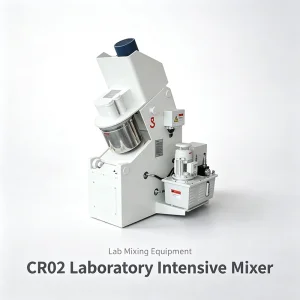
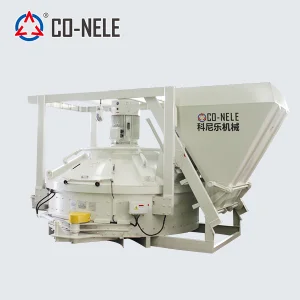
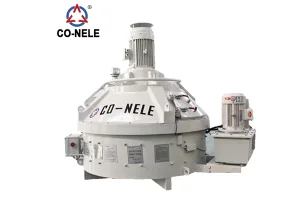
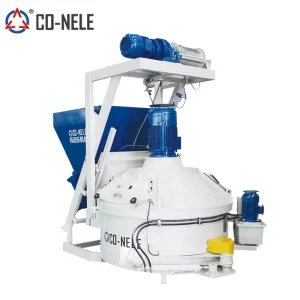
While vertical-shaft planetary mixers excel in micro-homogeneity for zero-slump dry-cast, UHPC, and pigment dispersion (due to complex counter-current star orbits), Double Shaft Mixers dominate heavy civil engineering. Double shaft systems provide higher volumetric throughput per hour, handle larger maximum aggregate sizes (up to 80mm-120mm depending on model), and consume significantly less energy per cubic meter on standard commercial ready-mix recipes.
How China's heavy machinery manufacturing hubs deliver high-spec metallurgy, planetary gear drives, and cost efficiency to global industrial buyers.
Wear components directly impact operational downtime. Leading Chinese manufacturers leverage domestic foundry clusters to supply batch-tested high-chromium cast iron liners and mixing blades with hardness ratings exceeding HRC 62-65 (Ni-Hard & Chromium Carbide Alloys). These liners withstand abrasive silica sand, crushed granite, and recycled aggregates, extending service life to over 150,000 batches under standard operating parameters.
Unlike simple assembly vendors who outsource major components, premier Qingdao factories utilize multi-axis CNC horizontal boring centers to machine mixer bodies in a single setup. This guarantees perfect axis parallelism between twin shafts, eliminating gear binding and reducing mechanical vibration. Every planetary gearbox and heavy-duty synchronizer undergoes rigorous 24-hour full-load thermal bench testing before shipment.
A data-backed evaluation framework comparing Chinese Double Shaft Mixers against European and North American alternatives for procurement officers and plant managers.
| Evaluation Vector | Tier-1 China Manufacturer (e.g., CO-NELE) | European Legacy Brands | Low-Cost Assembly Vendors |
|---|---|---|---|
| Initial Capital Expenditure (CAPEX) | Optimal ($25k - $85k depending on capacity) | High ($80k - $220k+) | Very Low ($15k - $35k) |
| Liner & Blade Hardness (Wear Life) | High-Chrome Alloy (HRC ≥ 62) / 120,000+ batches | Proprietary Alloy / 140,000+ batches | Standard Cast Iron / < 40,000 batches |
| Shaft Seal Architecture | Quadruple Floating Seal + Automatic Auto-Grease | Mechanical Floating Seal + Auto-Grease | Single Rubber Packing Seal (Prone to Leakage) |
| Mixing Cycle Efficiency (C25 Concrete) | 30 - 45 Seconds Batch Discharge | 30 - 40 Seconds Batch Discharge | 60 - 90 Seconds (Poor Homogeneity) |
| Spare Parts Availability & Cost | Global Fast-Ship Stock, Standardized Bolted Parts | High Cost, Long Lead Times for Imports | Inconsistent Machining Standards |
| 3-Year Total Cost of Ownership (TCO) | Lowest Operational Expense Curve | High Initial Amortization Cost | High Downtime & Repair Cost |
Where double shaft compulsory mixers are deployed across diverse global infrastructure and industrial manufacturing domains.
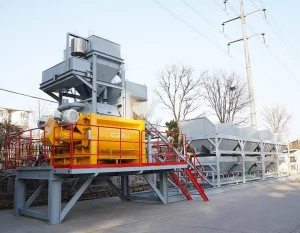
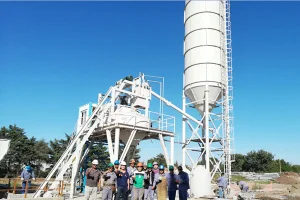
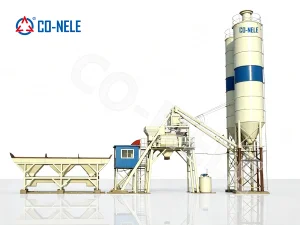
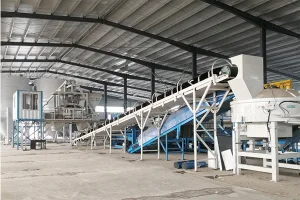
Integrated into high-output stationary plants (HZS90, HZS120, HZS180), double shaft mixers ensure continuous loading of transit mixers. Fast cycle times handle variable aggregate moisture seamlessly with automatic slump compensation software.
Requiring heavy aggregate mixing (up to 120mm crushed stone for roller-compacted concrete / RCC), double shaft machines deliver high shear force without jamming, satisfying strict hydraulic engineering standards.
Providing high slump control and precise batch consistency required by automated precast casting machines, block makers, and hollow-core slab extruders.
Modified double shaft ploughshare variants process dry powders, cellulose additives, sand, and polymer binders without thermal degradation, achieving fine powder shear dispersion.
Heavy industrial remediation plants utilize compulsory double shaft mixing to encapsulate toxic heavy metals in fly ash, mining tailings, and municipal solid waste incinerator residues with binder reagents.
Configured with thermal jackets and non-stick liner geometry, twin shaft continuous asphalt mixers homogenize reclaimed asphalt pavement (RAP) with bitumen emulsions and rejuvenating fluids.
Eliminating cross-border procurement risks for EPC contractors, engineering consultants, and international equipment importers.
Export machines are engineered to match local power distribution requirements across all continents: 220V/380V/415V/440V/480V at 50Hz or 60Hz. Electrical control panels integrate Schneider, Siemens, or ABB components built to CE Directives (2006/42/EC) and UL/CSA electrical safety standard compliance, complete with IP65 dust-proof ratings and emergency stop interlocks.
Every industrial mixer can be optioned with integrated Industry 4.0 PLC telematics modules. Engineers from Qingdao can remotely monitor gearbox oil temperatures, vibration spectra, motor load currents, and shaft seal pressure levels in real time. Standardized bolt-on wear liner kits are stocked at regional distribution hubs, ensuring air-freight delivery of replacement parts within 48 to 72 hours.
How double shaft machinery is evolving to meet low-carbon cement formulations, AI automation, and zero-downtime maintenance goals.
As the construction industry transitions to LC3 (Limestone Calcined Clay Cement) and alkali-activated slag binders, mixers must generate higher fluid shear to deagglomerate sticky clay fines while maintaining low water-binder ratios.
Integrating in-pan acoustic sensors, optical microwave moisture probes, and drive motor torque-curve analysis enables live machine-learning algorithms to adjust batch water dosage dynamically during mixing.
Next-gen double shaft mixers adopt interlocking keyway liner modules instead of traditional through-bolt designs. This cuts liner replacement labor time by up to 60%, drastically shortening plant turnaround maintenance windows.
In-depth answers from process engineers regarding machinery selection, maintenance, and operating economics.
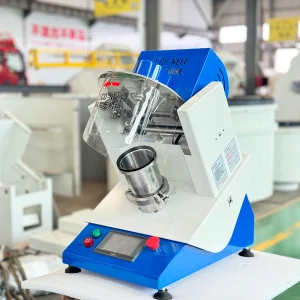
Explore additional planetary, twin shaft, mobile concrete plants, and granulation machinery engineered in our Qingdao manufacturing facility.