CO-NELEMixing & Granulation
Explore our core flagship series engineered for precast concrete, high-intensity ceramic granulation, dry-mortar production, and heavy infrastructure batching.
In the contemporary structural engineering and advanced material processing landscape, the global demand for concrete mixing technology has evolved drastically beyond primitive gravity-drum agitations. Today's mega-infrastructure projects—encompassing high-speed rail viaducts, ultra-deep subsea tunnels, offshore wind foundations, and hyper-slender architectural precasts—require concrete mixes with unprecedented compressive strength, low permeability, and complex chemical rheology.
The global transition toward Ultra-High Performance Concrete (UHPC), Engineered Cementitious Composites (ECC), and specialized refractory formulations has made conventional mixing machinery obsolete. Industrial buyers are no longer evaluating cement mixers solely on raw volumetric output per hour; rather, the defining criteria have pivoted toward micro-homogeneity metrics, shear rate control, energy-to-batch efficiency ratios, and wear component longevity.
China has established itself as the global epicenter for advanced heavy machinery engineering and mixing technology manufacturing. Combining deep metallurgy supply chains, state-of-the-art CNC precision machining, and extensive empirical field data across diverse climate zones, leading Chinese manufacturers deliver industrial mixing systems that match or surpass legacy European standards while offering unrivaled capital expenditure efficiency and custom engineering flexibility.
Eliminate cement balling, micro-silica agglomeration, and pigment streaking. Counter-current planetary dynamics ensure multi-directional particle trajectory overlap within seconds of charging.
Specially engineered planetary speed reducers transmit max mechanical torque without thermal degradation. High dynamic torque handles zero-slump dry cast and heavy-fiber UHPC recipes effortlessly.
Equipped with Ni-Hard alloy, high-chrome casting (HRC ≥ 62), and optional tungsten carbide hardfacing, liners endure up to 150,000 continuous mixing batches under severe silica abrasion.
Selecting the optimal mixing machine architecture requires a deep understanding of fluid dynamics, aggregate motion vectors, and particle interaction mechanics.
Industrial forced-action mixers operate under distinctly different physical principles depending on their internal drive mechanisms and vessel geometry. Understanding these differences allows project managers and plant designers to match equipment precisely with target mixture rheology:
| Kinematic Metric | Planetary Counter-Current Mixer | Compulsory Twin-Shaft Mixer | Inclined Intensive Mixer / Granulator |
|---|---|---|---|
| Trajectory Path | Complex satellite revolution + rotation; zero dead-zone coverage. | Counter-rotating dual turbulence zones with center overlapping mass transfer. | High-speed rotor combined with rotating tilted pan for asymmetric flow. |
| Slump Suitability | Zero-slump, dry-cast, semi-dry, plastic, and fiber UHPC (0–280 mm). | Standard ready-mix wet concrete, high slump mass concrete (50–260 mm). | Ultra-fine dry powders, micro-pelletizing, wet pastes, ceramic granules. |
| Mixing Cycle Time | 45 – 90 seconds (Micro-homogeneity focused). | 30 – 45 seconds (High volumetric throughput focused). | 60 – 180 seconds (Granulation and intense shear dependent). |
| Discharge Efficiency | Pneumatic/hydraulic bottom gate; near 100% clean discharge. | Dual full-length hydraulic gate; rapid bulk dumping. | Central bottom discharge with scraper wall clearing. |
| Primary Application | Precast elements, pavers, block plants, UHPC wind towers, refractories. | Commercial ready-mix plants, dams, high-speed rail civil works. | Battery dry electrodes, ceramic powders, metallurgy, chemical pelletizing. |
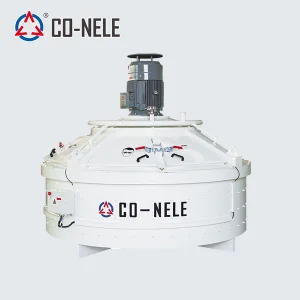
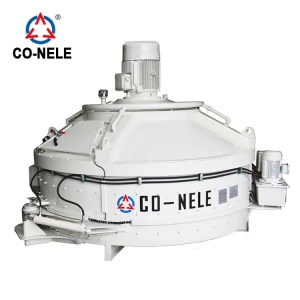
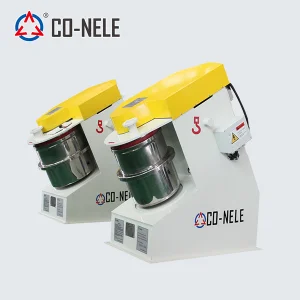
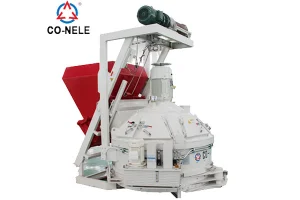
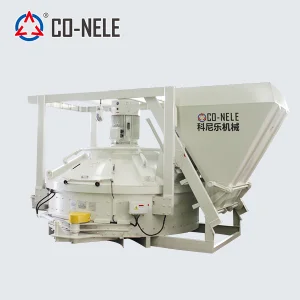
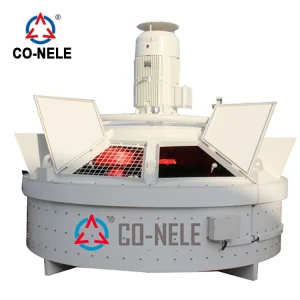
Planetary mixers utilize a fixed mixing pan inside which one to three mixing star arms revolve around a central vertical axis while simultaneously rotating rapidly around their own individual satellite axes. This dual-rotation mechanism causes the mixing blades to sweep the entire bottom floor and sidewalls of the pan without leaving unworked shadow zones. As a result, lightweight additives (such as microsilica and synthetic fibers) and heavy pigments are rapidly distributed in under 60 seconds, preventing segregation and ensuring consistent color uniformity in precast architectural concrete.
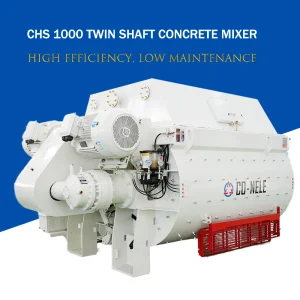
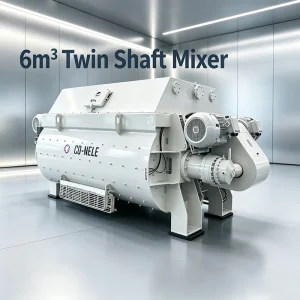
Twin-shaft compulsory mixers employ two parallel horizontal shafts equipped with synchronized counter-rotating mixing arms arranged in a helical pattern. This geometry generates intense 3D counter-directional turbulence within the central mixing zone. Twin-shaft mixers excel in continuous high-output commercial ready-mix concrete batching plants (ranging from 1.0 m³ to 6.0 m³ per batch), where rapid discharge speed and low energy consumption per cubic meter of wet concrete are the primary operational objectives.
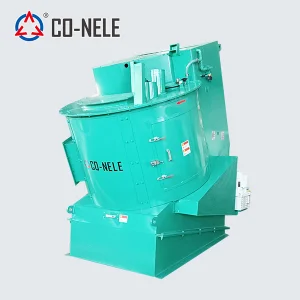
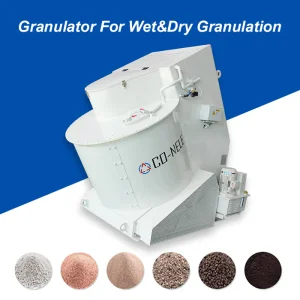
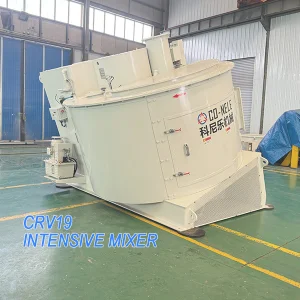
Intensive mixers combine a rotating, inclined material pan with a independently driven, high-speed mixing rotor tool. By rotating the pan in reverse to the rotor motion, raw material is continuously fed directly into the high-shear field generated by the rotor blades. This continuous input of energy enables double-duty performance: achieving molecular-level homogenization of challenging formulations (such as lithium battery slurries, diamond abrasive matrices, and refractory oxides) or building spheroidal granules (0.5 to 8 mm diameter) via controlled liquid binder atomization.
How Qingdao's industrial machinery cluster guarantees uncompromised quality control, custom gearbox manufacturing, and rapid global delivery.
The competitive advantage of leading Chinese cement mixer manufacturers stems from complete vertical integration across the industrial supply chain. Unlike regional assemblers who source third-party gearboxes, imported hydraulic gates, and off-the-shelf wear liners, top-tier Chinese manufacturers operate specialized foundry bases, gear-grinding workshops, and automated robotic welding lines under one quality control system.
The gearbox is the heart of any industrial compulsory mixer. China's top mixing equipment plants design and manufacture custom planetary speed reducers in-house. Featuring heavy-duty carburized alloy gears, precision-ground gear teeth (AGMA Class 12 / DIN 6 quality), and high-load bearing arrangements, these gearboxes absorb massive torsional shocks caused by sudden dry material charging without gear tooth fracture or oil seal failure.
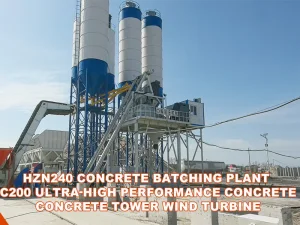
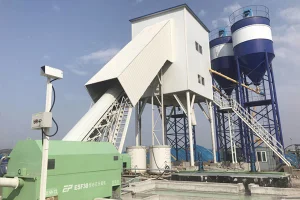
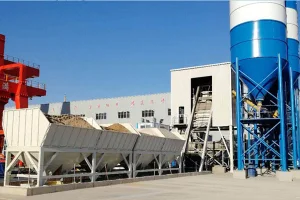
Situated adjacent to major deep-water port hubs such as Qingdao Port, Chinese mixer manufacturers benefit from seamless maritime shipping routes to North America, Europe, the Middle East, Southeast Asia, and Latin America. Heavy batching plants, modular containerized batching silos, and large-capacity twin-shaft mixers can be loaded directly into standard 40ft High Cube or Flat Rack containers, reducing freight lead times and transportation risk.
Engineered mixing solutions tailored to rigorous regional environmental conditions, unique raw material characteristics, and stringent structural standards.
Ultra-High Performance Concrete (UHPC) requiring 150+ MPa compressive strength demands total dispersion of steel micro-fibers without clumping. Chinese CMP series planetary mixers deliver zero-segregation batches for offshore and onshore wind power foundations worldwide.
Processing acidic, basic, or neutral high-temperature refractory matrices demands extreme wear resistance and fast liquid chemical binder distribution. Intensified forced-action mixing pan geometries protect grain structure while achieving uniform matrix densities.
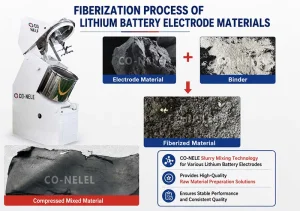
Next-generation EV battery dry electrode processing requires high-shear mechanical energy to achieve PTFE binder fibrillation without overheating active materials. Advanced Chinese intensive mixing vessels incorporate double-jacket thermal cooling controls.
Ensuring complete regulatory alignment, operational safety, and continuous spare parts backing for international commercial buyers.
Navigating cross-border industrial equipment procurement requires confidence in electrical certification, mechanical engineering standards, and long-term after-sales support guarantees. Leading Chinese mixing machinery OEMs fulfill international standard frameworks:
All structural fabrications, pressure vessels, pneumatic controls, and electrical cabinets conform fully to European CE directives, Machinery Directive 2006/42/EC, and ISO9001:2015 quality control systems.
Control systems are built around Siemens PLC automation paired with Schneider low-voltage components. Custom drive motors accommodate local industrial power grids (220V to 480V, 50Hz/60Hz, UL/CSA/EAC compliance).
Every mixer model produced maintains 100% interchangeable spare parts availability (wear plates, blades, seals, sensors). Resident commissioning engineers and cloud-connected IoT diagnostic portals support site setups worldwide.
Direct technical answers from senior process engineers regarding selection criteria, operational life, and custom engineering inquiries.
Planetary counter-current mixers should be specified whenever the concrete mix design requires exceptionally high micro-homogeneity, involves low-slump/dry-cast consistencies, contains fine synthetic/steel fibers, or uses colored pigments. Applications include precast concrete panels, architectural concrete blocks, UHPC wind turbine towers, and refractory products. Twin-shaft mixers are better suited for high-volume commercial ready-mix plants producing standard wet concrete above 2 m³ per batch where cycle time speed (30–45 seconds) is the primary economic factor.
Under standard aggregate conditions (quartz sand, limestone gravel), high-chrome casting liners (HRC ≥ 62) and Ni-Hard blades typically perform between 90,000 and 150,000 mixing cycles before requiring replacement. Under highly abrasive environments—such as refractory castables, corundum powders, or quartz-rich UHPC recipes—liner lifespan averages 40,000 to 60,000 batches. All wear parts are bolt-on and modular for fast field replacement within 2 to 4 hours.
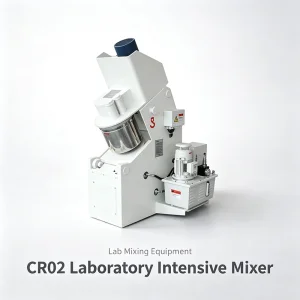
Yes. OEM test laboratories operate 5L to 75L scale-up pilot intensive mixers and planetary test units. Buyers can ship 15–50 kg of raw powders, aggregates, or chemical binders to the Qingdao testing center. Engineers will perform test batches, record shear torque profiles, analyze granule sphericity, density, and moisture dispersion, and deliver a comprehensive process report to confirm equipment sizing prior to line fabrication.
All machinery electrical control panels are custom-engineered to match the buyer's local supply grid (e.g., 380V 50Hz, 415V 50Hz, 460V/480V 60Hz). Motor drives can be specified with premium-efficiency IE3/IE4 ratings, UL/CSA certified enclosures for North America, or CE-compliant safety interlocking doors and emergency stop circuits for the European Union.
An intensive mixer granulator utilizes a high-speed rotor combined with an inclined rotating pan. As dry powders enter the pan, the rotor imparts mechanical kinetic energy, generating intense mechanical friction and micro-agglomeration. When small amounts of liquid binder are atomized into this fluidized bed, cohesive forces transform the powder mass into dense, spherical granules (90%+ roundness) within 2 to 5 minutes, eliminating the massive thermal energy requirements associated with spray drying towers.
Explore complete stationary batching plants, mobile mixing rigs, laboratory formula mixers, and specialized battery dry electrode units.