CO-NELEMixing & Granulation
Engineered to eliminate dead zones, reduce mixing cycles by up to 40%, and achieve micro-level binder homogenization for unshaped and monolithic refractory recipes.
The Metropolitan Area of Lisbon, along with the adjacent Setúbal Peninsula and Ribatejo industrial corridors, represents one of Southern Europe's vital strategic hubs for heavy manufacturing, cement clinker synthesis, steel fabrication, and naval shipbuilding. Industrial thermal processors across the Tagus basin—from Secil's Outão cement operations to the metallurgic smelting and steel foundry networks of Seixal—operate under rigorous European environmental decarbonization and thermal performance frameworks.
Local Lisbon procurement managers and maintenance contractors face intense operational pressure to maximize the service lifetime of blast furnace ladles, rotary kiln preheaters, and foundry tundishes. To satisfy these localized demands, modern vertical planetary mixers supersede traditional gravity pan mixers by enforcing a counter-current mechanical shear field, ensuring micro-silica, calcium aluminate cements, and corundum aggregates are fully stabilized within 45 to 60 seconds.
| Sector / Node | Target Material | Required Kinetic Solution |
|---|---|---|
| Cement Works (Setúbal) | Ultra-Low Cement Castables (ULCC) | Counter-Current Planetary (Dual Star) |
| Steel & Foundries (Seixal) | Alumina-Silicon Carbide Tundish Mix | High-Torque Hardened Planetary Mixer |
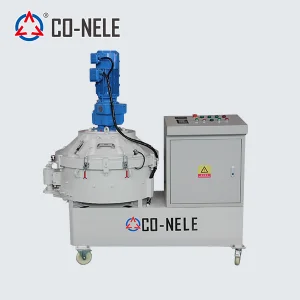
| Naval & Repair (Lisnave) | Thermal Insulation Castable Mortar | Mobile Quick-Deploy Batch Mixer |
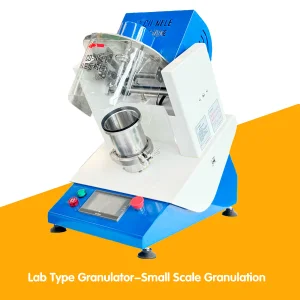
| Glass Plants (Marinha Grande Hub) | Fused Zirconia-Mullite Refractories | Precision Intensive Granulator & Pan |
Bridging metallurgical heavy engineering with advanced computer-aided kinematic modeling to deliver turnkey reliability with uncompromised cost efficiency.
Unlike factories outsourcing drivelines to generic gearbox producers, our facility fabricates dedicated heavy-torque vertical planetary reducers. Built to absorb abrupt shock-loads generated during dry-to-plastic transition states in dense castables.
Extreme abrasion resilience through modular, replaceable wear segments. Internal liners crafted from high-chromium cast alloys (Cr15/Cr26) endure tens of thousands of cycles handling corundum, silicon carbide, and sintered bauxite without alloy spalling.
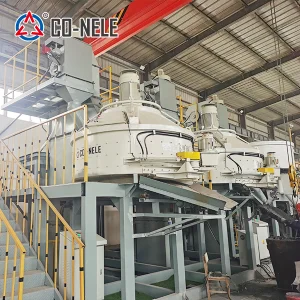
Operating out of 30,000 m² modernized digital manufacturing centers in Qingdao, we integrate robotic plasma cutting, automatic submerged welding, and complete dynamic pre-shipment bench-testing to deliver CE-compliant machinery to Portugal on compressed timelines.
| Kinematic Parameter | Standard Pan Mixer | CO-NELE Planetary Mixer |
|---|---|---|
| Dead Zone Ratio | 12% – 18% along rim | 0.00% (Complete Trajectory) |
| Fibre Balling Incidence | Moderate to High | Zero (High Shear Breakdown) |
| Water/Binder Addition | Requires +1.5% excess | Theoretical Stoichiometric Level |
| Discharge Velocity | Manual scrap / slow sweep | Full Hydraulic Clean-Out (15s) |
In modern monolithic castable production, the addition of sub-micron fumed silica is crucial for particle packing density. However, electrostatic agglomeration poses an immense challenge: conventional pan mixers fail to impart adequate shear forces to break down these agglomerates before early hydration initiates.
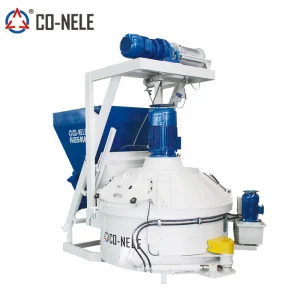
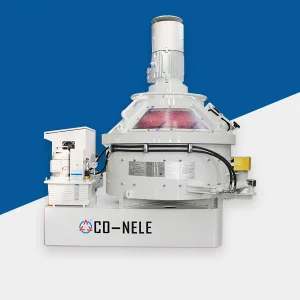
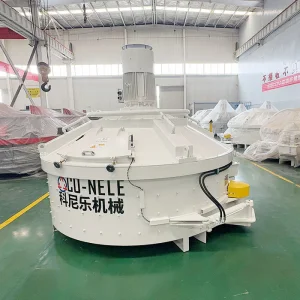
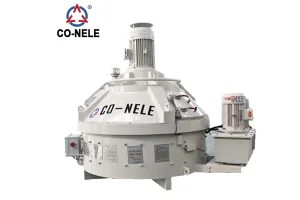
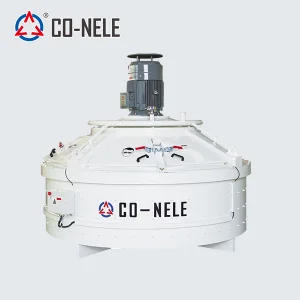
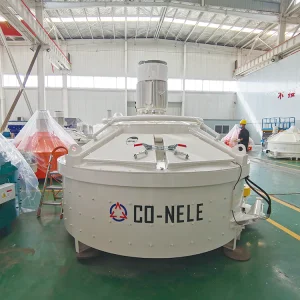
CO-NELE's vertical-shaft planetary mixers utilize a dual-star rotating arm system revolving along a counter-current track while rotating rapidly on their own axes. This complex cycloidal trajectory sweeps the entire floor and outer perimeter of the mixing pan within three revolutions, generating intense particle-on-particle friction that deagglomerates nano-silica, dispenses steel or organic explosion-proof fibers evenly, and maximizes cold crushing strength (CCS).
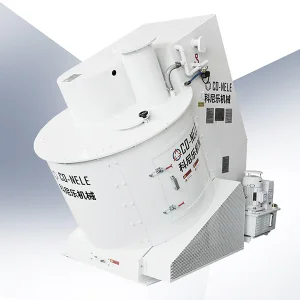
Engineered for versatile continuous mixing, specialized refractory formulations, intensive granulation, and high-throughput castable preparation.
Navigating compliance, CE marking, electrical compatibility, and logistical reliability when procuring heavy mixing capital equipment.
All mixers earmarked for the Portuguese Republic conform strictly to Directive 2006/42/EC. Enclosures incorporate safety proximity interlocks, IP55/IP65 electrical protection, Siemens control systems, and low-voltage emergency cutoff protocols.
Direct maritime container freight routes operating between Qingdao Port and the Port of Lisbon (Terminal de Contentores de Santa Apolónia & Alcântara) guarantee predictable freight transit, customs documentation clarity, and seamless intermodal trucking.
Every casting, mechanical seal, and planetary arm is coded with full traceability. We ensure interchangeable wear blades and liners remain available across 15+ years of operational lifecycle, minimizing downtime risks for our partners.
Direct engineering answers addressing formulation shear, wear life expectancy, maintenance procedures, and logistics.
Standard paddle mixers move materials linearly, creating dead spots where unhydrated fine powders congregate. Planetary counter-current mixers utilize revolving blades tracing hypocycloid patterns, forcing micro-silica, cement binders, and heavy aggregates into rapid, multi-directional shear intersections that achieve homogeneous consistency in under 60 seconds.
When processing severe abrasive refractory formulas (such as tabular alumina, silicon carbide, and fused silica), standard wear components spall quickly. CO-NELE integrates high-chromium alloy liner tiles (up to 65 HRC) and optionally silicon carbide composite plates, ensuring an operational threshold of 45,000 to 65,000 batch cycles before segment renewal is needed.
Yes. All machines built for shipment to Lisbon, Setúbal, or wider EU markets are factory wired for 400V, 3-Phase, 50Hz power sources. Control cabinets feature CE-compliant Siemens, Schneider, or ABB switchgear, accompanied by multilingual HMI touch screens (English / Portuguese) for seamless local operator adoption.
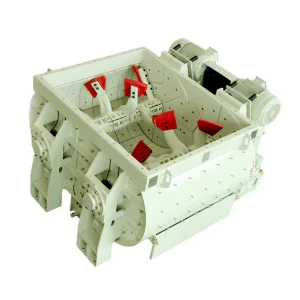
Steel fibers easily nest and tangle in slow, single-shaft mixers. The high-energy mechanical shear zone created by our counter-current star arms unravels fiber bundles instantaneously, dispersing needles uniformly throughout the matrix without bending or clumping, which ensures the structural integrity of precast refractory shapes.
Standard units (such as CMP500, MP150, or CEL1) maintain a fabrication and testing turnaround of 20 to 30 days in our Qingdao plant. Ocean transit from Qingdao Port to the Port of Lisbon typically spans 30 to 35 maritime days, accompanied by full bill of lading, certificate of origin, and CE conformity dossiers.
Absolutely. Portuguese clients can dispatch 20 to 50 kg of raw formulation powders (calcined bauxite, binders, fine aggregates) to our Qingdao mixing testing center. Our engineers execute batch runs on our laboratory planetary and intensive mixers, providing complete granulation and rheology reports before your commercial commitment.
Consult with our process engineering team to tailor mixing configurations, wear protection packages, and automated batching solutions for your facility.