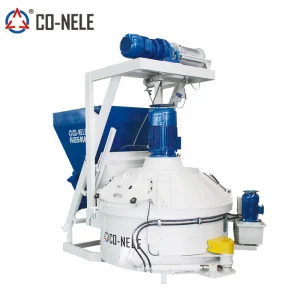
China Planetary mixer for refractory Manufacturer, Factory (Vitebsk Heavy Industry Grade)
Explore Machine Model

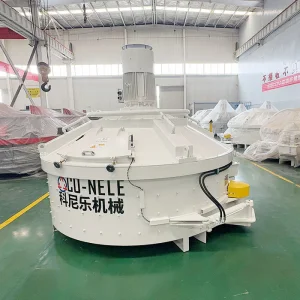
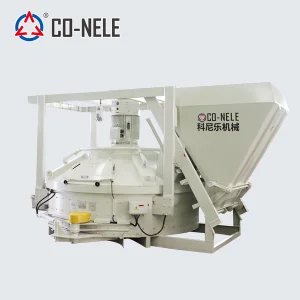
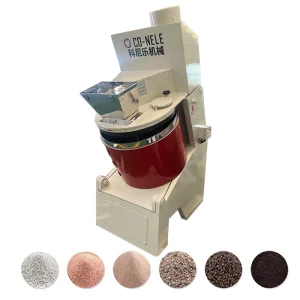
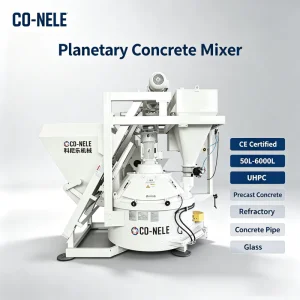
Direct factory manufacturing featuring in-house hardened planetary reducers, high-chrome alloy wear protection, and rapid homogenization for low-cement castables (LCC) and ultra-low cement castables (ULCC).
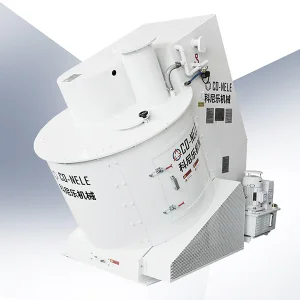
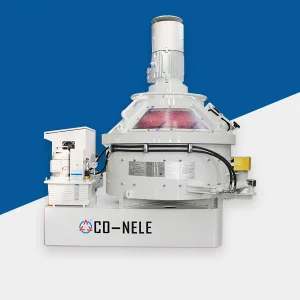
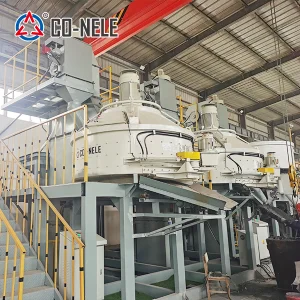
Analyzing thermal refractory batching, furnace maintenance, and castable preparation inside Vitebsk's Free Economic Zone (FEZ Vitebsk) and broader regional industrial clusters.
The machine tool manufacturing and iron/steel foundry networks in Vitebsk depend critically on uniform ladle linings, cupola runners, and induction furnace refractories. Irregular mixing leads to spalling, premature structural erosion, and sudden molten metal breakouts during demanding casting runs.
Vitebsk and the neighboring Polotsk-Novopolotsk belt support extensive fiber, fiberglass, and thermal insulation production. Glass melting tanks require dense zircon, alumina-zirconia-silica (AZS), and high-purity monolithics where binder dispersal must be executed with micron-level consistency to resist molten glass attack.
Operating under harsh winter freeze-thaw cycles, power boiler linings and cracking reactors require zero-shrinkage castables with minimal water addition. Planetary counter-current mixers ensure low water-to-cement ratios (W/C down to 4.5%) are thoroughly achieved without leaving dry clumps or unhydrated pockets.
Why modern refractory formulations demand forced planetary shear mechanics over legacy ribbon and tilting drum designs.
Modern refractories have moved decisively away from high-cement formulations toward low-cement (LCC), ultra-low cement (ULCC), and no-cement colloidal silica-bonded monolithic systems. These materials rely on ultra-fine submicron powders—such as volatilized silica fume, reactive alpha-alumina, and silicon carbide grains—dispersed alongside polycarboxylate ether (PCE) or polyacrylate deflocculants.
In low-energy mixers, these microscopic powders form dense agglomerates that trap binder water within their clusters. The result is pseudo-stiff mixes requiring operators to mistakenly add excess moisture, which drastically degrades cold crushing strength (CCS) and thermal shock resistance at 1400°C–1650°C. Counter-current planetary mixing arms impose high mechanical shear that shears apart agglomerates, releasing entrapped water into the matrix within 60 to 90 seconds.
Traditional horizontal twin-shaft or pan mixers create velocity gradients where material clings to outer perimeters or shaft centerlines. In contrast, planetary counter-current mixing revolves the mixing tools on their own central vertical axis while concurrently rotating planetary stars around the perimeter of the vessel.
This compound epicyclic movement forces heavy corundum grains, calcined bauxite, and lightweight insulating aggregates through complex intersective pathways. The coefficient of variation (CV) for mix homogeneity consistently drops below 3%, preventing batch stratification, segregation of heavy metallic fibers, or localized density voids in high-value precast refractory blocks.
| Performance Metric | Planetary Counter-Current Mixer | Twin-Shaft Horizontal Mixer | Traditional Tilting Drum / Pan |
|---|---|---|---|
| Micro-Homogeneity (CV%) | < 3.0% (Superior) | 5.5% – 8.0% (Moderate) | > 12.0% (Inadequate for ULCC) |
| Discharge Cycle Time | 12 – 25 Seconds (Rapid) | 20 – 35 Seconds | 45 – 90 Seconds (High Residue) |
| Dispersion of Steel & Organic Fibers | 100% Uniform, No Balling | Occasional Fiber Entanglement | Frequent Fiber Clumping |
| Water Addition Requirement | Minimal (Down to 4.2% W/C) | Standard (5.5% – 7.0%) | High (> 8.5% Required to Flow) |
| Pan Liner Wear Resistance | Cr26 High-Chrome Segmented Tiles | Weld-overlay Hardfacing | Mild Steel Plates (High Abrasion) |
Combining heavy-duty mechanical engineering, in-house component casting, and verified ISO9001/CE manufacturing benchmarks to eliminate operational downtime.
Unlike standard commercial equipment assemblers who outsource critical drive trains, our gearboxes are fully cast, heat-treated, carburized, and precision-ground within our Qingdao industrial complex. Designed specifically for severe shock loads common when batching dense 3.2 g/cm³ corundum refractory castables.
Abrasive tabular alumina, fused mullite, and quartz sands cause accelerated scouring on ordinary steel plates. Our pans are lined with bolt-on, interchangeable modular tiles crafted from high-chromium alloy (≥26% Cr, hardness ≥60 HRC), extending service life to over 60,000 batches on severe abrasive recipes.
Leveraging China’s deeply integrated industrial supply chain, we deliver tailored machine configurations—including dual hydraulic discharge doors, skip hoists, steam jackets, and automated dust extraction hoods—in under 25 business days, backed by sea-rail direct transport into Eastern European routes.
From precast burner blocks to continuous ladle relining: where CO-NELE refractory machinery powers operational reliability.
In foundries and steelworks, castable well blocks and porous plugs undergo tremendous thermal turbulence. A single microscopic void creates an initial pathway for steel penetration. Our vertical planetary mixers guarantee uniform grain density throughout cast tundish linings and precast burner nozzles, lowering total lining maintenance overhead.
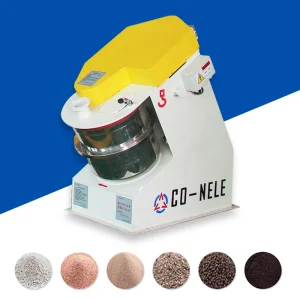
District heating power plants and cement manufacturing facilities in the Vitebsk region require fast-setting refractory gunning mixes and thixotropic vibration castables for emergency weekend shutdowns. CO-NELE mobile and compact refractory mixers deliver on-site, fast batching with controlled moisture to guarantee rapid strength development before reignition.
Smart automation, rheology torque tracking, and microwave moisture control shaping modern production facilities.
By monitoring high-frequency current and torque draw on the planetary drive, modern PLC controllers detect the exact moment when the castable transitions from dry powder to plastic state. This allows automatic adjustment of liquid dosing, eliminating operator guesswork and batch variance across different raw material shipments.
Refractory castables have strict moisture limits; an extra 0.5% water can decrease structural hot modulus of rupture (HMOR) by over 20%. Integrated optical and microwave sensors installed flush with bottom floor tiles read continuous moisture data at 25 readings per second for automated dosing regulation.
Toxic micro-silica and fine bauxite dust pose severe occupational hazards. CO-NELE refractory mixers incorporate air-balanced de-dusting hoods, negative-pressure vent ports for pulse-jet filtration units, and pressurized perimeter liquid spray bars to suppress fine airborne particulates during dry charging cycles.
Essential technical benchmarks to verify before finalizing international equipment acquisition contracts.
Standard concrete mixers calculate motor capacity for materials around 2.3 to 2.4 t/m³. Dense refractory castables, silicon carbide mortars, and corundum mixes frequently reach 2.8 to 3.4 t/m³. Verify that installed motor kW and planetary torque rating account for high bulk density to prevent thermal trip-outs during emergency start-stops under full load.
Hydraulic discharge doors must handle both sticky fine thixotropic pastes and dry powders without particulate seepage. Check for triple-labyrinth polyurethane seal designs, high-pressure hydraulic actuators with manual emergency hand-pumps, and proximity sensors that interlock with automated batch plant systems.
In-depth technical answers prepared by our process engineering team for Vitebsk and global manufacturing enterprises.
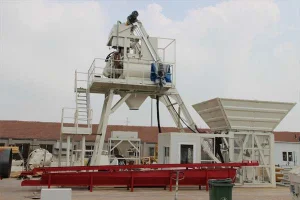
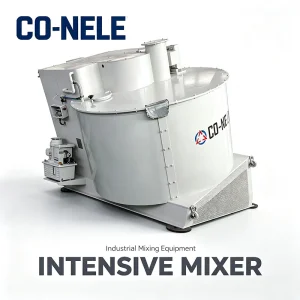
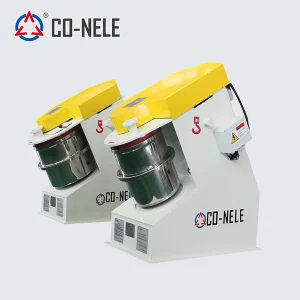
Explore specialized intensive mixers, mobile batching stations, pelletizers, and high-capacity planetary machines for ceramics, metallurgy, and advanced building systems.
Send your specific aggregate types, target bulk density, and desired output capacity. Our metallurgical process engineers will analyze your formula, provide full dimensional layout drawings, and issue a factory-direct commercial quotation.
Send Inquiry Now