
CO-NELEMixing & Granulation
Engineered to achieve micro-homogeneity below 5% variation for refractories, specialized concrete, and ceramic processing in high-ambient environments.
Understanding how Saudi Arabia Vision 2030 is shifting heavy manufacturing, construction, and petrochemical material requirements toward micro-precision compounding.
Under the ambitious Saudi Vision 2030 framework, the Kingdom of Saudi Arabia (KSA) is undergoing an unprecedented industrial expansion. Driven by gigaprojects such as NEOM (The Line, Oxagon, Trojena), the Red Sea Project, Qiddiya, and extensive industrial city developments in Jubail, Yanbu, and Riyadh, the demand for specialized, high-performance materials has reached historic peaks.
Traditional gravity and ribbon mixers are no longer adequate for modern Saudi mega-engineering requirements. The local market now demands high-intensity forced-action mixing systems capable of blending complex, multi-phase materials—including Ultra-High-Performance Concrete (UHPC), refractory castables for metallurgical smelters, dry-mix mortars, lithium-ion battery precursors, and technical ceramic powders.
Globally, industrial mixing is transitioning from simple mechanical blending to rheology-controlled kinetic energy input. Modern material science relies heavily on particle packing theory (such as the modified Andreassen model) to achieve maximum density and minimal porosity in composite materials.
Leading global manufacturers rely on counter-current inclined intensive mixers. By decoupling the rotational speed of the mixing pan from the high-speed rotor tools, engineers can precisely manipulate shear forces, energy dissipation rates, and residence times within the mixing vessel. This technological jump allows Saudi manufacturing plants to produce international-grade materials locally, reducing reliance on costly imported pre-mixed compounds.
Why counter-current inclined mixing pan geometry vastly outperforms conventional horizontal twin-shaft and planetary mixing systems.
The rotating mixing pan is mounted at an inclined angle (typically 20° to 30°). This tilt uses gravity to continuously feed material into the high-speed rotor zone, ensuring 100% material turnover per revolution without dead zones at the center or pan walls.
Unlike standard mixers where tool speed is locked to the arm drive, our intensive mixers feature an independent high-speed rotor (up to 30 m/s tip speed). Rotor tool geometries can be adjusted for intensive homogenizing, high-shear granulating, or gentle micro-pelletizing.
At the conclusion of the mixing cycle, the central discharge gate opens while the pan continues rotating. Centrifugal force and wall scrapers achieve 99.5%+ material evacuation in under 15 seconds, preventing cross-contamination between batches.
Customized mixing solutions designed for Saudi Arabia’s unique raw materials, environmental conditions, and industrial quality standards.
Saudi megaprojects require UHPC architectural panels, bridge joints, and anti-scour structures with compressive strengths exceeding 150-200 MPa. Micro-silica and steel fibres must be perfectly dispersed in under 90 seconds without fiber clumps or void pockets.
In the industrial hubs of Jubail and Yanbu, steel mills (Hadeed) and SABIC refineries require high-alumina and silicon-carbide refractory linings capable of surviving 1600°C+. Our intensive mixers ensure precise liquid binder absorption with ultra-low water content recipes.
Aligning with Saudi Arabia's EV initiative (Ceer and Lucid Motors manufacturing hubs in King Abdullah Economic City), CO-NELE intensive mixers deliver vacuum-sealed, dust-free dry electrode compounding and high-density battery cathode slurry blending.
High ambient temperatures cause fast water evaporation during tile setting. Saudi dry-mortar producers use our intensive mixers to incorporate cellulose ethers and polymer powders uniformly into quartz sand mixes, guaranteeing bond strength under severe thermal expansion.
From electrical insulators to solar mirror glass production in desert solar parks, intensive mixing guarantees zero iron contamination through specialized ceramic or polyurethane drum linings paired with non-magnetic scraping blades.
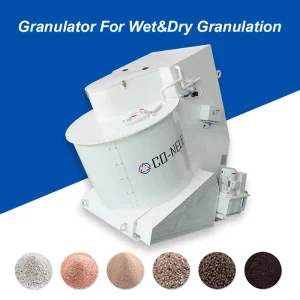
Processing steel mill baghouse dust, fly ash, and hazardous chemical by-products into dense, non-dusting 1-5mm granules for safe transport or recycling back into furnace feeds, fulfilling Saudi environmental compliance standards.
Consult with CO-NELE Senior Process Engineers to request a customized mixing trial, lab test report, or turnkey plant proposal tailored to Saudi Arabian specifications.
Send Inquiry NowHow next-generation intelligent mixing systems will drive digital manufacturing across the Middle East.
Integrating real-time dynamic torque sensing and acoustic moisture analysis. The PLC system automatically adjusts rotor RPM and moisture dosing based on the evolving viscosity curve of the batch, guaranteeing zero human error.
Cloud-connected IoT modules continuously log bearing vibration, gearbox oil temperature, and liner thickness degradation. Operators in Saudi Arabia receive automated alerts before mechanical failure occurs, ensuring zero downtime on 24/7 production lines.
Next-generation synchronous reluctance motors (IE5 energy efficiency standard) combined with regenerative variable frequency drives (VFDs) reduce total power consumption per ton of mixed material by up to 28%.
From raw material SILO dosing to automated high-shear mixing, granulation, and robotic packaging lines.
Expert technical answers regarding equipment selection, high-ambient adaptation, shipping, and local maintenance support in Saudi Arabia.
Choose an intensive mixer when your formulation contains fine micro-powders (silica fume, pigments, technical ceramics), requires liquid binders, demands fiber deagglomeration, or requires wet granulation. While twin-shaft mixers are suitable for standard ready-mix concrete, intensive mixers achieve micro-homogeneity with a coefficient of variation under 1.5%, which is critical for UHPC, refractories, and battery chemical slurries.
Our Saudi-spec mixers are engineered with dual-jacketed liquid cooling walls, heavy-duty IP65/IP66 tropicalized electrical insulation, high-viscosity synthetic gear lubricants, and isolated cooling fans on electrical panels to ensure 24/7 continuous operation under extreme ambient heat.
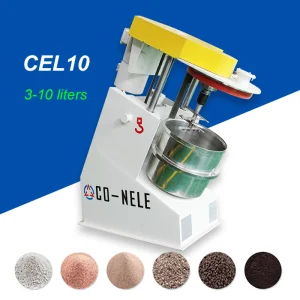
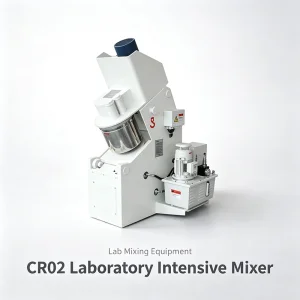
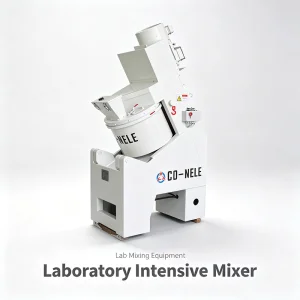
Yes! CO-NELE operates an advanced material testing laboratory in Qingdao. Saudi clients can ship 20-50 kg sample batches of local quartz sand, bauxite, or cementitious binders. We run trial batches on our lab mixers (5L to 75L), providing a comprehensive technical report covering mixing homogeneity, granule sphericity, density, and recommended industrial scale-up models.
All machines destined for KSA are custom-built to match Saudi Electricity Company (SEC) grid specifications: 380V/400V/415V at 60Hz (or 50Hz for specific industrial zones). Complete CE compliance, SASO/SABER certification documentation, and English operation manuals are supplied with every unit.
When processing highly abrasive materials like quartz sand or alumina castables, our bolt-on High-Chrome Alloy (65-68 HRC) and Tungsten Carbide hard-faced scrapers deliver a service life of 60,000 to 120,000 batches. All wear liners are modular and field-replaceable in under 4 hours.
Explore our complete collection of laboratory, pilot-scale, and heavy industrial plant mixers engineered for high performance.
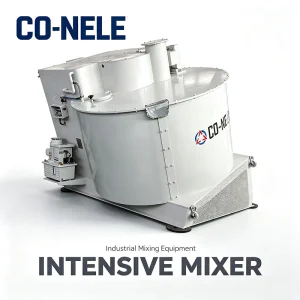
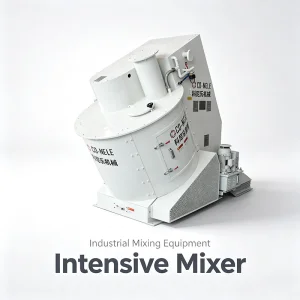
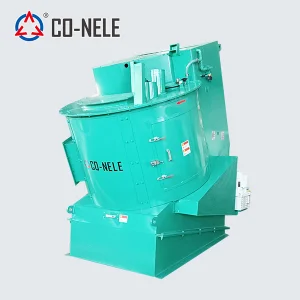
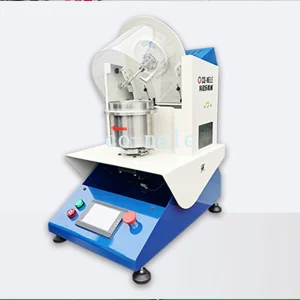
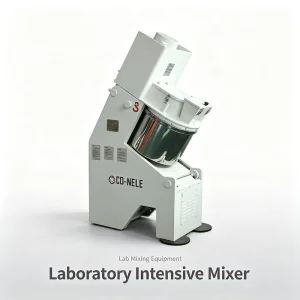
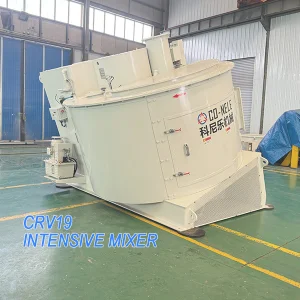
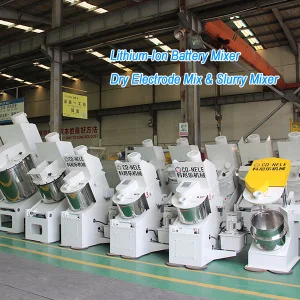
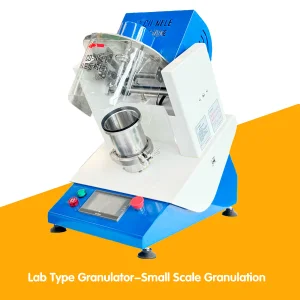
Whether you require a single R&D laboratory mixer or a complete 100 t/h automated mixing & granulation production line in Saudi Arabia, CO-NELE provides end-to-end engineering excellence.
Send Inquiry Now