CO-NELEMixing & Granulation
The first four original product platforms are ideal for Drammen buyers who need to qualify a formulation, verify a supplier and move from laboratory evidence to a production decision without losing continuity in scale-up.
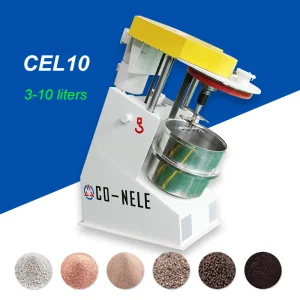
Use this platform to screen raw materials, binders and moisture windows in a Drammen laboratory before committing capital to a production granulator.
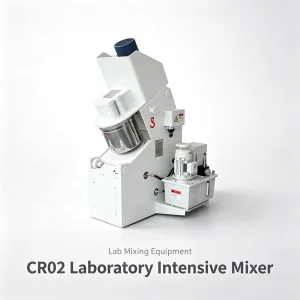
A compact intensive mixer for ceramic, refractory, battery and powder teams that need repeatable laboratory data and a documented test report before a Drammen purchase committee reviews the capex.
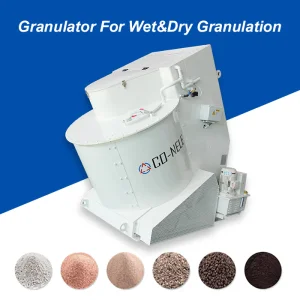
Ceramic body preparation, glaze and technical ceramic powders demand controlled moisture, dust containment and repeatable bulk density. This platform is a practical bridge for Nordic ceramic and advanced-material laboratories.
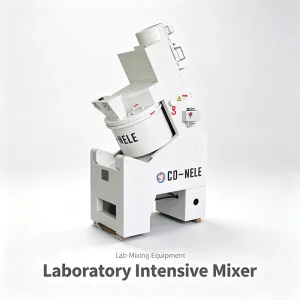
A pilot-to-production bridge for Drammen plants moving from 50–200 kg trials to commercial batches. High-shear action supports refractory castables, special concrete and advanced powder recipes.
An intensive mixer is often evaluated as a single machine, but in Drammen it is better understood as a process node inside a regional supply chain. The city sits within a practical industrial geography: the Port of Drammen, the E18 corridor, rail links toward Oslo and the wider region, aggregate handling, construction supply, precast production, maintenance engineering and energy-related industries. For a plant manager in Drammen, the buying question is rarely “Who sells the cheapest mixer?” It is “Which configuration keeps my batch quality inside specification, my maintenance window predictable and my compliance file complete when an EEA customer or auditor asks for evidence?”
That distinction changes the search intent behind commercial queries. A buyer searching for a China intensive mixer factory may be comparing ex-works pricing, but a buyer searching for an intensive mixer machine in Drammen is usually solving a wider problem: spare-part availability, CE documentation, 400 V / 50 Hz electrical compatibility, commissioning support, operator training, dust control and a clear escalation path when production stops. The machine is only one line item in a decision that includes process risk, freight, installation, wear parts and lifecycle service.
The Drammen market is also shaped by high labour costs and long winter maintenance windows. A machine that is difficult to clean, hard to inspect or dependent on slow spare-part logistics becomes expensive even if its purchase price is low. This is why the most valuable information gain a supplier can offer is not another brochure page, but a transparent view of test methods, wear-part strategy, compliance documents and remote commissioning capability.
Commercial investigation in this market usually begins with application-led phrases such as “intensive mixer for refractory castable,” “laboratory intensive mixer Norway,” “UHPC mixer supplier EEA” or “battery material granulator Scandinavia.” The buyer is not only looking for a product category. They are looking for proof that the supplier understands local operating conditions, can deliver the right electrical configuration, can support a Norwegian-language safety file where required and can keep the line running after the warranty period.
CO-NELE’s role in this conversation is to connect the Drammen application to a tested machine configuration. That means starting with the material, the target specification and the available floor area instead of starting with a model number. The result is a commercial proposal that a Drammen technical committee can compare against European alternatives on evidence, not only on initial cost.
The Nordic construction market is moving faster on carbon accounting, recycled materials and documented quality than many export buyers expect. For intensive mixer suppliers, the consequence is clear: the machine must handle wider material variability while producing evidence that the batch met specification.
These trends increase the value of a supplier that can provide material trials and scale-up logic. The Drammen buyer wants to know what happens when the recipe changes, not only what happens in a standard concrete demonstration.
Illustrative weighting based on CO-NELE export-enquiry discussions, 2024–2026. It is a discussion tool for specification meetings, not a statistically representative survey.
Chinese mixing equipment can offer strong value, but the procurement process must be designed around evidence. A factory visit, a material trial and a compliance dossier reduce risk more than a low quotation.
| Buyer question | Why it matters in Drammen | Evidence to request |
|---|---|---|
| Can the mixer handle my material, not just standard concrete? | Drammen buyers may process refractory castables, UHPC, ceramic powders or recycled aggregates with variable moisture. | Material trial report, power draw, mixing time, granule size or homogeneity data, recommended wear protection. |
| Is the machine CE/EEA ready? | Norway applies EEA rules. Safety, electrical and documentation expectations are part of the purchase, not an afterthought. | Declaration of Conformity, risk assessment, electrical drawings, EN 60204-1 design checklist, component certificates. |
| Will it run on Norwegian power? | Most industrial sites use 400 V / 50 Hz three-phase supply with local earthing and protection practice. | Motor nameplate, control voltage, IP rating, terminal diagrams, PLC language and alarm list. |
| What is the real lead time? | Drammen projects often have short weather windows and fixed installation dates. | Production schedule, FAT date, sea-freight routing, customs documents, installation and commissioning plan. |
| What happens when a wear part fails? | Long winter shutdowns make spare-part readiness more valuable than a small initial discount. | Recommended spare-parts kit, wear-part drawings, expected batch life, air-freight option and stock availability. |
| Can you support commissioning remotely? | Travel and site access can add cost and delay. Video commissioning and resident-engineer options should both be priced. | Commissioning checklist, video inspection protocol, operator manual, training agenda and warranty terms. |
For global buyers, the most useful comparison is total cost per compliant batch, not purchase price alone. That calculation should include freight to the Drammen area, foundation works, electrical connection, energy, wear parts, expected downtime, training and documentation. CO-NELE supports this comparison with model recommendations, layout drawings and a lifecycle spare-parts plan so that the Drammen buying team can evaluate the offer on the same basis as a European supplier.
A successful intensive mixer project follows a sequence. Skipping the laboratory stage may shorten the quotation process, but it usually shifts risk to commissioning and the first months of production.
Document composition, bulk density, abrasiveness, moisture window, temperature and target specification.
Run a 5–75 L trial to measure mixing time, homogeneity, granule sphericity, bulk density and binder demand.
Translate test results into rotor speed, pan geometry, batch size and cycle time for the production model.
Integrate batching, dosing, dust control, discharge, safety guarding and maintenance access into the available floor area.
Prepare CE/EEA documentation, electrical design, risk assessment, manuals, spare-parts list and training plan.
Use FAT, video commissioning or resident engineers, then establish a wear-part and remote-diagnostics routine.
For a Drammen buyer, local support begins before the machine arrives. The compliance dossier, electrical design and spare-parts plan should be reviewed alongside the technical proposal.
Machinery Regulation (EU) 2023/1230 applies from 20 January 2027, replacing the Machinery Directive 2006/42/EC. A 2026 project should specify which regime the machine will be placed on the market under and verify that the technical file will remain valid through handover.
The next five years will reward suppliers who can connect mechanical reliability with digital evidence and low-carbon material performance. For Drammen, the most relevant changes are practical rather than speculative.
More buyers demand laboratory evidence before quotation. Trial reports become part of the technical file.
IE3/IE4 motors, power monitoring and wear-life forecasts help compare total cost per batch.
Technical files, digital declarations and risk-assessment traceability become normal procurement checks.
Sensor-driven moisture control, recipe traceability, predictive maintenance and low-carbon binder optimisation.
For Drammen producers, the strongest short-term opportunity is not a fully autonomous plant. It is a reliable mixer with a documented recipe, a visible wear-part plan, fast remote support and the ability to test alternative binders or recycled materials without repeated downtime. That is the practical meaning of Industry 4.0 in a Nordic industrial market.
Use this comparison as a first filter. The final recommendation should be based on a material trial and a review of batch size, cycle time, wear and compliance requirements.
| Configuration | Best for | Drammen buying note |
|---|---|---|
| Planetary counter-current mixer | UHPC, GFRC, precast, coloured dry-cast products | Choose when micro-homogeneity and surface finish matter more than the lowest cycle time. |
| Twin shaft mixer | Ready-mix, wet concrete, high-throughput batching | Economical for 2 m³+ batches when 30–45 second cycles dominate the business case. |
| Inclined intensive mixer | Refractory castables, special concrete, powder granulation | High shear and pan motion suit difficult recipes; verify access for cleaning and wear-part replacement. |
| Intensive mixing granulator | Ceramic, metal powder, battery material, fertiliser | Focus on sphericity, bulk density and binder consumption, not only batch time. |
| Laboratory mixer / granulator | R&D, quality control, formula screening | Requires a clear scale-up report to the production model; 5–75 L units are appropriate. |
| UHPC mixer with reinforced drive | Fibre-reinforced, high-strength and marine repair mixes | Review fibre dispersion, discharge behaviour and PLC recipe control before purchase. |
CO-NELE has engineered forced-action mixers since 2004. Every machine below is produced in our own Qingdao workshops — from the planetary gearbox to the wear liner — so mixing homogeneity, discharge speed and spare-part availability are all controlled by one manufacturer.
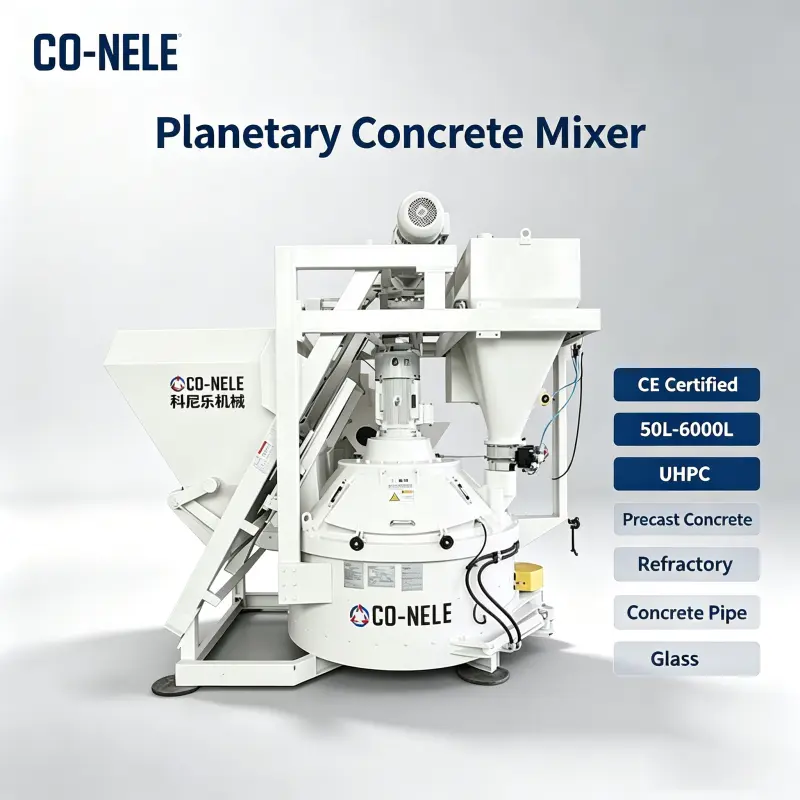
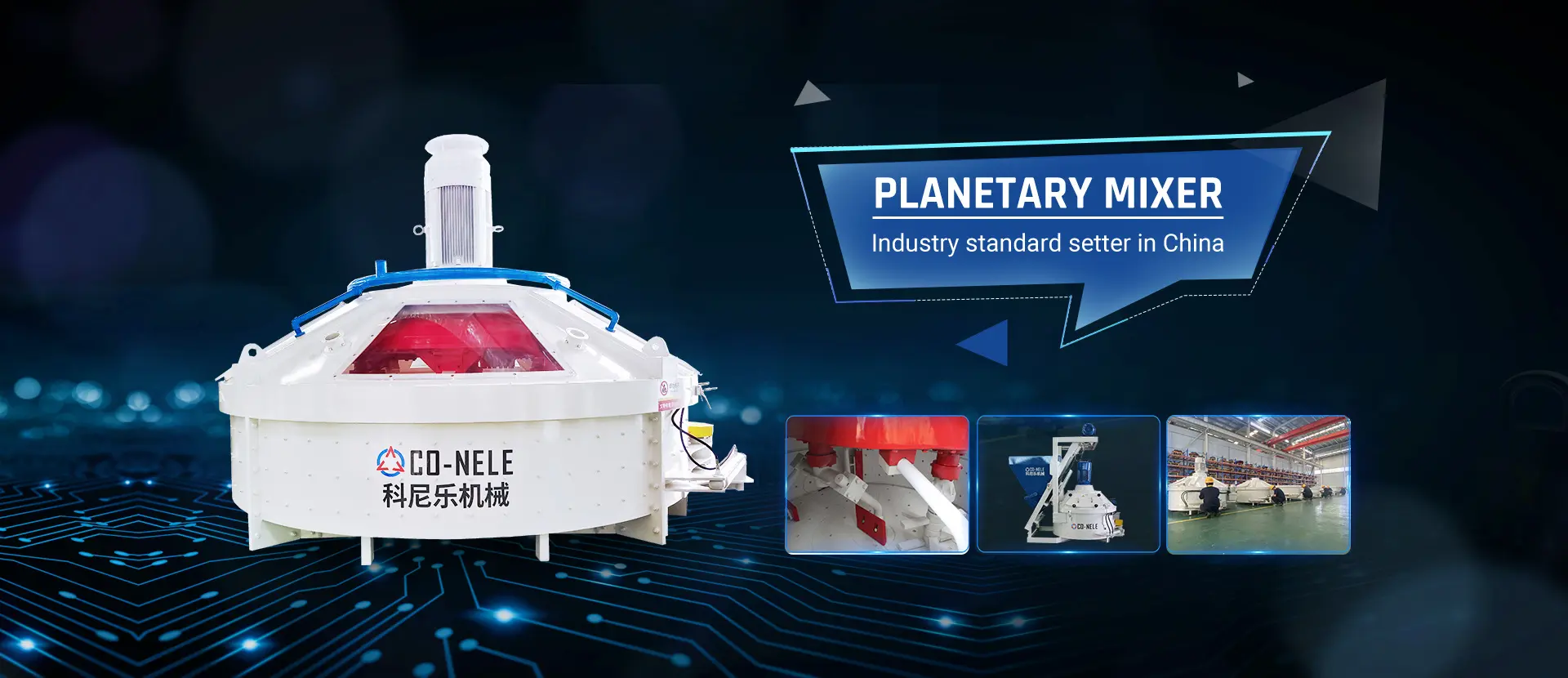
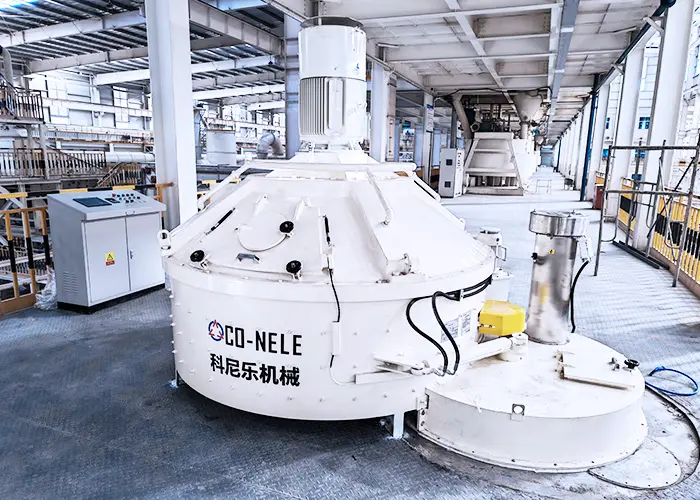
Vertical-shaft counter-current pan mixer producing micro-homogeneous batches for C60+ concrete, UHPC, GFRC and coloured dry-cast products. Star-arm kinematics eliminate dead zones at the pan wall.
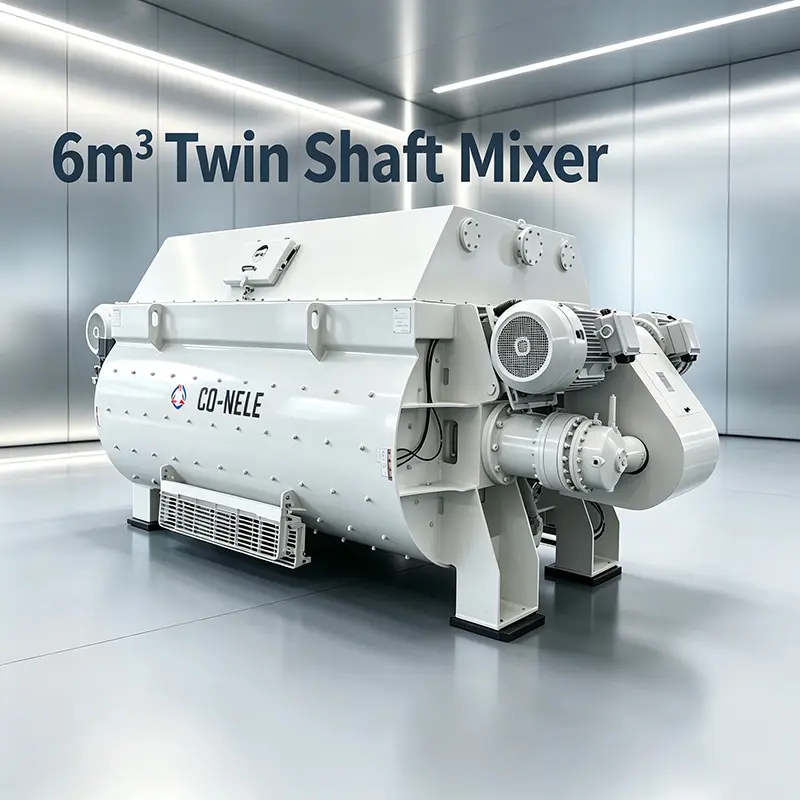
High-throughput compulsory mixers from 1 m³ up to 6 m³ output with dual hydraulic discharge gates, sealed shaft-end system and bolt-on high-chrome liners for ready-mix and infrastructure plants.
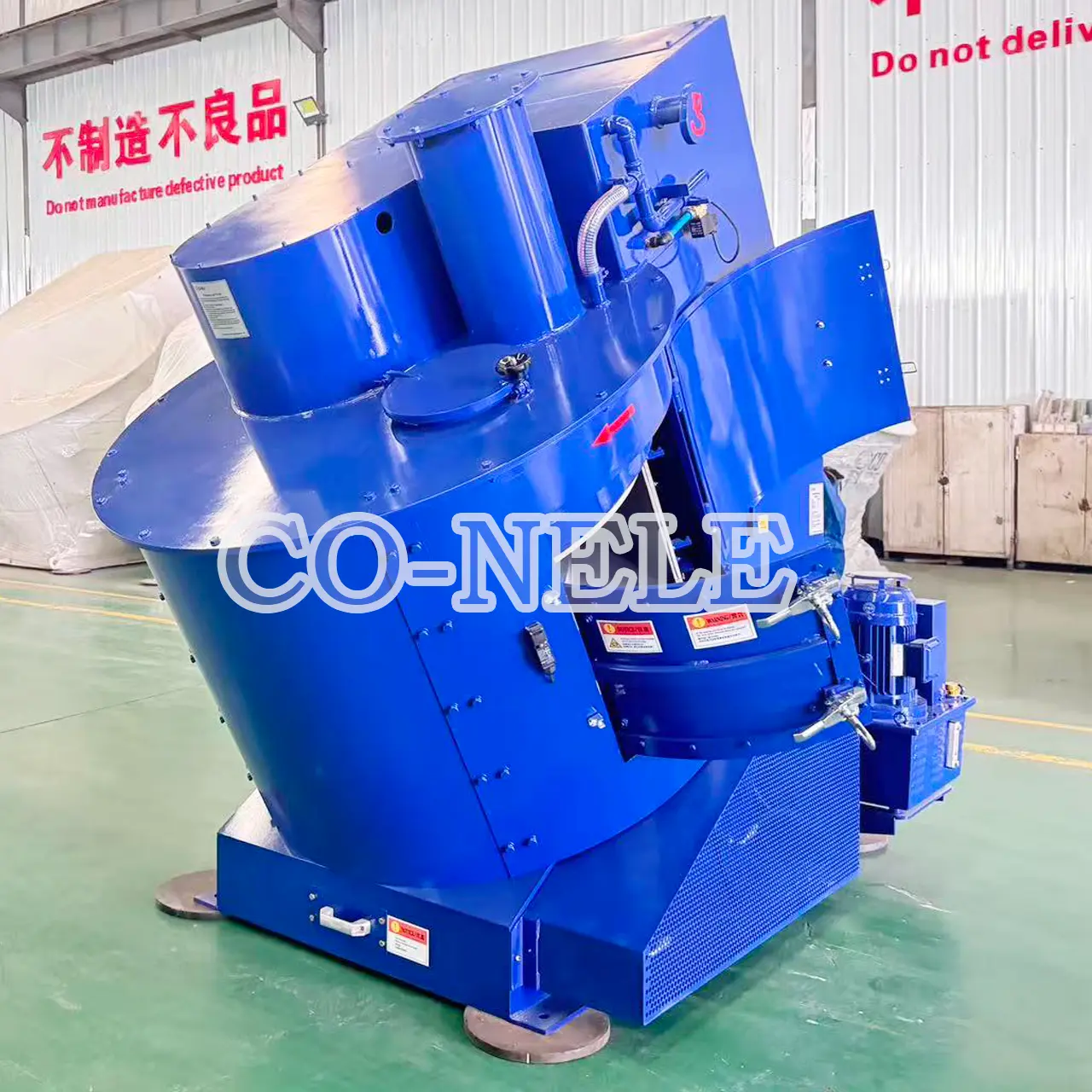
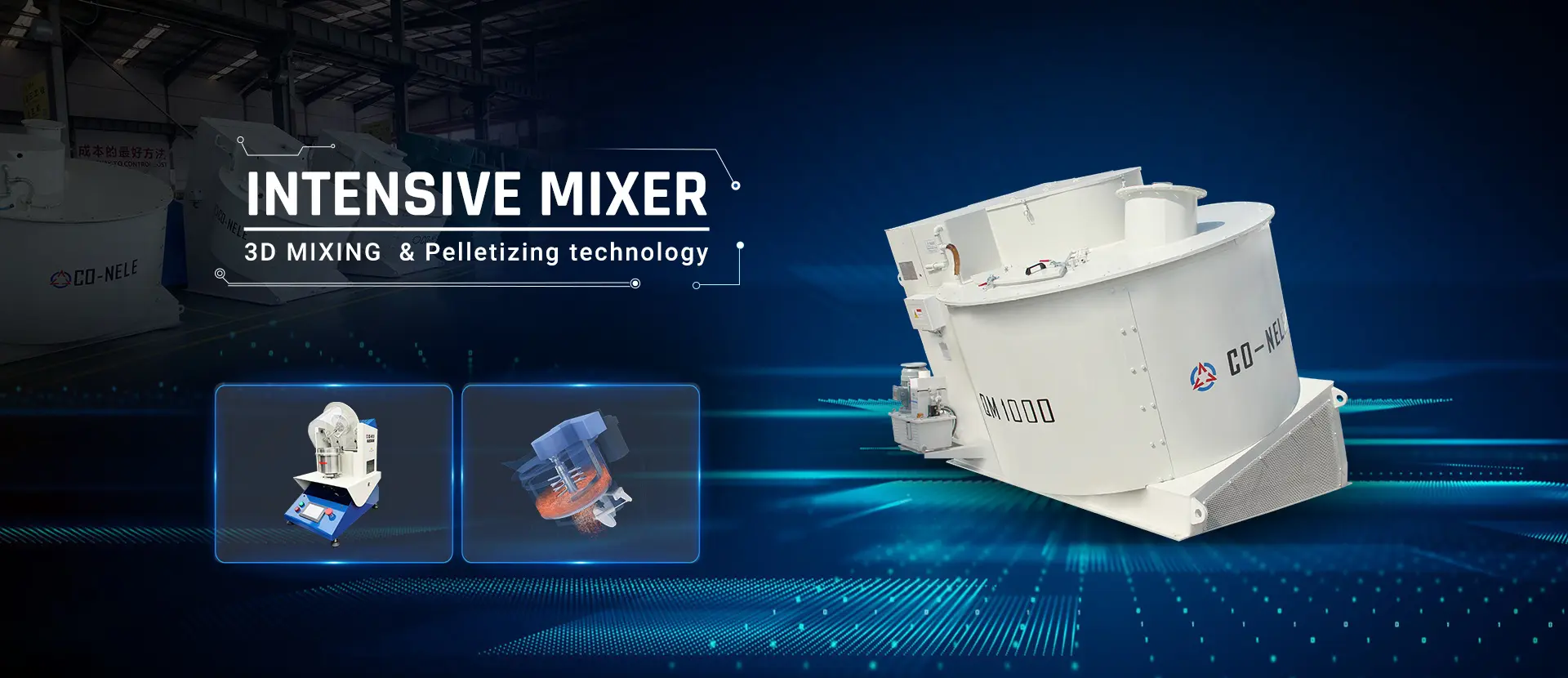
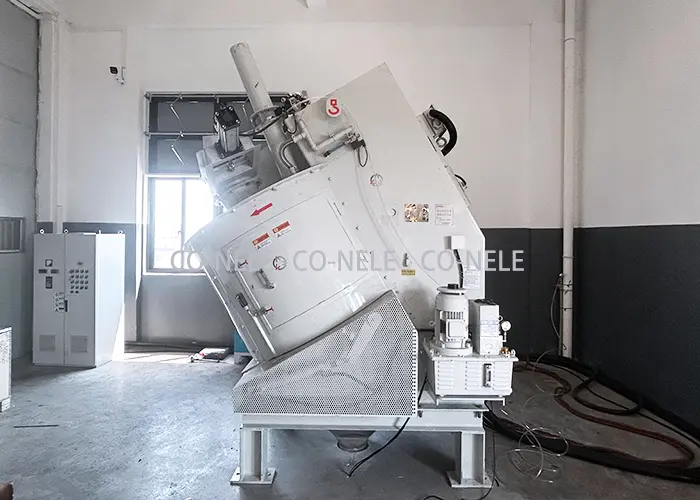
Inclined rotating pan with high-speed rotor: mixes, wets and granulates in a single vessel. Applied to metal powder, ceramics, refractories, battery materials and fertiliser pelletising.
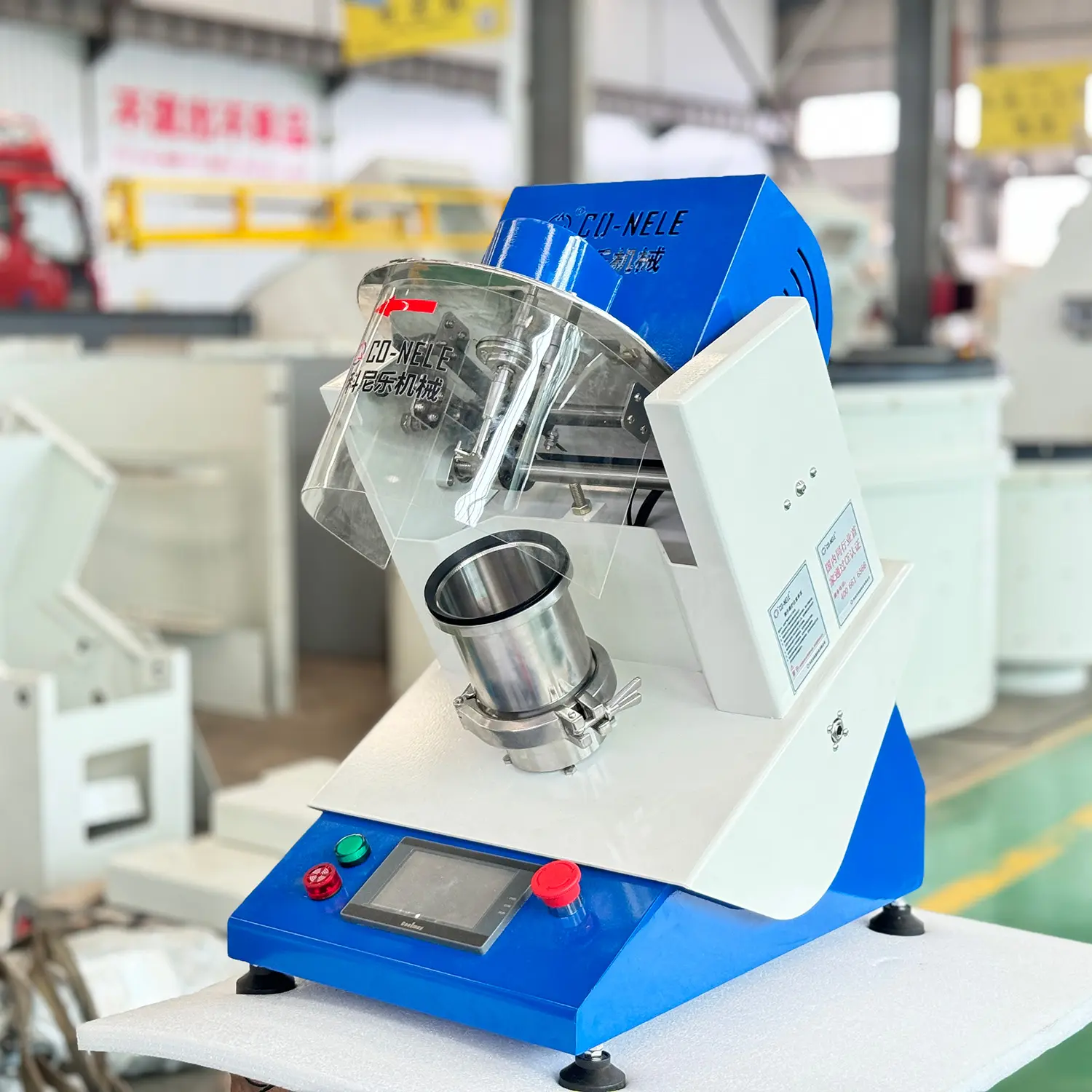
Dust-free wet granulation of alumina, zirconia and ceramic powders — 90%+ sphericity, uniform bulk density and improved flowability for pressing, without the energy load of spray drying.
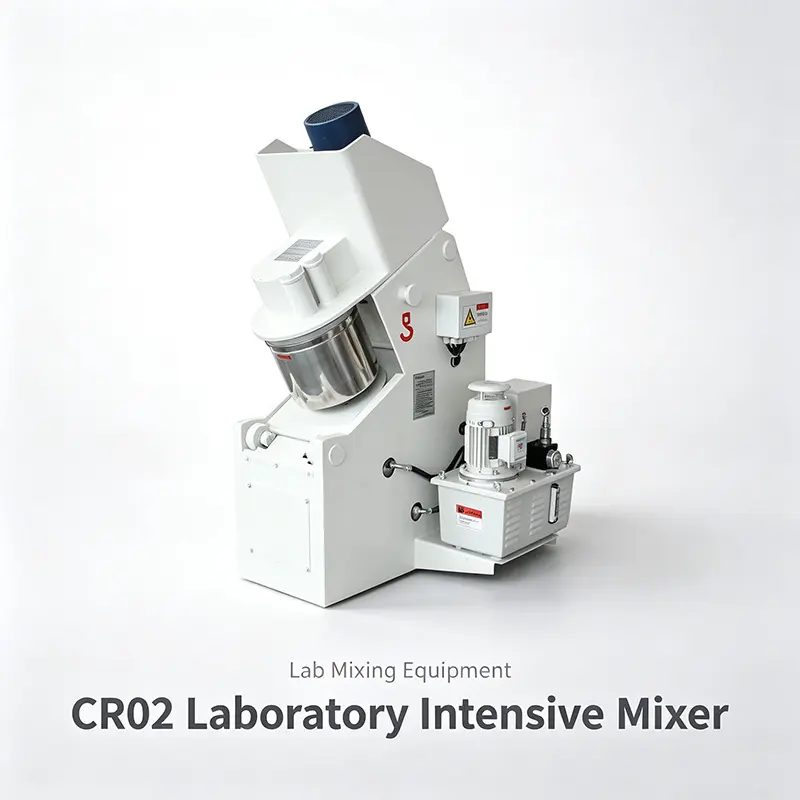
5–75 L lab units that reproduce production-scale kinematics, used for diamond/CBN powder, refractory and UHPC formula development. Scale-up data transfers directly to the industrial model.

Reinforced drive, hardened pan and controlled shear profile for fibre-reinforced ultra-high-performance concrete used in bridge joints, façades and offshore anti-scour grouting.
Stationary, compact, foundationless and mobile configurations from 25 to 180 m³/h. Aggregate batching accuracy ±2%, cement and water ±1%, admixture ±1%, all controlled by a Siemens-based PLC with recipe management and printable batch records.
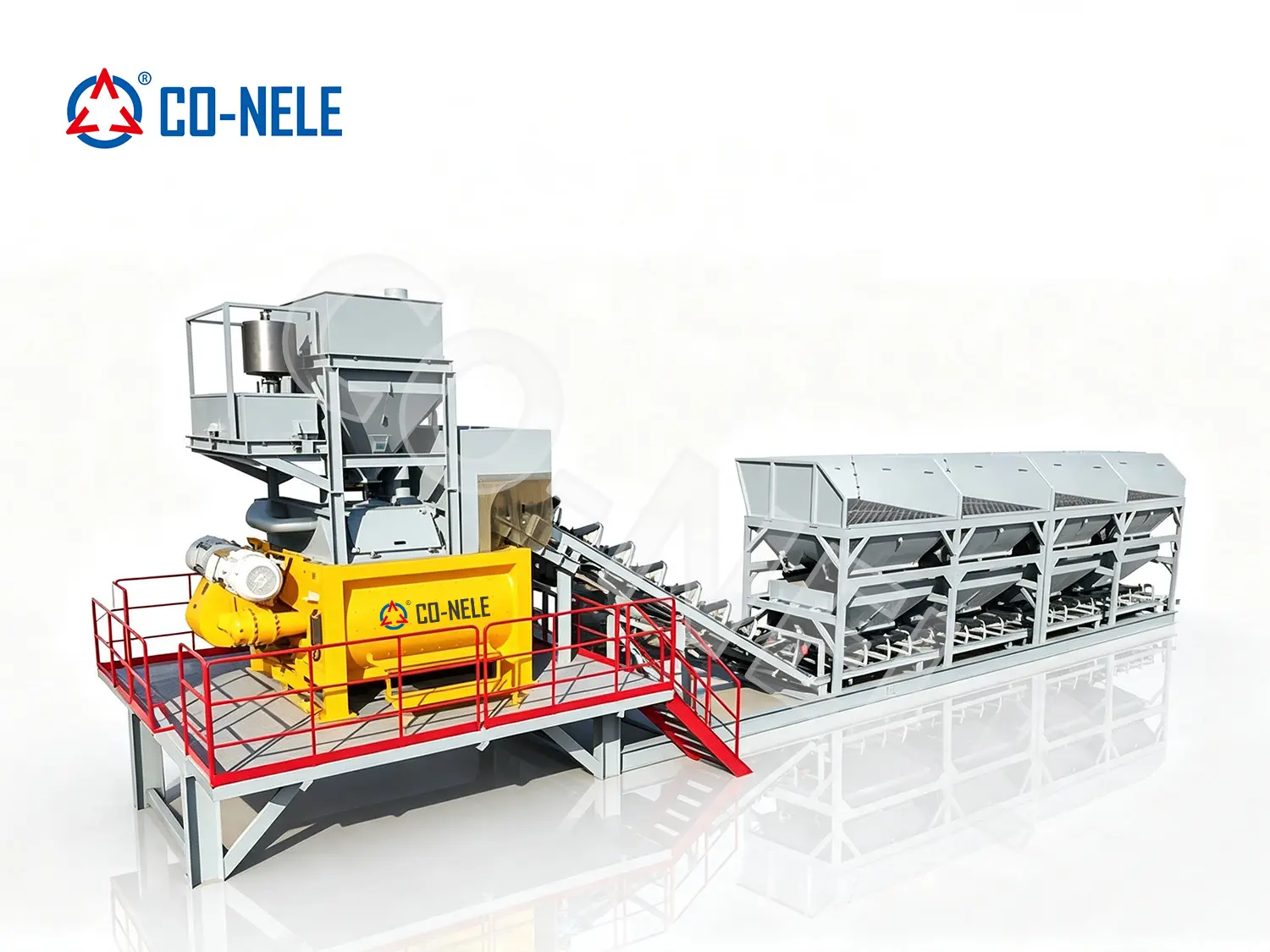
No concrete foundation, no pit: installed on a levelled slab in days. Ideal for leased land, rural projects and contractors who must relocate between contracts.
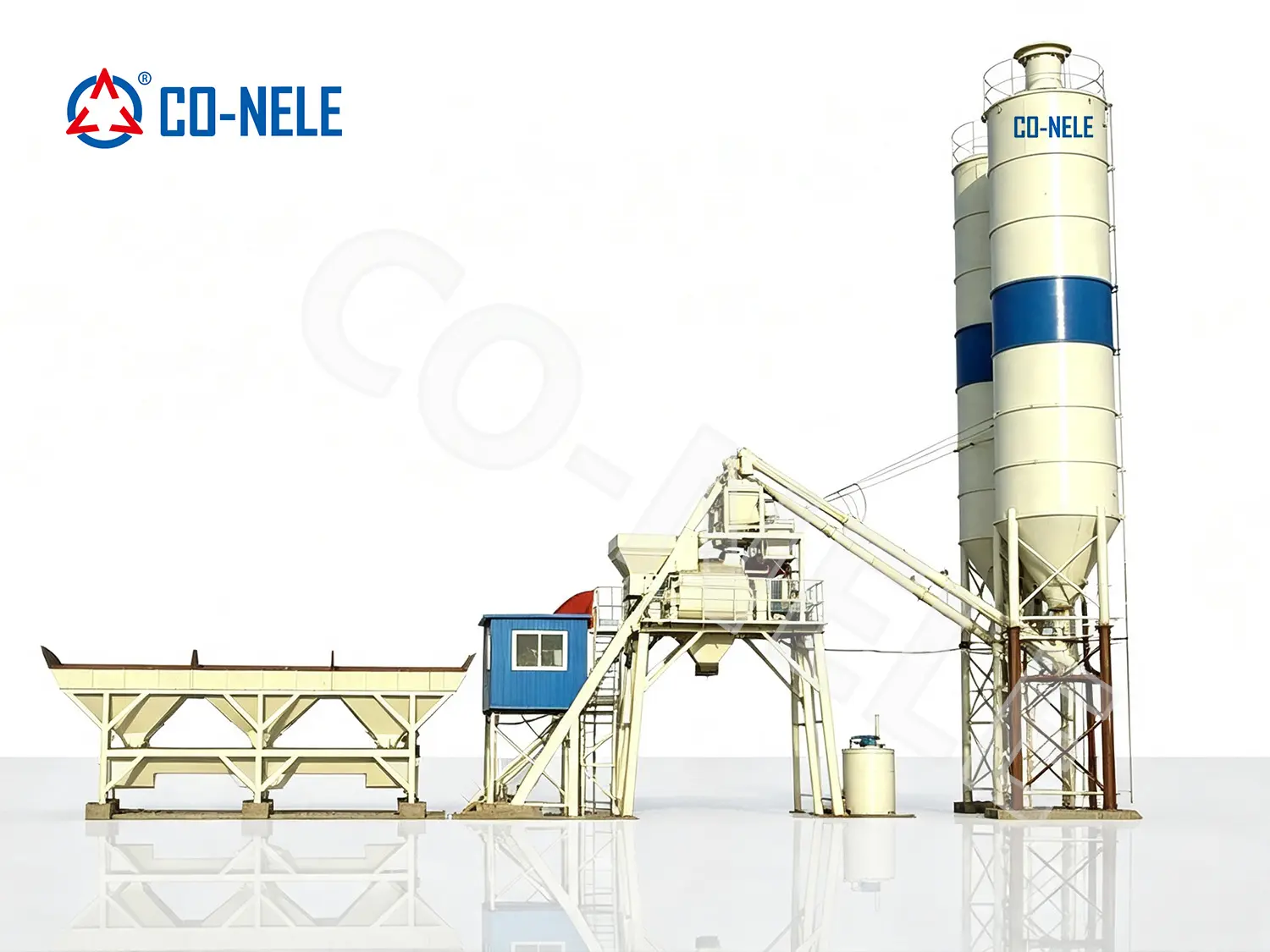
Modular 50 m³/h layout with a small footprint, shipped in standard containers and bolt-assembled on site — the shortest route from container to first batch.
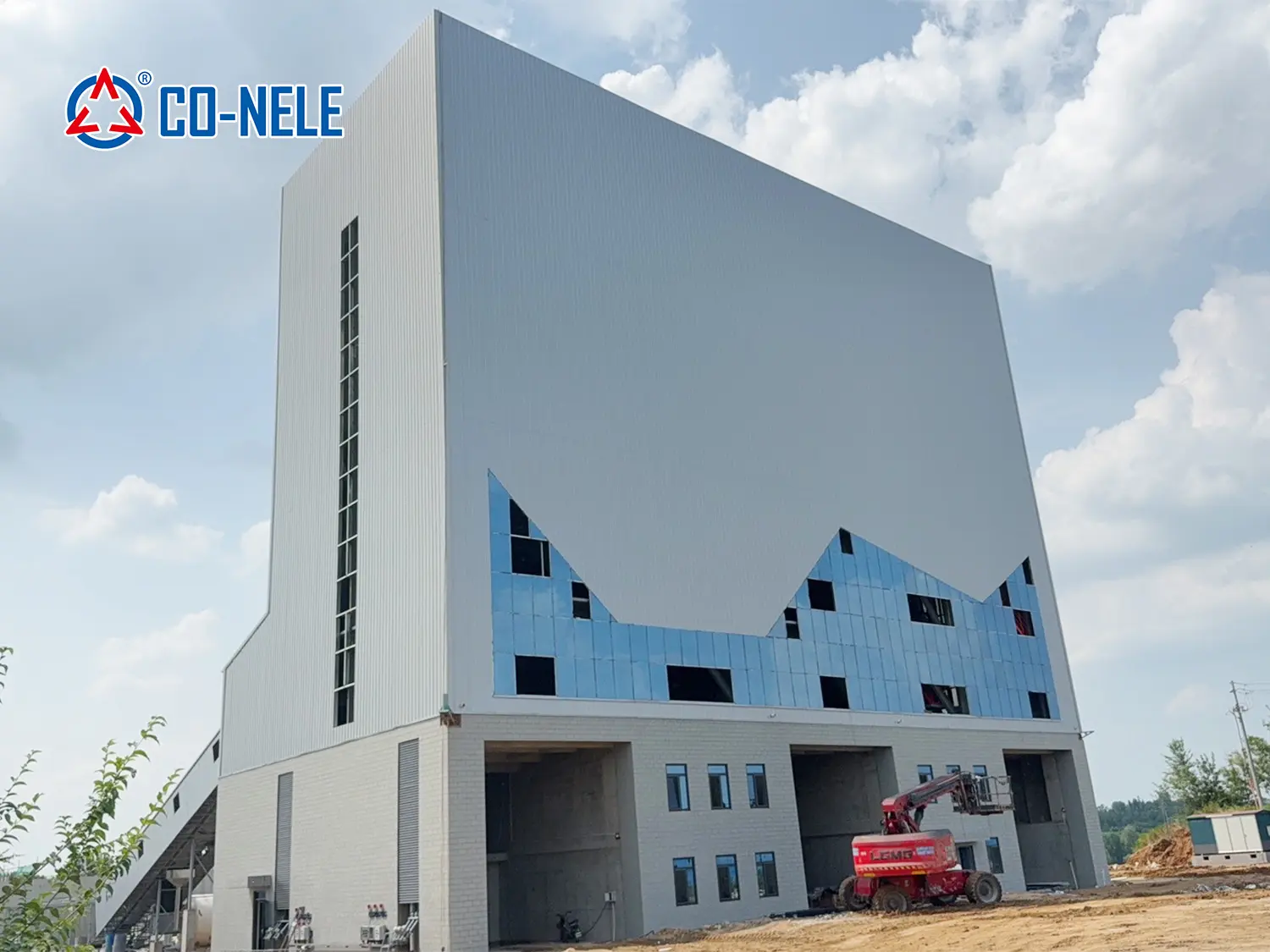
High-capacity stationary plant for commercial concrete supply and major infrastructure, with enclosed aggregate bins, dust filtration and truck-loading logistics design.
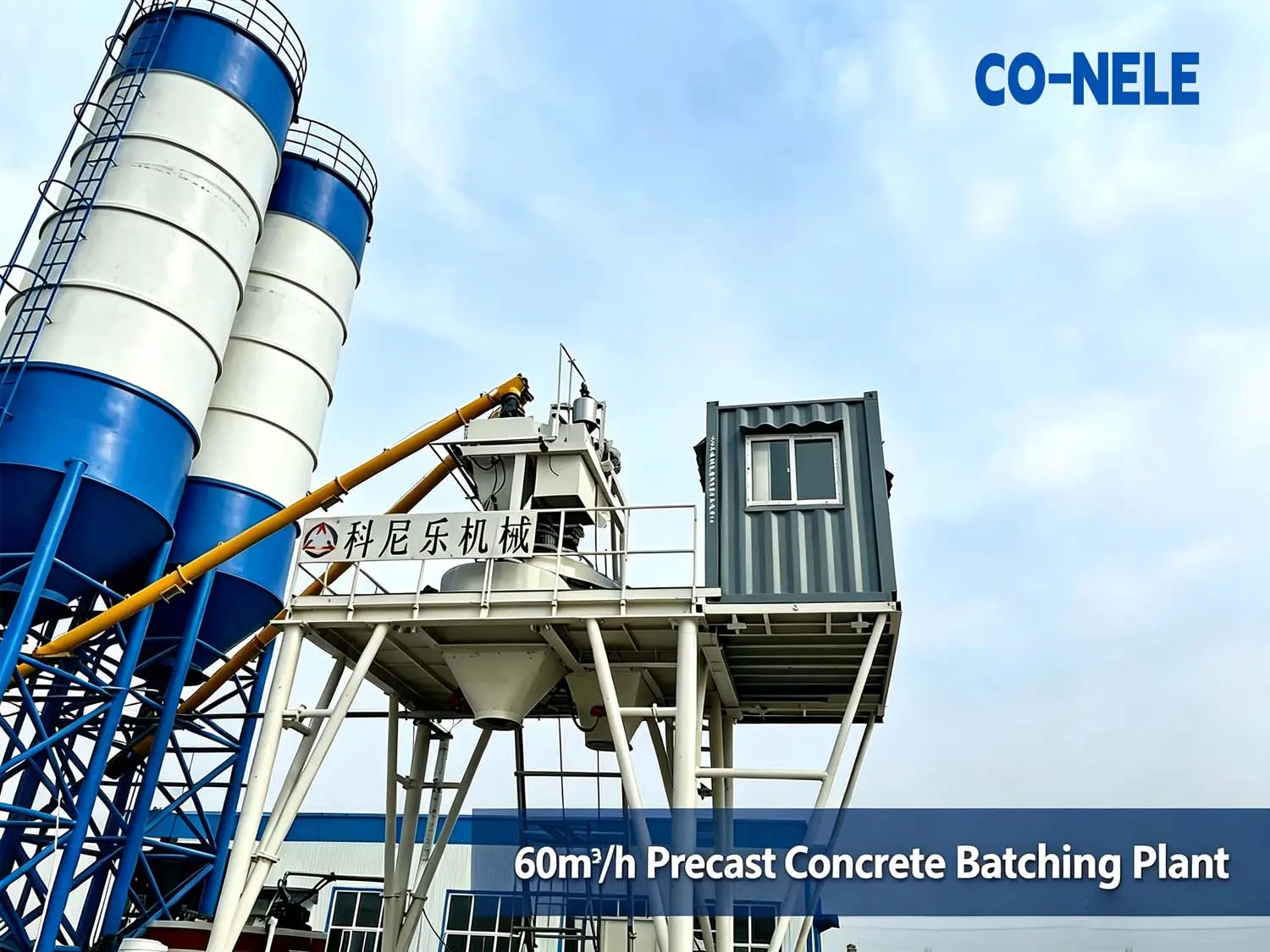
Built around a CMP1000 vertical-shaft planetary mixer for pavers, kerbs, poles, pipes and wet-cast elements where colour consistency and surface finish decide the sale price.
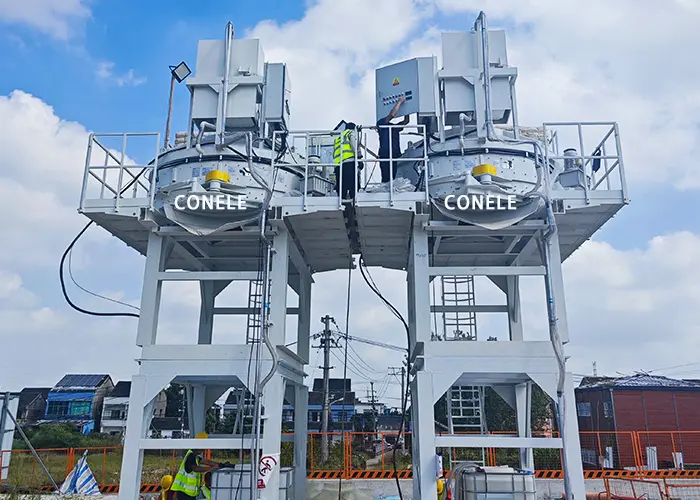
Trailer-mounted batching unit that tows to the next section of road, tunnel or bridge repair and restarts production the same day — a proven answer to long haul distances.
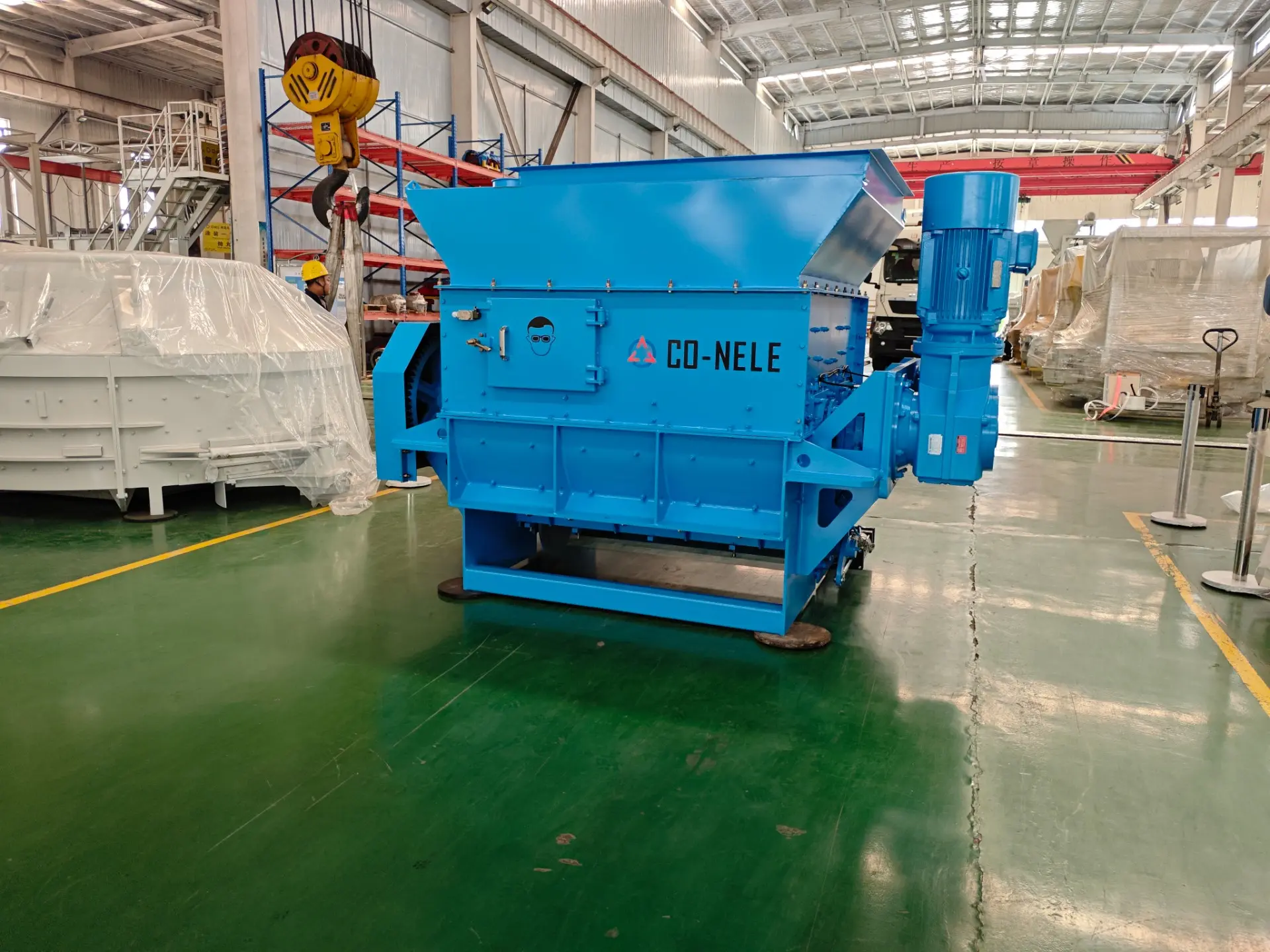
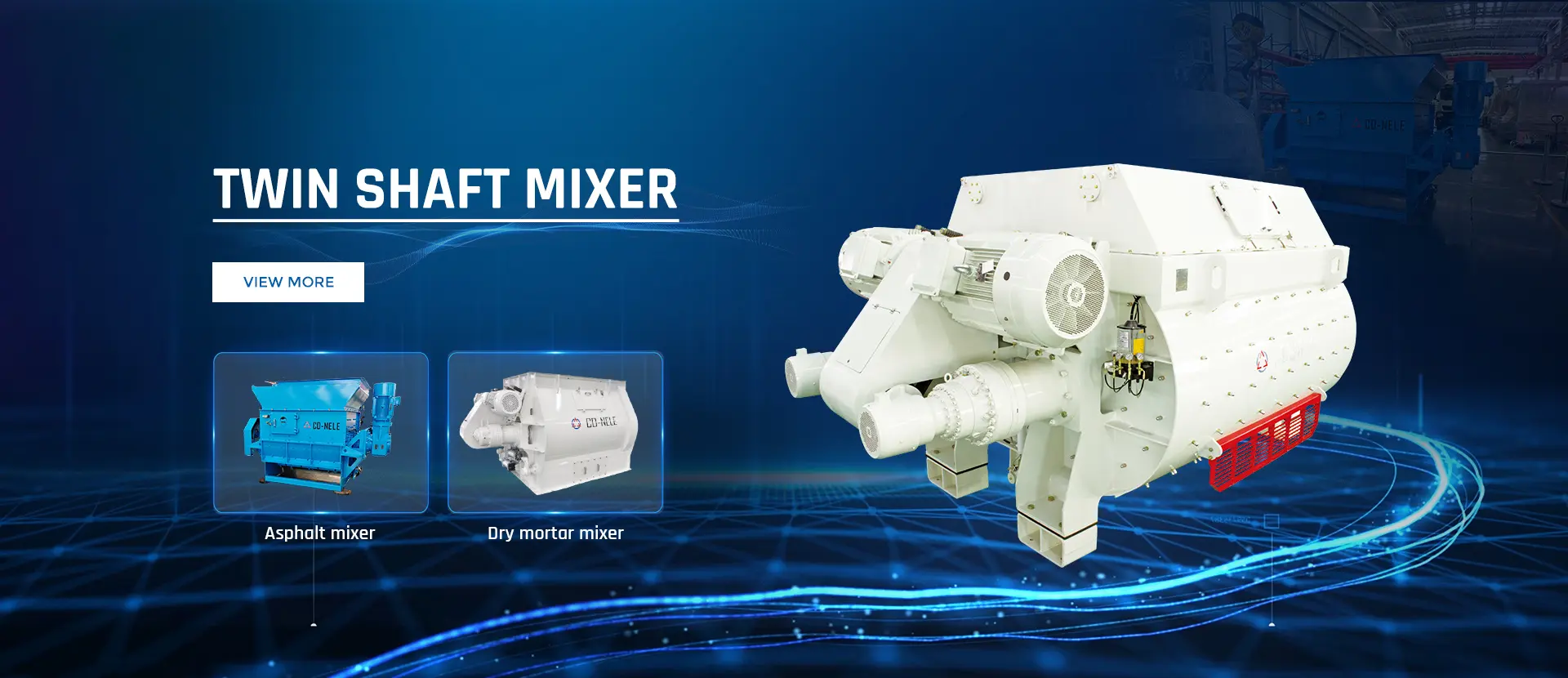
Twin-spiral dry powder mortar mixers and batch asphalt mixers, integrated with silo, screw conveying, weighing and bagging for tile adhesive, plaster and hot-mix asphalt output.
CO-NELE researches, manufactures and services mixing, granulating and coating equipment. Since 2004 our engineers have commissioned machines with more than 10,000 customers: intensive mixers, mixing granulators, vertical-shaft planetary mixers, twin shaft mixers, dry mortar mixers, asphalt mixers and complete production lines.
We hold the leading market share of planetary concrete mixers in Shandong Province, participated in drafting a national industry standard, and are regularly specified by refractory, precast, abrasive, ceramic and powder-metallurgy producers who need repeatable batch quality rather than the cheapest machine.
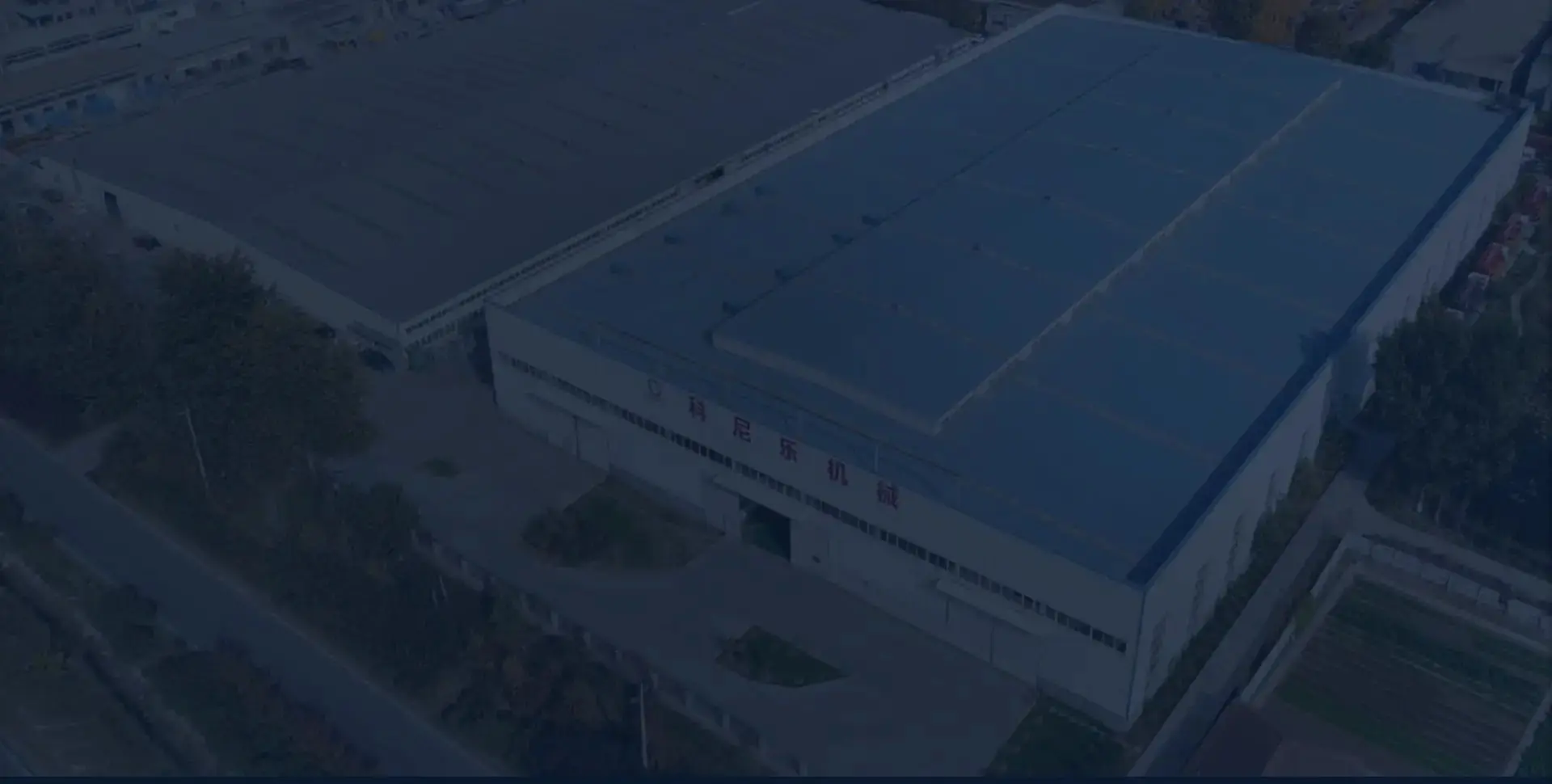
Factory walk-through: planetary mixer assembly, gearbox testing and mixing trials in Qingdao. Watch the factory video.
Machine selection is only the first step. Our engineering team validates the recipe, designs the plant layout, supplies the drawings your civil contractor needs and stays involved through commissioning and wear-part planning.
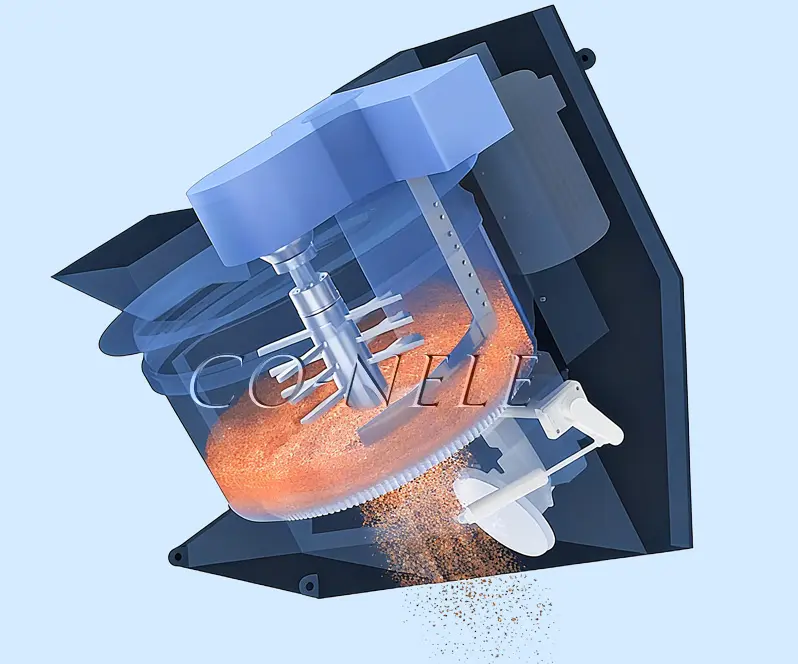
Rotor speed, arm geometry, wear material and discharge method are matched to your material's bulk density, abrasiveness and moisture window — verified in our lab before the drawing is released for production.
Explore machines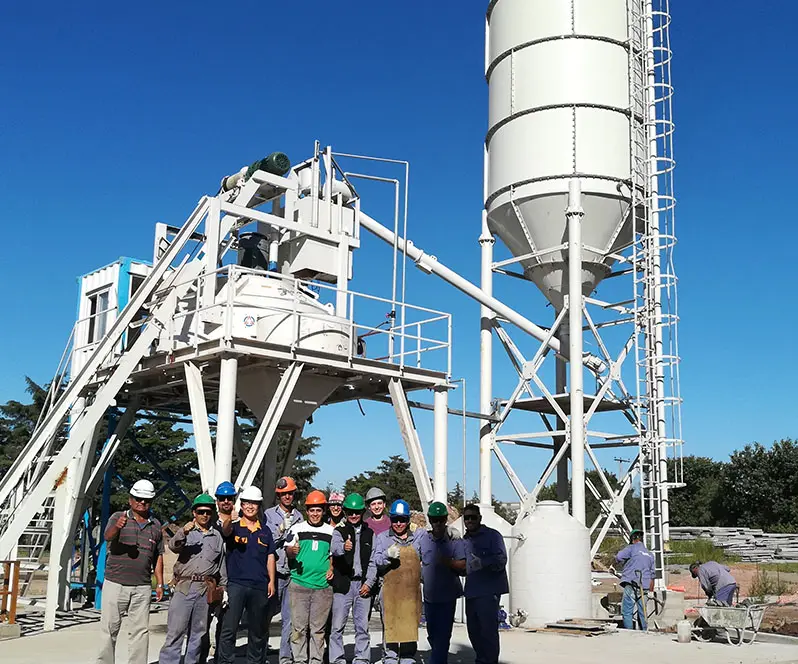
UHPC façade lines in Saudi Arabia, paving-block plants in Thailand, refractory brick plants in Luoyang, ceramic granulation in India, brick production in Kenya — installations we can describe batch-by-batch.
Global service network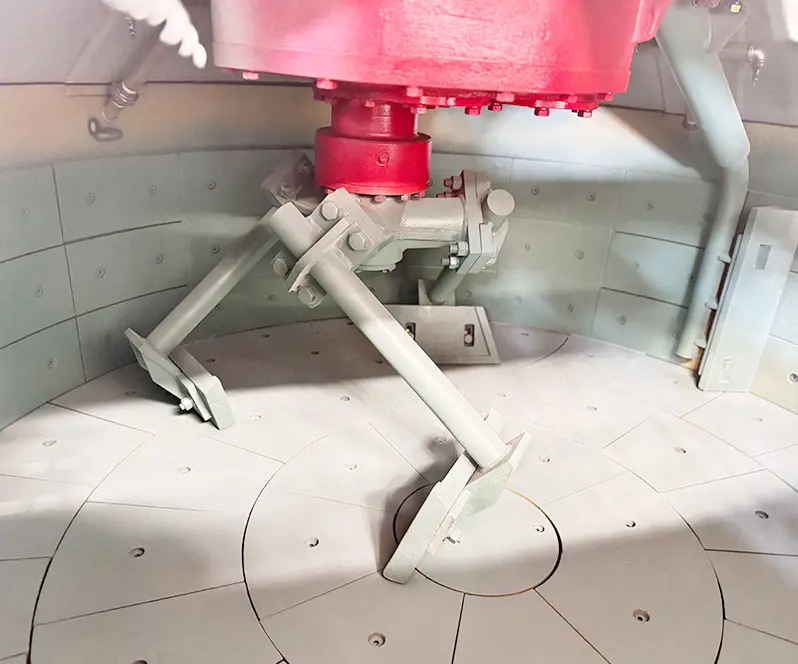
Recorded mixing and granulation trials show real charge volumes, cycle times and discharge behaviour — so a buying committee overseas can evaluate performance without flying to China.
Technical articles
Precast & UHPC, refractories, abrasives & diamond powder, ceramics, powder metallurgy, battery materials, fertiliser, glass, foundry sand and asphalt — each with its own proven mixer configuration.
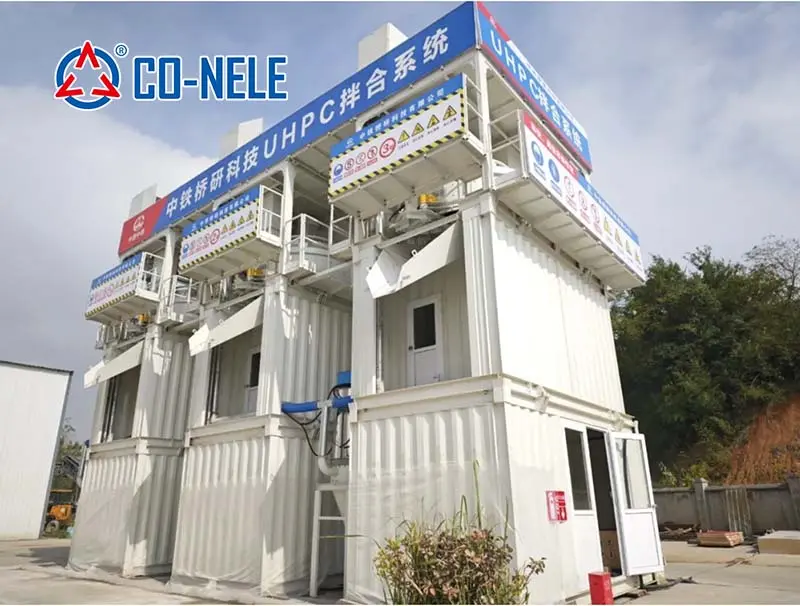
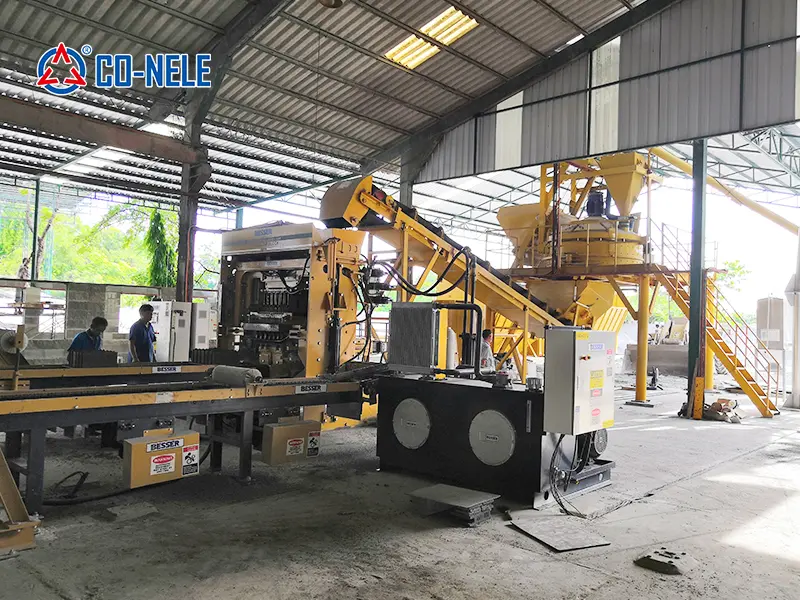
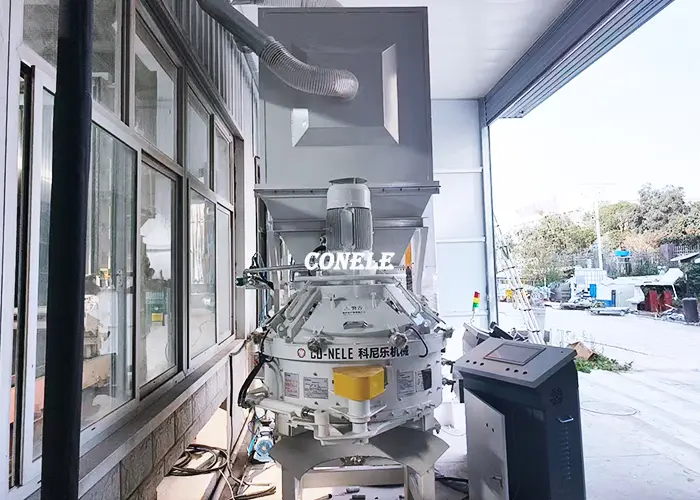
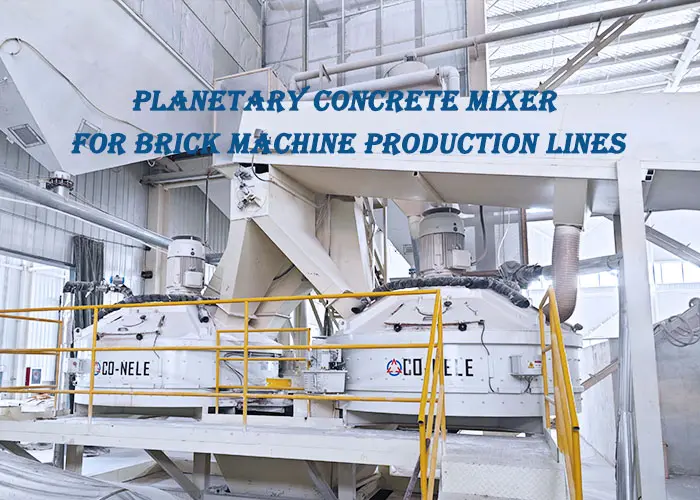
Match my industryFrom offshore wind anti-scour grouting to ceramic powder granulation, these are the working environments where CO-NELE equipment is measured every shift.
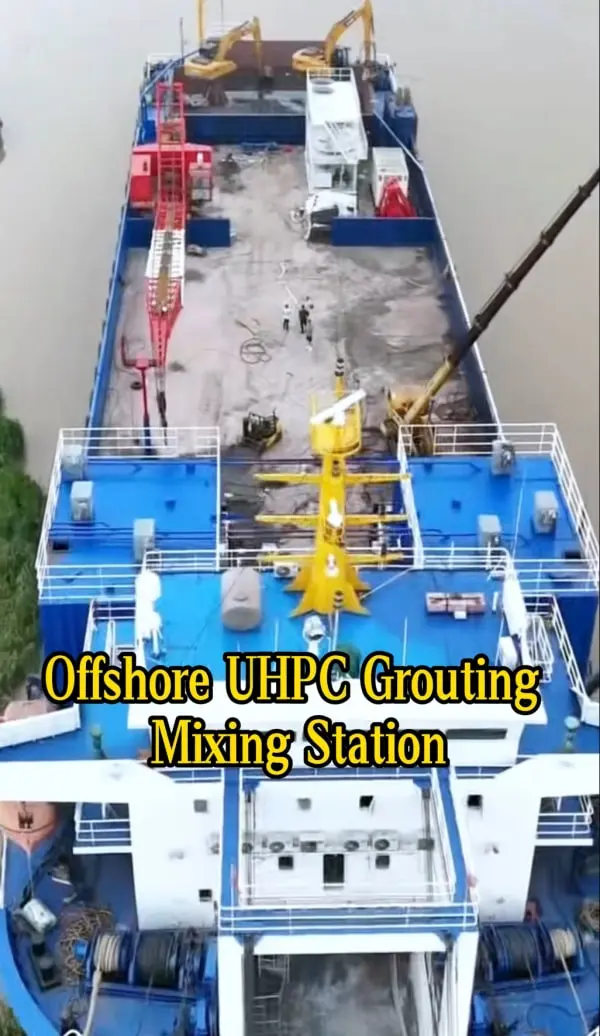
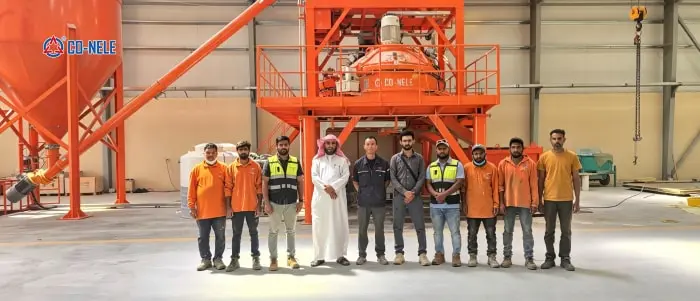
Whether you need higher mixing homogeneity, precise granulation or a full production line, we work from blueprint to commissioning. Three inputs from you are enough for our engineers to start a technical proposal.
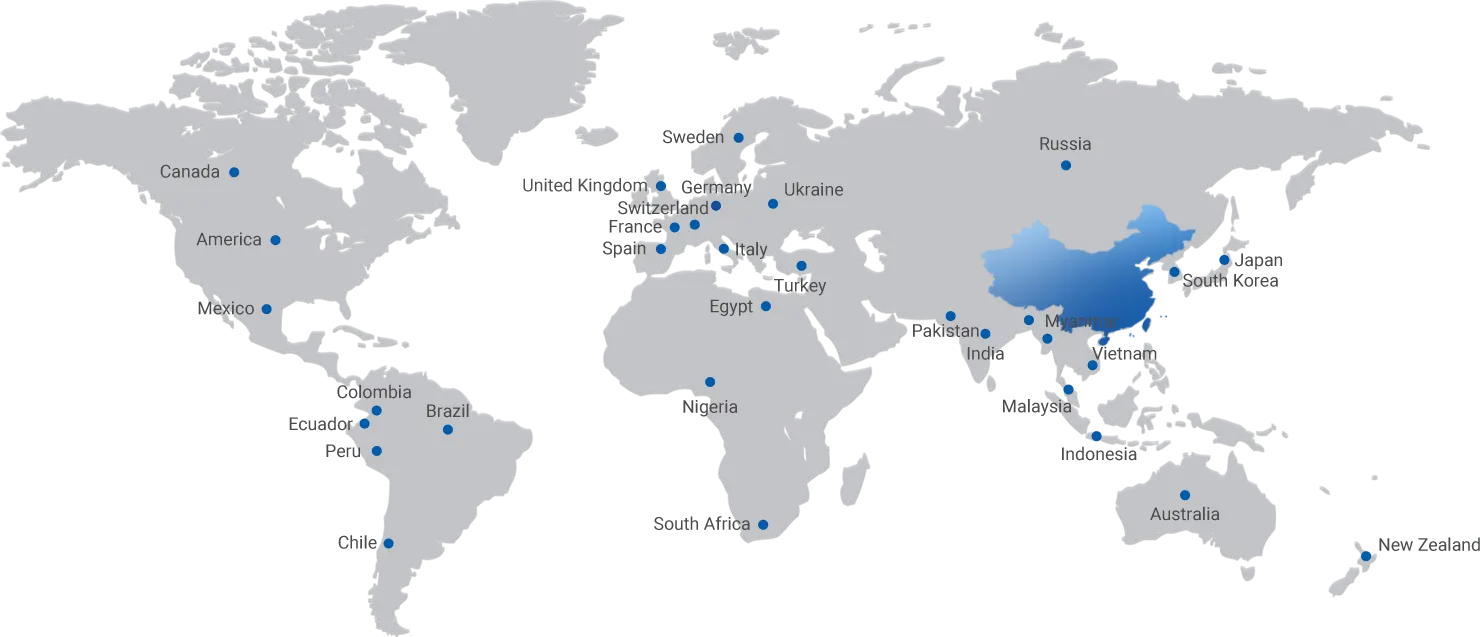
CO-NELE is headquartered in Qingdao, Shandong Province, with three manufacturing bases covering 30,000 m². Equipment and spare parts ship regularly to Germany, the United States, Brazil, South Africa, Saudi Arabia, South Korea, Thailand, India and Kenya, supported by remote commissioning and resident-engineer service.
Straight technical answers written by the CO-NELE process team — the same guidance we give before quoting a machine, including Drammen-specific compliance and application questions.
Choose a vertical-shaft planetary counter-current mixer when the mix is dry, fibre-reinforced, pigmented or ultra-high performance: UHPC, GFRC, refractory castables, dry-cast paving blocks and precast elements that require homogeneity below a 5% coefficient of variation. A twin shaft mixer is the more economical choice for high-throughput ready-mix and wet concrete above 2 m³ per batch, where a 30–45 second cycle matters more than micro-homogeneity.
With standard high-chrome wear parts, liners and mixing arms typically run 90,000–150,000 batches on normal concrete and 40,000–60,000 batches on abrasive mixes such as refractory castables or quartz-rich UHPC. Every wear part is bolt-on and replaceable in the field, and CO-NELE keeps interchangeable spares for all models produced since 2004, so a ten-year-old machine is still serviceable.
Yes. Our Qingdao laboratory operates lab-scale intensive mixers and granulators from 5 to 75 litres. Send 10–20 kg of your powder or aggregate together with the target particle size, moisture window and required capacity; our process engineers return a test report covering granule sphericity, bulk density, mixing time, binder consumption and the recommended production model with scale-up factors.
Machines are built to your local supply (220V / 380V / 415V / 440V, 50 or 60 Hz) and can be supplied with CE-compliant electrical design. Deliveries include foundation and wiring drawings, an English operation and maintenance manual, a recommended spare-part list and a 12-month warranty on the drive unit. Installation is supported by video commissioning or by resident engineers, with spare parts shipped from stock in Qingdao.
Work backwards from truck logistics, not from the brochure figure. Rated output assumes continuous mixing; real output is usually 55–70% of theoretical once loading, discharge and haulage are counted. For a 30 m³/h actual demand, an HZS60 with a 1 m³ planetary or twin shaft mixer is normally the right balance. Also confirm aggregate bin volume covers at least two hours of production and that cement silo capacity matches your delivery interval.
For a Norwegian buyer, CE marking is the visible part of a wider technical file. The supplier should be able to identify the applicable EEA rules, prepare a Declaration of Conformity, provide a risk assessment, confirm electrical design to EN 60204-1, supply drawings and manuals, and verify that safety guarding, emergency stop and maintenance access meet the intended use. For 2026 projects, also confirm whether the machine will be placed on the market under the current Machinery Directive or the incoming Machinery Regulation (EU) 2023/1230, which applies from 20 January 2027.
Yes. Export machines can be configured for 400 V / 50 Hz three-phase supply, with control voltage and protection selected to match the plant design. The buyer should provide the site voltage, frequency, earthing arrangement, ambient conditions and any internal electrical standard. CO-NELE supplies motor and control data, terminal diagrams and component documentation so the Norwegian electrical contractor can integrate the machine correctly.
Start with a lifecycle model: purchase price, freight to the Drammen area, foundation and electrical works, expected energy per batch, wear-part consumption, maintenance labour, spare-parts inventory and downtime risk. CO-NELE can supply a recommended wear-part kit, expected batch life for the application and a remote-support plan. The lowest purchase price is rarely the lowest cost per compliant batch.
Lead time depends on model, configuration, testing requirements and whether the unit is a standard or engineered build. A practical plan should separate production time, pre-shipment inspection, sea freight, customs clearance and inland delivery to Drammen. For projects with a fixed installation window, ask for a milestone schedule and book the FAT date early. Spare parts can usually be air-freighted faster than the main machine.
Commissioning can be supported by a documented video protocol, a remote engineer session or a resident engineer visit. The package should include a pre-commissioning checklist, foundation and utility verification, no-load and load tests, operator training and a signed handover record. For Drammen plants, it is useful to appoint a local electrical contractor and a mechanical fitter before delivery so that site readiness does not delay the start-up.
The correct choice depends on the recipe, but the evaluation should focus on moisture control, shear intensity, discharge behaviour and wear protection. Recycled aggregates may increase water demand and variability; low-carbon binders may change rheology and early strength. A laboratory trial with your actual materials is more reliable than a generic recommendation. In many cases, a planetary or inclined intensive mixer with recipe-controlled water addition and a robust wear package is the right starting point.
Send a representative 10–20 kg sample with a description of the feed, target product, moisture window and required capacity. The laboratory can run mixing or granulation trials, record power draw and cycle time, measure homogeneity, bulk density or granule size, and recommend a model with scale-up factors. The test report becomes part of the technical file and helps the Drammen buying team compare suppliers on evidence.
Process notes, comparison studies and test reports published by our engineering team.
Where old pan designs lose homogeneity on dry castables, and how counter-current kinematics recover it.
High-efficiency metal powder granulation: flowability, bulk density and press-feed consistency.
Why the gearbox — not the pan — determines the service life of a planetary concrete mixer.
Energy, binder and yield comparison across three granulation routes for ferrous powders.
Lab granulator trial data, moisture curve and scale-up recommendation for fertiliser producers.
The models, capacities and applications international buyers are comparing right now.
These eight original product platforms complete the Drammen sourcing map: inclined-pan mixing for castables, factory-direct intensive mixers, laboratory units for QA, battery-material mixing and a Portuguese-language laboratory model for international procurement teams.
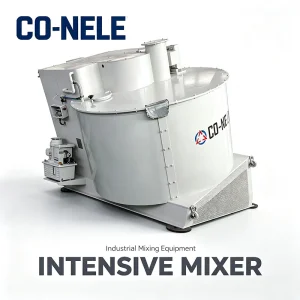
For refractory castables, special concrete and difficult powders where shear and pan motion matter more than simple batch turnover.
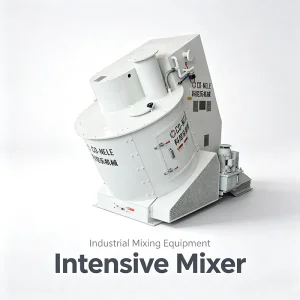
A production-oriented route for refractory castables and dense mixes where homogeneity, binder dispersion and discharge behaviour decide quality.
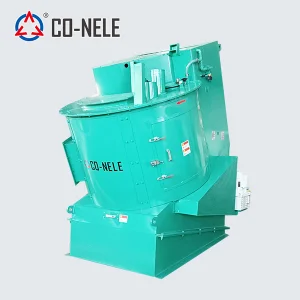
A direct factory pathway for buyers who want to compare ex-works configuration, testing and export documentation before selecting a model.
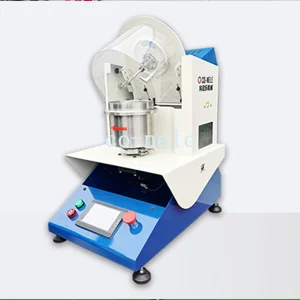
A compact laboratory mixer for incoming-material checks, formula adjustment and quality-control verification in Drammen laboratories.
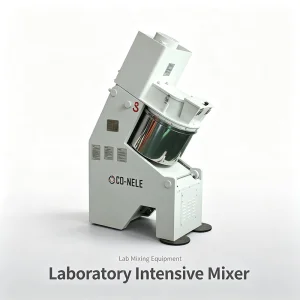
For advanced-material teams that need a laboratory mixer with controlled shear and a clear path to production-scale validation.
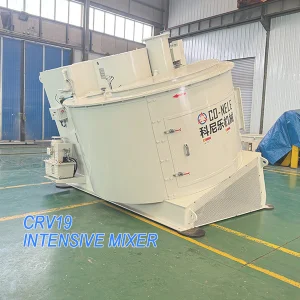
A pilot-scale platform for granulation studies, binder optimisation and process validation before a full Drammen production line is ordered.
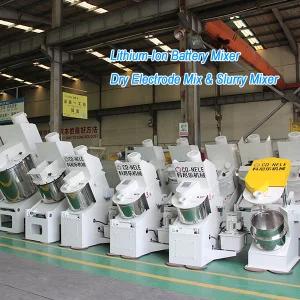
For battery-material laboratories and pilot lines that need controlled dry electrode mixing or slurry preparation with documented process parameters.
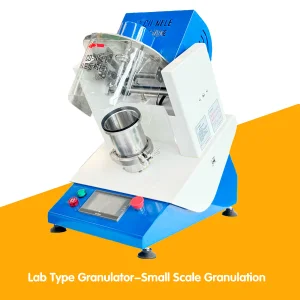
A laboratory intensive mixer platform useful for international procurement teams comparing Portuguese-language product documentation and lab-scale performance.
Send your material, target specification and capacity. You will receive a model recommendation, layout concept and full technical catalog — reviewed by the engineers who build the machine, with Drammen-specific compliance and logistics support.
QINGDAO CO-NELE MACHINERY CO., LTD. — manufacturer of planetary concrete mixers, intensive mixer granulators, twin shaft mixers and complete concrete batching plants since 2004.