CO-NELEMixing & Granulation
Explore our core industrial planetary concrete mixers, intensive granulators, and specialized mixing machinery engineered for extreme material recipes.
Why conventional mixing technologies fail in modern cementitious micro-structure formulation
Ultra-High-Performance Concrete (UHPC) represents a fundamental leap forward in civil engineering material science. Characterized by compressive strengths exceeding 150 MPa to 250 MPa, tensile ductility, extreme durability, and virtually zero capillary porosity, UHPC is redefining the boundaries of architectural and structural engineering. However, achieving these extraordinary physical properties demands far more than tweaking a traditional concrete recipe—it dictates a complete overhaul of the mechanical mixing process.
Traditional twin-shaft or gravity-based drum mixers were originally engineered for standard slump concrete containing coarse aggregates ranging from 10mm to 32mm. When charged with UHPC formulations—which feature ultra-fine silica fume (particle sizes below 0.1 microns), fine quartz flour, superplasticizers, ultra-low water-to-binder ratios ($w/b < 0.18$), and dense steel fiber loading (up to 2%–3% by volume)—conventional mixers encounter severe physical limitations. They suffer from high-shear blind spots, massive friction torque overloads, balling of micro-fibers, and un-dispersed agglomerates of silica fume that severely degrade compressive strength and fracture toughness.
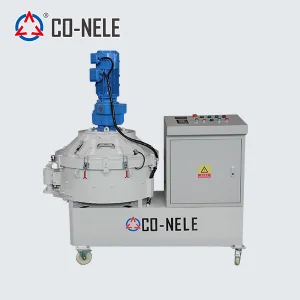
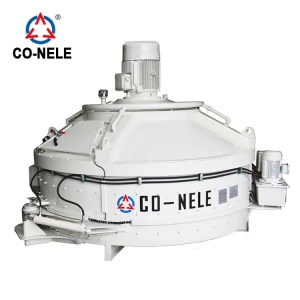
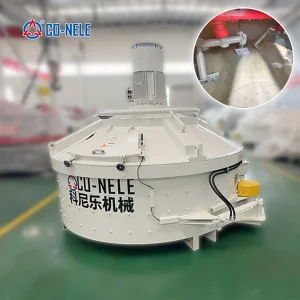
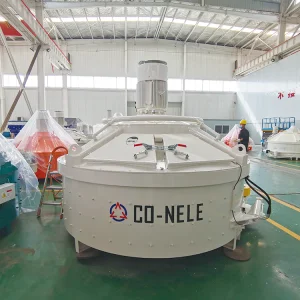
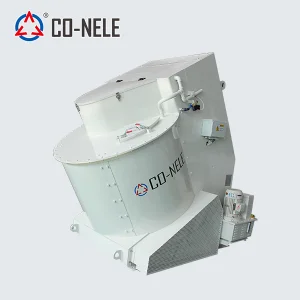
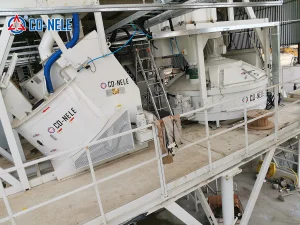
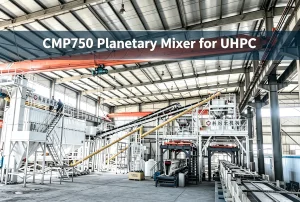
To overcome particle agglomeration and achieve a homogeneous micro-matrix, top-tier global EPCs and precast manufacturers are transitioning to specialized planetary counter-current UHPC mixers engineered in China. As a premier China UHPC Mixer Manufacturer, our machinery leverages complex planetary gear transmission systems where the mixing stars rotate on their own vertical axes while simultaneously revolving around the central axis of the mixing pan. This dual-rotation trajectory creates a high-kinetic, non-repeating 3D shear path that covers 100% of the mixing floor without dead zones.
By generating optimal velocity gradients and localized turbulent shear energy, China UHPC mixers break down electrostatic surface attraction between sub-micron silica particles, fully activate high-range water reducers, and evenly distribute micro-steel fibers throughout the paste. The result is a fully homogenized, bubble-stripped matrix with maximum packing density and predictable mechanical performance.
Evaluating industrial mixer architectures for modern reactive powder concrete (RPC) and UHPC production
| Performance Indicator | Counter-Current Planetary UHPC Mixer | High-Speed Inclined Intensive Mixer | Traditional Twin-Shaft Mixer |
|---|---|---|---|
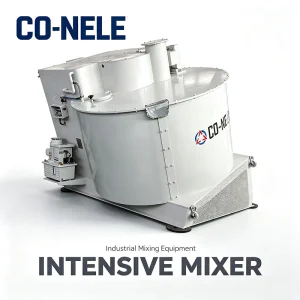
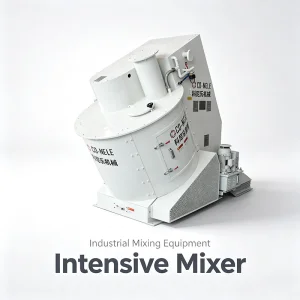
| Primary Mixing Mechanism | Dual-rotation planetary star arms + high-shear scappers | Tilted rotating pan + high-speed counter-rotating rotor | Horizontal counter-rotating twin shafts with paddles |
| Silica Fume Dispersion Rate | 99.6% De-agglomeration within 90 sec | 99.9% De-agglomeration within 60 sec | 75.0% - 82.0% (Risk of unmixed powder balls) |
| Steel Fiber Distribution | Uniform 3D isotropic orientation, zero balling | Ultra-rapid dispersal, ideal for fine short fibers | High risk of fiber nesting and segregation |
| Coefficient of Variation (CV) | < 2.5% (Micro-level consistency) | < 1.8% (Extreme laboratory precision) | 5.0% - 8.0% (Varies with batch viscosity) |
| Energy Consumption per Tonne | Optimized planetary torque transfer (-18% kWh) | Targeted shear rotor efficiency | High energy loss due to wall/shaft friction |
| Wear Liner Life (High-Chrome Alloys) | 120,000+ Batches (Abrasive micro-aggregates) | 90,000+ Batches (Easy ceramic tile replacement) | 45,000 - 60,000 Batches (Heavy shaft wear) |
Reduces batching time from 8-12 minutes down to 3-5 minutes for ultra-low water UHPC recipes, increasing precast plant daily throughput by over 40%.
Engineered with triple-stage mechanical face seals and pressurized grease barriers to prevent abrasive silica slurry from penetrating drive gearboxes.
Real-time electrical current analysis continuously tracks batch viscosity transitions from dry powder charging to fluid state transformation.
How international infrastructure megaprojects are driving the adoption of high-shear China UHPC mixing plant systems
The global demand for high-capacity, robust UHPC machinery is expanding at an unprecedented compound annual growth rate (CAGR). Driven by modernizing infrastructure mandates, decarbonization goals, and resilient architectural designs, procurement officers from North America, Europe, the Middle East, and Southeast Asia are seeking trusted industrial equipment manufacturers who can deliver high-precision machinery at scaled cost structures.
Precast bridge decks and long-span highway viaducts utilize UHPC for high-strength field joints. China planetary mixers ensure that field-mixed UHPC slurries exhibit self-consolidating flow properties, guaranteeing 100% bond strength with pre-existing rebar structures.
Architects specify GFRC and UHPC panels down to 15mm-25mm thickness for high-rise buildings. Achieving pristine surface aesthetics, crisp geometric edges, and zero surface bug-holes demands micro-homogeneous mixing provided by counter-current star mixing arms.
Subsea foundations endure severe wave fatigue and saltwater corrosion. China mobile UHPC mixing plants provide continuous, reliable grouting mixes for monopile foundations, maintaining strict air voids control and high early flexural strength.
Beyond standard concrete, high-intensive China mixers are heavily deployed in steel mills, cement kilns, and chemical plants to homogenize dense silica-alumina refractory linings that must withstand temperatures beyond 1600°C.
Why sourcing directly from premier Chinese mixing equipment original manufacturers guarantees quality, compliance, and cost performance
The modern Chinese industrial machinery landscape has undergone a dramatic transformation driven by Industry 4.0 smart manufacturing initiatives. Today, leading Chinese UHPC mixer manufacturers operate fully integrated production bases equipped with 5-axis CNC machining centers, robotic welding cells, digital coordinate inspection tools, and in-house gear forging workshops.
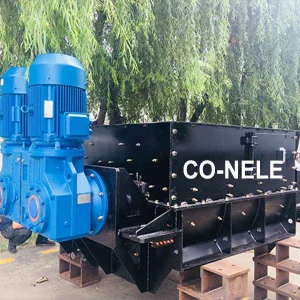
The heart of any UHPC mixer is its heavy-duty gearbox. Unlike assemblers who purchase off-the-shelf commercial gear reducers designed for lightweight agitators, leading Chinese manufacturers engineer bespoke planetary gearboxes specifically calculated to handle the explosive starting torque and high viscosity of stiff UHPC batches. Utilizing alloy steel forgings subjected to carburizing, quenching, and precision gear grinding, these gearboxes deliver up to 98% mechanical transmission efficiency with exceptional service life.
UHPC raw materials—especially quartz powder, crushed granite, and micro-steel fibers—are aggressively abrasive. Chinese machinery plants utilize proprietary High-Chromium Alloy liners (Cr26, Cr28) and Tungsten Carbide hardfaced mixing blades. This metallurgical refinement extends wear part lifespans by up to 300% compared to standard manganese steel liners, drastically reducing downtime and lowering total cost of ownership (TCO) for global operators.
Exported Chinese mixing machinery is designed to seamlessly interface with international job-site power grids (220V, 380V, 415V, 440V, 480V at 50Hz or 60Hz). Electrical control panels feature premium components from Schneider, Siemens, and ABB, incorporating CE-compliant interlocks, emergency stop circuits, ISO 9001 quality management, and IP65 dust-and-waterproofing for extreme climatic conditions.
Expert engineering answers to critical buyer questions regarding equipment sizing, fiber dispersion, and international service
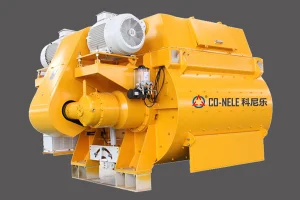
Standard twin-shaft mixers rely on horizontal paddle sweeps that struggle to generate high shear in zero-slump, high-viscosity pastes. They leave un-dispersed micro-silica agglomerates and cause steel fibers to clump into nests. A planetary mixer uses counter-current dual rotation kinematics, ensuring 100% shear coverage across every cubic millimeter of the pan, fully dispersing powders and orienting fibers homogeneously.
China UHPC mixers utilize high-velocity star paddles combined with specialized scrapers and optional side-mounted high-speed rotor choppers. This combination breaks up fiber bundles immediately upon dosing, distributing individual steel micro-fibers into the wet slurry prior to cement hydration.
With standard high-chrome alloy liners (Cr26), users expect between 90,000 to 120,000 standard concrete batches. For highly abrasive UHPC recipes rich in quartz sands and steel fibers, liners average 40,000 to 65,000 batches. All liners are modular, bolt-on, and rapidly replaceable in the field.
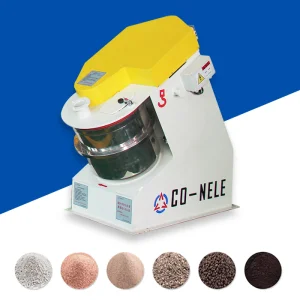
Yes. Laboratory models such as the CMP50 (50-liter capacity) share identical kinematic velocity vectors, arm blade radius proportions, and tip speeds with large industrial mixers like the CMP2000 (2000-liter capacity). Data gathered during lab mix testing transfers seamlessly to full-scale batching plants.
Export packages include full CE certificate documentation, English operation manuals, foundation installation blueprints, electrical schematics, 12-month structural warranties, and lifetime remote diagnostic support via video link. Spare parts are dispatched from factory stock within 24-48 hours.
When batching UHPC, mixing cycle times take between 3 to 5 minutes per batch (compared to 45 seconds for standard ready-mix). Therefore, to yield an output of 15 m³/h of finished UHPC, an operator typically selects a 1.0 m³ to 1.5 m³ planetary counter-current mixer to account for loading, mixing, and discharge intervals.
Select from mobile batching stations, pelletizing granulators, precast plants, and intensive castable mixers.