
CO-NELEMixing & Granulation
Explore our core engineering portfolio, directly available from our Qingdao manufacturing bases with customizable options.
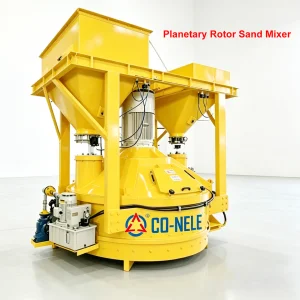
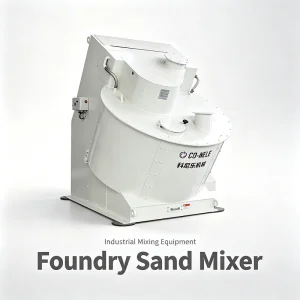
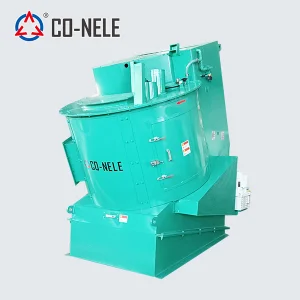
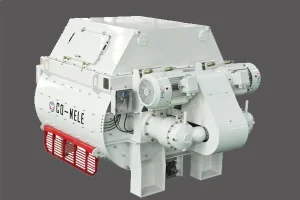
Analyzing the shift from conventional mixing techniques to advanced vertical-shaft planetary counter-current kinematics across heavy industrial, precast construction, and high-tech material synthesis markets.
In contemporary industrial manufacturing, achieving uniform material distribution within complex multi-phase mixtures represents the fundamental boundary between product performance compliance and costly material failure. As modern industrial recipes become increasingly demanding—incorporating micro-silica additives, synthetic fibers, nano-scale pigments, abrasive aggregates, and reactive chemical binders—traditional horizontal shaft or free-fall drum mixers fail to satisfy strict homogeneity metrics. This technological gap has driven global adoption toward vertical-shaft planetary mixers, particularly those engineered with counter-current rotational mechanics.
The global demand for industrial mixers has transitioned from simple volumetric displacement toward precise kinetic energy dispersion. In the precast concrete sector, Ultra-High-Performance Concrete (UHPC) and Glass Fiber Reinforced Concrete (GFRC) require a mixing intensity capable of disbursing fine steel or polymer fibers without clumping or segregation. In the refractory industry, synthetic raw materials such as corundum, silicon carbide, and graphite require intense shear force to distribute micro-powders evenly around coarse aggregates while minimizing water usage. Similarly, battery energy storage materials, glass production batches, advanced ceramics, and metallurgical powders necessitate zero-dead-zone agitation to guarantee chemical stability across massive batch sizes.
Information Gain Metric: Traditional mixing equipment often leaves up to 12% of the mixing pan volume under-utilized, creating "dead spots" near walls and central shafts. Counter-current planetary mixing eliminates dead zones entirely, reducing overall batch cycle time by up to 35% while lowering energy consumption per ton of finished product.
A rigorous examination of planetary rotation vs. revolution, velocity vector distributions, and kinetic turbulence in high-shear industrial mixers.
The mixing blades rotate on their own vertical axes (star rotation) while simultaneously revolving around the central axis of the mixing pan (revolution). This dual-action trajectory sweeps 100% of the floor area within a single revolution cycle, preventing material segregation.
By forcing materials to collide at intersecting vector angles, the planetary mixer imparts intense mechanical energy. Agglomerated fine powders are dispersed rapidly, ensuring complete wetting of micro-particles with minimal liquid addition.
Outermost wall scrapers operate in conjunction with outer mixing blades to strip cohesive mixes off the side walls and bottom pan lining, redirecting material into the path of high-speed planetary stars continuously.
| Mixing Technology | Kinematic Profile | Homogeneity (CV%) | Fibre & Micro-Powder Dispersion | Primary Industrial Application |
|---|---|---|---|---|
| Planetary Counter-Current | Star Rotation + Pan Revolution | < 3.0% (Ultra-High) | Superior (No Clumping / Zero Segregation) | UHPC, Precast, Refractories, Glass, Granulation |
| Twin Shaft Compulsory | Horizontal Dual Axle Counter-Rotation | ≤ 5.0% (High) | Moderate (Prone to fibre balling at high friction) | Commercial Ready-Mix Concrete (> 2 m³/batch) |
| Single Shaft / Pan Mixer | Simple Concentric Rotation | ≤ 8.5% (Medium) | Poor (Creates peripheral dead zones) | Standard Mortar, Low-grade Structural Concrete |
| Reversible Drum Mixer | Gravity Free-Fall Rotation | > 12.0% (Low) | Unsuitable (Relies purely on gravity cascade) | On-site Civil Construction, Small Footprint Projects |
Deconstructing China's industrial equipment ecosystem: Metal metallurgy efficiency, heavy gearbox manufacturing, and total cost of ownership (TCO) optimization.
Global procurement directors and machinery importers frequently evaluate the trade-offs between European precision engineering and Chinese industrial capacity. Over the past two decades, leading Chinese manufacturers, particularly based in manufacturing hubs like Qingdao, Shandong Province, have closed the engineering gap while retaining significant structural cost advantages.
Chinese OEM factories utilize heavy-duty, hardened planetary gear reducers designed specifically for high-torque start/stop cycles under full load. In-house gear cutting and heat treatment ensure low noise and extreme power transmission efficiency.
Pan liners and mixing blades utilize high-chromium alloy cast irons (HRC ≥ 62) and optional tungsten carbide hardfacing. This metallurgy guarantees up to 150,000 batch cycles even when processing abrasive quartz, slag, or metallic sands.
Chinese planetary mixer factories excel at custom engineering. Motors can be built to specific international voltages (220V–440V, 50Hz/60Hz), paired with Siemens or Schneider PLC control systems, and equipped with hydraulic or pneumatic discharge doors.
From a Total Cost of Ownership (TCO) standpoint, acquiring a planetary mixer from a reputable Chinese manufacturer typically yields a 40% to 60% capital expenditure (CAPEX) reduction compared to Western European equivalents, without compromising performance metrics. Spares parts availability is also significantly enhanced; bolt-on wear plates and standardized planetary drive modules ensure rapid dispatch and minimal operational downtime.
Understanding localized engineering demands: How tailored mixer configurations solve specific recipe challenges.
In high-density concrete paving blocks, architectural kerbs, prestressed hollow core slabs, and drainage pipes, color batching and moisture consistency determine surface aesthetics and compressive strength. Planetary mixers eliminate color streaking and deliver rapid discharge cycles.
UHPC formulations feature extremely low water-binder ratios (< 0.20) and high dosages of silica fume and steel fibers. The counter-current motion breaks down agglomerates instantly, distributing fibers homogeneously to prevent structural micro-cracking.
Refractory linings for steel furnaces, cement kilns, and glass tanks demand dry micro-powder homogeny combined with fast liquid binder addition. Planetary counter-current mixers provide zero thermal hotspot accumulation and prevent binder balling.
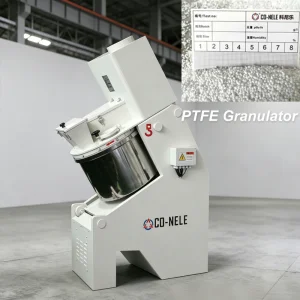
For glass batch processing, PTFE granulators, ceramic powders, and foundry moulding sand, intense localized shearing action moistens particles evenly, turning loose fine dust into spherical granules without requiring energy-intensive spray drying systems.
A structured engineering checklist for industrial buyers: Evaluating capacity sizing, drive unit specifications, discharge mechanisms, and moisture sensor integration.
When selecting a planetary mixer for sale from a manufacturer, commercial buyers should evaluate technical performance metrics beyond simple volumetric pan size. The following checklist highlights key engineering criteria:
How smart sensors, IoT remote diagnostics, and low-carbon cement chemistry are transforming planetary mixer engineering.
Modern planetary mixers are increasingly outfitted with motor torque profiling sensors. By analyzing real-time current draw across the planetary gear train, machine learning algorithms infer batch viscosity and automatically adjust mixing time on-the-fly.
The global push toward decabonized construction requires blending supplementary cementitious materials (SCMs) like calcined clay, alkali-activated slag, and bio-ash. Planetary mixers provide the shear energy needed to activate these low-carbon binders.
Integrated vibration analysis and oil clarity monitoring inside the central planetary gear housing warn plant operators of gear micro-pitting or bearing wear weeks before physical breakdown occurs, enabling scheduled off-peak maintenance.
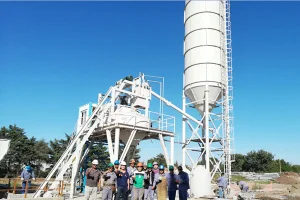
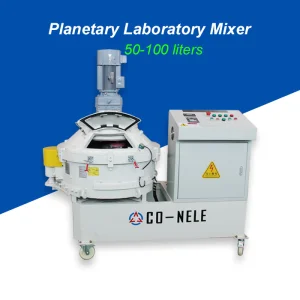
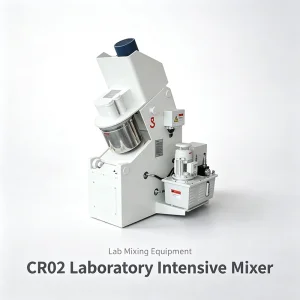
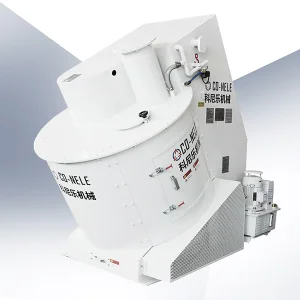
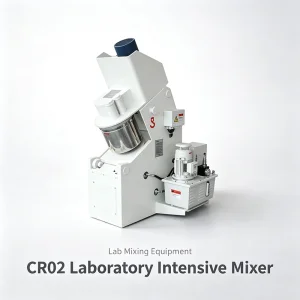
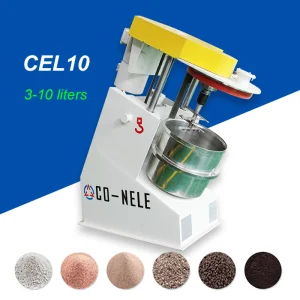
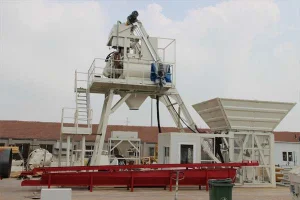
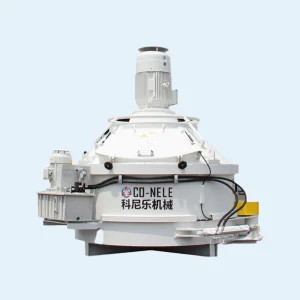
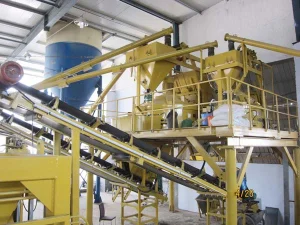
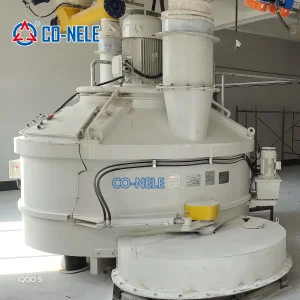
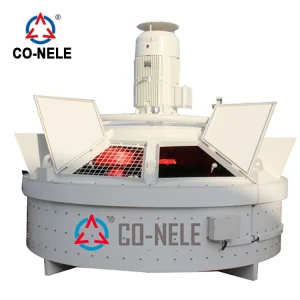
Explore additional specialized planetary mixers, laboratory testing units, and heavy industrial batching plants.
Expert engineering answers to common inquiries regarding planetary mixer selection, operational maintenance, and export logistics.
A vertical-shaft planetary counter-current mixer uses star arms that rotate and revolve simultaneously, providing micro-homogeneity with a Coefficient of Variation (CV) below 3%. It is ideal for dry mixes, precast blocks, UHPC, glass, and refractories. A twin shaft mixer uses horizontal counter-rotating shafts, which offer fast cycle times for high-volume commercial ready-mix concrete (> 2m³ per batch) but cannot match the micro-mixing intensity of planetary kinematics for specialized recipes.
Equipped with standard high-chromium alloy (Cr26) cast iron wear parts (HRC ≥ 62), pan liners and mixing blades typically last between 90,000 to 150,000 batches on standard concrete mixes. For highly abrasive mixes such as refractory castables or quartz-heavy UHPC, operational lifespan is approximately 40,000 to 60,000 batches. All wear plates are bolt-on and fully replaceable in the field.
Yes. Our testing facility in Qingdao operates laboratory-scale planetary mixers and intensive mixer-granulators ranging from 5 to 75 liters (e.g., CMP50 / CEL10). Prospective buyers can ship 10–20 kg of raw material for trial runs. Our engineers will provide a formal test report covering mixing uniformity, bulk density, sphericity, and scale-up parameters for industrial production.
All machines are custom-wired to match your local industrial power supply (220V, 380V, 415V, 440V, 480V at 50Hz or 60Hz). Electrical control panels feature CE-compliant components, incorporating Siemens PLCs, Schneider contactors, and ISO9001 certified gear housings. Complete wiring schematics, foundation civil drawings, and English maintenance manuals are delivered with every machine.
Industrial planetary mixers feature hydraulic or pneumatic discharge gates with multiple position sensors for partial or full discharge. In the event of a power outage, an auxiliary manual hand pump is integrated into the hydraulic power unit, allowing operators to safely discharge mixed material and prevent concrete setting inside the pan.
Standard planetary mixer models (e.g., CMP330 to CMP1500) feature a production lead time of 20 to 35 calendar days. Shipments are packed in open-top or standard sea containers with anti-corrosion wrap. Installation guidance is available via digital remote engineering commissioning or on-site engineer deployment for full batching plant setup and operator training.