
CO-NELEMixing & Granulation
Explore our core engineering catalog of vertical-shaft planetary mixers, twin-shaft units, and specialized batching equipment engineered for extreme material homogeneity.
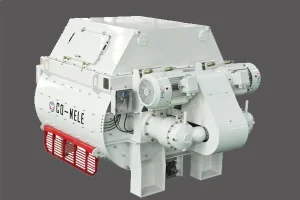
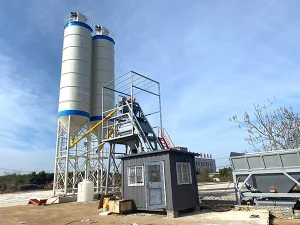
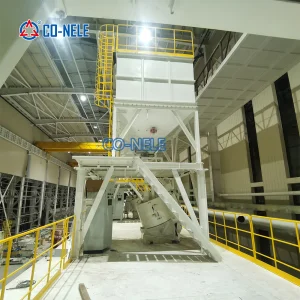
China 25m³/h Small Portable Concrete Batching Plant Manufacturer, Machine
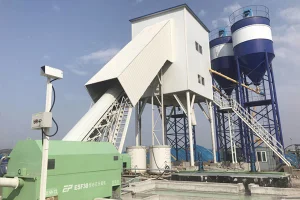
China HZN90 stationary ready concrete batching plants Factory, Machine
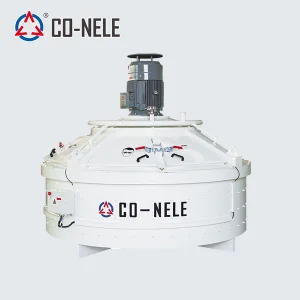
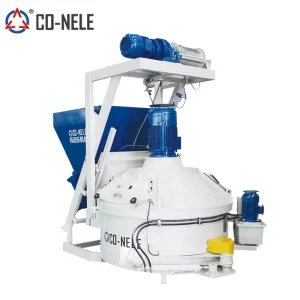
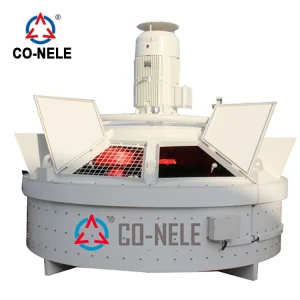
China Planetary Concrete Mixer Type CMP Manufacturer, Factory
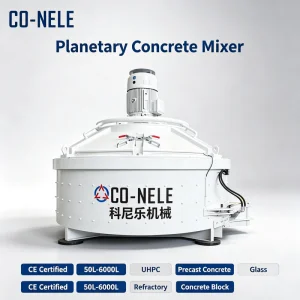
China Ultra-high performance concrete mixer Factory, Machine
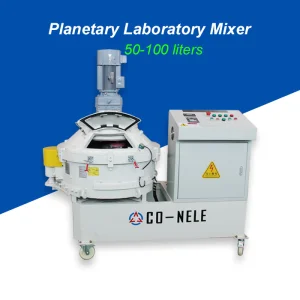
China Laboratory Planetary Mixer CMP50/CMP100 Manufacturer, Machine
Strategic Takeaway for Procurement Directors:
Modern ceramic production lines—ranging from technical porcelain tiles and proppants to silicon carbide refractories—demand micro-homogeneity with a coefficient of variation (CV) under 3%. Planetary counter-current concrete mixers manufactured in China are replacing legacy single-shaft and drum mixers due to their zero-dead-zone rotational geometry, significantly lower energy footprint, and extreme wear resistance against sub-micron abrasives.
The global ceramics manufacturing market is undergoing a structural transformation. Driven by stringent quality parameters for structural strength, porosity reduction, and color dispersion, plant managers across North America, Europe, the Middle East, and Southeast Asia are re-engineering their batching processes. The search for a reliable China Planetary Concrete Mixer For Ceramics Factory & Machine is no longer purely a cost-reduction exercise; it is a vital technological procurement strategy aimed at securing high-torque shear blending, absolute binder distribution, and rapid cycle optimization.
Traditional mixing equipment often suffers from localized dead spots, excessive thermal buildup during dry mixing, and uneven liquid pigment coating. Planetary mixers resolve these engineering bottlenecks through complex counter-current blade trajectories. By pairing high-speed rotation with full-pan revolution, the raw material bed is completely lifted, sheared, and homogenized in 60 to 90 seconds. As China’s industrial machinery manufacturing reaches top-tier global standards, enterprise ceramic facilities are deploying Chinese-engineered planetary mixers to scale output while maintaining ISO 9001 compliance.
Mixing ceramic slips, dry-press powders, and dense refractory bodies requires overcoming unique physical dynamics that distinguish ceramic processing from standard concrete manufacturing.
Fine ceramic powders (silica, alumina, zirconia, kaolin) exhibit strong Van der Waals forces leading to particle clumping. A standard mixer lacks the high kinetic energy required to break down these micro-agglomerates without adding excessive water.
Ceramic raw materials have high Mohs hardness ratings (typically 7 to 9). Standard steel mixing pans wear out rapidly, introducing metallic iron contamination that ruins white ceramic bodies, high-voltage insulators, and electronic substrate ceramics.
Dry-press ceramic bodies operate in narrow moisture windows (3% to 7%). Over-wetting causes press sticking, while under-wetting reduces green strength. Liquid organic binders must be atomized and dispersed instantaneously across the entire batch.
The core innovation of the vertical-shaft planetary counter-current mixer lies in its patented gearbox transmission system. Unlike twin-shaft horizontal mixers that rely on intersecting shear planes, the planetary mixer forces every blade through a complex geometric trajectory.
The mixing arms revolve around the vertical axis of the pan while simultaneously rotating rapidly around their own individual axes. The rotation-to-revolution speed ratio (typically 1:3.2) is mathematically optimized so that mixing blades sweep every square millimeter of the floor within 4 complete revolutions.
Dedicated wall and floor scrapers prevent damp ceramic slip or clay bodies from adhering to the pan perimeter. Materials are constantly deflected back into the high-energy mixing zone, completely removing localized static zones.
China's leading mixer manufacturers outfit planetary mixers for ceramic applications with exchangeable high-chrome alloy liners (HB600+), polyurethane coatings, or ceramic tile linings (silicon carbide / alumina) to guarantee zero iron contamination in sensitive bodies.
| Performance Parameter | Planetary Counter-Current Mixer (CMP Series) | Horizontal Twin-Shaft Mixer | Standard Pan / Drum Mixer |
|---|---|---|---|
| Mixing Uniformity (CV %) | < 2.5% (Micro-homogeneous) | 4.0% – 6.0% (Macro-homogeneous) | > 8.0% (Inconsistent) |
| Discharge Velocity | Pneumatic / Hydraulic Drop Door (< 15s) | Dual Gate System (15-20s) | Tilt / Gravity Discharging (> 45s) |
| Dead Zone Ratio | 0% (100% Geometry Swept) | 3% – 5% (Shaft ends & corners) | 10% – 15% (Wall accumulation) |
| Liquid Binder Coating | Instantaneous atomized dispersion | Moderate dispersion | Poor (Creates clumps/lumps) |
| Wear Life (Ceramic Mixes) | High (Bolt-on Ceramic / Chrome Plates) | Medium (Shaft seal risk) | Low (Rapid shell erosion) |
Planetary concrete mixers re-engineered for ceramic applications are deployed across diverse sectors of structural, technical, and decorative ceramic manufacturing.
Refractory plants require intense blending of coarse grog with fine alumina silica powders and micro-silica additives. Planetary mixers handle zero-slump dry mixes and high-viscosity castables without stalling high-torque gearboxes.
Achieving uniform density in large-format porcelain slabs demands precise particle packing. China planetary mixers ensure that moisture, clay, feldspar, and silica are blended evenly before spray drying or dry pressing.
Frac sand replacement proppants require sphericity and high crush resistance. Planetary mixers process raw bauxite and kaolin slurries into homogeneous green pellets during intensive mixing cycles.
Electrical porcelain insulators, alumina wear tiles, and honeycombs require zero metallic contamination and ultra-low bubble entrapment. Specialized rubber/ceramic-lined planetary units fulfill these sterile requirements.
Dispersing micro-pigments into ceramic bodies requires massive shear rates. Planetary star arms generate intense cross-current friction that evenly breaks down color agglomerates in seconds.
Overlapping with structural ceramics, Ultra-High-Performance Concrete (UHPC) and glass-fiber reinforced ceramics (GFRC) require high shear force to disperse steel or synthetic fibers cleanly without balling.
Investing in a high-performance China Planetary Concrete Mixer for Ceramics Factory yields measurable financial dividends across raw material savings, energy consumption, and product scrap reduction.
By achieving full batch micro-homogeneity within 60 seconds, overall electric motor running hours drop significantly compared to drum mixers that require 3 to 5 minutes per batch. Optimized gearboxes achieve 92%+ mechanical efficiency.
Superior shear force ensures complete activation of plasticizers, binders, and deflocculants. Ceramic plants routinely reduce expensive organic binder dosage by 8% to 12% while maintaining identical green tile strength.
Elimination of unmixed dry clay pockets and moisture gradient variations reduces firing cracks, warping, and strength failures in kilns, saving thousands of dollars per operational week.
Procuring industrial machinery internationally requires strict adherence to international electrical, safety, and operational standards. Leading Chinese mixing equipment plants offer tailored engineering services for overseas integration.
Get answers to common engineering questions faced by procurement teams when upgrading ceramic batching and mixing equipment.
A vertical-shaft planetary counter-current mixer is essential when processing dry, highly abrasive, pigmented, or ultra-fine ceramic formulations. Its complex rotational geometry ensures 100% pan coverage with zero dead zones, yielding a coefficient of variation (CV) under 3%. Twin-shaft mixers are designed for high-volume, coarse wet concrete where rapid bulk discharge matters more than micro-homogeneity.
Chinese planetary mixers configured for technical or white ceramics utilize specialized non-metallic or non-contaminating linings. Options include high-density alumina ceramic tiles, silicon carbide wear plates, or seamless polyurethane coatings on mixing arms and pan interiors. All scraper blades can be supplied in hardened ceramics or ultra-high-molecular-weight (UHMW) polymers.
When equipped with standard high-chrome alloy liners (HB600+), mixing blades typically endure 40,000 to 60,000 batches under highly abrasive ceramic or refractory service (such as silicon carbide or fused alumina). For standard ceramic clay bodies, wear life extends to 90,000–150,000 batches. All liners feature bolt-on designs for rapid field swapping.
Yes. Planetary mixer lids are custom-engineered with high-pressure atomizing spray nozzles, moisture sensor ports (microwave or optical sensors), dust collection ports, and pneumatic charging inlets. The planetary motion immediately disperses sprayed liquids across the churning bed without producing damp localized balls.
Leading Chinese mixing machinery manufacturers operate dedicated material trial laboratories. Clients can send 10kg to 50kg of raw ceramic powder or slurry for benchmark testing in lab-scale planetary units (such as CMP50 or CMP100 models). The laboratory returns detailed technical reports covering batch homogeneity, energy consumption curves, density distributions, and recommended scale-up factors.
Browse our additional specialized product range including heavy-duty planetary units, laboratory scale granulators, intensive mixers, and turnkey batching plants.
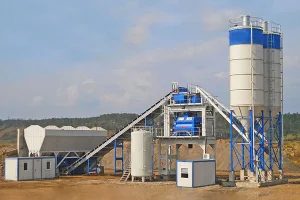
China 90m3/h sationary concrete batching plant Manufacturer, Machine
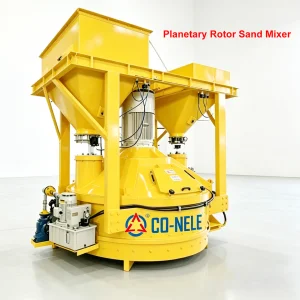
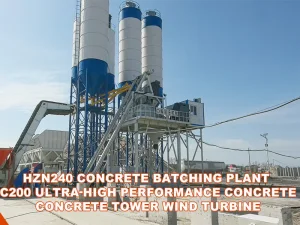
China UHPC Batching Plant for Precast Concrete Wind Turbine Towers Manufacturer, Factory
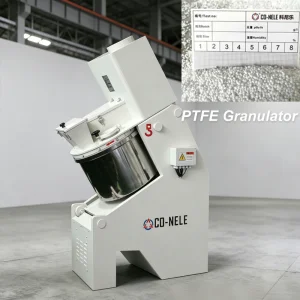
China Intensive Mixer for PTFE Granulator Manufacturer, Machine
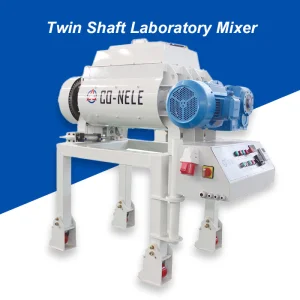
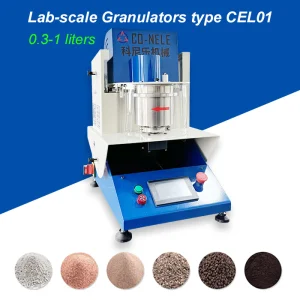
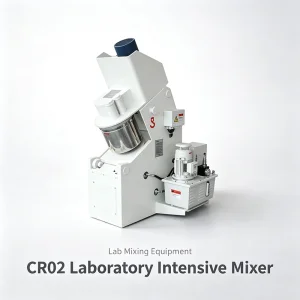
China CR02 laboratory intensive mixer for mixing and granulating Factory, Machine