
CO-NELEMixing & Granulation
Explore our top-tier industrial mixing machinery engineered for extreme material consistency, high-torque output, and maximum uptime across heavy precast, block, and UHPC plants.
The global construction material manufacturing sector is currently undergoing a structural transformation. Driven by the tightening of global carbon emission standards (ISO 14064), the rapid expansion of megastructure infrastructure projects, and the surging demand for modular precast building components, traditional mixing technology—such as standard tilt-drum or horizontal twin-shaft mixers—is proving insufficient for complex modern mix formulations.
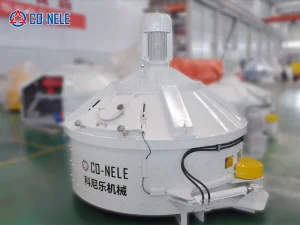
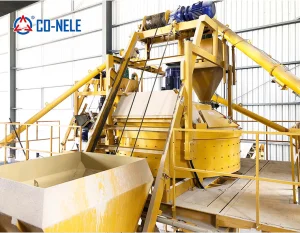
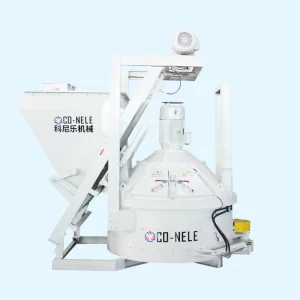
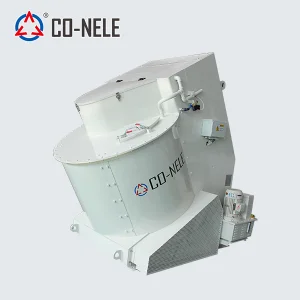
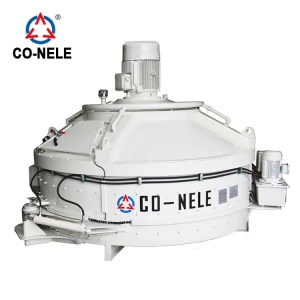
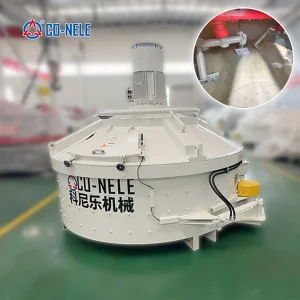
China’s manufacturing landscape for heavy machinery has evolved from basic assembly to cutting-edge technological innovation. Modern China Planetary Concrete Mixers stand at the forefront of this industrial revolution, providing vertical-shaft counter-current mixing mechanisms that address the critical limitations of legacy systems.
Modern architectural engineering demands compressive strength exceeding 150 MPa. Achieving this requires exact dispersion of silica fume, quartz flour, and high-aspect-ratio steel fibers without agglomeration—a feat only attainable through vertical counter-current shearing.
As global cement manufacturers replace clinker with supplementary cementitious materials (SCMs) like blast furnace slag and fly ash, mixers must achieve micro-homogeneity at lower water-to-binder ratios ($w/b < 0.18$), reducing overall carbon footprint per cubic meter.
Architectural concrete products, paving stones, and concrete pipes require zero color banding and uniform moisture density across every cycle. Planetary movement ensures 99.8% material distribution uniformity within 45 to 60 seconds.
The defining engineering edge of a planetary concrete mixer lies in its complex geometric motion pathway. Unlike horizontal twin-shaft mixers where aggregate paths are largely parallel and prone to dead spots near shaft ends, a vertical planetary mixer operates via a synchronized central revolution combined with high-speed planet rotation.
During a single mixing cycle, the mixing star arms revolve around the vertical central axis while simultaneously rotating at high velocity around their own planetary axes. The mixing blades cover the entire floor and walls of the mixing pan within a single revolution.
This complex movement creates high shear forces, forced displacement, and intense micro-velocity gradients across the entire batch. The counter-current effect prevents raw materials from grouping, breaking down micro-clumps of dry pigment or silica powders within seconds.
| Parameters | Twin-Shaft Mixer | CO-NELE Planetary |
|---|---|---|
| Mixing Kinematics | Parallel Circular Shear | Hypocycloidal Counter-Current |
| Mixing Homogeneity (CV) | 5% - 8% | < 2.5% (High Precision) |
| UHPC / Fiber Capability | Moderate (Risk of Balling) | Superior (Instant Dispersion) |
| Discharge Cleanliness | 88% - 92% | 98.5% (Hydraulic Gate) |
| Power Consumption / m³ | Standard Baseline | 15% - 22% Lower kWh |
The gearbox is the heart of any planetary mixer. Standard commercial speed reducers often fail prematurely when subjected to the torsional shock loads of zero-slump or fiber-reinforced mixes. China’s leading manufacturers, such as CO-NELE, utilize custom-designed, single-stage co-axial planetary gearboxes.
These heavy-duty drive units combine high torque distribution across multiple internal planetary gears, immersed in a continuous oil-bath lubrication system with external heat exchangers. This ensures continuous operation under 24/7 industrial production schedules without thermal breakdown of gear teeth or bearings.
For international EPC contractors, ready-mix producers, and precast concrete block factories, procuring industrial machinery from China requires a robust technical evaluation matrix. Price per unit is no longer the sole metric; Total Cost of Ownership (TCO), compliance, and material wear longevity are primary procurement drivers.
Ensure the supplier uses replaceable bolt-on liners made of High-Chrome Alloy steel ($\ge 60$ HRC) or specialized ceramic tiles (Alumina/Silicon Carbide) for abrasive aggregates like quartz, glass, or granite sand.
Evaluate energy demand per ton ($kWh/t$). High-efficiency planetary transmissions reduce active power consumption by up to 20%, generating millions of dollars in power savings over a 10-year service life.
Verify manufacturer certifications, including CE marking, ISO9001 quality management, UL-compliant electrical control panels (Siemens PLC), and pressure-vessel approvals for pneumatic systems.
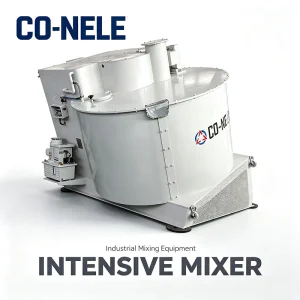
Planetary concrete mixers and specialized intensive mixers serve as the operational core across diverse manufacturing sectors. Below is an overview of how specialized mixing configurations solve specific material challenges.
Problem: Standard mixing leaves tiny air pockets and micro-color streaks in light-colored architectural panels and facing bricks.
Planetary Solution: Counter-current planetary mixing strips entrained air efficiently through forced kinetic shear. The moisture sensor integration (microwave probes) delivers real-time $w/b$ adjustments, ensuring uniform color and surface density from batch to batch.
Problem: Steel fiber clump formation ("balling") during structural concrete mixing causes localized mechanical failure points in bridge joints and offshore wind turbine foundations.
Planetary Solution: High-speed rotor stars combined with low-speed planetary revolution untangle and evenly distribute steel fibers in dense paste, guaranteeing isotropic tensile strength across the hardened element.
Problem: Extreme density variations and micro-powder separation during dry mixing lead to premature furnace lining cracking.
Planetary Solution: Inclined intensive mixers and planetary mixers handle ultra-fine refractory powders ($< 10 \mu m$) and heavy aggregates simultaneously, ensuring perfect dispersion before water addition.
Problem: Standard drum pelletizers yield irregular granule sizes and excessive fine dust.
Planetary Solution: Specialized intensive granulating mixers wet-granulate metal, ceramic, or fertilizer powders into high-sphericity ($\ge 90\%$) granules with controlled density, eliminating spray-drying costs.
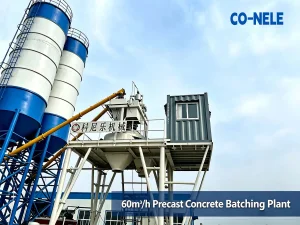
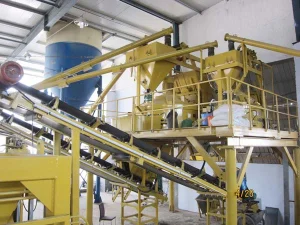
Deploying heavy industrial batching plants internationally requires strict adherence to local grid voltages, environmental dust laws, and software protocols. China planetary concrete mixer factories offer comprehensive customization packages for global installation.
Custom motor windings and control cabinets configured for global industrial electrical grids: 220V, 380V, 415V, 440V, 480V at 50 Hz or 60 Hz frequencies, including tropical heat insulation and freeze-proof lubrication systems.
Fully integrated Siemens S7-1500 or Allen-Bradley PLCs with multi-language HMI touchscreens. Real-time batch recording, SCADA integration, automated cloud diagnostics, and moisture feedback calibration.
Zero-dust emission mixing pan enclosures equipped with negative-pressure reverse-jet dust collectors, acoustic insulation lining ($< 75 dB(A)$ noise level), and closed-loop wash water recycling integration.
As AI-driven process automation and smart factories become standard in global construction, industrial mixer manufacturing is evolving toward fully autonomous systems.
Integration of torque-curve machine learning models that detect batch viscosity in real time, automatically adjusting mixing duration and chemical admixture dosing dynamically without manual operator intervention.
Embedded ultrasonic sensor arrays inside mixing blades and liner plates monitor wear depth continuously, pushing automated component replacement alerts to plant manager dashboards prior to mechanical failure.
High-pressure 3D rotational water jet systems mounted inside the mixer lid reduce daily end-of-shift washouts to under 4 minutes while recycling 95% of wash water back into the next concrete batch.
Technical guidance compiled by senior engineering specialists to resolve crucial procurement, operational, and maintenance queries.
While twin-shaft mixers excel at continuous high-volume ready-mix wet concrete (above 2 m³ per batch), they struggle with zero-slump dry-cast formulations, pigments, micro-powders, and fiber mixes.
A planetary mixer features vertical-shaft counter-current arms that cover 100% of the pan floor every few seconds. This guarantees micro-homogeneity with a Coefficient of Variation (CV) under 2.5%, prevents pigment streaking in pavers, distributes steel/synthetic fibers evenly without balling, and empties completely via hydraulic discharge doors without material residue build-up.
Lifespan depends heavily on raw material hardness (Mohs scale) and mix consistency. Equipped with standard High-Chrome Alloy liners ($\ge 60$ HRC), CO-NELE planetary mixers routinely achieve 100,000 to 150,000 batches under standard aggregate conditions.
For highly abrasive applications such as silica-rich UHPC, glass batch mixing, or refractory castables, optional ceramic tile linings (Alumina/SiC) or Wolfram-Carbide coated blades are available, extending wear life up to 300,000+ batches before replacement is required.
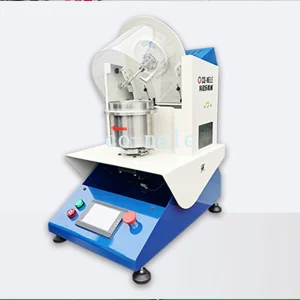
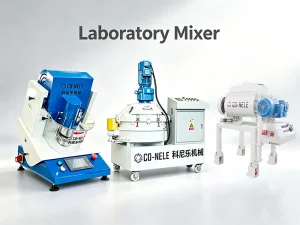
Leading factories maintain specialized materials testing laboratories equipped with pilot-scale lab mixers (5L to 75L models like the CMP50 or CEL01).
Clients can ship 20–50 kg of raw material samples (aggregates, binders, powders) to the test facility. Process engineers analyze moisture absorption curves, mixing torque profiles, granule sphericity, and bulk density variations. A comprehensive laboratory test report with scale-up data coefficients is provided prior to full-scale machine production.
Export machinery is supplied with a comprehensive 12-to-24 month warranty on main drive components (gearbox, electric motor). All structural wear items (blades, scrapers, liners) feature standardized bolt-on dimensions, ensuring interchangeability across all model generations since 2004.
Spare parts ship globally via DHL/FedEx air freight within 24 to 48 hours from central warehouse stocks in Qingdao. Commissioning support is delivered through resident field installation engineers or real-time remote augmented-reality (AR) video sessions.
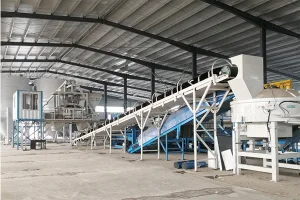
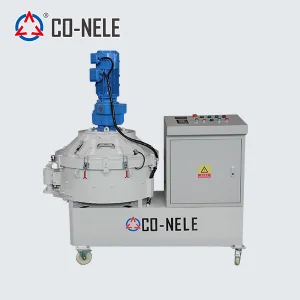
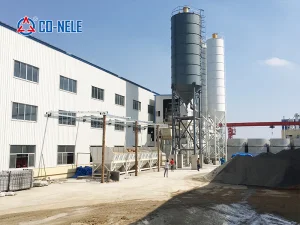
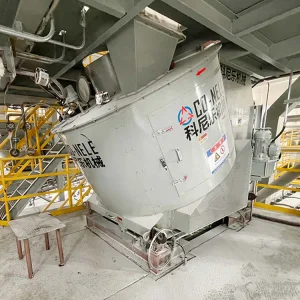
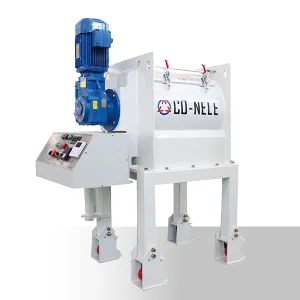
Discover our specialized laboratory mixers, high-capacity ready-mix batch plants, granulating systems, and specialized dry mortar machinery.
Whether you are engineering a high-capacity UHPC precast facility, upgrading block production machinery, or conducting advanced powder lab trials, our senior process engineers provide full blueprint proposals, torque calculations, and customized quotation packages.