
CO-NELEMixing & Granulation
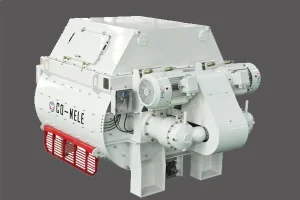
Explore our flagship vertical shaft planetary mixers, twin-shaft compulsory mixers, and specialized batching equipment.
Understanding vertical-shaft counter-current motion in modern high-performance concrete production.
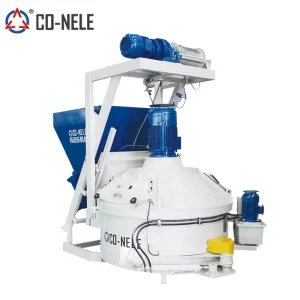
In modern industrial civil engineering, batch mixing performance dictates concrete structural integrity. As concrete technology transitions from standard ready-mix formulations to sophisticated micro-matrices such as Ultra-High-Performance Concrete (UHPC), Glass Fiber Reinforced Concrete (GFRC), and specialized refractory castables, conventional horizontal twin-shaft mixers often reach structural and thermodynamic mixing limitations. The MP1000 Planetary Concrete Mixer represents the benchmark in vertical-shaft forced mixing, utilizing counter-current motion to yield maximum microscopic homogeneity within compressed batch cycle times.
Core Kinematic Principle: The MP1000 operates via a complex planetary gear mechanism where mixing arms simultaneously rotate around their own axes while revolving around the central axis of the mixing pan. This dual-action trajectory guarantees 100% pan coverage within a single rotation cycle, completely eliminating dead zones.
Unlike standard drum or pan mixers that rely heavily on gravity or single-axis agitation, the planetary mixing trajectory forces shearing interaction across every cubic millimeter of the batch. Aggregates, cementitious powders, micro-silica, liquid admixtures, and pigments are subjected to high kinetic displacement. This dynamic action breaks down agglomerated micro-powders, achieving a Coefficient of Variation (CV) under 3%—a requirement for heavy precast elements, structural bridge components, and architecture-grade concrete blocks.
The synchronized planetary revolution and rotation paths ensure mixing star blades sweep the entire floor and sidewalls systematically, preventing material build-up and dry pockets.
High relative speeds between planetary blades and static material beds rapidly disperse micro-silica and liquid chemical additives, shortening total mixing cycles by 25–40%.
Equipped with high-torque gearboxes designed specifically for heavy-duty concrete duty cycles, absorbing shock loads from stiff mixes and steel fiber loads seamlessly.
Built to heavy-duty international industrial machinery standards with customizable options.
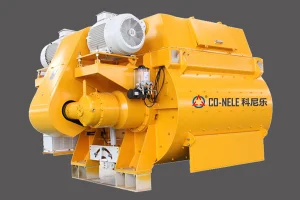
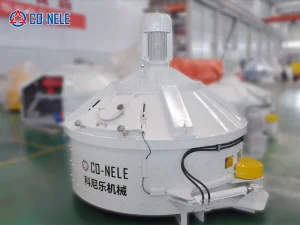
The MP1000 designation indicates a nominal compacted discharge output of 1000 liters (1.0 m³) per batch, with a dry charging capacity typically engineered at 1500 liters. The mechanical robustness of the machine stems from its unified design: a heavy steel structural frame, an integrated co-axial planetary gearbox, hard-wearing alloy liner tiles, and high-pressure hydraulic discharge assemblies.
| Technical Parameter | Standard Specification (MP1000) | High-Performance / UHPC Variant |
|---|---|---|
| Charging Capacity (Dry Material) | 1500 Liters | 1500 Liters |
| Discharging Capacity (Compacted Concrete) | 1000 Liters (1.0 m³) | 1000 Liters (1.0 m³) |
| Main Drive Electric Motor Power | 37 kW / 45 kW (3-Phase) | 55 kW Heavy-Duty Inverter Motor |
| Mixing Stars / Revolving Arms | 2 Mixing Stars (4 Blades) | 2 High-Shear Stars + Scraper Arm |
| Side & Floor Scrapers | 1 Side Scraper / 1 Outer Scraper | Dual High-Chrome Alloy Scraper Plates |
| Discharge Door System | Hydraulic Pump System (2.2 kW) | Dual Hydraulic Gates with Manual Override |
| Pan Floor Wear Liner Material | High-Chrome Alloy Cast Steel (≥60 HRC) | Hardox 500 / Ceramic-Coated Plates |
| Liner Plate Thickness | 15 mm Floor / 10 mm Wall | 20 mm Floor / 12 mm Wall |
| Operating Weight (Approx.) | 4,800 kg | 5,400 kg |
The gearbox is the central component of any planetary mixer. China's leading manufacturers employ purpose-built, heavy-duty planetary gearboxes designed to handle extreme torsional stress and uneven material loads. Power transmission efficiency exceeds 94%, with hardened helical and spur gears immersed in continuous oil-bath lubrication systems, ensuring thermal stability during continuous 24-hour plant operations.
Industrial concrete mixing creates severe abrasive wear. The MP1000 features segmented, bolt-on wear liners cast from high-chrome alloy steels (with hardness ratings exceeding 60 HRC). Segmented tiles allow maintenance teams to replace only high-wear zones—typically directly under the inner mixing star paths—dramatically reducing lifetime maintenance overhead and plant downtime.
Combining metallurgical expertise, digital CNC manufacturing, and efficient supply chains.
Over the past two decades, China has developed into a global hub for heavy machinery manufacturing. The concentration of specialized engineering clusters—particularly in regions like Shandong (Qingdao, Weifang) and Henan—has created an integrated industrial supply chain for concrete machinery. International EPC contractors, concrete precast plant developers, and commercial batching suppliers increasingly source MP1000 planetary mixers directly from leading OEM/ODM manufacturers in China for several strategic reasons:
Direct access to domestic foundries specializing in wear-resistant alloys guarantees high material purity and precision casting for mixing arms, wear plates, and planetary gear blanks.
Modern Chinese OEM facilities utilize 5-axis CNC machining centers and robotic welding suites to produce gearbox housings and mixing pans with sub-millimeter tolerances.
Delivering European-level mixing performance and reliability at a fraction of capital expenditure (CapEx), lowering total cost of ownership (TCO) for global operators.
Decarbonization, UHPC adoption, and automated batching drive demand for planetary forced mixers.
The global construction equipment market is undergoing a structural transition. Sustainable building initiatives, strict carbon emission regulations, and the rising adoption of high-performance civil engineering materials are reshaping global procurement requirements for batching machinery.
As the cement industry works to reduce its CO2 footprint, traditional Ordinary Portland Cement (OPC) is increasingly blended with or replaced by industrial by-products such as Ground Granulated Blast-furnace Slag (GGBS), pulverized fly ash, and calcined clays. Geopolymer and alkali-activated binders exhibit significantly higher rheological stiffness and cohesive stickiness compared to OPC mixes. Standard twin-shaft mixers often struggle with material buildup on rotor shafts when processing sticky binders. The MP1000 planetary mixer's high-shear counter-current blades and scraper system effectively process sticky low-carbon concretes without shaft wrapping.
Accelerated urbanization and labor shortages have fueled strong growth in Off-Site Construction (OSC) and precast concrete modular buildings. Precast component fabrication—such as prestressed hollow-core slabs, architectural facade panels, utility culverts, and railway sleepers—demands flawless surface finishes and uniform color distribution across every single batch. The MP1000 planetary mixer provides exact color pigment dispersion and moisture uniformities down to micro-tolerances, eliminating surface mottling, color banding, and structural voids in finished precast products.
UHPC formulations feature compressive strengths exceeding 120–150 MPa and low water-binder ratios (frequently below 0.18–0.22), heavily loaded with micro-silica and straight or deformed steel fibers. Achieving uniform steel fiber orientation and preventing fiber clumping ("balling") requires intense, localized energy input during the fluidization phase. The MP1000 planetary mixer can be equipped with secondary high-speed disperser rotors or configured with reinforced planetary kinematics to ensure uniform fiber distribution throughout the entire batch volume.
Delivering consistent industrial performance across diverse material manufacturing sectors.
In high-speed, automated concrete block machinery (e.g., face-mix and core-mix block machines), dry-cast concrete must maintain strict moisture tolerances (typically 4–6%). The MP1000 provides rapid moisture homogenization, ensuring consistent block height, structural density, and edge sharpness while minimizing machine wear caused by dry friction.
Steel mills, aluminum smelters, and cement kilns require high-purity refractory bricks and monolithic castables (silica, alumina, magnesia-carbon). The MP1000 planetary mixer's sealed pan design, heavy-duty wear liners, and dust-tight covers prevent cross-contamination while mixing highly abrasive, heat-resistant raw material blends efficiently.
Modern highway bridges and high-speed rail projects rely heavily on specialized UHPC grouting for shear key joints and deck overlays. Installed inside mobile or compact batching plants, the MP1000 delivers reliable, high-shear mixing directly on site to keep heavy infrastructure projects moving forward.
Beyond concrete, the MP1000 planetary mixer's forced vertical mixing action is widely utilized in glass manufacturing plants to blend quartz sand, soda ash, and cullet into homogeneous batch feeds, as well as preparing raw material powders for technical ceramics.
Evaluating key technical, structural, and commercial criteria prior to placing purchase orders.
Sourcing heavy capital equipment internationally requires a clear evaluation framework. Procurement departments must look beyond the initial purchase quote and evaluate total operational life, spare parts availability, safety certifications, and engineering compatibility with existing plant control architectures.
Verify that motors and control systems match local site power supplies (e.g., 380V/50Hz, 415V/50Hz, 460V/60Hz). Leading Chinese manufacturers offer CE-marked, UL-listed, or CSA-compliant electrical components with Siemens PLCs and Schneider switchgear for simple integration.
Ensure the mixing pan bottom is factory-machined to accommodate microwave moisture measurement probes (such as Hydronix or Franz Ludwig sensors). Real-time moisture feedback allows automated water adjustment for consistent batch workability.
Inquire about optional automated 360° high-pressure pan washing ring assemblies. Automatic cleanout nozzles reduce daily manual cleaning labor, improve operator safety, and prevent residual buildup inside the mixing drum.
Technical guidance from engineers specializing in MP1000 planetary mixing systems.
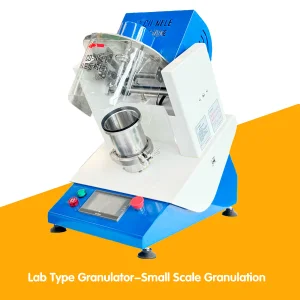
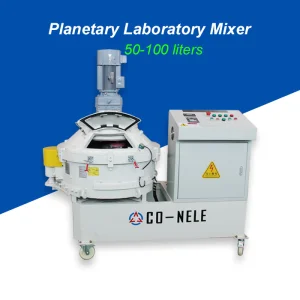
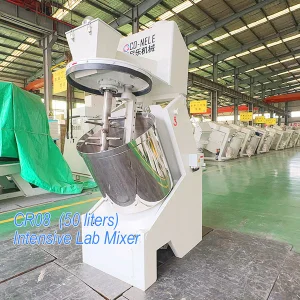
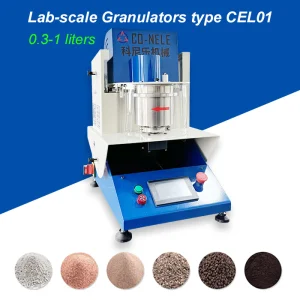
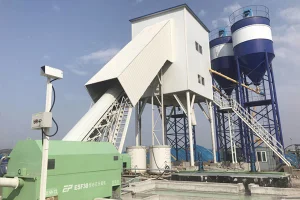
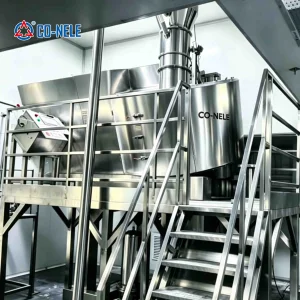
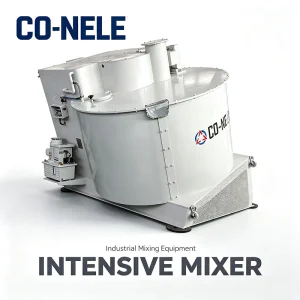
Additional specialized batching plants, granulators, and lab-scale mixers from our manufacturing facility.
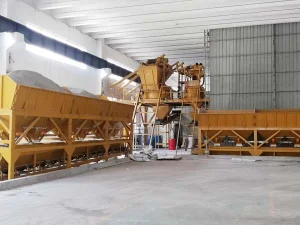
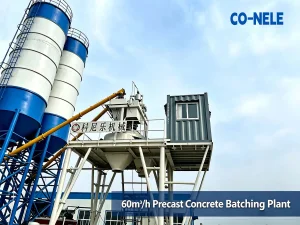
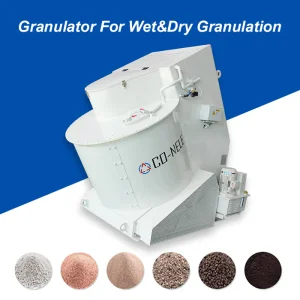
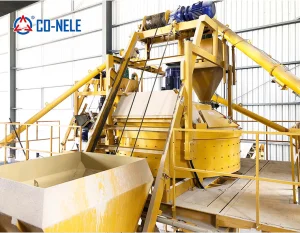
Planning a precast factory upgrade, UHPC project, or concrete batching plant expansion? Contact our engineering team for detailed CAD layout drawings, customized technical proposals, and factory-direct pricing.
Contact Machinery Specialists