CO-NELEMixing & Granulation
Explore our top-tier industrial mixing systems, engineered for micro-homogeneity, high durability, and seamless integration into modern infrastructure projects.
Analyzing the macro-economic shifts, operational flexibilities, and engineering demands driving the global transition from traditional stationary mixing to advanced mobile batching plants.
Modern mega-projects—such as cross-country expressways, high-speed rail networks, and remote wind farm foundations—demand dynamic concrete supply points. Stationary plants require extensive civil foundations and long haulage times, increasing aggregate segregation risks and transit-mixer fuel overheads.
The industrial sector has rapidly shifted beyond standard structural concrete (C25–C40) toward dry-cast paving elements, Ultra-High-Performance Concrete (UHPC), and fiber-reinforced matrixes. This paradigm requires batching plants with integrated vertical-shaft planetary mixers capable of reaching a Coefficient of Variation (CV) below 5%.
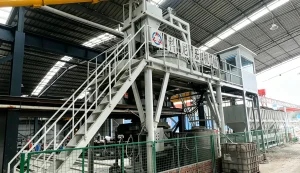
Global EPC contractors prioritize modular, quick-moving mixing stations (such as trailer-mounted or containerized units) that bypass foundation construction permits, reduce erection time from weeks to 48 hours, and minimize capital lockup across consecutive project phases.
China's mixing equipment ecosystem has transformed from low-cost assembly to precision-engineered OEM supremacy, led by integrated manufacturing clusters in Shandong.
The global dominance of Chinese mobile mixing plant factories stems from deep-tier industrial integration. Unlike European or North American aggregators who source gearboxes, pneumatic valves, and wear-resistant liners from third-party global vendors at high markups, leading Chinese manufacturers—such as Qingdao CO-NELE Machinery—control the complete design, casting, machining, and assembly stack under one roof.
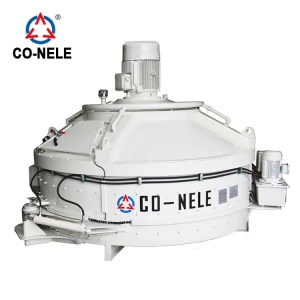
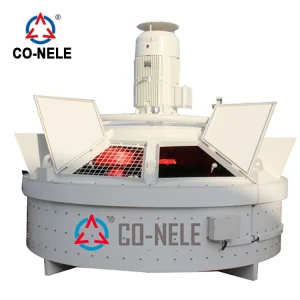
The heart of a vertical-shaft planetary concrete mixer is its gear reducer. Premium Chinese manufacturers produce proprietary parallel-shaft and vertical-spiral bevel gearboxes in-house. Designed specifically for high-torque, abrasive-shock loading, these gearboxes prevent fluid contamination and gear pitting, lowering maintenance cycles by 40% compared to off-the-shelf industrial gear units.
Utilizing Ni-Hard and high-chromium alloy casting technologies (hardness ≥ 60 HRC), Chinese mixing arms and pan liners achieve exceptionally low wear rates under aggressive slurry conditions. Standard components endure up to 150,000 discharge cycles under normal aggregate abrasion, while specialized refractory options withstand thermal shock up to 1200°C.
Modern Chinese mobile mixing stations integrate globally backed automation frameworks (Siemens PLC, Schneider low-voltage components, WAM dust collectors, and Toledo load cells). Multi-language touchscreens, cloud telemetry, moisture probe feedback, and automated batch calibration come standard on international export models.
When procuring a mobile concrete batching plant or intensive mixer from China, international buyers must benchmark core parameters to prevent operational bottlenecks.
| Mixer Kinematic Type | Mixing Efficiency & Homogeneity | Target Applications | Optimal Discharge Volume Range | Wear Maintenance Index |
|---|---|---|---|---|
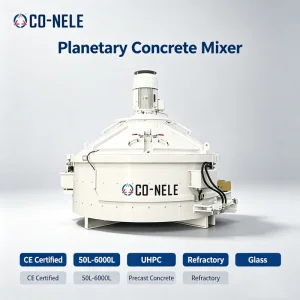
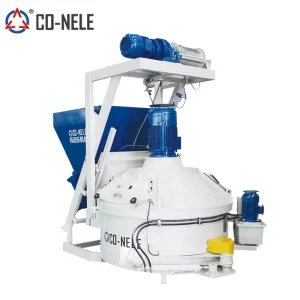
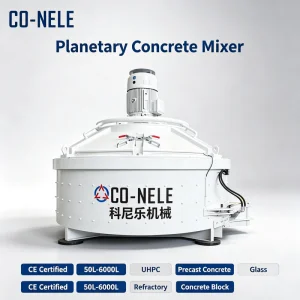
| Vertical Shaft Planetary Counter-Current | Extreme (CV < 5%) - Zero dead area motion | UHPC, Precast elements, Dry-cast blocks, Refractories | 0.5 m³ – 4.0 m³ per batch | Low (Replaceable bolt-on liners) |
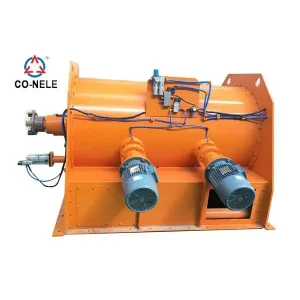
| Twin Shaft Compulsory (CHS Series) | High (Fast cycle 30–45s) - Dual shaft shear | Ready-mix concrete, Commercial infrastructure, Dams | 1.0 m³ – 6.0 m³ per batch | Medium (High-chrome blades) |
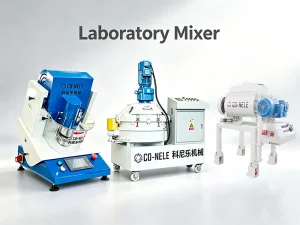
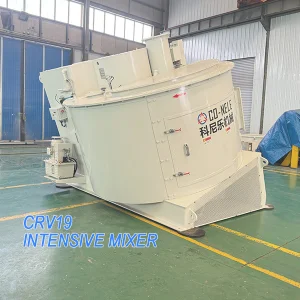
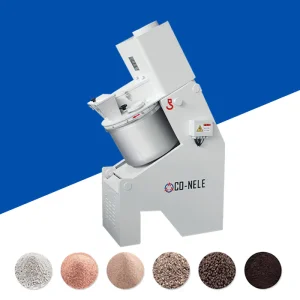
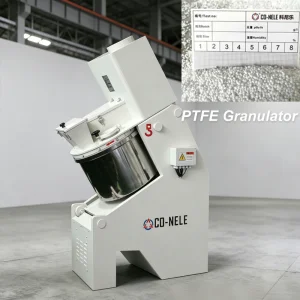
| Inclined Intensive Mixer & Granulator | Ultra-High (Granulation + Mixing in one vessel) | Powder metallurgy, Proppants, Ceramics, Battery materials | 5 L (Lab) – 3000 L (Industrial) | Low (Adjustable rotor speed) |
| Single Shaft Dry Mortar Mixer | Moderate to High - Rapid ribbon blending | Tile adhesives, Wall plasters, Pre-mixed dry mortar | 1.0 m³ – 5.0 m³ per batch | Low-Medium (Spiral ribbon design) |
Determine whether your project requires a Trailer-Mounted Mobile Station (with integrated kingpin and travel wheels), a Containerized Modular Plant (fits into standard 40HQ containers for low-cost ocean freight), or a Foundationless Quick-Erection Unit (placed directly on stabilized ground).
Ensure aggregate batching bins offer individual or cumulative weighing hoppers equipped with high-accuracy load cells (±2% aggregate, ±1% cement/water, ±1% liquid additives). Micro-silica and pigment dosing systems require dedicated loss-in-weight feeders.
Verify that motor drives match local grid specifications (220V/380V/415V/440V at 50Hz or 60Hz). Dust management systems should feature reverse-pulse jet cleaning filter areas (≥ 24 m²) to satisfy strict local environmental emission standards (< 20 mg/Nm³).
From offshore wind turbine grouting in harsh marine environments to remote desert road paving, Chinese mobile mixing equipment delivers tailored operational performance.
Challenge: Ultra-High-Performance Concrete requires precise mixing of micro-silica, quartz flour, steel fibers, and low water-binder ratios (< 0.20). Conventional twin-shaft mixers often clump steel fibers and overheat the mix.
Solution: Mobile mixing units fitted with CO-NELE CMP Planetary Mixers and auxiliary high-speed fly-cutters. Star-shaped rotation ensures complete fiber dispersion without balling. Mobile chassis allow direct placement on barges or bridge decks for rapid joint-grouting operations.
Challenge: Production of prestressed concrete poles and spun pipes requires zero-slump, stiff concrete with consistent color and density across rapid cyclic discharges.
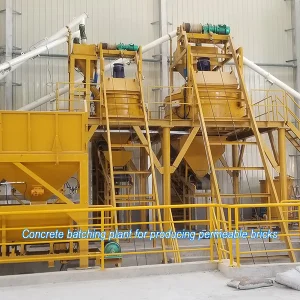
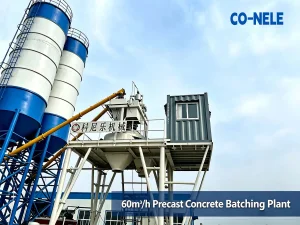
Solution: Custom HZS60 precast batching plants configured with a planetary concrete mixer core. Automated aggregate moisture sensors adjust batch water in real-time, delivering uniform slump across all shifts while reducing cement usage by up to 7% through superior hydration.
How smart sensors, AI-driven batching algorithms, and green low-carbon concrete formulations are reshaping modern mixing plant manufacturing.
Next-generation mobile batching plants integrate microwave moisture probes directly into the mixing pan floor and aggregate bins. AI feedback loops automatically adjust added water dynamically during the dry-mix cycle to achieve target slump before discharge.
With the global shift toward decarbonization and Supplementary Cementitious Materials (SCMs like slag, fly ash, and calcined clays), intensive mixers feature modified shear geometries to activate fine particles without thermal degradation.
Modern mobile mixing plants incorporate dual-power systems: electric grid-tie motors for zero localized emissions alongside auxiliary tier-4 final diesel generators for complete off-grid operational independence.
Expert responses to critical questions raised by project engineers, procurement managers, and plant operators.
Discover specialized machinery for refractory blending, intensive powder granulation, laboratory R&D, and heavy-duty precast batching.