CO-NELEMixing & Granulation
Precision-engineered mobile batching plants, planetary concrete mixers, and compulsory intensive granulators engineered by China's leading OEM manufacturers.
Analyzing the technological evolution, procurement economics, and operational advantages of China-manufactured mobile concrete batching infrastructure.
The global construction equipment ecosystem is undergoing a fundamental structural transition. Modern mega-infrastructure initiatives—spanning high-speed railway networks, offshore wind energy foundations, remote desert highways, and fast-track urban rehabilitation—no longer permit the long setup times and rigid civil foundations historically required by traditional stationary concrete batching plants. Consequently, high-capacity, trailer-mounted mobile concrete batching plants have shifted from specialized regional assets to primary capital equipment investments for tier-one EPC contractors worldwide.
As international contractors seek to optimize their Total Cost of Ownership (TCO) and contract deployment velocity, China mobile concrete batching plant suppliers and manufacturing factories have emerged as pivotal global partners. Utilizing integrated industrial supply chains centered in heavy machinery manufacturing hubs such as Qingdao, Shandong, Chinese OEM manufacturers design and construct mobile batching systems that merge structural durability with AI-assisted process automation.
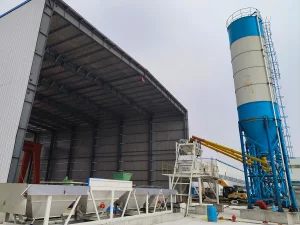
Integrated wheel-chassis systems allow complete plant relocation within 24 to 48 hours. Zero complex concrete foundation engineering required; setup utilizes heavy-duty hydraulic landing legs directly on compacted soil or steel plates.
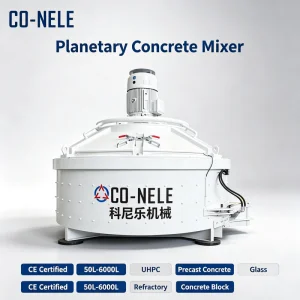
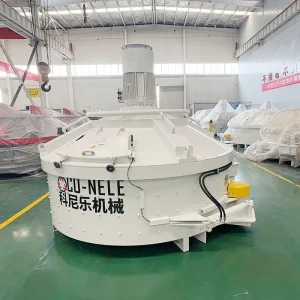
Equipped with compulsory twin-shaft or counter-current vertical planetary mixers. Achieves uniform cement hydration and aggregate dispersion with a Coefficient of Variation (CV) under 5% within mixing cycles of 30 to 60 seconds.
Fully integrated Siemens or Schneider SCADA architecture featuring real-time microwave aggregate moisture sensors, automated batching calibration, dynamic recipe management, and remote IoT diagnostic telemetry.
A primary concern for international procurement directors assessing mobile batching equipment is structural integrity under continuous heavy dynamic loading. Stationary plants rely on thousands of tons of reinforced concrete foundations to absorb the mechanical vibration generated during aggregate charging, weighing, and high-torque compulsory mixing.
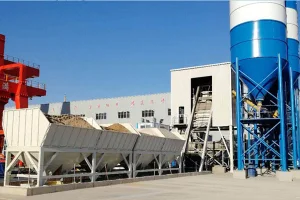
To deliver equal structural stability in a mobile platform, top-tier Chinese suppliers utilize advanced finite element analysis (FEA) to design articulated, heavy-duty box-beam chassis systems. Built using high-strength Q355B and Q460 structural steel, these mobile frames house the complete operational assembly: multi-compartment aggregate batching bins, belt conveyors, aggregate weighing hoppers, water and additive dosing scales, compulsory mixing units, control cabins, and integrated hydraulic support legs.
| Performance Metrics | Standard Mobile Batching Plant | Advanced China OEM Mobile Plant | Stationary Concrete Plant |
|---|---|---|---|
| Setup Time (Days) | 3 - 5 Days | 1 - 2 Days (Plug-and-Play) | 14 - 30 Days |
| Foundation Requirements | Minimal concrete pads | Foundationless (Compacted Ground) | Deep reinforced concrete civil works |
| Mixing Homogeneity (CV) | < 8% | < 5% (Planetary / Twin Shaft) | < 5% |
| Relocation Cost (% of CAPEX) | 4% - 6% | < 1.5% | 15% - 25% (Demolition & Rebuild) |
| Dosing Accuracy | ± 2% Aggregates, ± 1% Cement | ± 1% Aggregates, ± 0.5% Cement | ± 1% Aggregates, ± 0.5% Cement |
Why do leading global construction groups source mobile batching equipment directly from Chinese manufacturers? The answer lies in China's unsurpassed industrial concentration and continuous technological iteration in material handling equipment.
Shandong Province hosts China's premier mixing and concrete machinery manufacturing cluster. Within a 50-kilometer radius, top-tier OEM factories operate dedicated foundries for high-chrome wear-resistant liner plates (HB600+ casting hardness), specialized planetary reducer manufacturing facilities, and automated robotic welding centers for chassis fabrication. This dense concentration drastically reduces supply chain bottlenecks and allows rapid customization of specialized concrete plants.
Leading Chinese exporters do not compromise on component reliability. While structural fabrication and planetary mixing units are produced in-house under ISO9001 quality protocols, critical sub-assemblies are integrated from world-class component leaders: Siemens PLCs, Schneider low-voltage electronics, Toledo load cells, WAM dust filters and screw conveyors, AirTEC pneumatic systems, and Bonfiglioli or Brevini gearboxes. This hybrid engineering approach ensures long operational life while providing global spare parts availability.
Engineered to comply with stringent European, North American, and Middle Eastern construction regulations and extreme operational environments.
Factories customize electrical enclosures to meet CE directives, UL standards, or regional NEMA enclosures. Motors are configurable to 220V, 380V, 415V, 440V, or 480V at 50Hz/60Hz. Integrated reverse-jet dust collectors ensure site air quality complies with EPA and European stage emissions limits.
For Middle Eastern desert projects (up to +55°C ambient), mobile plants incorporate insulated water chilling lines, aggregate shading covers, and heat-dissipating hydraulic oil coolers. For Arctic environments (down to -30°C), thermal cladding panels and steam injection manifolds inside mixing drums prevent freeze-lock.
Proven across remote highway paving, mountain tunnel lining, wind turbine foundation pours, island reclamation works, and temporary precast concrete element yards. Mobile plants deliver consistent batch quality exactly where transit-mix haul times would compromise workability.
Key criteria for evaluating mobile concrete batching equipment manufacturers in China to guarantee long-term operational uptime.
When enterprise EPC purchasing managers evaluate China mobile concrete batching plant suppliers, evaluating the initial purchase price (CAPEX) represents only 30% of the long-term financial equation. Operational expenses (OPEX), maintenance downtime risks, wear-parts replacement intervals, and residual machinery resale value dictate the true Total Cost of Ownership.
How digital automation, sustainable cement formulations, and mobile UHPC mixing are reshaping mobile batching plant technology.
Traditional batching relies on manual aggregate moisture testing once or twice a day. Next-generation mobile plants utilize microwave sensors installed directly inside the aggregate dosing bins. The PLC dynamically adjusts added water volumes millisecond-by-millisecond, preserving the precise water-cement ratio and eliminating slump variance.
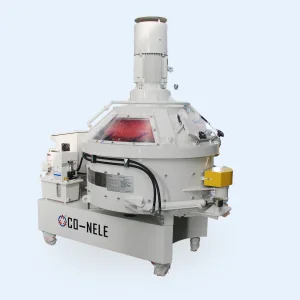
With bridge deck joints and architectural facades demanding compressive strengths exceeding 150 MPa, mobile plants are now custom-fitted with high-shear vertical planetary mixers capable of dispersing steel micro-fibers without clumping, enabling on-site UHPC production.
Modern mobile batching stations incorporate expanded multi-powder weighing systems (up to 4 separate cementitious powder silos). This enables seamless integration of supplementary cementitious materials (fly ash, ground granulated blast-furnace slag, silica fume, and calcined clays) to drastically lower carbon footprints.
Direct technical guidance addressing common queries during mobile concrete batching plant evaluation.
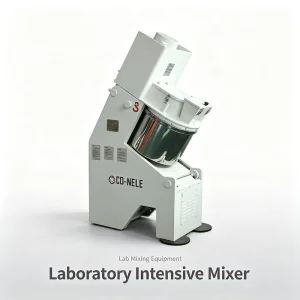
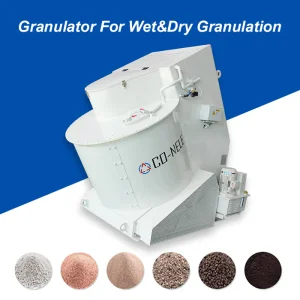
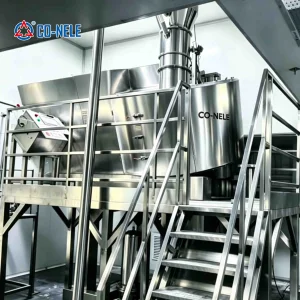
Explore our full engineering portfolio of granulators, laboratory testing units, and planetary mixers.