CO-NELEMixing & Granulation
Explore precision-engineered mobile plants, planetary mixers, and specialized granulation machinery manufactured in Qingdao, China.
Real-world performance metrics compiled across 10,000+ active mixing plants worldwide.
The global construction, mining, and civil infrastructure markets are undergoing a fundamental paradigm shift from traditional, stationary batching plant installations toward highly versatile, towable mobile concrete batching plants. Driven by rapid urban infill projects, remote renewable energy installations (such as wind turbine gravity base foundations and solar array ballast blocks), and linear infrastructure contracts (high-speed rail, highways, and aqueducts), contractors no longer accept the long setup cycles and permanent civil foundation requirements of static plants.
In this dynamic macroeconomic climate, global buyers searching for China Mobile Concrete Batching Plant Price Factory & Machine require far more than basic price quotes. They require absolute transparency regarding Total Cost of Ownership (TCO), material kinematic efficiency, structural metallurgy standards, and direct OEM supply chain capabilities. Operating out of established industrial manufacturing clusters such as Qingdao, leading Chinese mixing machinery manufacturers like CO-NELE (established 2004) have elevated mobile batching technology from budget alternatives to top-tier engineering solutions competing directly with European brands.
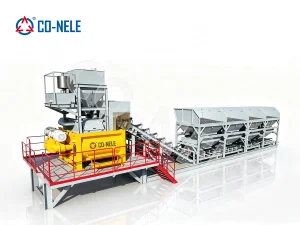
Understanding the price structure of a mobile concrete batching plant requires a detailed forensic decomposition of initial Capital Expenditure (CAPEX) versus long-term Operational Expenditure (OPEX). On average, direct FOB prices for Chinese manufactured mobile concrete batching plants range between $45,000 USD to $280,000 USD, depending on output capacity ($25\text{ m}^3/\text{h}$ to $120\text{ m}^3/\text{h}$), core mixing technology (Twin-Shaft vs Planetary Counter-Current), level of automation, and mobile chassis engineering.
| Mobile Plant Model | Capacity (m³/h) | Mixer Core Engine | Aggregate Hoppers | Avg. Price Range (FOB China) | Primary Application |
|---|---|---|---|---|---|
| MBP10 / MBP25 | 25 – 35 m³/h | Twin Shaft / Single Shaft | 2 – 3 Bins (Skip Hoist) | $45,000 – $68,000 USD | Small bridges, rural roads, urban repairs |
| MBP60 Compact | 50 – 60 m³/h | Twin Shaft CHS1000 | 4 Bins (Inclined Belt) | $75,000 – $115,000 USD | Commercial ready-mix, highway paving |
| MBP90 Heavy-Duty | 75 – 90 m³/h | Twin Shaft CHS2000 | 4 Bins (In-line Dosing) | $125,000 – $180,000 USD | High-speed rail, dam foundations, airports |
| Mobile UHPC Specialized | 30 – 50 m³/h | Planetary CMP1000/MP3000 | 4 Bins (Micro-Dosing) | $140,000 – $240,000 USD | Wind turbine towers, bridge joint grouting |
When engineering procurement teams search for concrete production machinery, their search intent extends beyond simple product catalogs. Global buyers prioritize reliability, local compliance, logistics compatibility, and rapid field support. Key procurement requirements include:
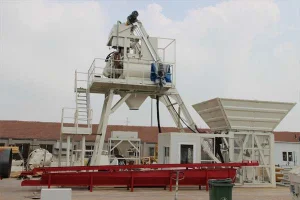
Modern mobile concrete plants are factory pre-wired, pre-piped, and dry-tested prior to shipment. On-site installation requires less than 8 to 24 hours, eliminating complex civil foundations and structural welding.
Component dimensions are optimized to fit standard 40ft High Cube (HQ) or Open Top (OT) shipping containers, protecting international buyers from exorbitant break-bulk ocean freight costs.
Control panels conform to CE (Europe), UL/CSA (North America), and EAC (Eurasia) electrical standards, featuring dual-voltage (220V–480V, 50/60 Hz) transformers for seamless global operation.
The reputation of Chinese industrial machinery has undergone a dramatic transformation driven by China’s "Smart Manufacturing 2025" initiative. Industrial hubs like Qingdao integrate complete regional supply chain ecosystems—ranging from specialized steel rolling mills for wear-resistant liners to dedicated gearbox transmission testing labs.
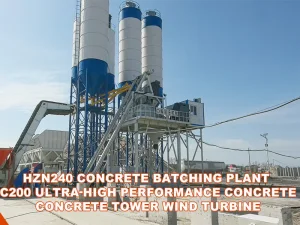
Offshore wind projects require high-strength, anti-scour Ultra-High Performance Concrete (UHPC) mixes capable of achieving compressive strengths exceeding 150 MPa. Mobile batching plants equipped with planetary counter-current mixers ensure uniform steel fiber dispersion without balling, delivering continuous pours on remote coastlines and port facilities.
In arid regions like the Middle East or North Africa, long transport distances from commercial ready-mix plants risk concrete setting inside transit mixers. Deploying mobile batching plants directly at construction sites eliminates haulage delays, controls concrete slump, and reduces water loss in high ambient temperatures.
For city-center metro projects and precast segment yards, space constraints prohibit large static installations. Compact foundationless mobile plants deliver high-precision dosing for precast tunnel segments, bridge girders, and architectural panels within a compact footprint.
Architectural superiority, smart PLC software automation, and heavy-duty structural engineering.
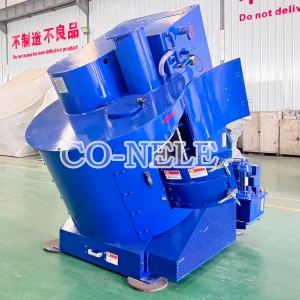
Rotating mixing stars complete a full pan revolution every 6 seconds, producing sub-5% coefficient of variation (CV) mixing homogeneity for technical mixes.
Real-time batch reporting, automated moisture sensor integration, cloud recipe management, and remote fault diagnostics via encrypted VPN connections.
Heavy steel outriggers with integrated surface pads allow installation directly on compacted soil or gravel surfaces without concrete foundation pads.
Direct technical answers from factory process engineers regarding procurement, operation, and pricing.
Pricing is governed by target hourly production capacity ($25\text{ m}^3/\text{h}$ to $120\text{ m}^3/\text{h}$), the mixing technology specified (twin-shaft vs vertical planetary), the number of aggregate bins (2 to 4 compartments), cement storage silo specs (bolted mobile vs horizontal low-profile silos), and integrated trailer features (pneumatic braking, hydraulic erection legs, lighting system).
A mobile plant features an integrated heavy-duty wheel chassis, kingpin hitch, and braking system, allowing it to be towed directly by a standard tractor head. A foundationless plant is modularly designed on steel skids; while it does not require poured concrete foundations, it must be transported on standard flatbed trailers and loaded via crane.
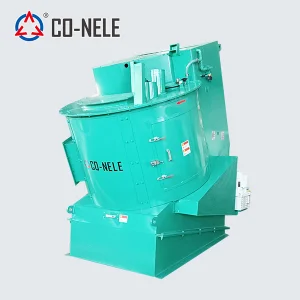
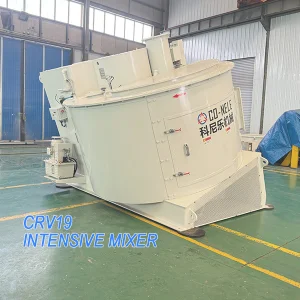
Specify a planetary counter-current mixer for dry-cast concrete, block making, precast elements, GFRC, pigmented concrete, or Ultra-High Performance Concrete (UHPC) where micro-homogeneity (<5% CV) is critical. Choose a twin-shaft compulsory mixer for high-volume commercial ready-mix concrete ($C20-C60$) requiring 30 to 45 second fast batch cycles.
Utilizing standard high-chrome alloy wear components (26-28% Cr), liner plates typically achieve 100,000 to 150,000 batch cycles under standard granite/gravel aggregate mixes. Highly abrasive materials like quartz sand or refractory minerals reduce wear life to 40,000 – 60,000 batches. All wear parts are bolt-on and field-replaceable.
Yes. Motors, gearboxes, electrical breakers, and VFD drives are customized to match local site electrical supplies, including 220V, 380V, 415V, 440V, or 480V at 50Hz or 60Hz. Electrical cabinets feature international brands (Siemens, Schneider, ABB) and comply with CE, UL, or CSA requirements upon request.
Compact mobile batching plants ($25-60\text{ m}^3/\text{h}$) are engineered to fit inside 40-foot High Cube (40' HQ) containers by detaching aggregate bin extensions. Larger capacity plants ($90-120\text{ m}^3/\text{h}$) ship using a combination of 40' HQ and 40' Flat Rack (FR) containers.
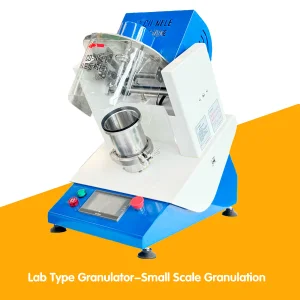
Browse our complete export lineup of mobile stations, twin-shaft mixers, and lab testing units.
Consult with our process engineers in Qingdao to configure the optimal mobile batching plant layout, receive a detailed CAD foundation drawing, and obtain guaranteed FOB/CIF pricing within 24 hours.
Request Technical Quote Now