
CO-NELEMixing & Granulation
Precision-engineered mixing equipment designed for high-homogeneity applications, quick deployment, and extreme wear environments.
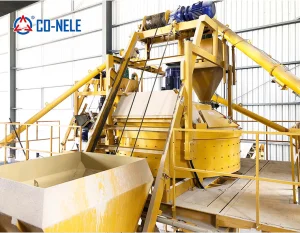
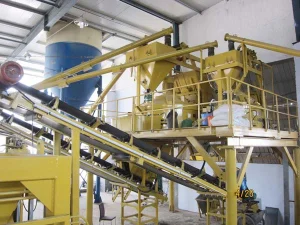
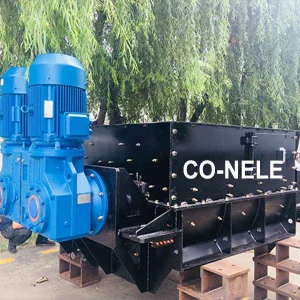
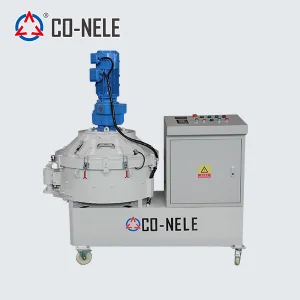
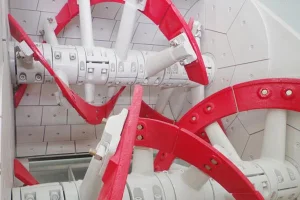
The global construction and heavy civil engineering sectors are experiencing a structural paradigm shift. The historical reliance on massive, centralized, stationary concrete batching plants is rapidly giving way to dynamic, decentralized, high-mobility mixing architectures. Driven by megaprojects spanning remote transport corridors, wind-energy infrastructure, high-speed rail networks, and urban infill redevelopments, the demand for high-performance mobile batching plants has grown exponentially over the past decade.
Modern global contractors no longer view mobile batching plants merely as temporary emergency measures. Instead, fully automated, wheel-mounted, containerized, and foundationless batching stations represent core strategic assets. China has emerged as the premier manufacturing epicentre for these advanced plants, leveraging robust industrial supply chains, advanced metallurgy, and cutting-edge automation to challenge traditional European machinery manufacturers.
As a leading China mobile batching plant manufacturer and factory (such as Qingdao CO-NELE Machinery Co., Ltd.), Chinese engineering enterprises have transitioned from basic mechanical assembly to pioneering advanced rheological mixing systems. Modern mobile batching plants must maintain strict compliance with global technical metrics—achieving batch mixing homogeneity within 30 to 60 seconds while keeping the coefficient of variation (CV) below 5%. This capability is essential for specialized recipes including Ultra-High Performance Concrete (UHPC), Glass Fiber Reinforced Concrete (GFRC), and specialized refractory matrices.
From an economic perspective, total cost of ownership (TCO) evaluation heavily favors mobile systems in project-based contract models. Traditional stationary plant installations require months of environmental permitting, extensive reinforced concrete foundation work, complex electrical sub-station construction, and significant civil restoration costs upon project completion. In contrast, a modern towable or foundationless mobile batching plant can be transported via standard low-bed trailers or standard ISO shipping containers, erected within 24 to 48 hours on compacted soil or simple concrete slabs, and brought to full operational capacity with zero long-term site scarification.
The technology underpinning mobile batching plants has evolved dramatically from basic drum-tilting mechanisms to highly sophisticated forced-action compaction and shear systems. Current industry trends focus on five critical technological pillars:
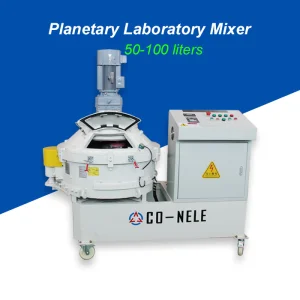
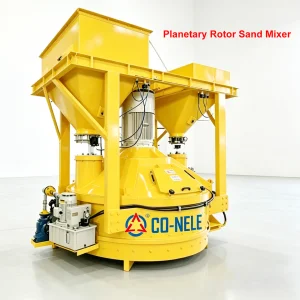
Unlike standard twin-shaft mixers that rely on horizontal displacement, vertical-shaft planetary mixers utilize counter-current mixing stars. The complex planetary trajectory ensures that mixing blades sweep every square millimeter of the mixing pan within a single revolution, preventing particle segregation and eliminating unmixed dead zones.
Next-generation mobile batching plants integrate real-time microwave moisture probes located within aggregate hoppers and mixer pans. High-speed PLC controllers dynamically adjust water dosing per batch, compensating for moisture fluctuations in fine sand and maintaining constant water-cement ratios (W/C) without operator intervention.
To reduce field assembly friction, structural designs incorporate pre-wired, pre-piped modular units. Electrical connections utilize quick-connect industrial plugs, pneumatic lines feature quick-fit manifolds, and integrated hydraulic lifting legs allow self-erection without heavy mobile cranes.
Mixing abrasive aggregates, quartz sand, or metallic micro-fibers causes rapid mechanical erosion. Premium plants utilize high-chrome cast iron alloys (26%+ Cr content) with hardness ratings exceeding 60 HRC, paired with replaceable wear liners rated for 90,000 to 150,000 production cycles.
Modern mobile operations in urban or ecologically sensitive areas demand stringent environmental safeguards. Pulse-jet filter systems mounted on cement silos ensure particulate emissions remain below 10 mg/Nm³, while integrated filter presses recover wash water and aggregate slurry for complete recycling.
Transitioning away from continuous diesel engine usage, modern plants feature dual-power inputs (mains electric grid + auxiliary diesel generator). This approach dramatically cuts site carbon footprints while reducing operational noise levels during night-shift urban paving work.
Selecting the ideal mixing infrastructure requires evaluating operational trade-offs across mixer kinematics, mobility requirements, throughput capacity, and concrete recipe complexity. The matrix below outlines key engineering performance parameters:
| Performance Metric | Mobile Planetary Batch Plant | Mobile Twin Shaft Batch Plant | Stationary High-Capacity Plant |
|---|---|---|---|
| Primary Concrete Target | UHPC, Precast, Dry-Cast Bricks, GFRC, Color Concrete | Ready-Mix, Mass Concrete, Pavements, Foundations | Commercial Ready-Mix, Mega Dams, Infrastructure |
| Mixing Kinematics | Counter-Current Vertical Planetary Motion | Compulsory Dual-Horizontal Shaft Shear | Twin Shaft or Tilting Drum Array |
| Mixing Coefficient of Var. (CV) | < 3% to 5% (Ultra-High Homogeneity) | < 5% to 8% (Standard Structural Concrete) | < 5% to 8% (Depending on Mixer) |
| Site Setup Time | 12 to 36 Hours (Plug-and-Play) | 24 to 48 Hours (Modular Trailer) | 30 to 90 Days (Civil Foundations Required) |
| Foundation Requirement | Foundationless / Steel Outriggers / Compacted Soil | Foundationless / Flat Concrete Slab | Deep Reinforced Concrete Footings & Piling |
| Typical Capacity Range | 15 m³/h to 90 m³/h | 30 m³/h to 120 m³/h | 90 m³/h to 360 m³/h |
| Relocation Cost & Effort | Extremely Low (Towable / Containerized) | Low (Trailer Mounted) | Extremely High (Demolition & Civil Rebuilding) |
The technical versatility of mobile batching plants allows engineering teams to deploy precise mixing capabilities across diverse operational environments worldwide:
In linear transport projects such as high-speed railway viaducts, bridge joint sealing demands continuous batches of high-strength grout and UHPC. Mobile planetary batching stations follow track erection gantries, supplying fresh, non-segregated mix directly at the pouring head and eliminating slump loss caused by transit mixer delay.
Offshore wind turbine jacket foundations and port expansion jetties require continuous underwater placement of high-density concrete. Compact mobile plants mounted directly on installation barges deliver continuous batching under challenging marine conditions, utilizing automated salt-spray-resistant electrical enclosures.
For specialized concrete brick, paving block, and curbstone manufacturing factories, color uniformity and surface density dictate final product value. Mobile planetary batching plants integrated with dry-cast block machines provide absolute micro-dispersion of pigment powders and zero aggregate crushing.
Maintenance turnarounds in blast furnaces, rotary cement kilns, and glass furnaces require rapid placement of specialized refractory castables containing stainless steel fibers and ultrafine silica fume. Mobile intensive mixers allow rapid on-site batching at temperatures up to 50°C without premature setting.
Sub-surface tunneling operations utilizing Tunnel Boring Machines (TBM) require dedicated backfill grout and shotcrete batching within confined footprints. Compact, low-profile mobile batching stations operate directly within shaft bottoms or tunnel access portals, feeding concrete pumps continuously.
Operating in regions such as the Middle East or North Africa requires specialized thermal management. Mobile plants equipped with aggregate chilling systems, ice-water dosing meters, and insulated mixing pans maintain concrete temperatures below 30°C despite ambient desert heat exceeding 45°C.
Partnering with a premier manufacturer like Qingdao CO-NELE Machinery Co., Ltd. extends far beyond buying a standalone machine. Modern industrial clients require fully integrated macro-solutions that bridge raw material intake, pneumatic powder conveying, automated batching, mixing, and downstream distribution.
CO-NELE’s turnkey engineering framework is executed across four standardized lifecycle phases:
Clients submit raw aggregate, powder, and admixture samples to our Qingdao laboratory. Engineers run comprehensive trials from 5L to 75L to map shear resistance, mixing time, particle distribution, and optimal binder usage.
Using 3D CAD and BIM modeling, our engineering office designs custom plant layouts tailored to site terrain, access roads, power hookups, aggregate stockpiles, and truck loading corridors to maximize operational throughput.
Across our 30,000 m² manufacturing bases, mixing pans are robotically welded, gearboxes undergo 100% load bench testing, and structural steel frames are hot-dip galvanized or coated with marine-grade epoxy paint.
Plants ship pre-assembled and factory-tested. Resident commissioning engineers or remote augmented-reality (AR) support teams assist local crews during final mechanical positioning, wiring, and PLC calibration.
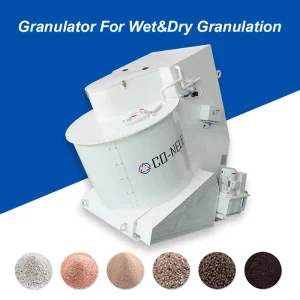
Explore additional high-performance concrete batching plants, compulsory twin-shaft mixers, intensive granulators, and laboratory mixing systems.

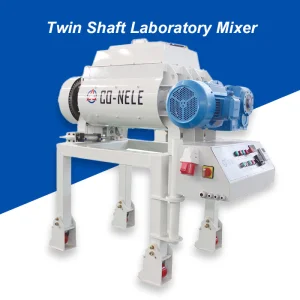
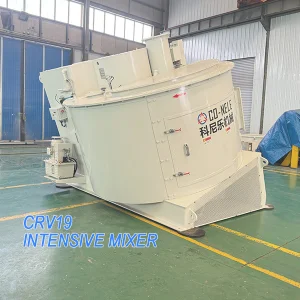
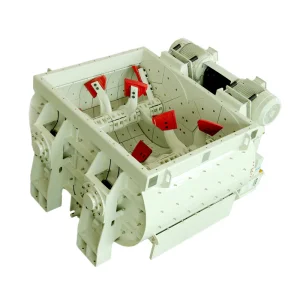
Direct responses from our engineering department addressing procurement, operational kinematics, voltage customization, and maintenance protocols for international buyers.
Submit your raw material specifications, required hourly batch output, and project site parameters. Our senior technical team will return a customized plant layout proposal, dynamic drive sizing calculation, and factory quotation.